When Impact Stops at the Office Door
For mission-led organizations, a change of manager tests whether workplace inclusion is built to last.



For mission-led organizations, a change of manager tests whether workplace inclusion is built to last.

 44
44
 0
0

Artist Rob Strati on inherited objects, the limits of market price, and the creative possibilities…
 85
0
85
0

Counting what we fail to prevent, sixty seconds at a time
89
0

How states can crowd in local early-stage capital
 368
0
368
0

Why last-mile healthcare needs an operating model, not just more mobile clinics
 351
0
351
0

How Australia’s succession wave could turn ownership into a funding model
 466
0
466
0

 20018
0
20018
0

To accelerate the energy transition and to meet the Sustainable Development Goals by 2030, companies must think about how their business model can contribute positively to the planet and society. A positive impact should be understood as a positive change in an outcome caused by an organization. The positive change can be realized: 1) through the creation of new products and services by the company (integrated into the business model and generating revenue), or 2) through its practices, which means that the company can leverage its value chain and engage with suppliers, customers, employees, or innovation practices to produce a positive impact. This impact goes beyond simple "sustainable" practices, is integrated into the value chain, but doesn’t directly generate revenue. Note, however, that a positive impact does not offset a negative impact.
The fallout from the recent bank failures in the Global North (Silicon Valley Bank, First Republic, and Crédit Suisse, to name a few) is only the latest of a series of events tightening borrowing conditions — which could hit small businesses the hardest — and contributing to a sustained lack of confidence in the banking sector. The irony is in the design of the banking system, which favours those already endowed with capital, while those most in need are often left on the margins.
Meanwhile, in the Global South, banks have made notable advancements in improving access to credit and promoting financial inclusion by understanding the unique circumstances in which they operate, notably by engaging with the populations they serve. In this article, we look at how HDFC Bank, India's largest private bank, which is listed on the Bombay Stock Exchange, has proven that, in fact, a bank can accomplish the twin objectives of profitability and being a force for good.
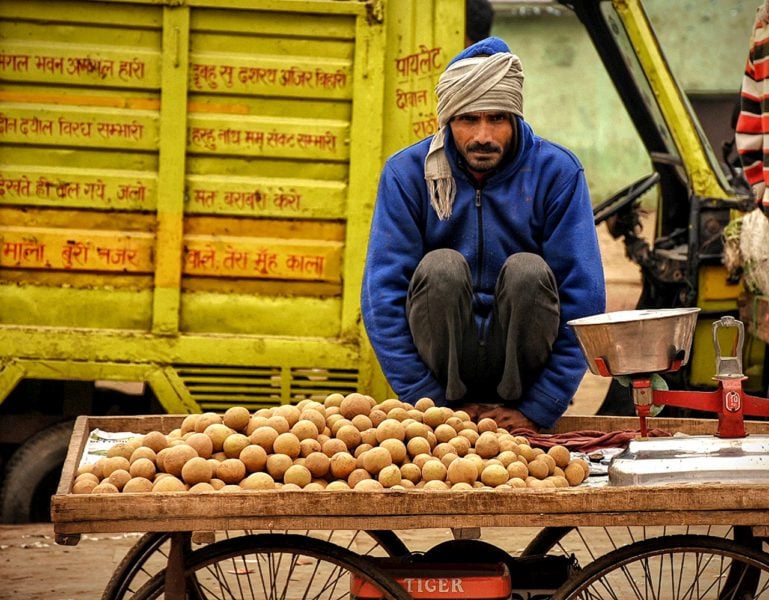
Since a sizable portion of India’s population lives in rural areas where socio-economic conditions greatly lag behind urban areas, HDFC Bank is committed, through its business model, to resolving long-standing issues of poverty, gender inequality, health, and education in rural India. It provides emergency loans to emerging micro, small, and medium enterprises (MSMEs) and microloans to the unbanked, contributing to the SDG 8.3. Moreover, it continues to enroll unbanked populations in the most remote parts of the country into formal financial channels, educate them on digital banking and provide access to mobile banking applications, which aligns with SDG 1.4. Lastly, through its flagship CSR program, the Holistic Rural Development Program (HRDP), HDFC partners with local NGOs and invests directly in their programs to improve the living conditions of rural populations, contributing to SDG 17.16-17.
According to the Impact Management Framework, there are Five Dimensions of Impact: What, Who, How Much, Contribution, and Risk. The ‘Who’ and ‘How Much’ are particularly well-answered by HDFC.
In the Global South, banks have made notable advancements in improving access to credit and promoting financial inclusion by understanding the unique circumstances in which they operate, notably by engaging with the populations they serve.
Emerging micro, small, and medium enterprises
At the outset of any program, the process of stakeholder identification is crucial to generating a positive impact. HDFC excels in this area, mostly given the banking context in India. The approach of Priority Sector Lending — requiring banks to dedicate funds to specific sectors of the economy that may require credit and financial assistance — is exercised by The Reserve Bank of India (RBI) vis-à-vis banks. As such, lending to the less fortunate participants of the agriculture sector and MSMEs in rural areas is both a mandate and an opportunity for HDFC. In FY 2021, 15.17% of the Bank’s total assets were allocated to this segment.
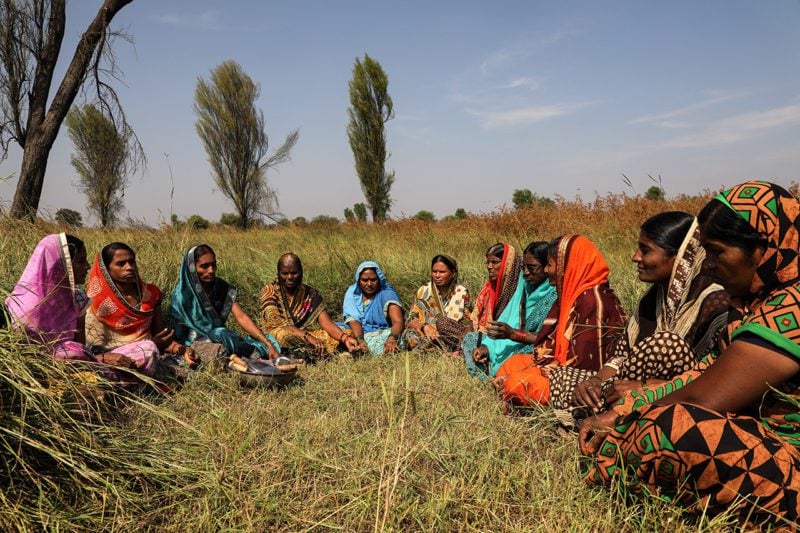
Unbanked populations
What’s more, with half of the Bank’s branches located in rural and semi-urban areas, it has committed to bringing more underbanked sections of the population into formal financial channels by providing education on digital banking for and extending microloans to the most disadvantaged castes and tribes of India, notably street vendors and women. This results in new account openings and loan extensions to the targeted groups, which are facilitated by HDFC’s digital suite of products and services. Total investments in this regard amounted to 0.34% of the total assets of the Bank.
The Holistic Rural Development Program (HRDP)
Last but not least, the Bank invested 2,105 million rupees (25 million USD), about 0.17% of its total assets, in the HRDP's development, including investments in renewable energy, health and sanitation, skill development, livelihood enhancement, and education. In 2020, the Bank enlisted a third party, RTI International India, to complete an assessment of the program’s effectiveness in a sample region. The results are presented in an exhaustive public Impact Assessment Report, supplemented by independent opinions and recommendations for the future of the program. This initiative highlights the importance of understanding not only the stakeholders' characteristics and needs (Who), but also the impact experienced by them over time (How Much), measured through in-depth interviews and discussions with NGO partners, program beneficiaries, and community stakeholders.

HDFC is India’s largest private bank and one of the very few banking/financial institutions in impak Analytics’ universe that have a score of “C: Contributes to Solutions”- the best possible score. Key factors in the program’s success include the clear alignment of business activities with stakeholder needs, and stakeholder-centred impact measurement. This makes the program a great example for its peers in the banking sector, especially the Global North where issues of financial inclusion — access to and affordability of financial services — remain very much a problem affecting poor populations and small businesses.
Irrespective of the economic context, the principle of putting stakeholders at the center of financial services, should be upheld across lending institutions if we are serious about the SDGs mentioned above.
In the final decade for achieving the 2030 Agenda for Sustainable Development and in the face of a global public health, climate, and economic crisis, it has never been more important to steer private finance toward the SDGs.
--
[Note: Microfinancing remains a controversial topic whose effectiveness has often been challenged as a way to alleviate poverty and promote financial inclusion. In reality, the concept of microfinance has taken two different directions, and one unfortunate path has led to loan-sharking and over-indebtedness, despair as well as waves of suicides in India.]


Related Content
For mission-led organizations, a change of manager tests whether workplace inclusion is built to last.
44
0
Artist Rob Strati on inherited objects, the limits of market price, and the creative possibilities…
85
0
Counting what we fail to prevent, sixty seconds at a time
89
0

How collateral rules and payment terms keep impact capital out of reach
195
0
Comments
Deep Dives
RECENT
 368
0
368
0
 351
0
351
0
 466
0
466
0
Editor's Picks
 44
0
44
0
 85
0
85
0
 89
0
44
0
85
0
44
0
85
0
89
0
89
0
44
0
85
0
44
0
85
0
89
0
Webinars
Signed by the author. Collected at the door at Lipton Hall, NYU School of Law,…
News & Events

The September 14 program and a live IFI Tool demo are online

Pre-seed and seed startups can apply on a rolling basis

Their Built platform helps teams design, launch and run funds
Subscribe to our newsletter to receive updates about new Magazine content and upcoming webinars, deep dives, and events.
Become a Premium Member to access the full library of webinars and deep dives, exclusive membership portal, member directory, message board, and curated live chats.


0 Comments