Redefining Security
An introduction to our new magazine department from the Editors



An introduction to our new magazine department from the Editors

 875
875
 0
0

Why climate advocates need a stronger narrative
 1668
0
1668
0

Why reconnecting education, work, and opportunity matters
 1627
0
1627
0

Why investing with impact is no longer enough
 2502
0
2502
0

What Ramadan reveals about solidarity as economic infrastructure
 1277
0
1277
0

Rebalancing support between tech ventures and traditional SMEs in MENA
1447
0
 4391
0
4391
0
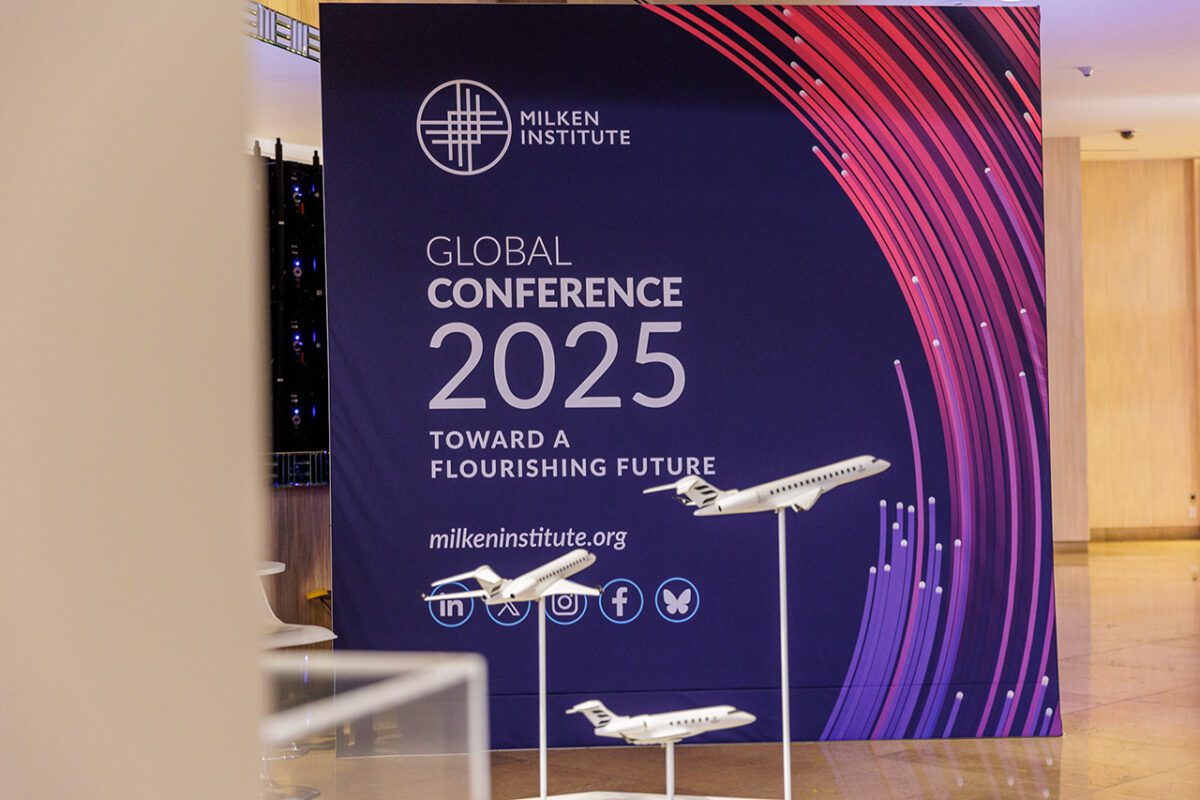
Courtesy of Milken Institute
At the 2025 Milken Global Conference, Mike Milken closed the event with an uncomfortable truth: while the United States has long overcome serious challenges, it has also reliably held its status as the best place to pursue higher education, build a career, and start a company from scratch. Since the Civil Rights era, the American Dream has been deeply economic—not just about money, but about cultivating a rich marketplace of ideas. This year, however, history may be taking a turn.
For decades, research centers, labs, incubators, and think tanks have formed the backbone of the American Dream, fueled by robust funding, strong protections for free speech, and broad institutional support for talent. Now, as university and government funding erodes across the U.S., other nations are stepping in to attract both capital and talent. While private funds, companies, and philanthropies are attempting to fill part of the gap, the challenge goes beyond money. The American Dream has always been about unleashing human ingenuity and pushing the boundaries of what’s possible.
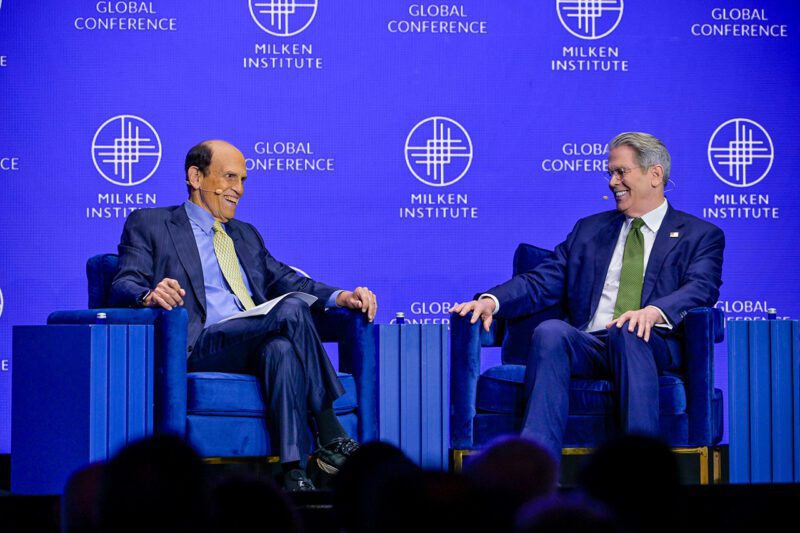 Michael Milken (left) in a conversation with US Secretary of the Treasury Scott Bessent; Photo courtesy of Milken Institute
Attracting and retaining top talent in the U.S. is about more than just stable employment. America’s economic success has long been rooted in its robust ecosystem for invention. But today, talent is increasingly migrating elsewhere — drawn to countries that prioritize open debate, free expression, institutional strength, and scientific research. Inventors, scientists, and founders are considering careers in parts of the world that are better equipped to support them through both funding and free speech. This is more than a human capital issue; it’s a canary in the coal mine for the United States as a global economic hub.
The Milken Global Conference conveyed both cautious optimism and deep unease about the future of the United States. While capital is abundant — funds, family offices, and philanthropies are eager to deploy it — investors are increasingly looking abroad. Their rationale is simple: the U.S. feels too volatile, too consumed by internal strife, while countries with stronger social cohesion are more attractive. Milken’s message was clear: the U.S. must reinvest in universities and talent by strengthening funding, policy, and the social fabric. Productivity and innovation flourish in environments of mutual respect, open discourse, and emotional stability. Right now, the U.S. is falling short on all three.
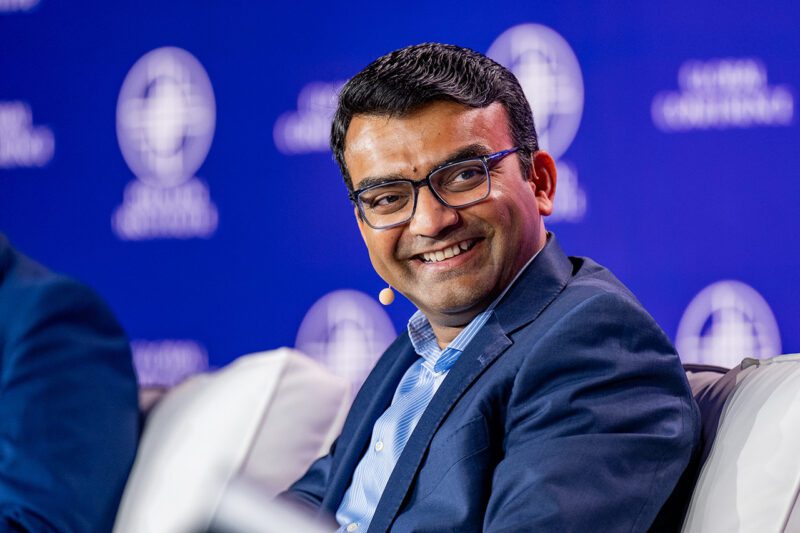 Dennis Gada, Executive Vice President, Global Head of Banking and Financial Services at Infosys speaks about AI and Digital Transformation's Impact on Investing; Photo courtesy of Milken Institute
A shifting American Dream might not be a bad thing. Both the COVID-19 pandemic and the accelerating climate crisis have reinforced a fundamental truth: global collaboration matters more than the dominance of any single region. Today, investors and donors are actively seeking secure, transparent, and sophisticated channels for deploying capital. In many ways, U.S. destabilization has only heightened the appetite to identify organizations and institutions worldwide that consistently nurture cultures of innovation. There is strong, growing demand for collaboration among regions that uphold democratic values and transparent governance.
 Closing Plenary: Toward a Flourishing Future. From left: Michael Milken Chairman, Milken Institute; Sian Beilock President, Dartmouth; Jon Clifton, CEO, Gallup; Francis Collins,16th Director, National Institutes of Health; Jenny Johnson, President and CEO, Franklin Templeton; Photo courtesy of Milken Institute
This moment offers a powerful opportunity to catalyze meaningful, cross-regional investments — whether driven by profit, impact, or both. Throughout the Milken Global Conference, I heard a consistent refrain: investors, including institutional players and family offices, want more than financial returns. There’s a strong demand to ensure that capital generates measurable, positive impact. However, many investors lack the tools or frameworks to verify impact effectively. As a result, there’s increasing demand for investment opportunities that already have transparent, third-party systems in place to assess organizational outcomes. This creates a distinct advantage for organizations that rigorously measure and audit their impact — they are far more attractive to globally minded investors.
The American Dream has always been about unleashing human ingenuity and pushing the boundaries of what’s possible.
Those of us with expertise in Organizational Development are well-positioned to bridge the gap between financial acumen and impact accountability. This is a timely opportunity to embrace global collaboration and define a new chapter in investment. While globalization has rightfully drawn criticism — particularly when exploited for cheap labor and regulatory evasion — cross-regional interdependence remains a core global reality. Whether in economics or climate resilience, nations rely on one another for foundational security. Risk mitigation, then, is not just about fiduciary due diligence. It’s also about proactively cultivating cooperation and embracing interdependence as a strategic advantage.
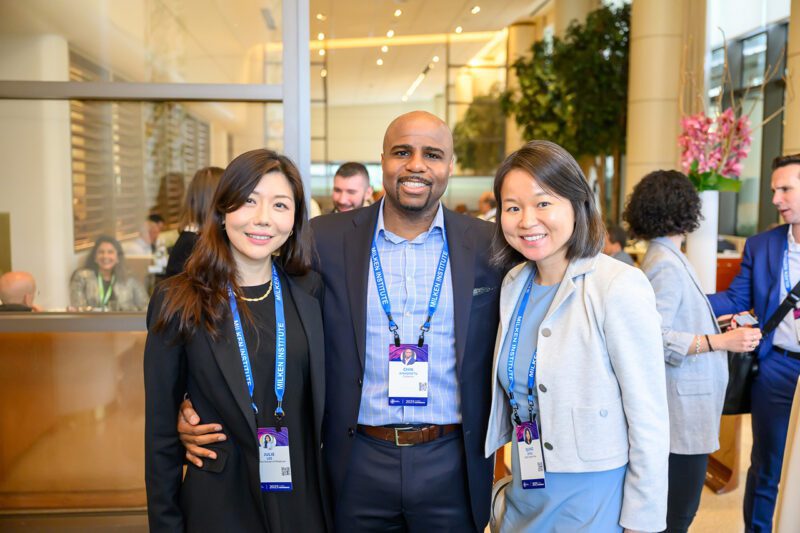 2025 Milken Global Conference attendees
The American Dream will endure as long as human beings are fueled by hope. But the game has changed — and today, successful organizations make it easy for both investors and talent to commit. With the U.S. struggling to uphold key pillars of governance and cultural cohesion, there’s a growing sense that a new era is emerging. As time goes on, regions that prioritize robust democracy, civil discourse, and global cooperation are likely to enjoy more success. Whether or not the United States will lead or lag remains to be seen. But one thing is certain: family offices and investment firms are actively seeking opportunities that combine strong returns with meaningful, measurable impact.


Related Content

Local economies as a bulwark against cross-border extraction and violence
 876
0
876
0
An introduction to our new magazine department from the Editors
875
0
Balancing production and preservation
 998
0
998
0

The metaphysics, the machine, and the future of the Impact Economy
1013
0
Comments

Deep Dives
RECENT
 2502
0
2502
0
 1277
0
1277
0
 1447
0
1447
0
Editor's Picks
 13914
0
13914
0
 11938
0
11938
0
 9539
0
9539
0
 875
0
875
0
 1668
0
1668
0
 1627
0
1627
0
Webinars
News & Events


Over $200k to six or more winners will be awarded

$22 Million raise is democratizing investment in community wealth building
Subscribe to our newsletter to receive updates about new Magazine content and upcoming webinars, deep dives, and events.
Become a Premium Member to access the full library of webinars and deep dives, exclusive membership portal, member directory, message board, and curated live chats.

Join our global community of systems-minded changemakers.
Subscribe to the Impact Entrepreneur newsletter for the latest insights, magazine features, and invitations to exclusive webinars, Deep Dives, and events.


0 Comments