Youth Inequality Is a System Design Failure
Why reconnecting education, work, and opportunity matters



Why reconnecting education, work, and opportunity matters

 1682
1682
 0
0

 1480
0
1480
0

Why militarized security keeps making us less safe
 1714
0
1714
0

Can immersive experiences move people beyond consumption toward lasting change?
2260
0

As the extractive model sheds human workers to AI, a new regenerative economy is emerging
1883
0

How narrow strategies are helping ventures survive volatile ecosystems
1847
0

 7231
0
7231
0

How much waste has a city produced? Where did the waste come from? How far has it traveled?
These are some of the common information gaps that prevent governments from accurately tracking, measuring, and adapting their waste management goals. Most digital waste management solutions track only what’s collected — not what’s generated. There is often little or no real-time data at the point of generation, whether in households, restaurants, public spaces, or factories.
Unmonitored and unregulated waste transport chains — from bins to trucks, to transfer stations, recycling centers, and landfills — exacerbate issues such as illegal dumping, fraudulent billing for “ghost loads,” and misrouting of hazardous materials.
Environmental policies and decisions are still often based on assumptions and inaccurate estimates derived from outdated reports, largely due to a lack of reliable, empirical data. Hong Kong’s Solid Waste Charging Scheme, Australia’s REDcycle Soft-Plastics Scheme, and the Philippines’ waste-to-energy (WTE) initiatives are just a few examples of national crises arising from the absence of end-to-end visibility at every point in the waste management process.
This data gap isn’t just an obstacle to advancing environmental efforts — it can also serve as a tool for corruption. Authorities can artificially inflate recycling rates, underreport landfill use, or claim success in reducing waste without any real evidence.
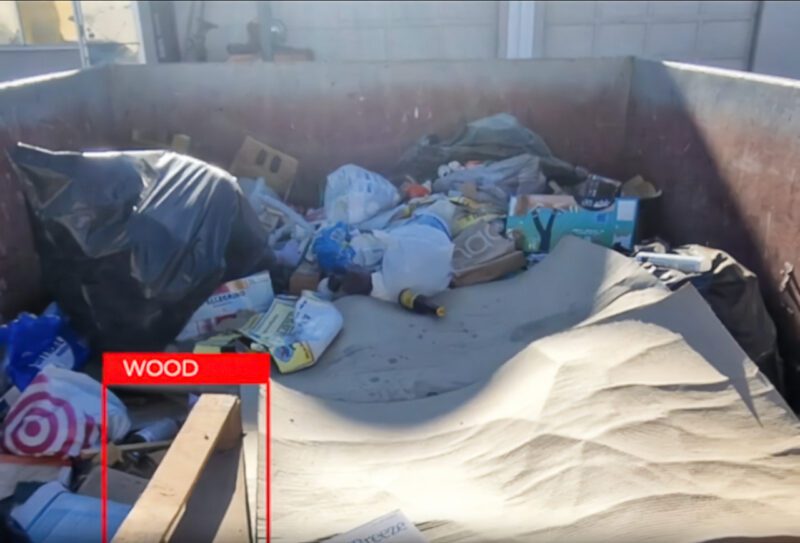 End-to-end smart monitoring; Image courtesy of WasteLocker
For example, between 2014 and 2017, the Albanian government under Prime Minister Edi Rama contracted three taxpayer-funded waste incinerator projects in Tirana, Elbasan, and Fier, costing over €430 million. Officials claimed these facilities would generate green energy from collected waste using advanced technologies. In reality, only one incinerator was built — and it operated only partially.
In contrast, some governments are actively seeking new solutions and investments to bolster environmental accountability and position themselves as ethical and progressive leaders. Saudi Arabia, for instance, has set a target of diverting 82% of waste from landfills as part of its Vision 2030 plan.
Whether combating corruption or striving to build a circular economy, governments need waste management systems with quantification features — systems that can verify official claims and make transparent, verifiable data publicly accessible. Saudi Arabia’s Ministry of Environment, Water, and Agriculture (MEWA) has enrolled WasteLocker in its Sedrah Accelerator Program to help achieve strategic goals under Vision 2030 and the National Waste Management Strategy, including the management of 110 million tons of waste annually.
WasteLocker is an AI-powered environmental intelligence platform designed for state-level entities to optimize waste management and recycling systems. Using advanced image-recognition technology, it monitors the type, quantity, and origin of waste. Understanding where waste originates enables better segregation at the source, reduces recycling inefficiencies, and promotes safe composting.
Whether combating corruption or striving to build a circular economy, governments need waste management systems with quantification features.
The platform also tracks waste after sorting and collection to provide ground-truth data on its broader environmental impacts — such as air quality degradation linked to waste.
How does pollution spread? What quantities of pollutants are released? What toxins go undetected in factories, and at what concentrations, for example, at factory borders?
“These data allow us to determine whether factories comply with government environmental standards and provide guidance so authorities can take action to minimize waste and emissions,” explains Mark Skljarov, co-founder and CEO of WasteLocker. “If governments do not quantify their actions, they lack the tangible, objective baselines needed to measure environmental progress.”
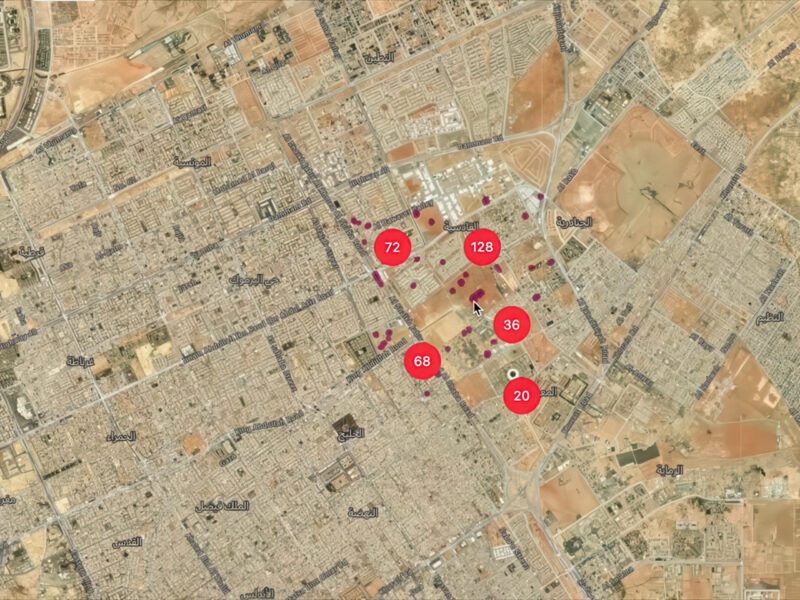 Modular satellite AI assets platform; Image courtesy of WasteLocker
Currently, WasteLocker is working with city governments in Estonia, Finland, and Latvia. Skljarov envisions expanding the technology’s reach beyond Europe, leveraging both satellite technology and on-ground sensors that integrate into locally adapted systems.
In Saudi Arabia, for instance, WasteLocker has used satellite imagery to identify illegal dumping. “In Riyadh, we helped the government quantify how much waste was generated and how much was illegally dumped in the city,” Skljarov notes. “This enabled yearlong cleanup targets to be set and achieved.”
Satellite imagery provides a high-level view, particularly valuable for regulating large industrial areas. WasteLocker detects and classifies objects in satellite images, enabling concrete decisions such as determining which factories are managing their waste effectively and at what capacity.
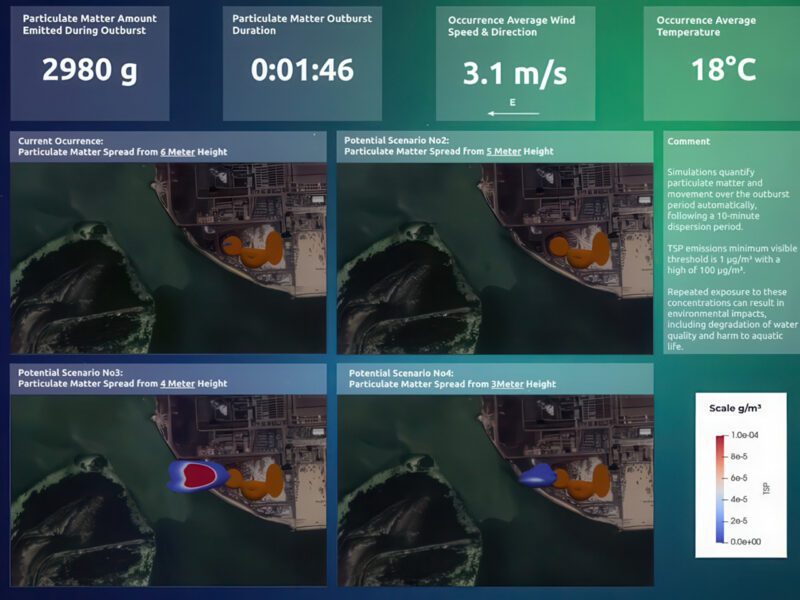 3D emissions & air pollution digital twin; Image courtesy of WasteLocker
This approach is also cost-effective. Monitoring urban areas spanning two square kilometers using ground sensors would be prohibitively challenging, but satellite technology significantly simplifies the process — demonstrating how innovation and feasibility can intersect for government use.
The AI platform depends on satellites orbiting the Earth. Since satellites don’t remain over the same location continuously, daily monitoring of the same area can be difficult. The platform is particularly effective for wide-scale monitoring that only needs to occur a few times a week or month.
For consecutive-day monitoring, WasteLocker deploys ground-based sensors. In cases where satellite imagery isn’t sufficient — such as monitoring underground conditions — on-site sensors are used.
Beyond quantification, WasteLocker provides behavioral guidance to improve resource efficiency. This education-driven approach has helped reduce mixed waste by up to 70%.
The platform’s capabilities extend beyond waste management to industries such as agriculture. WasteLocker can monitor defective crops, assess leaf health across crop types, estimate potential yields, and track pest spread. If a pest outbreak is detected, WasteLocker’s simulation engine can predict its spread, helping farmers implement effective mitigation strategies.


Related Content

The metaphysics, the machine, and the future of the Impact Economy
1092
0

What FLY paper reveals about the limits of bespoke financial tools
 1424
0
1424
0

How impact and revenue can scale together
 2018
0
2018
0
Purpose language is not enough
 2398
0
2398
0
Comments

Deep Dives
RECENT
 2260
0
2260
0
 1883
0
1883
0
 1847
0
1847
0
Editor's Picks
 9602
0
9602
0
 12221
0
12221
0
 10070
0
10070
0
 1682
0
1682
0
 1480
0
1480
0
 1714
0
1714
0
Webinars
News & Events

$22 Million raise is democratizing investment in community wealth building


IE Members receive discount
Subscribe to our newsletter to receive updates about new Magazine content and upcoming webinars, deep dives, and events.
Become a Premium Member to access the full library of webinars and deep dives, exclusive membership portal, member directory, message board, and curated live chats.

Join our global community of systems-minded changemakers.
Subscribe to the Impact Entrepreneur newsletter for the latest insights, magazine features, and invitations to exclusive webinars, Deep Dives, and events.


0 Comments