The Long Game of Systems Change
How three Skoll Awardees build public systems for lasting impact



How three Skoll Awardees build public systems for lasting impact

 74
74
 0
0

How place-based capital is expanding housing stability and ownership
 256
0
256
0

How Ziggma is trying to make values-aligned investing more transparent
 318
0
318
0

Lessons from Atlanta’s BeltLine and Pittsburgh Yards
 769
0
769
0

Jeremy Nicholls on building an accounting system fit for the impact economy
774
0

How portfolio theory could make cultural infrastructure more investable
 778
0
778
0
Upcoming Events
 2510
0
2510
0
As ESG standards rise across global markets, entrepreneurs in emerging economies face a defining challenge: how to scale responsibly without being shut out. For those who navigate it well, ESG can become a powerful pathway to resilience, credibility, and long-term value creation.
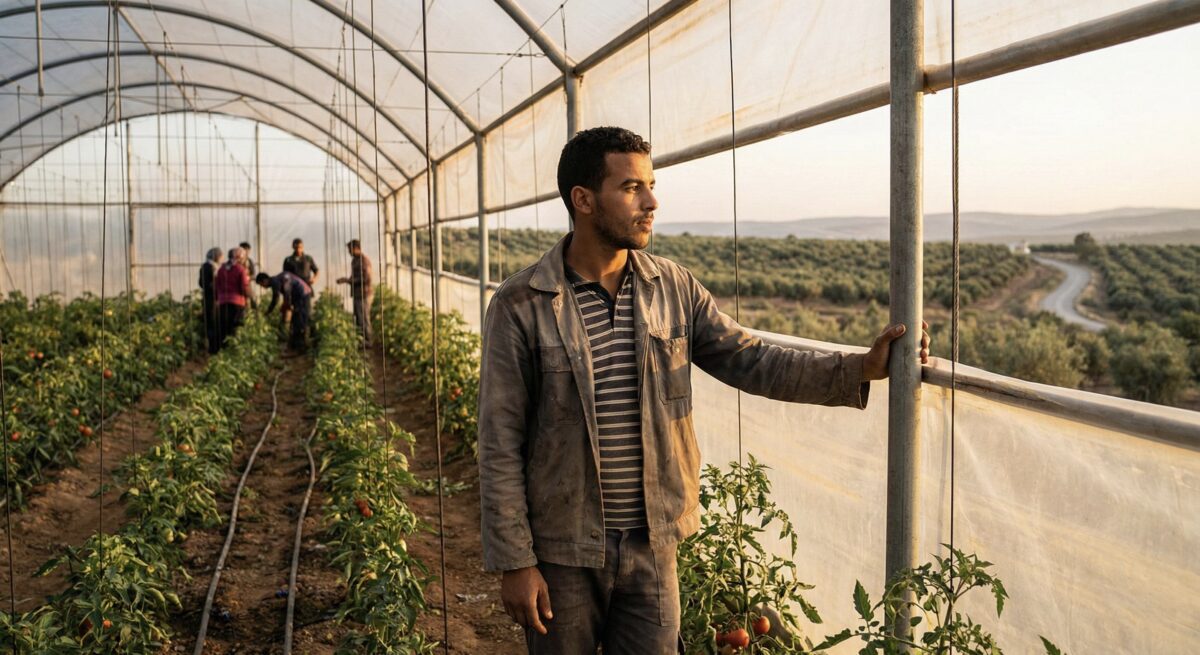
When Yassine, a young agri-entrepreneur from Sousse, tried to secure a small investment to scale his greenhouse operations, he expected questions about yield, pricing, or market access. Instead, the funder asked for his water-management plan, worker protection policies, and carbon-footprint estimates.
“I understand why ESG matters,” he said, “but when I hear ‘reporting’ and ‘compliance,’ I only see more costs and paperwork. I need someone to show me how this can help my business survive and grow — not just how it will judge me.”
His experience captures a paradox shaping entrepreneurship across emerging markets today: barriers to starting a business have never been lower, but expectations for how that business behaves have never been higher.
A decade ago, starting a business in much of the MENA region required capital, networks, formal infrastructure, and the ability to navigate layers of bureaucracy. Today, technology has dramatically lowered entry barriers. With a phone, a social-media account, and a modest prototype, a young entrepreneur can test a product, engage customers, and raise seed funding without ever entering a traditional office.

This democratization of entrepreneurship is one of the most profound shifts of our era. But it coincides with the rapid rise of ESG — environmental, social, and governance standards — as a global baseline for market participation. Investors, regulators, buyers, and even consumers increasingly expect businesses, large and small, to demonstrate environmental responsibility, ethical labor practices, transparency, and accountable leadership.
In short: starting up is easier than ever; scaling responsibly is harder than ever.
Once viewed as a soft, voluntary set of principles, ESG has become a hard driver of capital allocation and market access. Globally, over $30 trillion in assets are now managed using ESG or sustainability-aligned criteria, according to recent estimates from the Global Sustainable Investment Alliance (GSIA). Regulatory frameworks such as the EU’s Corporate Sustainability Reporting Directive (CSRD), India’s Business Responsibility and Sustainability Reporting (BRSR), and emerging climate-risk rules in the United States are reshaping expectations across global supply chains.
These frameworks increasingly extend beyond large corporations, cascading down to SMEs, exporters, agribusinesses, and startups in emerging markets.
At the same time, consumers — especially younger generations — are making more values-aligned purchasing decisions, while banks are tightening lending criteria for companies with high climate or governance risks. ESG is no longer a “nice to have”; it is increasingly the condition for doing business in an interconnected, risk-aware global economy.
What is often described as ESG “compliance” is, in practice, a redistribution of power — away from informal, relationship-based market access and toward documented, auditable credibility.
For entrepreneurs in emerging markets, where informality, thin margins, and limited financing are the norm, this shift can feel daunting. But it is also an opportunity to reposition local businesses from low-cost players to impact-accountable, investment-ready agents of long-term value creation.
The MENA region has one of the youngest and most entrepreneurial populations in the world, with nearly 46 percent of workers expressing interest in starting their own business, according to PwC’s Future of the Middle East report.
Yet this entrepreneurial momentum unfolds against significant structural constraints. Youth unemployment remains the highest globally. Access to finance is limited: only around 8 percent of total bank lending in MENA goes to small and medium enterprises, constraining their ability to scale and formalize.
The future of entrepreneurship in the MENA region will be shaped by how successfully countries balance accessibility with accountability.
This creates a growing tension. On one hand, entrepreneurs are encouraged — by policymakers, donors, and innovation ecosystems — to start fast, experiment, and innovate. On the other, they are increasingly expected to mature institutionally at an early stage: formalizing governance structures and complying with international ESG and reporting requirements long before achieving financial stability.
What is framed as “responsible entrepreneurship” can, in practice, feel like an additional barrier layered onto already fragile ventures.
Tunisia offers a revealing case study of this shift through the launch of new national pathways designed to help businesses raise their standards without excluding them. The country recently introduced ESGact Tunisia, a labeling initiative created to provide a shared reference framework for evaluating and improving the ESG performance of companies — from startups to established firms.
The program aims to position Tunisia as a transparent, impact-ready investment destination, aligning local businesses with international sustainability expectations.
What is often described as ESG “compliance” is, in practice, a redistribution of power — away from informal, relationship-based market access and toward documented, auditable credibility.
What makes ESGact notable is not that Tunisia is adopting international standards — many countries are doing the same — but that it signals a strategic repositioning. Tunisia is moving away from competing purely on cost and toward presenting itself as a trustworthy, transparent ecosystem capable of attracting long-term capital.
Still, the initiative faces challenges. For micro-enterprises, informal traders, and early-stage startups — the backbone of the Tunisian economy — ESG can appear distant, complex, and financially out of reach. Without careful implementation, Tunisia risks creating a two-speed economy: one in which larger firms integrate ESG and attract capital, while smaller businesses are left behind.

Here is an example from southern Tunisia. A small, family-run olive-oil producer seeking to export to Europe recently faced a new requirement from a distributor: proof of traceability, seasonal labor standards, and water-use documentation. The business had always operated responsibly, but informally.
“We didn’t change our practices,” the owner explained. “We had to change how we prove them.”
A similar dynamic is emerging among small textile workshops supplying European brands, where informal labor practices must now be documented, audited, and formalized — often without access to technical assistance.
This is where ESG pressure is felt most acutely: not in behavior, but in documentation, translation, upskilling, and access to support.
This tension is not unique to Tunisia. It mirrors dynamics across the MENA region, Sub-Saharan Africa, South Asia, and Latin America, where ambitious ESG frameworks confront deeply rooted structural realities.
An inclusive ESG transition strengthens the entire entrepreneurial base. When small businesses adopt better labor standards, improve energy efficiency, or strengthen governance practices, they gain trust, reduce risk, and diversify access to markets. They become more resilient — financially, socially, and environmentally.
But this only happens when standards rise with entrepreneurs, not above them.
Rather than selecting a handful of “ESG winners,” countries need strategies that upgrade the broader ecosystem: micro-enterprises, family businesses, rural cooperatives, informal traders, and early-stage startups. This is what moves economies up the value chain and prepares businesses for integration into global markets where sustainability is rapidly becoming non-negotiable.
The question is not whether ESG matters — it does. The question is how to introduce standards in ways that support entrepreneurs rather than intimidate them.

An effective ESG transition requires:
In this way, ESG becomes a pathway to opportunity rather than a barrier to participation.
The future of entrepreneurship in the MENA region will be shaped by how successfully countries balance accessibility with accountability. Lower barriers to entry create energy, innovation, and inclusion. Higher standards ensure resilience, trust, and long-term value creation.
The entrepreneurs who thrive will be those who see ESG not as a compliance exercise but as a design principle — a blueprint for building durable, transparent, socially anchored enterprises capable of competing globally.
For Tunisia, and for many emerging economies, the real opportunity is to turn ESG into a driver of transformation: a catalyst for systems change, a lever for attracting catalytic capital, and a pathway for creating enterprises that serve both people and planet.
Achieving this will not be easy. But the direction of travel is clear. With the right support, tomorrow’s entrepreneurs will be well positioned to navigate falling barriers and rising expectations — and to help build a regenerative, impact-aligned economy fit for the future.


Related Content
How three Skoll Awardees build public systems for lasting impact
74
0
How place-based capital is expanding housing stability and ownership
256
0
How Ziggma is trying to make values-aligned investing more transparent
318
0

Why education pilots need government adoption, not just proof
 432
0
432
0
Comments

Deep Dives

Featuring
Laurie Lane-Zucker
Founder & CEO, Impact Entrepreneur
July 30 - 12:00 PM EST
RECENT
 769
0
769
0
 774
0
774
0
 778
0
778
0
Editor's Picks
 74
0
74
0
 256
0
256
0
 318
0
74
0
256
0
318
0
74
0
256
0
318
0
318
0
74
0
256
0
318
0
74
0
256
0
318
0
Webinars
News & Events

To amplify entrepreneur voices in impact investing


Subscribe to our newsletter to receive updates about new Magazine content and upcoming webinars, deep dives, and events.
Become a Premium Member to access the full library of webinars and deep dives, exclusive membership portal, member directory, message board, and curated live chats.

Join our global community of systems-minded changemakers.
Subscribe to the Impact Entrepreneur newsletter for the latest insights, magazine features, and invitations to exclusive webinars, Deep Dives, and events.


0 Comments