Can Diaspora Capital Strengthen Nigeria’s Health Workforce?
Community health workers offer a practical starting point



Community health workers offer a practical starting point

 52
52
 0
0

How donor-advised funds are becoming catalytic capital platforms
 106
0
106
0

Why circular migration may offer a better path than mass repatriation
 150
0
150
0

How Haverford’s student investing program pivoted toward more purpose-suited capital
 671
0
671
0

Abrupt UK cuts threaten coastal resilience, food security, and community-led adaptation
 941
0
941
0

At MIE 2026, investors reframed risk as a tool for scale, resilience, and courage
 832
0
832
0
 3008
0
3008
0
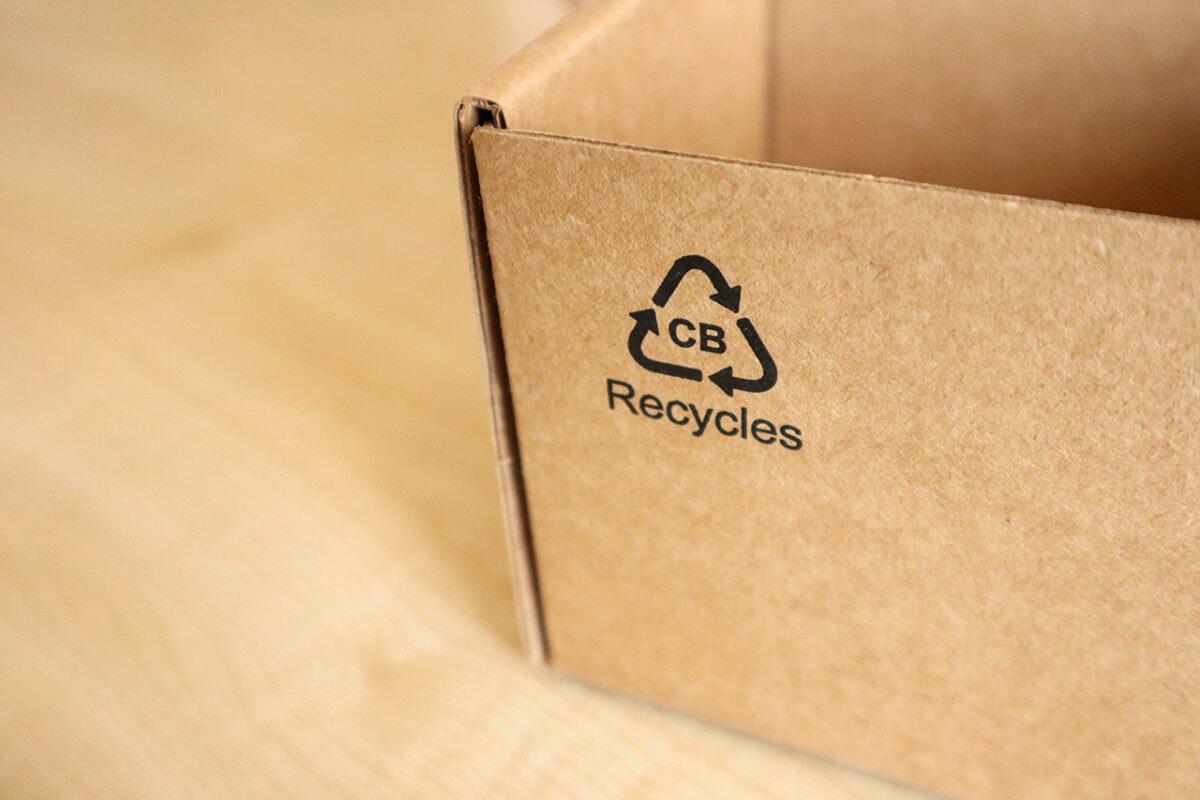
Packaging has long been treated as a cost center — a way to protect products, comply with regulations and market to consumers. But upstream sourcing is where the real leverage lies. Choosing what materials go into packaging and how they are procured can shift entire supply chains. Done regeneratively, packaging becomes more than waste reduction — it becomes a social investment.
Most companies began with a linear model — extract, use and discard. Circular design then improved efficiency by reusing or recycling materials to minimize waste. Regenerative sourcing goes further — it restores ecosystems and strengthens the social fabric of the communities that supply materials. Here’s how the three approaches compare in practice:
This distinction matters because communities that produce fiber, resin, and bio-based inputs often face volatility, poverty, or exclusion from value chains. Regenerative approaches ensure packaging investments translate into measurable gains in livelihoods and ecosystems.
 Notpla Food Oil Drip; Image Courtesy of Notpla
Some companies are already proving that packaging decisions upstream can have measurable downstream effects. Ron Rubin Winery’s Blue Bin bottles, made from recycled PET, weigh 85% less than traditional glass. That weight reduction lets the winery load more cases per truck, lowering transport emissions while keeping material in circulation.
Sourcing choices are not isolated decisions — they influence logistics, carbon intensity and consumer access. For regenerative models, these knock-on benefits show how upstream packaging design can catalyze broader social and ecological impact.
Seaweed is one of the fastest-growing regenerative materials, requiring no land, fertilizers, or freshwater to thrive. London-based Notpla develops packaging made from seaweed and plants, offering compostable films, coatings and takeaway containers designed to replace single-use plastics. The company’s approach to sourcing and partnerships reveals how seaweed packaging can deliver benefits beyond waste reduction.
Sourcing model
Notpla works with seaweed growers along European coasts, emphasizing regenerative harvest practices and partnerships that support local economies. Instead of simply extracting raw materials, their model integrates community benefit and long-term supply agreements.
Social outcomes This approach supports job creation in coastal regions while diversifying incomes for harvesters who might otherwise rely solely on fishing. It also reinforces cultural ties to marine stewardship. By 2025, Notpla had already swapped out over 21.5 million single-use plastic items in Europe, underscoring the rapid pace of sustainable packaging adoption.
 Notpla seaweed rigid cutlery; Image courtesy of Nopla
Metrics
Independent reviews indicate Notpla’s seaweed packaging can generate up to 70% lower greenhouse gas emissions than conventional plastics. Social and environmental impact reporting is framed against the UN Sustainable Development Goals, with metrics such as jobs created, the volume of seaweed sourced and community income stability.
Ecovative, a New York-based materials science company, leverages mycelium — the root-like structures of mushrooms — to create sustainable, biodegradable materials. Their innovations aim to displace plastic waste across various industries, including packaging, fashion and food.
Sourcing model
Ecovative employs proprietary MycoComposite and AirMycelium technologies to transform agricultural waste into mycelium-based materials. These materials serve as eco-friendly alternatives to plastics and other environmentally harmful substances. By establishing local supply chains within 200 kilometers of their vertical farms, Ecovative minimizes transportation emissions and supports regional economies. The company has also opened access to its European patent for MycoComposite, encouraging innovation in sustainable materials.
Social outcomes
Ecovative's initiatives have led to the creation of new jobs and the development of sustainable products. Their spinoff, MyForest Foods, produces MyBacon — a mushroom-based bacon alternative. The expansion of MyForest Foods' facility has also created approximately 160 jobs over the next five years. Notably, Ecovative's fashion cooperative, involving brands like Bestseller and PVH, focuses on scaling sustainable leather alternatives, aiming to reduce the environmental impact of traditional leather production.
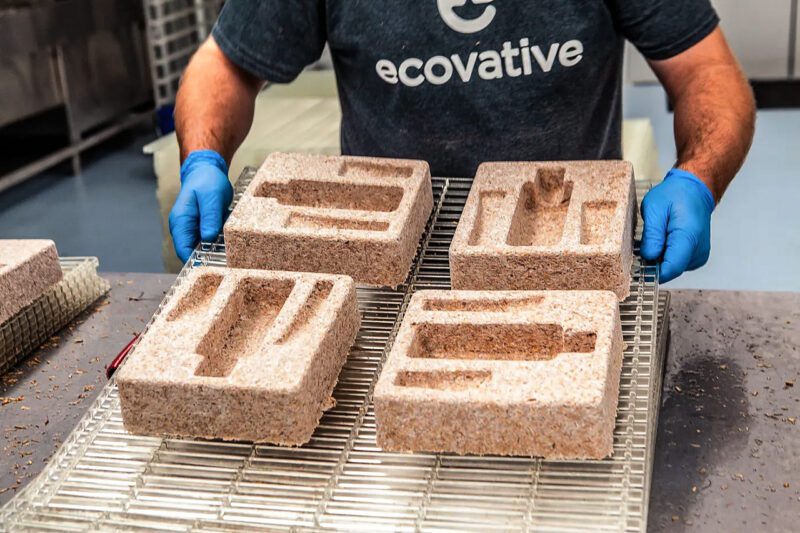 Ecovative Packaging; Image courtesy of Ecovative
Metrics and impact
In 2021, Ecovative produced over two million pieces of mycelium-based packaging, each replacing a piece of plastic that would otherwise end up in landfills or oceans. The company plans to double this number the following year and aims to replace over a billion pieces of Styrofoam with mycelium by 2032.
 Ecovative Packaging Close Up; Image courtesy of Ecovative
Making it measurable
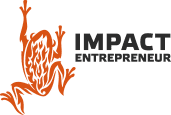
Labels alone can be deceiving. It’s a common misconception that all bioplastics are biodegradable. Some are only biobased, meaning they come from part biomass or organic matter, but don’t actually biodegrade. Others that are biodegradable often still need the controlled conditions of industrial composting facilities to decompose.
Rethinking packaging as an investment unlocks new possibilities.
Without proper measurement and verification, businesses risk adopting solutions that sound sustainable but persist in the environment. For regenerative sourcing to be credible, measurement is nonnegotiable. Useful frameworks include:
Sustainable Development Goals (SDGs): Especially SDG 12, SDG 13 and SDG 8.
Social Return on Investment (SROI): Calculating social value created per dollar invested.
Before-and-after KPIs: Indicators include household income growth, jobs created, and the percentage of procurement spent locally.
Certification systems: Fairtrade, Rainforest Alliance, or Regenerative Organic Certification.
Traceability tools: Chain-of-custody documentation or digital material passports to link sourcing back to communities.
Turning regenerative sourcing from concept into practice requires a clear roadmap. Here’s how teams can begin creating both social and environmental impact:
Packaging itself is a significant environmental concern, contributing to pollution, resource depletion, and waste accumulation — and even regenerative solutions are not without challenges. Costs can be higher, materials may underperform initially and agricultural supply chains can face seasonality. Certification requirements may burden small suppliers, while exaggerated claims risk greenwashing.
Without proper measurement and verification, businesses risk adopting solutions that sound sustainable but persist in the environment.
Mitigation strategies include starting with pilots, diversifying supplier bases, co-investing in supplier capacity and engaging independent auditors. Transparent communication about trade-offs — including the broader environmental footprint of packaging — builds trust with stakeholders.
Rethinking packaging as an investment unlocks new possibilities. Regenerative sourcing channels value back into communities, restores degraded ecosystems and builds resilient supply chains. For social entrepreneurs and impact investors, this is a practical frontier that aligns material innovation with measurable human and ecological benefits.
Packaging has long been seen as waste to be managed. The regenerative model proves that business can restore rather than deplete — a container for both products and positive change.


Related Content
Community health workers offer a practical starting point
52
0
How donor-advised funds are becoming catalytic capital platforms
106
0
Why circular migration may offer a better path than mass repatriation
150
0

Financing historic cities for housing, livelihoods, and resilience
 235
0
235
0
Comments

Deep Dives
RECENT
 671
0
671
0
 941
0
941
0
 832
0
832
0
Editor's Picks
 52
0
52
0
 106
0
106
0
 4508
0
52
0
106
0
52
0
106
0
4508
0
52
0
106
0
52
0
106
0
 150
0
150
0
Webinars
News & Events

Helping founders and impact investors align

For three craft enterprises in India

Subscribe to our newsletter to receive updates about new Magazine content and upcoming webinars, deep dives, and events.
Become a Premium Member to access the full library of webinars and deep dives, exclusive membership portal, member directory, message board, and curated live chats.

Join our global community of systems-minded changemakers.
Subscribe to the Impact Entrepreneur newsletter for the latest insights, magazine features, and invitations to exclusive webinars, Deep Dives, and events.


0 Comments