Sea Cucumber Ranching Supports Equitable Ocean Conservation




 10513
10513
 0
0

 15569
1
15569
1

 10633
0
10633
0
An interview with SOCAP President Robert Munson
 8197
0
8197
0
Accelerating post-wildfire recovery in ways conventional solutions can’t achieve
 15205
0
15205
0

 9673
0
9673
0
 16172
0
16172
0
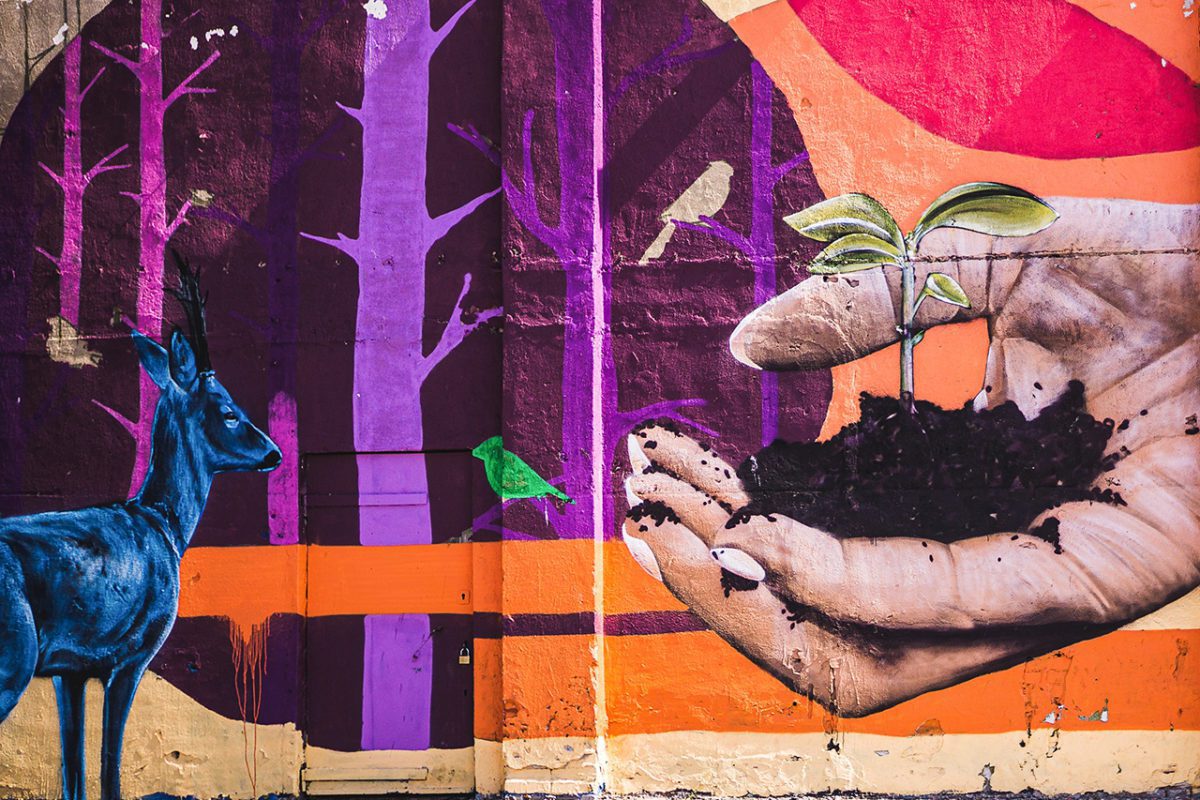
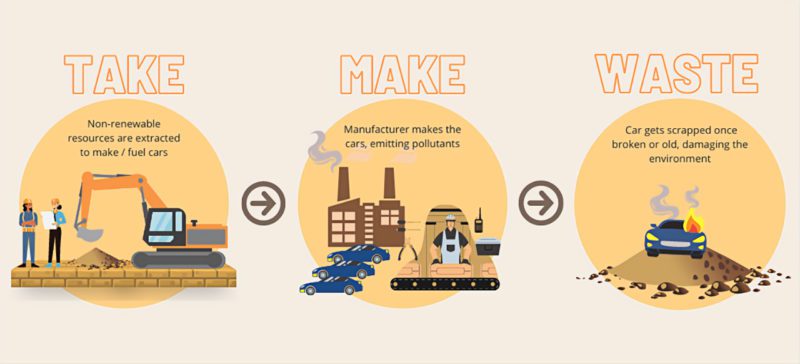
In our economy, most of the things we do are linear. We take from nature, we build things with what we take, and then we dispose of it once we don’t need it anymore (take, make, waste).
The first problem that arises from this linear economy is that we live in a world with finite resources, so we currently need 1.75 earths to sustain our way of life. We already start to experience this lack of resources (chips for computers and consoles, metal parts for cars, etc.). The second problem is that most of the waste that we create ends up in landfills or in the seas. Tessa O’Halloran, founder of Plasticity in South Africa, says that a waste crisis is to be expected in the next 5 to 10 years, because landfills are already full. The Ellen MacArthur Foundation has estimated that, by 2040, there will be more plastics than fish in the oceans (in weight). Those issues are an immense threat to human survival and to biodiversity: more than 90% of biodiversity loss is due to the extraction and processing of natural resources.
I believe that the circular economy could solve those problems. But there is a misconception about the circular economy. Too often, when I say that I help circular economy startups, people tell me “Oh great, what do they recycle?”. Well… the circular economy is not only about recycling. Actually, we won’t solve the problems mentioned above by only tackling waste, because more than 80% of the products’ environmental impact is determined at the design stage. The answer to the resource and waste problem lies in preventing plastics and waste from arriving in nature in the first place.
The circular economy helps by creating products that:
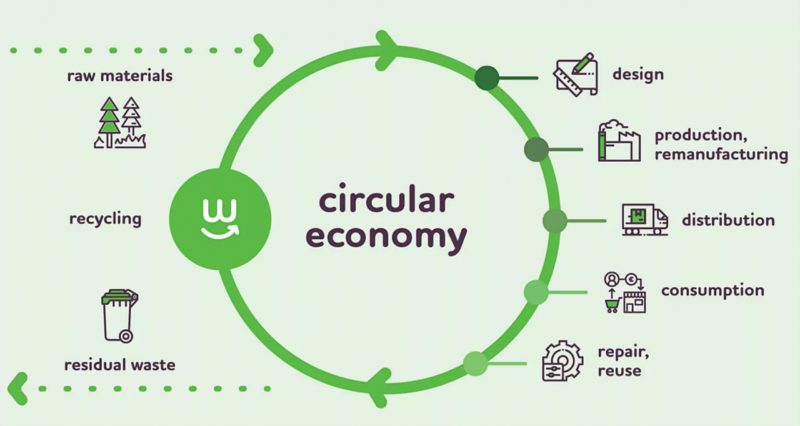
As you see, recycling is the very last step of the process and most of the work will need to happen at the design stage (in the choice of materials, packaging, and product’s design). Plastic, for example, is one of the worst materials to choose. Most of it is made from fossil fuels (a finite resource) and 95% of the value is lost after only one use. The point of the circular economy is to conserve as long as possible the functionality and complexity of products and materials, because this is where the value lies.
Here are the 5 most common business models of the circular economy, highlighted by examples of impact startups that chose it. Of course, those business models can be used together and are not exclusive. Those business models can be used as an idea starting point for entrepreneurs, investors, or students but also as a guideline for larger companies that want to embrace a circular path.
1. Circular inputs
Circular inputs business models aim at using resources (energy, materials, …) that we can’t run out of and that can’t affect natural systems. Examples of circular inputs resources are renewable energies, bio-based materials, or recycled materials. Through Humans to Humans’ impact accelerator, I met Tessa O’Halloran, a self-taught entrepreneur who believes that waste is the most valuable resource we have. Plasticity, the South-African startup that she started with her mom, has saved, to date, 4 tons of plastic from going to landfills. Plasticity gets waste from local recyclers and transforms it into up-cycled hand-made products.
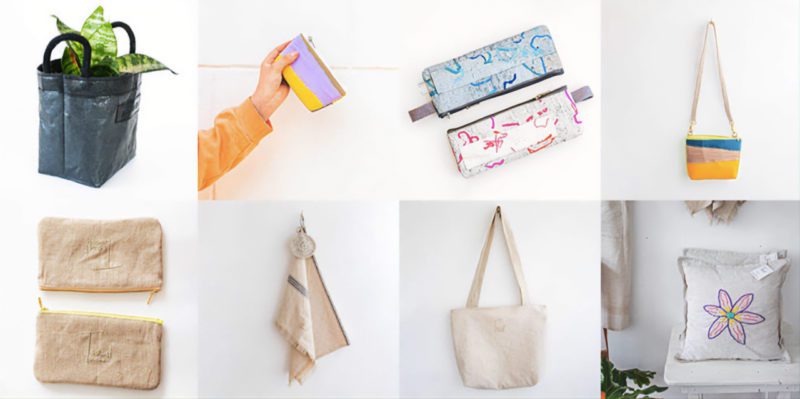 Courtesy of Plasticity
This business model has huge advantages: companies are ready to give away waste for free and waste is almost unlimited. But it also comes with constraints. Some companies in the U.S. have been sued for using toxic materials made out of waste in their products. Thus, it is highly important to have a good understanding of the life cycle of the waste that is used as input materials and of the legislation in each country.
2. Product use extension
Product use extension business models aim at extending the life of a product by facilitating repair, upgrading, reprocessing, and resale. It lies in a standardization of products and a better choice in product materials so that they last longer and so that parts are easier to replace if there is a problem. The example that first comes to mind is Fairphone. Most phones today are made to have a short life-cycle and be difficult to repair. It encourages people to buy new ones. However, Fairphone manufactures modular phones with parts that are easy to replace or upgrade.
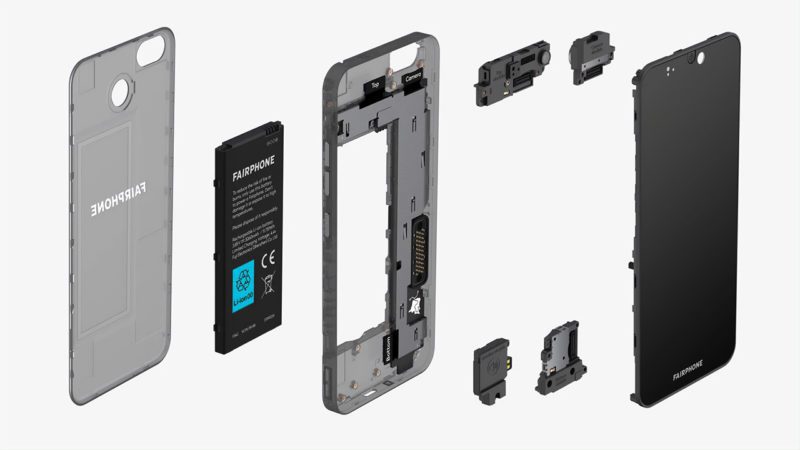 Courtesy of Fairphone
This business model makes sense because it focuses both on customer satisfaction and carbon footprint reduction. Instead of buying a new phone, you buy a camera upgrade or a new battery. This business model is not the norm because companies can make more money by making their products harder to repair.
3. Sharing platforms
What lies behind sharing platforms business models is the fact that what we buy is often completely under-used. Think about gardening tools, household items, or cars… Those are things that you rarely use and are very expensive. A car, for example, costs thousands of dollars but you likely use it less than 1 hour per day. Its average occupancy rate is 1.6 people… but it has 5 seats. It is completely under-used. The aim of sharing platforms is to increase the usage rates of products through collaboration and exchange. Some entrepreneurs have realized that a long-time ago. BlaBlaCar (car rides sharing platform) is a French unicorn. eRent provides a sharing platform for construction equipment and machinery management. Ioio, a mexican startup, recently raised funds to become the biggest peer to peer sharing platform in Latin America, where people can rent physical items, vehicles, etc.
4. Product as a Service
Product as a Service business models get their inspiration from Software as a Service (SaaS) models. Instead of selling a product, you lease it. While most companies do that for services (Netflix, internet subscriptions, bots, …), a Product as a Service approach makes sense because the company that leases the product will keep control of the product life’s cycle, maintenance, and treatment after use. You can lease phones (Fairphone starts to do it), clothes, cars, computers, … Rent the Runway, a US-based company, leases designer dress and accessories for special occasions. It helps people with low-income to access beautiful dresses, while preventing people with high-income to buy too many dresses that will be under-used.
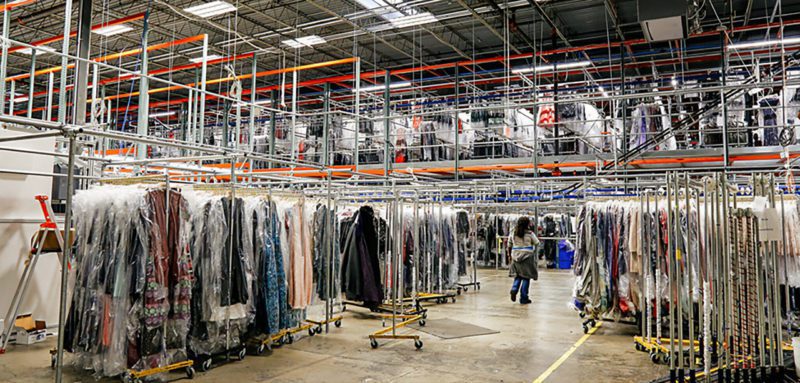 Courtesy of Rent the Runway
In the fast-paced fashion industry, it could make sense to create a clothing leasing business so that people can receive new clothes each month and send back their old ones to be recycled or reused by others.
5. Resource recovery
Resource recovery business models are what most people call circular economy. They rest on the fact that what is waste for a company might be a resource for another one. Those business models aim to collect resources or energy that are wasted and find companies that need those resources. In this area, reverse logistics is a growing field that allows those resources to be sent back into the economy efficiently. Kalundborg Symbiosis, in Sweden, is the world’s first industrial area to achieve a symbiosis in waste management. Companies exchange waste as resources (energy, water, and materials), creating a closed ecosystem where no waste is generated.
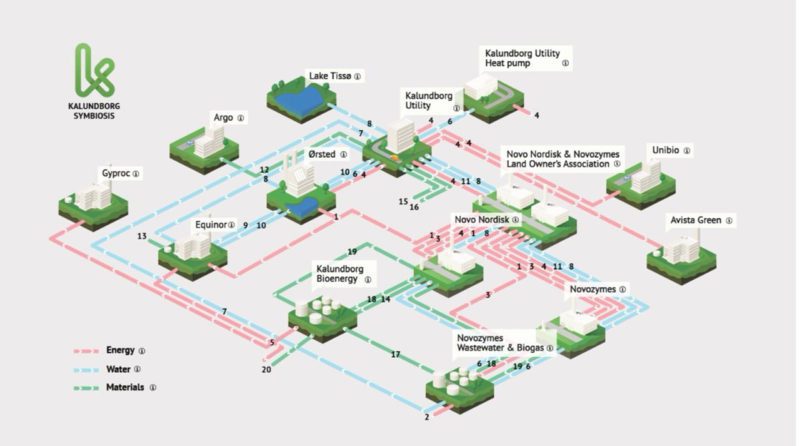 Courtesy of Kalundborg Symbiosis
Some reproductions of this model have started to appear, but we lack a concrete actor to match the material demand with the waste offer at a global level.
Finally, bear in mind that for a company to be completely circular, its own ecosystem (suppliers, partners, …) must be circular as well. In a perfect circular economy, the waste that a company creates becomes the resource of another company, so that our way of life can be sustained for thousands of years. Circular business models are easy to replicate and can be adapted to almost every product. By reducing waste creation and resource intake, not only companies will reduce their risk and costs, but will also tremendously contribute to the fight against climate change and biodiversity loss.


Related Content

Re-imagining our economy in service of ecological harmony and equitable well-being
 11721
0
11721
0
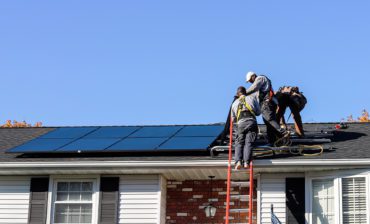
Innovative Solar Solutions for Energy Resilience in Underserved Communities
7779
0
Revitalizing a family business and becoming leaders in food banking
 14066
0
14066
0
Comments

Deep Dives
RECENT
 8197
0
8197
0
 15205
0
15205
0
 9673
0
9673
0
Editor's Picks
 10513
0
10513
0
 15569
1
15569
1
 10633
0
10633
0
Webinars
News & Events
Subscribe to our newsletter to receive updates about new Magazine content and upcoming webinars, deep dives, and events.
Become a Premium Member to access the full library of webinars and deep dives, exclusive membership portal, member directory, message board, and curated live chats.

Join our global community of systems-minded changemakers.
Subscribe to the Impact Entrepreneur newsletter for the latest insights, magazine features, and invitations to exclusive webinars, Deep Dives, and events.



0 Comments