Beyond Gut Checks and Reference Checks
How AI could expand access to capital without replacing human judgment



How AI could expand access to capital without replacing human judgment

 1999
1999
 0
0

 586901
0
586901
0

Why declining bilateral funding may force a long-overdue reset
 1962
0
1962
0

How an export-first model is pricing citizens out of a national staple
 2038
0
2038
0

How demand verification can cut overproduction emissions
 1882
0
1882
0

Why private equity keeps mispricing labor in healthcare
 1988
0
1988
0

 2860
0
2860
0
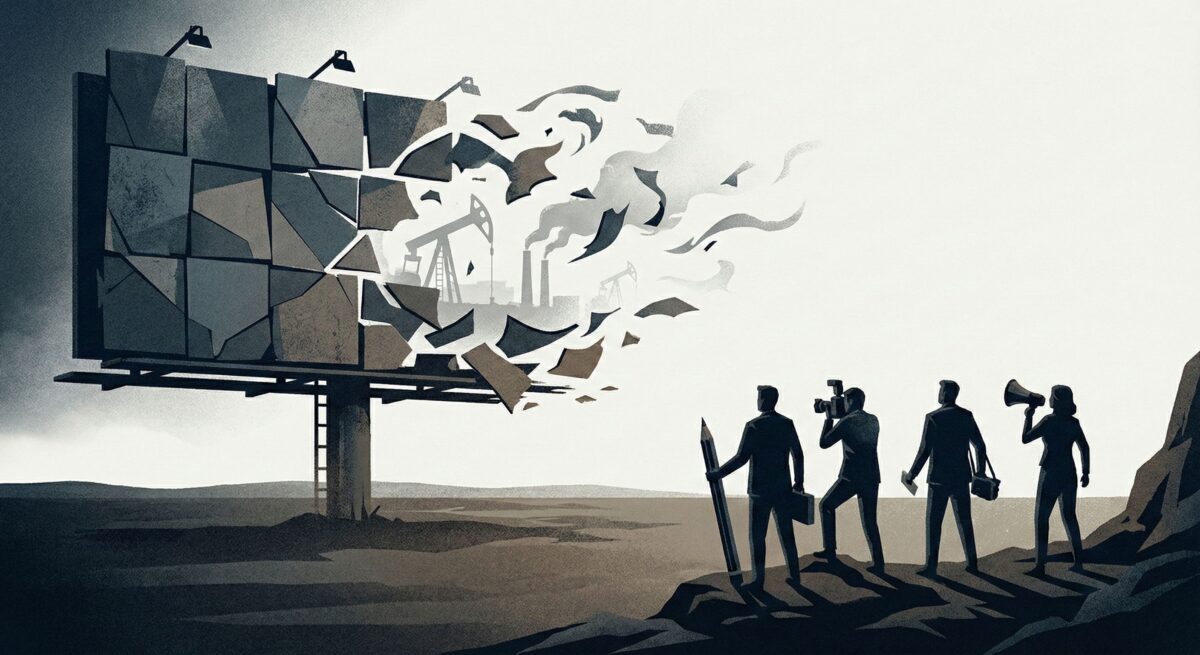
In a previous Impact Entrepreneur article, we examined “creative due diligence” — the importance of applying the same critical lens to advertising and PR agencies that fund managers and social enterprises regularly face when seeking capital. This conversation with Clean Creatives extends that analysis, exploring how a growing movement of creatives is organizing to disrupt the cultural foundations of fossil fuel power.
The fossil fuel industry has long relied on sophisticated marketing and advertising to reinforce its legitimacy and portray oil and gas companies as responsible corporate actors.
But behind every campaign sits a network of creative professionals — strategists, designers, media buyers — who shape the narratives that allow these companies to maintain public trust and evade scrutiny. BP’s creative team helped popularize the concept of the “personal carbon footprint,” subtly shifting responsibility from corporations to individuals. ExxonMobil and Chevron employed a patchwork of agencies to create and promote astroturfed front groups designed to simulate grassroots support for fossil fuels.
These tactics are well documented in books like Jane Mayer’s Dark Money and by investigative journalists such as Amy Westervelt of Drilled. Only more recently, however, has sustained attention turned to the role of creatives — and the dangers of allowing the PR and advertising industries to continue to provide the cultural infrastructure that enables extractive industries to operate.
The tide is beginning to turn. In 2024, UN Secretary-General António Guterres called for a global ban on fossil fuel advertising, citing “shameless greenwashing” that distorts public understanding and delays climate action. In early 2026, Amsterdam became the first capital city to ban fossil fuel advertising in public spaces, a move advocated for by members of Creatives for Climate in an open letter that emphasized the important role these spaces play in “shaping behavior, culture, and our collective response to the climate crisis.” Also in 2026, an anonymous group of ad executives released a provocative memo saying that agencies are “enabling harm rather than doing good” and warning of a “vacuum of responsible leadership.”
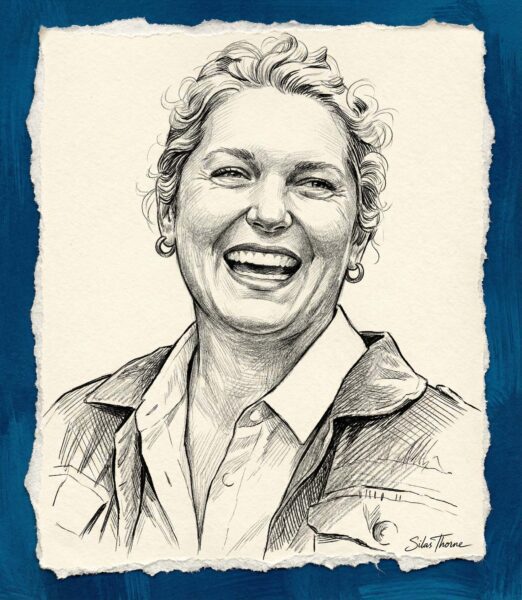
Laura Ranzato of Clean Creatives
Another organization pushing to accelerate this shift is Clean Creatives, an initiative launched in 2020 to persuade advertising and PR professionals to stop working with fossil fuel clients. To date, more than 2,700 individuals and 1,500 agencies — including my own firm, 17 Communications — have pledged to permanently cut ties with the industry.
I recently spoke with Laura Ranzato, the new Executive Director of Clean Creatives, about her path into the climate movement, the organization’s recent wins, and why challenging fossil fuel advertising is ultimately about dismantling the systems that normalize extraction.
Q: How did you first get involved in this work?
Laura: I’ve been working in the climate movement since college, and most of my career has focused on keeping oil and gas in the ground. Early on, I spent several years in Alaska pushing back against a wave of proposed coal mines near Anchorage — many of them adjacent to Native lands and salmon fisheries that local communities depended on for their food and livelihood.
What struck me was how effective the coal companies were at shaping perceptions in these communities. One company in particular, Usibelli, ran polished YouTube ads emphasizing themes like jobs, energy abundance, and even environmental responsibility. They even sponsored local sports teams and were widely seen as a pillar of the community.
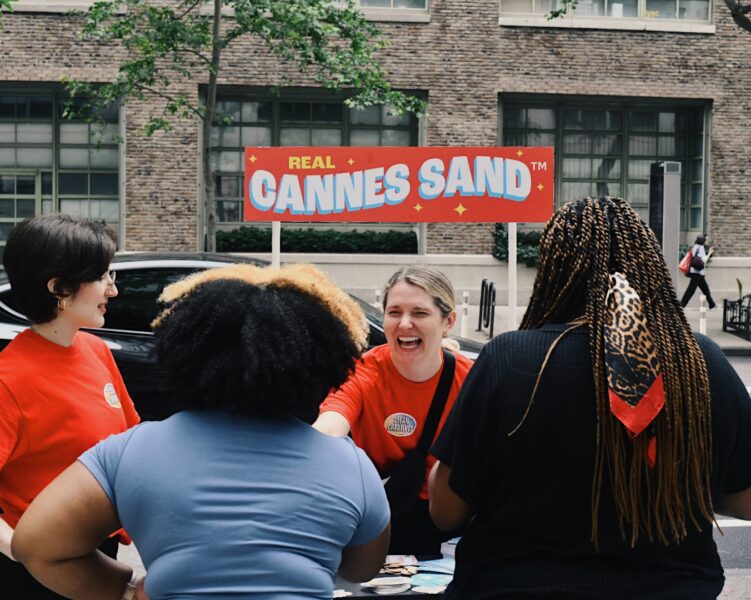
As part of their “Cannes in a Can’ campaign, Clean Creatives engaged employees at agencies named to the F-List about how it felt being forced to work on fossil fuel accounts while their bosses are rubbing elbows at the Cannes Lions festival in France; Photo courtesy of Clean Creatives
The substance of the ads was classic greenwashing, but they worked. People trusted the messaging. And that’s when it clicked for me: this is how the system operates at scale. It’s what Big Oil does every day — shaping public opinion to maintain its social license to operate. It’s the same playbook the tobacco industry used, and it’s incredibly effective.
Q: What are some of the most important things you’ve worked on at Clean Creatives?
Laura: I joined Clean Creatives in 2022, and much of my work initially focused on supporting individuals who wanted to take the pledge but couldn’t do so on behalf of their agencies. Often, they lacked internal power or faced cultural barriers — especially younger creatives and people of color who didn’t feel safe questioning client decisions.
A lot of my role was helping people connect, share strategies, and push for greater transparency and equity inside agencies — ultimately changing how decisions about clients get made.
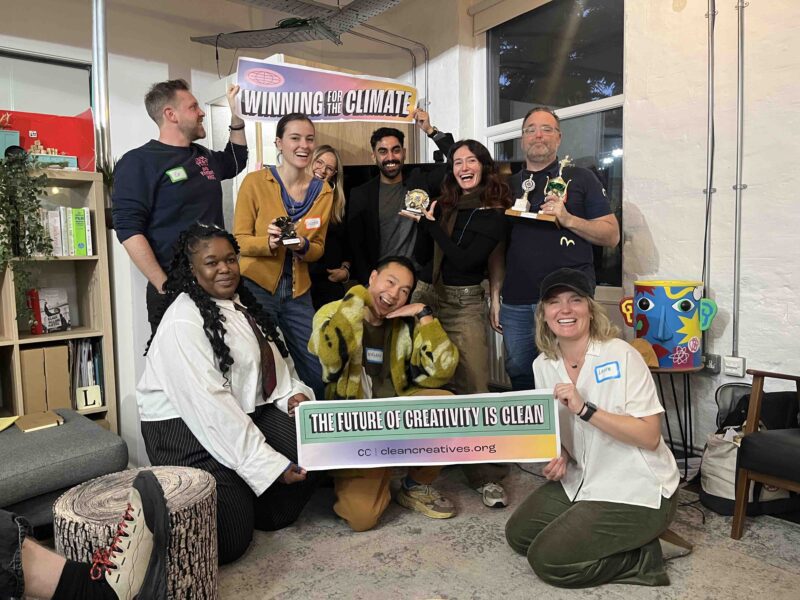
Members of the Clean Creatives community celebrate completing “Unpitch Fossil Fuels,” an interactive pitch competition that challenges creatives to develop campaigns to persuade brands to sign the Clean Creatives pledge and commit to fossil-free marketing; Photo courtesy of Clean Creatives
One major moment came in 2023, when Shell hired Havas to run its advertising and media buying. We learned about it even before Havas employees did and shared the information with another Havas client — the Fossil Fuel Non-Proliferation Treaty Initiative — which promptly walked out of the relationship.
What made the situation especially controversial was that several Havas subsidiaries were certified B Corps. We worked with 27 Clean Creatives agencies to file a formal complaint with B Lab, arguing that representing fossil fuel companies directly contradicted the Declaration of Interdependence. In 2024, B Lab revoked the B Corp certification of three Havas subsidiaries and announced they would implement stricter standards around human rights and environmental impact.
That outcome showed what’s possible when creatives act collectively — not just to express values, but to change institutional norms.
Q: Have we reached an inflection point in the industry?
Laura: I think we have. About 700 agencies still work with fossil fuel clients, according to our annual F-List — but more than twice that number have pledged not to. The momentum is clearly shifting.
The substance of the ads was classic greenwashing, but they worked. People trusted the messaging. And that’s when it clicked for me: this is how the system operates at scale.
Our Off-Ramp report also showed that fossil fuel marketing represents less than 1% of global advertising spend. That means agencies can move away from this work without significant financial risk, especially by pivoting toward growing sectors like healthcare, clean energy, and the circular economy. It’s just a question of how quickly and nimbly they can make the transition.
Signing the Clean Creatives pledge is a low-risk, high-impact signal — it’s a way for agencies to show to clients and to their employees that they want to be on the right side of history.
Q: What’s next for Clean Creatives?
Laura: One major focus is procurement — how brands decide which agencies to hire. We’ve spent years pushing for change from the outside, but brands ultimately hold the most power in choosing how to spend their money.
We’ve started engaging companies with strong sustainability commitments — including IKEA — to encourage them to align their procurement decisions with their climate goals. Sometimes that works, sometimes it doesn’t. But even when we don’t win outright, surfacing these contradictions helps shift expectations and can lead to productive conversations.
Ultimately, we want to activate our base and redefine what’s considered “normal” in the creative services industry — so that working with fossil fuel companies becomes as toxic as working with tobacco once did.


Related Content

Why investing with impact is no longer enough
 2502
0
2502
0

What Ramadan reveals about solidarity as economic infrastructure
1276
0

Rebalancing support between tech ventures and traditional SMEs in MENA
1446
0

Can immersive experiences move people beyond consumption toward lasting change?
2212
0
Comments
Deep Dives
RECENT
 2038
0
2038
0
 1882
0
1882
0
 1988
0
1988
0
Editor's Picks
 11834
0
11834
0
 1999
0
1999
0
 586901
0
586901
0
 1962
0
1962
0
Webinars
News & Events
Subscribe to our newsletter to receive updates about new Magazine content and upcoming webinars, deep dives, and events.
Become a Premium Member to access the full library of webinars and deep dives, exclusive membership portal, member directory, message board, and curated live chats.

Join our global community of systems-minded changemakers.
Subscribe to the Impact Entrepreneur newsletter for the latest insights, magazine features, and invitations to exclusive webinars, Deep Dives, and events.





0 Comments