When Impact Stops at the Office Door
For mission-led organizations, a change of manager tests whether workplace inclusion is built to last.



For mission-led organizations, a change of manager tests whether workplace inclusion is built to last.

 44
44
 0
0

Artist Rob Strati on inherited objects, the limits of market price, and the creative possibilities…
 85
0
85
0

Counting what we fail to prevent, sixty seconds at a time
89
0

How states can crowd in local early-stage capital
 368
0
368
0

Why last-mile healthcare needs an operating model, not just more mobile clinics
 351
0
351
0

How Australia’s succession wave could turn ownership into a funding model
 466
0
466
0

 4446
0
4446
0

Image Courtesy of Creatives for Climate
Investors of all stripes understand the importance of due diligence — assessing potential investments across a range of financial, operational, and governance factors to ensure alignment and minimize risk. For impact investors, this often includes evaluating a company’s carbon footprint, workforce quality, and accountability mechanisms.
But when it comes to creative partnerships — the designers, photographers, animators, and communications professionals who shape an organization’s identity and public narrative — many impact investors and purpose-driven businesses are less discerning.
In an age where reputation is currency and authenticity is core to impact, the creative ecosystem that represents a brand can either reinforce or undermine its mission. As the impact economy matures, every link in the value chain — including communications and marketing — must be assessed for alignment, transparency, and systemic integrity.
As someone who has participated in my share of competitive pitches, I’ve seen how decisions about which agency to work with often come down to affordability and experience. Yet in a world where storytelling drives trust and capital, it’s time to expand that decision matrix to include values alignment.
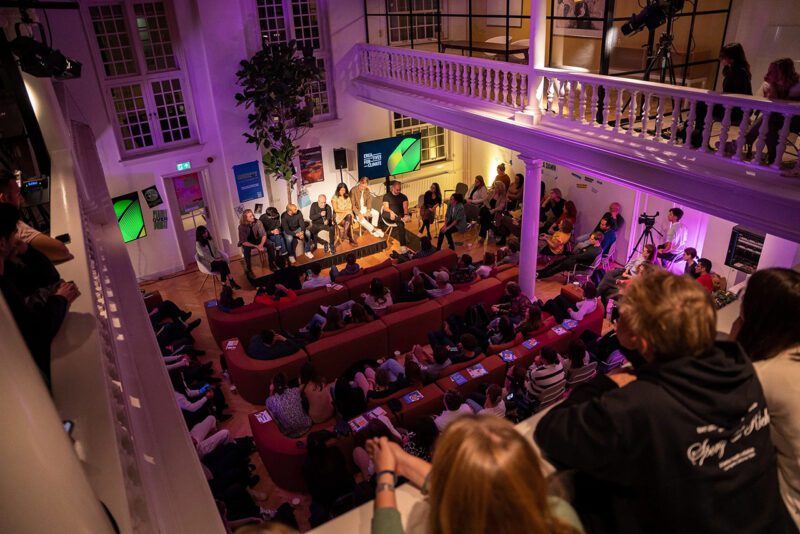
In September 2022, during the UN General Assembly, Secretary-General António Guterres directly addressed the advertising and public relations industry:
 C4CSummit24; Image Courtesy of Creatives for Climate
“Fossil fuels are not only poisoning our planet — they’re toxic for your brand… I urge every country to ban advertising from fossil fuel companies.”
By 2024, he was even more pointed, condemning the “shameless greenwashing” of the fossil fuel industry and describing advertising and PR firms as the “Mad Men fueling the madness.”
The message is clear: communications are not neutral. They either accelerate the transition to a sustainable economy — or delay it. Fortunately, a growing number of creatives are choosing to use their talents for good, and new tools and coalitions are emerging to help impact investors and entrepreneurs find values-aligned creative partners.
Founded in 2020, Clean Creatives is a global community of creatives, strategists, and agency leaders who view the fossil fuel industry as a threat to our shared future. Over 1,500 agencies and 3,700 creatives have now signed the Clean Creatives Pledge, committing not to work with fossil fuel companies or their front groups.
Impact investors and social entrepreneurs wield immense influence through the choices they make — not just in their portfolios, but in their partnerships.
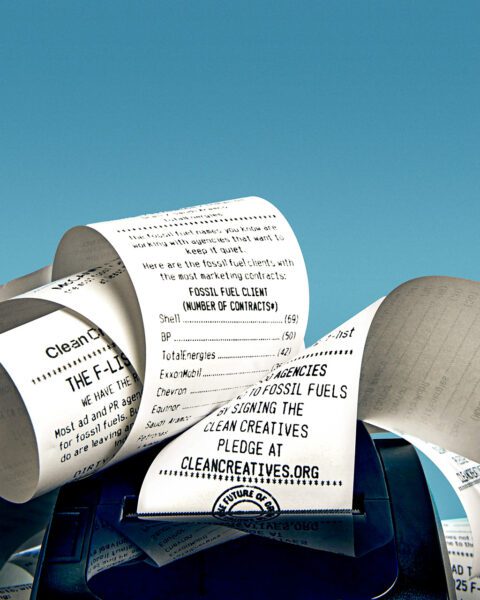
Each year, Clean Creatives publishes the F-List, a public database documenting agency relationships with fossil fuel clients, making it easier for investors and businesses to screen current or future creative partners. The 2025 edition, released during Climate Week NYC, names some of the world’s largest firms — from Edelman and Ogilvy to Publicis and TBWA — among the 700+ advertising and PR agencies that reportedly earned revenue from representing fossil fuel interests.
 The F-List; Image Coutesy of Clean CreativesThe FList; Image Courtesy of Clean Creatives
The list doesn’t imply these firms can’t do excellent creative work. But it does reveal potential conflicts of interest when agencies simultaneously promote fossil fuels and advise clients committed to climate action.
For instance, Edelman, which reportedly earns around 5% of its revenue from fossil fuel contracts, also manages communications for COP30 in Brazil — with the same executive overseeing its work for Shell in the region. As Clean Creatives Executive Director Duncan Meisel puts it:
“Agencies that work for fossil fuel companies present a conflict of interest for any company whose business is affected by climate change... The agencies marketing oil and gas are fundamentally not aligned with brands trying to manage the impact of extreme weather or other climate risks.”
The Ethical Agency Alliance, launched by Creatives for Climate in 2023, champions agencies ready to move beyond a simple “do no harm” approach toward defining what good looks like in the creative sector.
To join, each agency signs an MOU committing to three core actions:
In October 2025, the Alliance went further, taking a stand against “atrocity-washing” after documents revealed that two agencies — Stagwell and Havas — had been hired to conduct PR work aimed at sanitizing the image of governments accused of serious human rights abuses. A new fourth criterion was added:
“Refuse all contracts that involve manipulating public opinion to obscure or justify atrocities — including war crimes or crimes against humanity.”
In an era of rampant misinformation, this commitment to information integrity is critical. The Alliance’s matchmaking service now connects mission-driven brands with vetted, fossil-fuel-free agencies trained in anti-greenwashing practices and recognized for creative excellence.
B Lab, the nonprofit behind the B Corp certification, continues to play a central role in defining what responsible business looks like. As B Lab updates its standards to “galvanize business action on the world’s most critical issues,” more creative agencies are pursuing certification — and facing scrutiny when their actions contradict stated values.
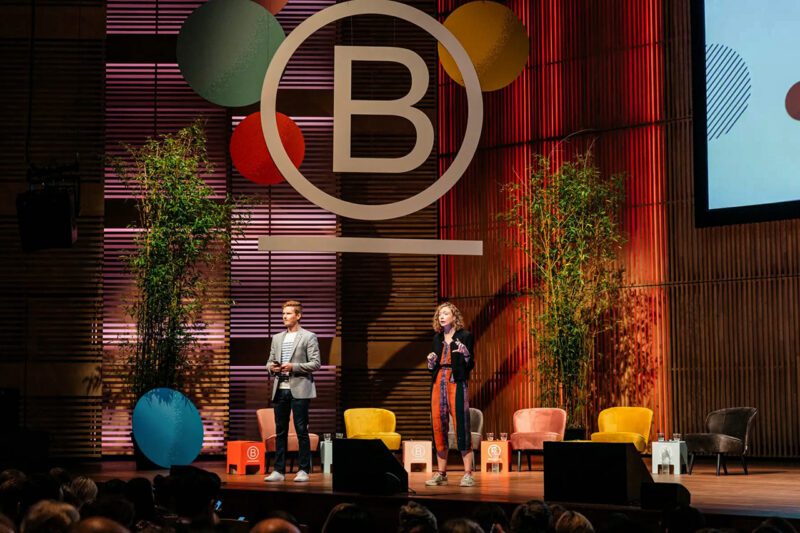 Image Courtesy of B Lab
In 2023, Havas won a global contract with Shell. Within a month, 22 B Corp agencies filed a complaint demanding the decertification of Havas subsidiaries, arguing that serving fossil fuel clients violates B Corp principles and calling for four Havas subsidiaries to lose their B Corp status since certification is “incompatible with providing advertising and PR services to fossil fuel polluters. In July 2024, B Lab agreed, declaring that Havas’ actions “constituted a breach of the B Corp community’s core values” and revoking its certification.
This decision sets a powerful precedent for accountability in the creative industry — and a clear warning for firms seeking to profit from both fossil fuels and sustainability branding.
 C4CSummit24; Image Courtesy of Creatives for Climate
At the same time, B Lab’s Climate Finance Cohort is helping companies shift their finances to climate-friendly options, partnering with mission-driven institutions such as Beneficial State Bank and Premiums for the Planet. This kind of systemic alignment — from banks to branding — is essential if the impact economy is to be both credible and regenerative.
Impact investors and social entrepreneurs wield immense influence through the choices they make — not just in their portfolios, but in their partnerships. Creative agencies and communicators are often the public face of an organization’s mission. Choosing those partners without considering their own ethical footprints risks undermining the very impact one seeks to achieve.
 Image Courtesy of B Lab
Just as investors now screen for ESG performance and transparency, so too should they conduct creative due diligence — ensuring that storytelling, messaging, and marketing reflect the same principles of authenticity, accountability, and systemic change that define the Impact Economy itself.
--
Personal disclaimer: 17 Communications is part of both the Clean Creatives and Creatives for Climate communities, though we are not currently a member of the Ethical Agency Alliance. 17 Communications was also certified as a B Corp in Oct. 2022 and is currently exploring options for re-certification.


Related Content
For mission-led organizations, a change of manager tests whether workplace inclusion is built to last.
44
0
Artist Rob Strati on inherited objects, the limits of market price, and the creative possibilities…
85
0
Counting what we fail to prevent, sixty seconds at a time
89
0

How collateral rules and payment terms keep impact capital out of reach
195
0
Comments
Deep Dives
RECENT
 368
0
368
0
 351
0
351
0
 466
0
466
0
Editor's Picks
 44
0
44
0
 85
0
85
0
 89
0
44
0
85
0
44
0
85
0
89
0
89
0
44
0
85
0
44
0
85
0
89
0
Webinars
Signed by the author. Collected at the door at Lipton Hall, NYU School of Law,…
News & Events

The September 14 program and a live IFI Tool demo are online

Pre-seed and seed startups can apply on a rolling basis

Their Built platform helps teams design, launch and run funds
Subscribe to our newsletter to receive updates about new Magazine content and upcoming webinars, deep dives, and events.
Become a Premium Member to access the full library of webinars and deep dives, exclusive membership portal, member directory, message board, and curated live chats.


0 Comments