What a Broken Plate Reveals About Value
Artist Rob Strati on inherited objects, the limits of market price, and the creative possibilities…



Artist Rob Strati on inherited objects, the limits of market price, and the creative possibilities…

 76
76
 0
0

Counting what we fail to prevent, sixty seconds at a time
83
0

How collateral rules and payment terms keep impact capital out of reach
 191
0
191
0

How states can crowd in local early-stage capital
361
0

Why last-mile healthcare needs an operating model, not just more mobile clinics
 343
0
343
0
How Australia’s succession wave could turn ownership into a funding model
 460
0
460
0
 598
0
598
0
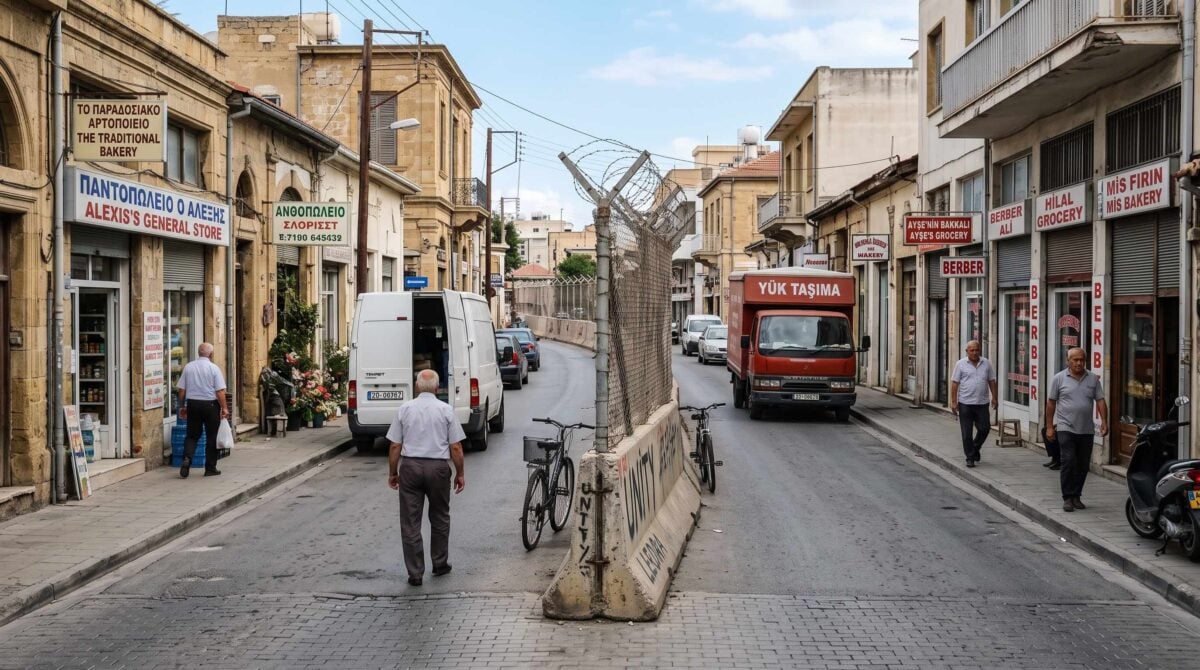
Cyprus’s Green Line is not only a ceasefire line; it is an economic fault line where trade, trust, regulation, and infrastructure shape what cooperation can become.
Cyprus’s Green Line is not only a ceasefire line; it is an economic fault line. Through the case of SlimLine Frame, a bicommunal manufacturing company operating on both sides of divided Nicosia, Ariel Wong explores how enterprise can build practical trust across political division — and why trade, banking, standards, and crossing infrastructure still determine whether such models can become durable recovery systems.
When Andreas G. Andreou and Emre Serdar founded SlimLine Frame in 2015, they were not only starting a window and aluminium framing business. They were building a company across one of Europe’s most enduring political divisions. Andreou, a Greek Cypriot, and Serdar, a Turkish Cypriot, operate SlimLine on both sides of Cyprus’s ceasefire line, using production, compliance, and trust to do what formal politics has struggled to accomplish: make cooperation practical. Reuters has described the company as one of the few ventures using factories on both the Greek Cypriot and Turkish Cypriot sides of the divide.
SlimLine Frame’s significance is not that it has solved Cyprus’s division. It has not. Its significance is that it shows how enterprise can create working channels across a fragmented economy: shared production, complementary local knowledge, buyer relationships, standards navigation, and the everyday trust that comes from doing business together. In divided economies, those mechanisms are not merely commercial. They are connective infrastructure.
Cyprus has been divided since 1974, after a Turkish military intervention followed a Greek-backed coup. The capital, Nicosia, remains split by the United Nations-controlled buffer zone commonly known as the Green Line. The Republic of Cyprus joined the European Union in 2004; the whole island is legally part of the EU, but EU law is suspended in the areas where the government of the Republic of Cyprus does not exercise effective control. The European Commission stresses that the Green Line is not an external EU border, but it does define how people, goods, and services may cross from the non-government-controlled areas into the government-controlled areas.
The result is a divided economic geography. In the government-controlled areas, EU membership, the euro, and access to the single market have supported a diversified economy built around services, tourism, shipping, finance, and information technology. World Bank data put the Republic of Cyprus’s 2024 GDP at $37.63 billion, with annual growth of 3.9 percent. In the Turkish Cypriot economy, by contrast, non-recognition, dependence on Turkey, use of the Turkish lira, and limited access to international markets and finance create a narrower and more volatile operating environment. A 2025 World Bank report found strong growth in the Turkish Cypriot economy in 2024, but also persistent inflationary pressure, fiscal pressure, and the need for stronger competitiveness and intra-island economic integration.
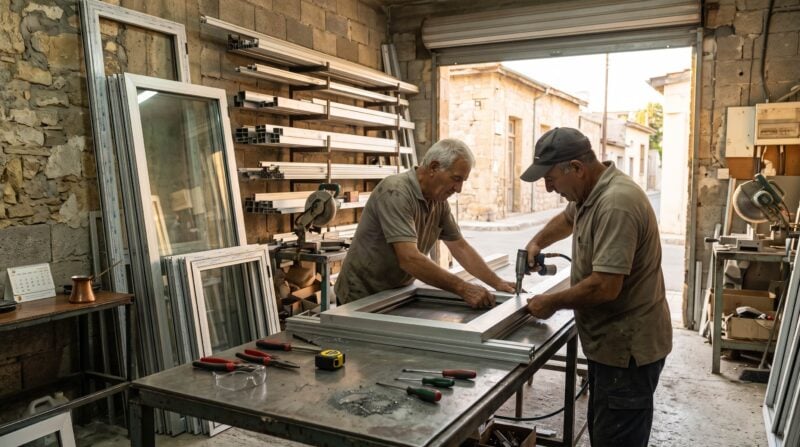
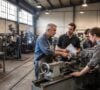
Bicommunal enterprises like SlimLine Frame show how shared production can create working trust across a divided economy.
That difference matters for entrepreneurs. A business trying to operate across the divide must navigate not only two communities, but two regulatory environments, two banking realities, two sets of technical standards, and one political ambiguity that can turn ordinary commercial transactions into exercises in diplomacy.
The 2004 Green Line Regulation created a controlled framework for movement and trade across the buffer zone. It allows certain goods produced in the Turkish Cypriot community to enter the government-controlled areas, provided they meet EU requirements. The regulation has mattered. On the twentieth anniversary of its adoption, the European Commission reported that the Green Line had been crossed more than 64 million times since April 2004, helping people shop, work, study, visit friends, and conduct business across the divide.
But the framework remains narrow. Goods must comply with EU standards. Crossing procedures can be slow. Heavy vehicles face infrastructure constraints. Businesses must often troubleshoot certifications, origin rules, customs clearance, and payments. Reuters noted that goods must be cleared by both sides on the same day, checkpoint delays are common, and Turkish Cypriot firms often lack access to banking in the south, leaving cash as the only practical option. These frictions are not incidental. They are the daily transaction costs of doing business under unresolved political division.
In divided economies, trust is not only social capital. It is economic infrastructure.
The scale of Green Line trade reflects both progress and limits. The European Commission reported that trade across the Green Line totaled €15.2 million in 2024, a 5 percent decline from the previous year, even as authorized crossings reached a historic high. Those figures are meaningful as measures of contact and trust. Economically, however, they remain tiny relative to the wider Cypriot economy. Green Line commerce is not yet a major engine of growth. It is better understood as a fragile channel of reconnection.
SlimLine Frame offers a concrete example of how bicommunal enterprise works in practice. The company manufactures aluminium facades, doors, and windows, and exports abroad. Cyprus Business News reported that Andreou and Serdar first met at a trade fair in Germany in 2010, a meeting that became both a friendship and a business partnership. Their company later received support through the Stelios Bi-Communal Awards, which have promoted business cooperation between Greek Cypriots and Turkish Cypriots since 2009.
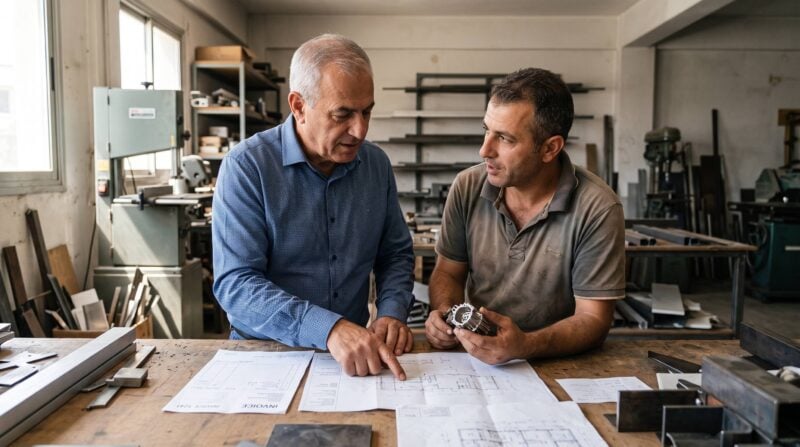
In divided economies, trust is not only social capital. It is economic infrastructure.
The model is practical rather than symbolic. Production on both sides of the Green Line gives SlimLine access to different workers, facilities, relationships, and compliance knowledge. Shared management helps the company understand how each side reads risk, paperwork, pricing, and trust. Cross-line production can also create resilience when politics, checkpoints, or supply chains become uncertain.
But the same structure that makes SlimLine compelling also reveals the limits of enterprise-led recovery. Duplicate facilities increase costs. Crossing procedures slow delivery. Banking constraints complicate payments. Political risk never fully disappears. A bicommunal business can reduce friction, but it cannot remove the regulatory and institutional architecture that creates the friction in the first place.
The most important output of a bicommunal enterprise may not be its product. It may be the trust embedded in the process of production itself. A window frame crossing the Green Line carries more than aluminium. It carries coordination: who certifies the product, who clears it, who pays, who delivers, who absorbs delay, who knows whom to call when a shipment is stuck.
Bicommunal businesses can reduce friction, but they cannot remove the institutional architecture that creates the friction in the first place.
In fragile or divided economies, that kind of trust is economic infrastructure. It lowers perceived risk. It turns the unfamiliar into the workable. It creates a record of cooperation that communities, buyers, investors, and policymakers can point to. In Cyprus, where political negotiations have stalled repeatedly, bicommunal businesses show that some forms of integration can be built from the ground up, transaction by transaction.
Yet trust alone does not create a durable market. Green Line businesses still need predictable rules, investable infrastructure, standards support, banking access, insurance, and patient capital. Without those systems, enterprises like SlimLine remain important but exceptional. They prove what is possible without making it easy for others to follow.
For impact investors, development agencies, and policymakers, Cyprus offers a useful warning: do not mistake bridge-building enterprises for a substitute for bridge-building systems. Bicommunal firms can model cooperation and absorb some risk, but they should not be left to carry the full cost of unresolved political architecture.
First, capital needs to match the reality of divided markets. Short-term working capital is useful, but bicommunal businesses also need patient, risk-tolerant financing that recognizes duplicated facilities, slower transactions, certification costs, and the higher overhead of operating across fragmented systems. A company that deliberately builds across a divide is not inefficient in the conventional sense; it is paying for connection.
Second, technical assistance matters. Enterprises need help aligning products with EU standards, documenting origin, navigating customs requirements, building buyer relationships, and using support systems such as the EU-funded trade-assistance infrastructure. These are not peripheral services. They are the rails that allow trust to become trade.
A company that deliberately builds across a divide is not inefficient in the conventional sense; it is paying for connection.
Third, banking and payments cannot remain an afterthought. If cross-line trade depends on cash workarounds, its scale will remain limited. Trusted payment channels, trade finance, insurance, and risk-sharing tools are central to turning bicommunal enterprise from isolated success into a wider market pattern.
Finally, physical crossing infrastructure should be treated as economic infrastructure. Delays at checkpoints, limited capacity for heavy vehicles, and uncertainty around approvals all shape whether a business can plan, deliver, and grow. In a divided economy, logistics are not neutral. They are part of the peace architecture.
Cyprus’s Green Line economy is still small. But its importance cannot be measured only by trade volume. Bicommunal enterprises reveal the difference between symbolic contact and operational connection. They do not resolve the island’s political status, but they make cooperation useful. They give people a reason to coordinate, trade, troubleshoot, and imagine a larger economic future than the one division permits.
That is the lesson Cyprus offers other divided and conflict-affected economies. Enterprise can build trust where politics stalls. But if the goal is durable recovery, trust must be reinforced by systems: patient capital, market access, technical standards, banking channels, crossing infrastructure, and policy frameworks that reduce the cost of cooperation.
SlimLine Frame shows that business across the Green Line is possible. The harder question is whether Cyprus can build the economic architecture that would make such cooperation ordinary.
--
This article is part of Impact Entrepreneur’s collaboration with Arts4Refugees’ A4R Media Hub to support emerging Gen Z journalistic voices covering how the Impact Economy is being built — and tested — in communities affected by conflict, displacement, and economic fragility.


Related Content
Artist Rob Strati on inherited objects, the limits of market price, and the creative possibilities…
76
0
Counting what we fail to prevent, sixty seconds at a time
83
0
How collateral rules and payment terms keep impact capital out of reach
191
0

Why free education tools need reliable access, credible evidence, and lasting support
 250
0
250
0
Comments
Deep Dives
RECENT
 361
0
361
0
 343
0
343
0
 460
0
460
0
Editor's Picks
 76
0
76
0
 83
0
83
0
 191
0
76
0
76
0
83
0
191
0
191
0
76
0
76
0
83
0
191
0
Webinars
Signed by the author. Collected at the door at Lipton Hall, NYU School of Law,…
News & Events

The September 14 program and a live IFI Tool demo are online

Pre-seed and seed startups can apply on a rolling basis

Their Built platform helps teams design, launch and run funds
Subscribe to our newsletter to receive updates about new Magazine content and upcoming webinars, deep dives, and events.
Become a Premium Member to access the full library of webinars and deep dives, exclusive membership portal, member directory, message board, and curated live chats.


0 Comments