What a Minute Costs
Counting what we fail to prevent, sixty seconds at a time



Counting what we fail to prevent, sixty seconds at a time

 38
38
 0
0

How collateral rules and payment terms keep impact capital out of reach
 150
0
150
0

Why free education tools need reliable access, credible evidence, and lasting support
 218
0
218
0

How states can crowd in local early-stage capital
340
0

Why last-mile healthcare needs an operating model, not just more mobile clinics
 312
0
312
0

How Australia’s succession wave could turn ownership into a funding model
 430
0
430
0
 38
0
38
0
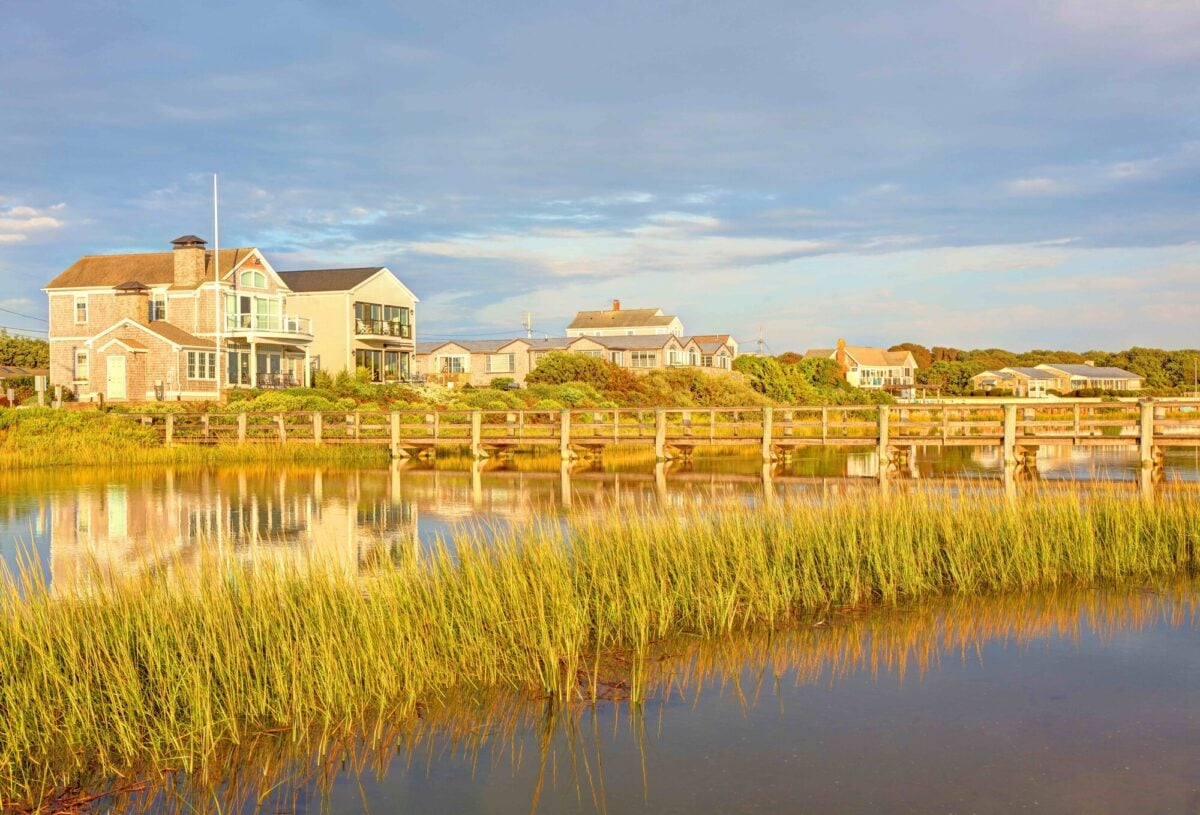
Prevention rarely makes the headline. Its value lies in what remains standing; Photo by Getty Images
Set a timer for one minute.
Put the published annual estimates on that clock. About seventeen people dead from the fine-particle pollution produced by burning coal, oil and gas. Nine children under five dead, most from causes that proven, low-cost interventions and quality care could prevent. Roughly $14 million flowing into activities that damage nature, against about $420,000 for nature-based solutions that protect and restore it.
Let it run for an hour: nearly a thousand deaths from fossil-fuel pollution. For a day: more than 13,000 young children dead. These are different studies and years, translated onto the same clock. They are the scale of the bill we have learned to live with.
We have built a global architecture that accepts this as the cost of doing business.
We know how to prevent much of this harm: a bed net, a course of antibiotics, a clean power grid, a wetland left intact. Getting those remedies to the people and places that need them takes functioning institutions and sustained investment. We pay for the damage in full and fund the remedies in pieces. The Five Pillars of Real Security that I describe in The Impact Entrepreneur Breakthrough each expose a version of that imbalance.
WWF’s 2026 Living Planet Report, released ahead of the UN biodiversity conference in Yerevan, Armenia, reports a 73 percent decline in the average size of monitored wildlife populations between 1970 and 2022. The global science panel on biodiversity, IPBES, warned in its 2019 assessment that about a million animal and plant species were threatened with extinction, many within decades.
The UN Environment Programme’s State of Finance for Nature 2026 found that in 2023, $7.3 trillion in public and private money flowed into activities that harm nature, while $220 billion supported nature-based solutions. UNEP puts the imbalance at about thirty to one.
We pay for the damage in full and fund the remedies in pieces.
Defending nature pays. The World Resources Institute cites estimated economic benefits of $7 to $30 for every dollar invested in restoring degraded land. During Hurricane Sandy in 2012, coastal wetlands in the northeastern United States averted an estimated $625 million in direct flood damage. These are examples of what I call the Prevention Dividend™.
Yet the institution paying to protect a wetland may never collect the savings on houses it keeps from flooding. Benefits spread across communities and decades; budgets come due this year. Financing prevention means finding ways to pay for value that a single investor cannot capture. Otherwise, the returns remain public while the investment remains somebody else’s problem.
The largest death toll in the opening minute comes through the air. A Harvard-led study attributed 8.7 million deaths in 2018 to fine-particle pollution from fossil fuels. That is the estimate behind the seventeen deaths a minute.
The International Monetary Fund puts the costs left out of fossil-fuel prices at $6.7 trillion for 2024. Three-quarters of this implicit subsidy comes from underpriced air pollution and climate damage. The costs do not disappear because the price leaves them out. They land on people’s lungs, livelihoods and lives.
Tuberculosis is curable and still killed more than 1.2 million people in 2024, over 3,000 a day. Funding for prevention, diagnosis and treatment that year reached just over a quarter of the annual target set for 2027. Malaria funding in 2024 fell short of half the target for 2025.
The costs do not disappear because the price leaves them out.
One especially stark estimate concerns pandemic preparedness. In a scenario presented in 2021, researchers at Imperial College London’s Jameel Institute modeled a COVID-like pandemic striking the United States within the following decade. Each dollar spent preparing was projected to avert $1,102 in lost economic output. That is a modeled avoided loss, not a guaranteed investment payout. It measures how expensive being unprepared can become.
The World Bank estimates that 831 million people lived in extreme poverty in 2025, on less than $3 a day, adjusted for purchasing power. The burden of preventable harm falls hardest where resources are scarcest. Almost nine in ten deaths attributable to unsafe water, sanitation and hygiene in 2019 occurred in low- and lower-middle-income countries. Sub-Saharan Africa accounted for 58 percent of deaths among children under five in 2024.
One of the best-documented ways to interrupt inherited disadvantage begins before a child turns five. Nobel laureate James Heckman and his colleagues have estimated annual returns of 7 to 13 percent across studies of high-quality early-childhood programs for disadvantaged children. Those returns include gains in health, education and earnings. Denying a child that start carries costs long after the budget that denied it has been forgotten.

Connection belongs in the prevention budget. The cost of its absence is paid in human lives; Photo by Curated Lifestyle
Loneliness still fits on the timer. The World Health Organization’s Commission on Social Connection links it to more than 871,000 deaths a year, close to two a minute.
WHO identifies places where people can connect, including parks and libraries, as part of the response. Treating that infrastructure as a dispensable amenity is a budget decision with human consequences. Belonging belongs in the ledger.
Democracy is where the timer stops working. By the V-Dem Institute’s count, nearly three in four people on Earth lived in autocracies at the end of 2025. There is no credible per-minute death toll for the loss of self-government. Its dangers accumulate through weakened scrutiny and warnings that power can afford to ignore.
Writing in 1999, the economist Amartya Sen observed that “no substantial famine has ever occurred in any independent and democratic country with a relatively free press.” His point was about accountability: voters and journalists give governments powerful reasons to act before hunger becomes catastrophe.
A free press and a working ballot are prevention infrastructure. Their value includes disasters that never happen. That makes their protection harder to put on a balance sheet, and easier to cut.
The money moves through ministries and city halls, foundations and pension funds. Some finances the damage. Some pays for the aftermath. Too little reaches the institutions and enterprises that could prevent it.
Changing the minute starts with counting. Identify what the money you control helps damage. Then examine your security-related spending: how much addresses root causes, and how much arrives after harm has occurred?
I call the share directed to prevention the Prevention Ratio™. The free Prevention Ledger on our site will do the arithmetic with you. Make the next budget harder to defend if it ignores what could keep people from needing rescue.
The timer is still running. A minute is long enough to move a dollar from one column to the other.
Figures given per minute, hour or day spread each annual estimate evenly across its reference year and are rounded. The studies cover different years and populations; some harms overlap, so the estimates are not added together. Returns include economic benefits, annual rates of return and modeled avoided losses, which are different measures.
Laurie Lane-Zucker is Founder and CEO of Impact Entrepreneur, PBC, and the author of The Impact Entrepreneur Breakthrough: A Field Manual for the Regenerative Economy (Berrett-Koehler, 2026).
Prevention Dividend™ and Prevention Ratio™ are trademarks of Laurie Lane-Zucker.


Related Content
How collateral rules and payment terms keep impact capital out of reach
150
0
Why free education tools need reliable access, credible evidence, and lasting support
218
0

What Islamic finance and impact investing can learn from each other
267
0

After the flood, recovery capital must do more than replace what was lost
 337
0
337
0
Comments
Deep Dives
RECENT
 340
0
340
0
 312
0
312
0
 430
0
430
0
Editor's Picks
 38
0
38
0
 150
0
150
0
 218
0
38
0
150
0
38
0
150
0
218
0
218
0
38
0
150
0
38
0
150
0
218
0
Webinars
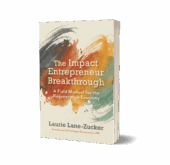
Signed by the author. Collected at the door at Lipton Hall, NYU School of Law,…
News & Events
Their Built platform helps teams design, launch and run funds

The SBA barred 7(a) refinancing of merchant cash advances in 2025

The foundation begins putting the larger pool to work in 2027
Subscribe to our newsletter to receive updates about new Magazine content and upcoming webinars, deep dives, and events.
Become a Premium Member to access the full library of webinars and deep dives, exclusive membership portal, member directory, message board, and curated live chats.


0 Comments