The Four Levels of Culture in the Age of AI
How culture shapes who benefits from AI


How culture shapes who benefits from AI

 33
 0
At OFN42, leaders explored new ways to fund affordable community finance.
 71
0
Can impact investing’s flagship gathering become more than a meeting ground?
 112
0

For mission-led organizations, a change of manager tests whether workplace inclusion is built to last.
 182
0

Artist Rob Strati on inherited objects, the limits of market price, and the creative possibilities…
 209
0

Counting what we fail to prevent, sixty seconds at a time
185
0
Upcoming Events
 33
0

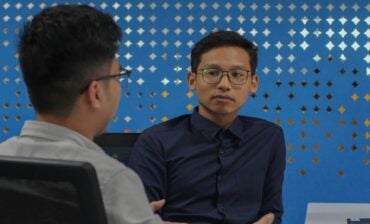
When AI frees up time, workplace culture shapes who gets a say in how it is used; Photo by Thant Zin
Imagine a professional services company where AI reduces the time needed to prepare reports, research information, and create presentations. The technology has freed up capacity. What happens next? Leaders could increase workloads, improve client service, or give people more time for learning and connection. The choice reveals the culture into which AI has been introduced.
AI can amplify an organization’s existing priorities. Whether that creates a better experience of work depends on how people guide its use and decide what its benefits are for.
Gallup’s August 2026 analysis found that, among U.S. employees in workplaces that had implemented AI, 24% said their culture had improved over the previous year, 25% said it had worsened, and 51% reported no change. Employees whose managers actively supported AI use were more likely to report improvement. These findings associate managerial support with better experiences; they do not establish that AI alone caused the changes.
Microsoft’s 2026 Work Trend Index also points to the importance of the environment around employees. Its analysis found that organizational factors, including culture, manager support, and talent practices, were more strongly associated with self-reported AI benefits than individual mindset and behavior.
In our corporate programs, participants have described overwhelm and burnout, sometimes affecting their health or sense of self. This prompted us to ask what kind of culture and leadership could help organizations use AI to improve both performance and people’s experience of work.
Drawing on Conscious Business Institute client projects and informal conversations with employees, managers, program alumni, and practitioners across Europe, North America, and Latin America, we developed a four-part framework for leadership and culture. It is a lens drawn from our practice, rather than a validated model for predicting AI outcomes.
Several cultural orientations can coexist within an organization, although one may be its center of gravity. The levels describe an expanding scope of concern: from output and organizational performance to human flourishing and the health of the wider systems on which the organization depends.
How can we use AI to produce more, work faster, and reduce costs?
At this level, organizations primarily see AI as an engine for productivity, automation, and cost reduction. Success is measured by what they produce, how efficiently they produce it, and the financial results they achieve.
This orientation is familiar in much of our client work. It does not mean an organization is poorly managed or that efficiency is undesirable. The limitations emerge when productivity becomes the overriding objective and people are treated mainly as a cost or a source of output.
Return to the hypothetical professional services company. If management allocates all the recovered capacity to reducing headcount or increasing workloads, AI may make individual tasks easier without making the working day more sustainable. The technology reinforces the pressure to do more.
BCG’s 2025 survey illustrates the range of choices. Among 7,492 respondents using generative AI for work, 54% reported using saved time to perform more tasks. Separately, 29% reported using it to connect with coworkers, and 29% to increase satisfaction and well-being. These are shares of respondents reporting activities, not percentages of the total productivity gains.
The concern is what an exclusive focus on output can crowd out: reflection, creativity, relationships, and the conditions people need to sustain their work.
How can we combine human intelligence and artificial intelligence to achieve better outcomes?
In an intention culture, AI becomes an intelligent assistant and strategic partner. It supports research, analysis, and coding, while people set intentions, make sense of information, and exercise judgment. Leaders ask how AI can free people to apply their capabilities more effectively in support of the organization’s purpose.
AI might help analyze market trends, explore customer needs, or develop strategic scenarios. People then use their experience and judgment to choose a direction. The emphasis shifts from producing more to improving the quality and value of the work.
Ingka Group, the largest IKEA retailer, offers an example of reskilling alongside automation. In June 2023, it reported that 8,500 call-center colleagues had been reskilled in capabilities including remote interior design, digital sales, relationship building, and complex customer inquiries, while its Billie chatbot handled simpler inquiries.
This illustrates a decision to expand human capabilities; it is not an assessment of IKEA’s entire culture. In this framework, the limitation of Level 2 is that improved organizational performance remains the main test of success. Human well-being and wider societal contribution may inform the purpose without yet being explicit measures or constraints on decisions.
The answers make culture visible. They reveal what kind of organization we are using AI to create.
How can AI help people become more fulfilled, connected, creative, and capable?
At Level 3, leaders ask how AI can help create a better human experience of work. Human flourishing becomes an objective in its own right, alongside performance. Trust, well-being, and the ability to learn become part of how the organization judges progress.
In our hypothetical services company, leadership and employees might decide together to allocate some recovered time to mentoring younger colleagues, building deeper client relationships, professional development, or rest. They would then need to adjust workloads and expectations so that this time remains available.
The questions become: What are we experiencing together? How do our people feel? How do we want to work together? Emotional intelligence, reflection, and human connection receive time and recognition alongside technical capabilities. Culture conversations and team retreats become part of an ongoing practice rather than isolated events.
Barry-Wehmiller’s Truly Human Leadership philosophy illustrates this orientation, although it is not an AI case study. Bob Chapman described its vision as “We measure success by the way we touch the lives of people.” His account emphasizes listening, dignity, and responsibility for the people entrusted to leaders’ care.
The practical test is whether those commitments change decisions. If employees are invited to discuss well-being but are still expected to turn every saved hour into additional output, the intention has not yet become a reliable feature of work.
How can we use AI and our collective intelligence to contribute to a flourishing world?
At Level 4, the organization recognizes itself as part of a larger interconnected system. Its responsibility extends beyond organizational success and the experience of its immediate stakeholders to the health of communities and ecosystems. That wider purpose shapes what it produces, how it operates, and what it measures.
AI can contribute analytical capabilities, pattern recognition, and ways to explore complex possibilities. People remain responsible for deciding which possibilities deserve pursuit and whose interests those decisions serve.
Consider a hypothetical agricultural company. An output orientation might prioritize yields and costs; an intention orientation might improve planning and resource allocation; a human-centered orientation might focus on farmers’ working conditions and relationships throughout the supply chain. A higher-purpose orientation would also ask how agriculture can regenerate the ecosystems on which life depends.
AI could help compare soil-restoration practices or model long-term environmental consequences. The company would still need to test those proposals in practice and measure ecological outcomes. The aspiration to regenerate becomes meaningful through the decisions and results it produces.

AI can help compare agricultural practices. Their effects on soil and ecosystems still have to be tested in the field; Photo by EqualStock
Patagonia provides a concrete example of embedding purpose in governance. In 2022, Yvon Chouinard and his family transferred the company to the Patagonia Purpose Trust and the Holdfast Collective. The trust holds all voting stock to protect the company’s mission; the collective holds the nonvoting stock and receives excess profits after reinvestment in the business to support environmental work. This connects purpose to control and the allocation of economic value.
Interface offers another example of environmental purpose informing product choices. The company reports producing carbon-negative carpet tiles using carbon-storing materials. The claim applies to specified products from raw-material extraction through manufacturing, known as cradle to gate, rather than their entire lifecycle.
These examples illustrate governance and product decisions, not evidence of AI outcomes or proof that every part of either company operates at Level 4. They show how a wider purpose can become part of the structures and choices that guide a business.
An organization can have sophisticated AI systems while remaining narrowly focused on output. Another might use relatively simple applications to pursue human and societal benefits. The distinction lies in the purposes the technology serves and the choices people make around it.
The four levels are not mutually exclusive. A higher-purpose organization still needs efficiency, good decisions, innovation, and financial resilience. The question is how those capabilities serve a more expansive purpose, and how leaders handle tensions between competing needs.
Inner development matters in this process. A leader operating primarily from fear and control may struggle to create trust. Becoming more aware of those patterns can open possibilities for a different kind of organization. But awareness alone does not establish a culture. It must be translated into how decisions are made, what behavior is rewarded, and who can hold the organization accountable.
That work is collective. Employees need meaningful opportunities to influence how AI affects their roles and how its benefits are shared. Governance and everyday practices can reinforce those commitments, support learning, and help them endure beyond a particular leader.
Start with a specific AI initiative and ask together: What are we trying to improve, and for whom? Who decides whether saved time becomes more output, time off, learning, or stronger relationships? What authority do employees have in that decision? What evidence will tell us whether the changes are improving people’s lives and the wider systems we depend on?
The answers make culture visible. They reveal what kind of organization we are using AI to create.
A framework drawn from practice. The orientations can coexist within an organization; the examples illustrate choices rather than predict outcomes.
| Level 1 Output culture |
Level 2 Intention culture |
Level 3 Human-centered culture |
Level 4 Higher-purpose culture |
|
|---|---|---|---|---|
| Primary intention | Produce more efficiently | Improve decisions and organizational outcomes | Help people and teams thrive | Contribute to communities and ecosystems |
| Role of AI | Automation engine | Intelligent assistant and strategic partner | Support for human and collective potential | Support for systemic understanding and wider contribution |
| Human responsibility | Direct and supervise AI | Set intentions and exercise judgment | Shape work together and protect time for development | Determine whose interests are served and assess wider consequences |
| Measures of progress | Efficiency, costs, output | Performance, quality, innovation | Trust, well-being, engagement, learning, and performance | Human and ecological outcomes alongside financial resilience |
| Risk | Output pressures crowd out people’s needs | Organizational gains overshadow well-being and wider consequences | Human-centered intentions do not change workloads or decision rights | Higher purpose remains rhetoric without accountable action |


Related Content
At OFN42, leaders explored new ways to fund affordable community finance.
71
0
Can impact investing’s flagship gathering become more than a meeting ground?
112
0

Why verified human judgment remains essential to digital scale
 158
0

Whose evidence counts
 110
0
Comments
Deep Dives

December 3 - 12:00 PM EST
RECENT
 182
0
 209
0
 185
0
Editor's Picks
 33
0
 71
0
 112
0
33
0
71
0
112
0
Webinars
Featuring
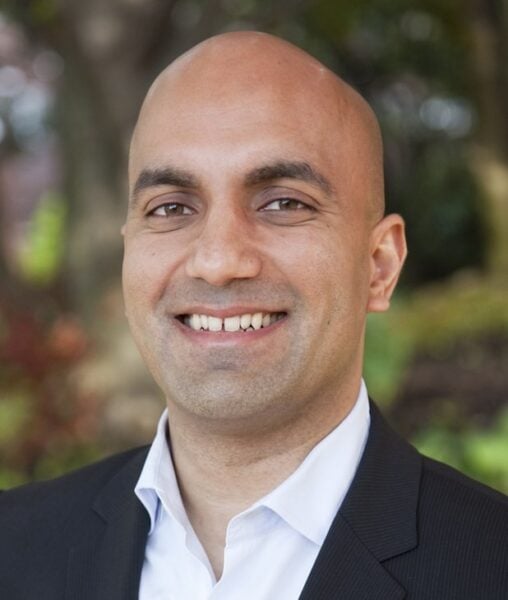
Amit Bouri
CEO & Co-Founder, Global Impact Investing Network
December 17 - 12:00 PM EST
Signed and personally inscribed — you'll write the inscription as you order. Limited · 50…
News & Events

Most have heard of social innovation; about a third understand it

A GIIN survey finds capital concentrated and confidence steady

Each donor gets one vote, whatever the size of the gift
Subscribe to our newsletter to receive updates about new Magazine content and upcoming webinars, deep dives, and events.
Become a Premium Member to access the full library of webinars and deep dives, exclusive membership portal, member directory, message board, and curated live chats.


0 Comments