When Automation Outruns Trust
Why verified human judgment remains essential to digital scale



Why verified human judgment remains essential to digital scale

 38
 0

Whose evidence counts
 64
0

The emerging movement to reshape capitalism using purpose-driven M&A
 97
0

For mission-led organizations, a change of manager tests whether workplace inclusion is built to last.
 137
0

Artist Rob Strati on inherited objects, the limits of market price, and the creative possibilities…
 151
0

Counting what we fail to prevent, sixty seconds at a time
134
0
 38
0

Automation can widen access to information. Trust also depends on who checks it, who consents to its use, and who responds when something goes wrong; Photo by Iwaria Inc.
Imagine a clean-energy initiative using an AI-generated avatar to explain affordable solar power to communities considering the switch. The avatar delivers consistent information in multiple languages, answers common questions, and reaches far more people than a small outreach team could manage alone. Communication scales. But does meaningful participation scale with it?
For people making consequential decisions about their homes, finances, and energy future, access to information is only the beginning. They need to understand their options, assess the credibility of what they hear, and know who will take responsibility when answers fall short. If the avatar creates the appearance of personal guidance without a clear path to qualified human support, wider reach may not translate into deeper understanding or greater trust.
This is the tension at the heart of the automation economy: technology can expand the volume and reach of communication without necessarily strengthening the human relationships, judgment, and accountability that turn communication into meaningful impact.
AI can reduce costs, reach underserved audiences, translate information, and make services more accessible. These are genuine opportunities. But output is not participation, and visibility is not trust. The governing question is where automation creates value and where verified human judgment must remain visible — especially when decisions carry material consequences for people and communities.
Consumer research offers one indication of why this distinction matters. A Gartner survey of 1,006 U.S. consumers conducted in May and June 2026 found that 65% believed brands were producing too much AI-generated marketing content, while 57% said such content had made them less trusting of brand messaging overall. These are self-reported attitudes, not proof of reduced sales or evidence that AI alone caused the change. Still, they suggest that organizations cannot assume more content will produce more credibility.
AI can help people research, translate, edit, and express ideas. But a polished post is not proof of expertise, and automated engagement is not evidence of a meaningful relationship. When production becomes nearly effortless, volume can increase without a corresponding increase in useful perspective.
That distinction is increasingly visible on professional platforms. In September 2026, LinkedIn reported that it was catching hundreds of thousands of automated comment attempts each day and that views of content it classified as “AI slop” had fallen by 40% following its interventions. LinkedIn was not rejecting all AI-assisted work; it was targeting generic, repetitive content and inauthentic engagement.
For impact entrepreneurs and knowledge-driven organizations, the stakes extend beyond marketing. Credibility affects whether people act on information, partners accept claims, and communities believe an organization is listening. As communication becomes inexpensive and abundant, establishing the reliability of a message — and the accountability behind it — becomes more important, not less.
Digital Green, an organization supporting smallholder farmers, offers a useful example of how AI can extend access to expertise while retaining human review. Its FarmerChat service uses generative AI to answer agricultural questions through text, voice, and images, providing guidance in farmers’ own languages and tailored to local conditions.
Agricultural advice is highly dependent on context: a recommendation that works for one crop, climate, or region may be inappropriate for another. A confident-sounding answer is not necessarily a reliable one.
In a 2026 paper published in Advancements in Agricultural Development, Digital Green researchers describe a quality-improvement process involving more than 25,000 expert-reviewed question-and-answer pairs. Experts refined responses for quality, tone, contextual relevance, and cultural fit, using human feedback to improve the system rather than treating fluent answers as inherently reliable.
Digital Green’s July 2026 product update reported that, following the launch of FarmerChat V2, farmers were asking about one and a half times as many questions across markets and that activation increased in all four measured countries. These are organization-reported product metrics, not independent proof of long-term agricultural or economic impact.
The example illustrates a practical principle: automation can expand access, while human expertise helps establish quality. It also shows why output metrics alone are inadequate. Reach matters, but so do relevance, usefulness, continued engagement, and whether people can act appropriately on the information they receive.

Useful agricultural advice depends on local conditions and expertise. A fluent answer alone cannot establish its reliability; Photo by Gnim Zabdiel Mignake
Here, “verified human presence” means more than the appearance of a real person in AI-assisted communication. Identifiable people contribute genuine expertise or lived experience, understand how their contributions are being used, and can review or correct their representation.
Verified human judgment goes further. It requires an identifiable person with appropriate knowledge and authority to assess evidence, consider context and potential harm, and take responsibility for consequential claims or decisions. A human name is not enough if that person has neither checked the work nor the power to correct it.
For organizations, this distinction can be translated into four practical responsibilities:
These safeguards do not require human approval of every routine output. They require organizations to identify where errors carry significant consequences and where judgment, consent, and accountability cannot responsibly be delegated.
Disclosure matters, but it is only one part of this system. Telling an audience that content was generated by AI helps people interpret what they see; it does not establish that the claims are accurate, that a represented person consented, or that anyone will take responsibility if the content causes harm. Transparency identifies a potential issue. Accountability provides a way to address it.
Ventures that claim to empower a community cannot treat that community merely as an audience to reach.
For organizations pursuing social and environmental value, trust is more than a reputational advantage. It is an enabling condition for impact: it supports the relationships through which information becomes action, partnerships become possible, and interventions earn legitimacy. When trust weakens, the consequences can extend well beyond a single message or campaign.
The challenge is especially high for mission-driven organizations. Ventures that claim to empower a community cannot treat that community merely as an audience to reach. Organizations seeking to improve livelihoods cannot substitute synthetic representations of lived experience for the participation, knowledge, and agency of the people whose lives they aim to improve.
The goal is not to choose between automation and human involvement or assume every AI-generated message is untrustworthy. It is to scale what technology does well while preserving the conditions that let people evaluate information, contribute on meaningful terms, and hold organizations accountable.
That means measuring more than the volume of content produced or the number of people reached. Organizations must also ask whether communication strengthens understanding, whether claims remain traceable to evidence, whether people retain meaningful control over how they are represented, and whether responsibility is clear when something goes wrong.
Digital trust is becoming core infrastructure for the automation economy. Verified human judgment — grounded in genuine expertise, meaningful consent, visible responsibility, and a route to remedy — is what allows digital scale to become not merely efficient, but trustworthy enough to deliver lasting impact.


Related Content
Whose evidence counts
64
0
The emerging movement to reshape capitalism using purpose-driven M&A
97
0

Connecting Georgia’s social enterprises to markets and capital
 134
0
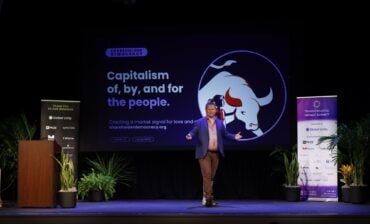
Gabriel Grant on giving shareholders a way to express what matters to them
136
0
Comments
Deep Dives
RECENT
 137
0
 151
0
 134
0
Editor's Picks
 38
0
 5162
0
 4820
0
38
0
38
0
 64
0
 97
0
Webinars
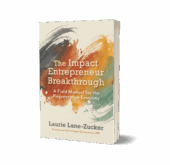
Signed and personally inscribed — you'll write the inscription as you order. Limited · 50…
News & Events

A GIIN survey finds capital concentrated and confidence steady

Each donor gets one vote, whatever the size of the gift

Most deals will run from $500,000 to $2 million
Subscribe to our newsletter to receive updates about new Magazine content and upcoming webinars, deep dives, and events.
Become a Premium Member to access the full library of webinars and deep dives, exclusive membership portal, member directory, message board, and curated live chats.


0 Comments