How Climate Risk Is Rewriting Infrastructure Investment Decisions
Who pays for resilience, who decides, and who gets protected


Who pays for resilience, who decides, and who gets protected

 29
 0

What Anthropic’s charter binds, and who can still rewrite it
 65
0

Predictable grants and local control over budgets can help coastal communities sustain marine stewardship.
 158
0

For mission-led organizations, a change of manager tests whether workplace inclusion is built to last.
 233
0

Artist Rob Strati on inherited objects, the limits of market price, and the creative possibilities…
270
0
Counting what we fail to prevent, sixty seconds at a time
258
0
Upcoming Events
 29
0
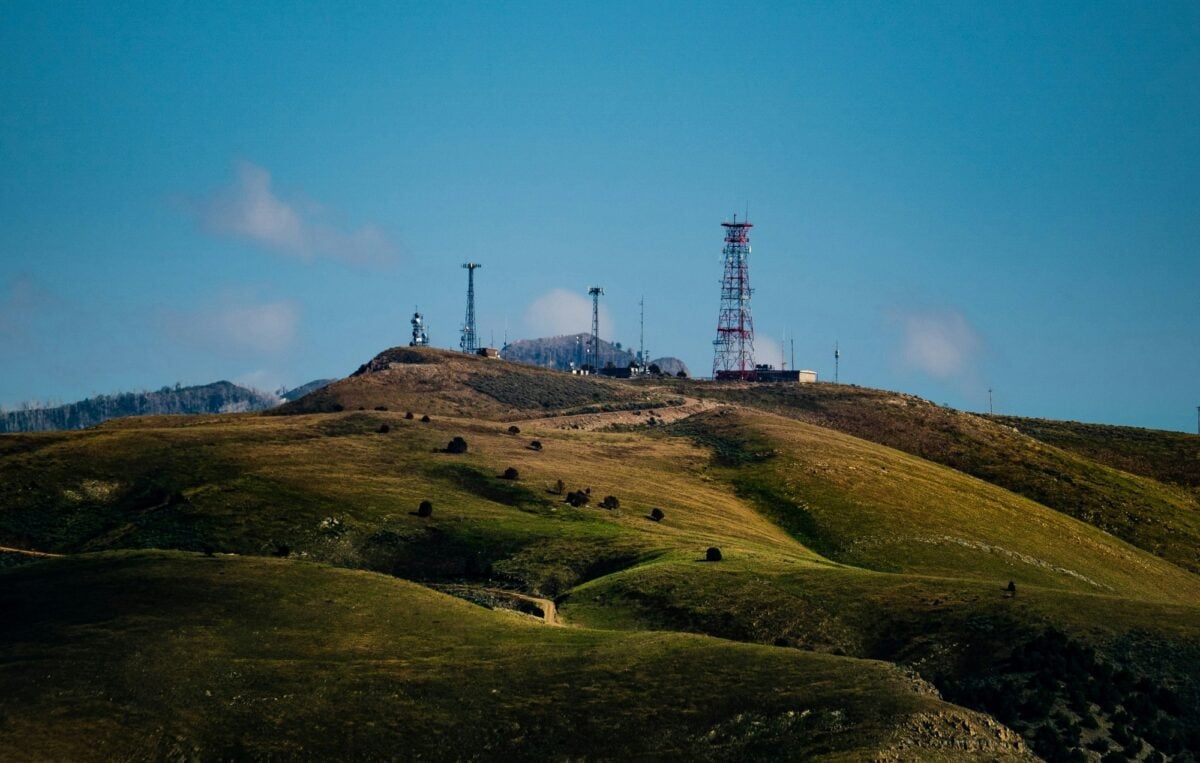
Resilience investment shapes whether essential connections remain available when networks come under pressure; Photo by Nils Rasmusson
As extreme weather puts critical networks under pressure, resilience is an engineering and investment matter. Marissa McInnis’s experience at Verizon illuminates how climate exposure enters infrastructure planning, where costs and responsibilities collide and who receives protection.
How much should an organization invest today to prevent a disruption that may happen years from now? For telecommunications operators, that question shapes where to build a tower, whether to invest in a second fiber route and how much backup power a facility needs.
The economic case is substantial. The World Bank’s 2019 Lifelines: The Resilient Infrastructure Opportunity estimates that infrastructure disruptions cost households and businesses in low- and middle-income countries $391–647 billion annually. These losses arise from a range of causes, not climate hazards alone. In its median scenario for those countries, the research estimates roughly four dollars in benefits for every dollar invested in more resilient infrastructure.
Yet those benefits don’t automatically translate into investment. The organization paying to strengthen an asset may not capture the full value of preventing a disruption, particularly when reliable infrastructure supports entire communities.
I explored this topic with Marissa McInnis, Senior Director, Sustainability and Small Business at Verizon, during an Impact Leaders Lab conversation. Having previously worked on climate adaptation and resilience at the White House and Department of Defense, Marissa brings a useful perspective on turning risk assessments into infrastructure decisions.
Extreme weather can threaten several parts of a telecommunications network at once. A tower may remain standing, but if its electricity supply fails or its fiber connection is damaged, customers can still lose service.
Marissa described Verizon’s use of mobile cell sites to restore connectivity during emergencies. But preparing for changing climate conditions also means reconsidering where infrastructure is located and how networks are designed.
That might mean moving a tower farther inland, accounting for flood and wildfire exposure or investing in additional connections so that a single failure doesn’t interrupt service across an entire area.
Hurricane Helene in September 2024 showed why these decisions matter. A Congressional Research Service analysis documented communications outages involving damaged infrastructure, electricity failures and difficulties accessing affected areas. Temporary equipment, generators and satellite-based solutions helped support restoration.
For operators, the question is how to anticipate conditions over the lifetime of an asset and decide how much protection to build in from the beginning.
The organization paying to strengthen an asset may not capture the full value of preventing a disruption, particularly when reliable infrastructure supports entire communities.
One of Marissa’s most practical insights was how she approaches investment decision-makers. Rather than leading with sustainability targets, she starts with what matters to the business.
“I never walk in and say, ‘This is what we need to do for our sustainability work or our green work.’”
Marissa McInnis, Verizon
She connects climate exposure to keeping the network reliable, referring to the industry’s “five nines” benchmark — 99.999% availability — to explain why resilience belongs in conversations about operational performance.
Before network teams propose major capital projects, her team can compare infrastructure locations with publicly available data on flooding, extreme heat and other hazards. This puts useful information in engineers’ hands while they can still change a project.
As Marissa explained, companies don’t necessarily need to spend millions on climate risk assessments to get started.
The OECD’s Infrastructure for a Climate-Resilient Future explains how resilience affects project finances: higher upfront capital expenditure (CAPEX) must be weighed against operating costs (OPEX), avoided damage and more reliable revenues over an asset’s life. Lower risk may, in principle, reduce financing costs or insurance premiums; those savings are not automatic.
For a network investment, this means comparing the cost of redundancy with expected losses from damage and downtime. An outage avoided ten years from now may still struggle to compete with more immediate returns, while benefits to the wider community may never appear in the operator’s cash flow.
Backup power makes these trade-offs tangible. Diesel generators can provide dependable protection but require fuel and produce emissions. Batteries avoid combustion at the point of use, although capacity limits their duration. Solar’s contribution during emergencies depends on weather, storage and system design. The World Bank’s telecom resilience guide emphasizes backup power and the constraints of renewable systems. Marissa discussed Verizon’s interest in on-site solar and lower-carbon fuels while maintaining essential reliability. Engineers need to establish how long a facility must operate without electricity; finance teams must weigh installation, maintenance and replacement costs. A solution that reduces emissions in normal operations may not provide sufficient protection during an extended emergency.
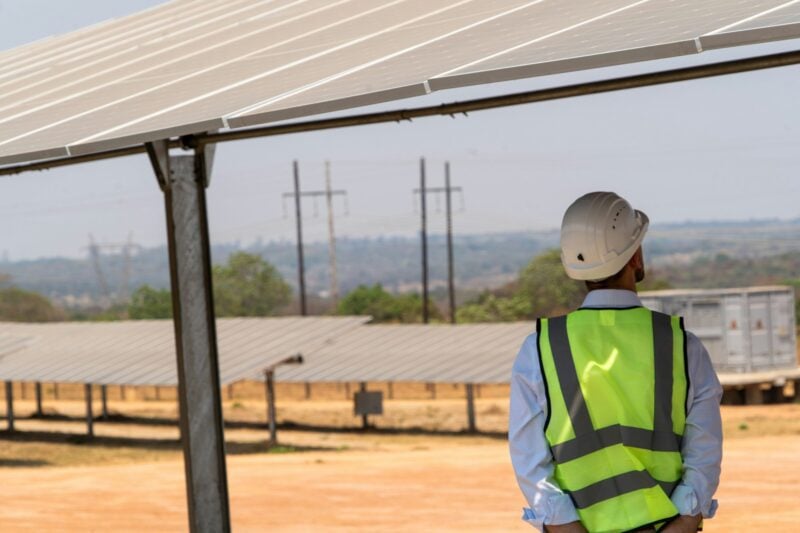
Backup power choices involve installation costs, operating limits, emissions and the length of time a network must function without grid electricity; Photo by Sikwe Scarter
Marissa described rural communities where a single fiber cut can disconnect an entire area. In networks with multiple routes, traffic may be redirected; where there is only one, the same incident can interrupt essential communications.
People depend on those connections for work, healthcare, emergency services and everyday communication.
She discussed shared infrastructure and hybrid fiber-satellite connectivity as potential ways to improve connectivity and resilience where building entirely separate networks may be impractical.
An additional connection serving a small rural population may not generate the same commercial return as an upgrade in a densely populated market. Yet the consequences of losing connectivity may be more severe in a community with no alternative.
Should investment decisions prioritize customer numbers, revenue at risk, the likelihood of disruption or the consequences for the people affected?
Those measures won’t always lead to the same answer.
The OECD highlights the wider public benefits of resilience that private investors may not capture. Public funding, risk-sharing arrangements and partnerships can help close that gap.
This is where resilience becomes a question of access and equity, not simply network performance.
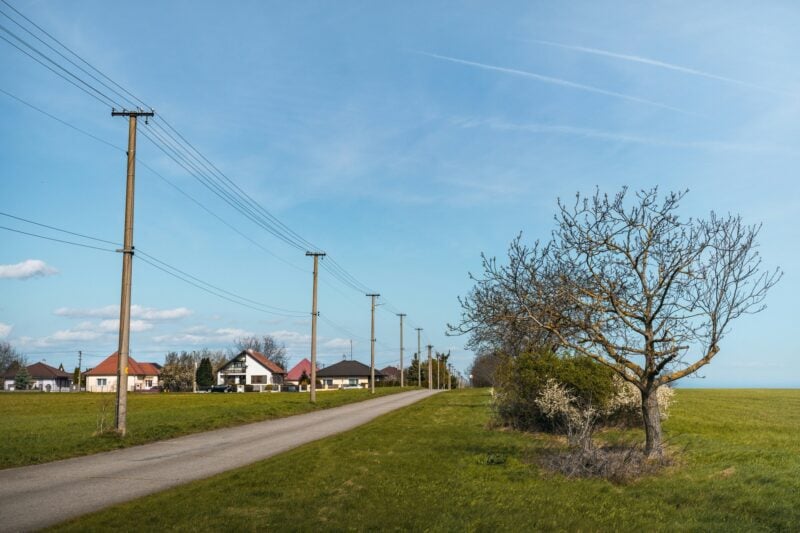
The commercial return on an additional connection may be limited even where losing service would have severe consequences for a community; Photo by Martin Leitgeb
Working with tower companies, equipment manufacturers and technology providers can bring expertise, improve efficiency and create opportunities to share investment. But it can also mean giving up some control over how infrastructure is managed.
Marissa acknowledged that this can be difficult for operational teams accustomed to making their own decisions about network assets.
An owner has greater authority over maintenance, upgrades and investment priorities. When it relies on a partner, those decisions may depend on contracts, shared priorities and another company’s willingness to invest.
Who assesses climate exposure when an asset belongs to a third party? Who pays for preventive upgrades? And if infrastructure fails, who is responsible for restoring the service?
These are governance and contracting questions as much as engineering questions. The World Bank’s telecom guide recommends translating resilience objectives into procurement requirements, including uptime, recovery times and monitoring. Agreements need to establish responsibilities before a failure tests them.
For me, this is also a question of organizational power: who can change a project, approve its budget or require a different design?
Marissa’s relatively small sustainability team works with colleagues across finance, network operations, real estate, fleet, supply chain and enterprise sales, sharing upcoming plans and identifying risks.
Engineers set technical requirements. Finance evaluates capital proposals. Real estate influences location, while procurement determines which technologies and suppliers are available. Sustainability specialists bring climate expertise, but cannot independently redesign a network or approve its investment budget.
Knowing who holds those decision rights is only the beginning. Climate expertise needs to reach the people with authority while they can still alter a proposal, with someone accountable for acting on it.
“You have to be ready to say, ‘This is the impact to our business.’ Bottom line.”
Marissa McInnis, Verizon
A company can strengthen its reporting or emissions commitments without changing the location, design or protection of vulnerable assets.
The more meaningful questions concern follow-through. Which projects receive funding? Who can require additional redundancy? And how are future disruptions accounted for when investments are evaluated?
What stood out to me from my conversation with Marissa was how much progress depends on bringing the right people together while decisions can still change. Climate exposure needs to shape the engineering plan and investment case before the budget is approved.
These challenges extend beyond telecommunications. Across energy, transport, water and digital infrastructure, they concern how institutions allocate capital and whose needs count.
Because ultimately, the real measure of progress isn’t how well we understand climate risk. It’s whether that understanding changes what we build, where we invest and who we protect.
This article draws on a conversation between Shannon Houde and Marissa McInnis during Walk of Life Coaching’s Impact Leaders Lab, supplemented by independent research from the World Bank, OECD and Congressional Research Service.


Related Content
What Anthropic’s charter binds, and who can still rewrite it
65
0
Predictable grants and local control over budgets can help coastal communities sustain marine stewardship.
158
0
Why prevention economics changes the math of SDG finance
166
0

How culture shapes who benefits from AI
 162
0
Comments

Deep Dives

December 3 - 12:00 PM EST
RECENT
 233
0
 270
0
 258
0
Editor's Picks
 29
0
 65
0
 158
0
29
0
65
0
29
0
65
0
158
0
Webinars
Featuring
Amit Bouri
CEO & Co-Founder, Global Impact Investing Network
December 17 - 12:00 PM EST

Signed and personally inscribed — you'll write the inscription as you order. Limited · 50…
News & Events

Social Value International tests what accounting rules assume

Access to finance and the economic climate are the top barriers

Most have heard of social innovation; about a third understand it
Subscribe to our newsletter to receive updates about new Magazine content and upcoming webinars, deep dives, and events.
Become a Premium Member to access the full library of webinars and deep dives, exclusive membership portal, member directory, message board, and curated live chats.


0 Comments