How Climate Risk Is Rewriting Infrastructure Investment Decisions
Who pays for resilience, who decides, and who gets protected



Who pays for resilience, who decides, and who gets protected

 25
 0

What Anthropic’s charter binds, and who can still rewrite it
 65
0

Predictable grants and local control over budgets can help coastal communities sustain marine stewardship.
 158
0

For mission-led organizations, a change of manager tests whether workplace inclusion is built to last.
 233
0

Artist Rob Strati on inherited objects, the limits of market price, and the creative possibilities…
270
0

Counting what we fail to prevent, sixty seconds at a time
258
0
Upcoming Events
 13
0

Announcement from Social Value International, November 24, 2026
Seven in ten investors surveyed in eight countries want information on the costs of harm that companies cause to appear in financial reports, whether in the profit figure or in the notes to the accounts. Social Value International (SVI) points out that international accounting standards do not explicitly require it. The finding heads the results of the Global Investor Expectations Survey, which Ipsos conducted for SVI in partnership with Hult International Business School and which SVI published on November 24.
Ipsos surveyed 8,275 adults online between January 30 and February 10, 2026, in Australia, Colombia, India, Singapore, South Africa, Spain, the United Kingdom and the United States, a set of countries chosen to span a range of GDP per head. The results concern the 5,633 respondents who invest their own money, directly or through a pension or a stocks-and-shares savings account.
The survey tests an assumption that SVI finds in the conceptual frameworks behind international accounting standards. Those frameworks say the decisions of a financial report’s primary users (existing and potential investors, lenders and other creditors) depend on the returns they expect, and SVI reads that as returns with no conditions attached. Because the costs of harm then sit outside the calculation of profit, SVI argues, a company can report a healthy profit while third parties pay for the damage it causes, and capital keeps flowing to the businesses that cause it.
Investors split on what they expect. Asked to choose one expectation for their investment decisions, 35% chose financial returns only and 32% chose financial returns after paying compensation for harm done. Of the two compensation options, more chose returns after compensation and positive impact (18%) than returns after compensation alone (13%).
The answers shifted with geography and age. In India, South Africa and Colombia, the three countries in the survey with GDP per head below the global average, 33% to 45% of investors chose financial returns after compensation for harm, against 23% to 32% in the other five. In all but one of the eight countries, investors under 35 were less likely than older investors to choose financial returns only. The research paper treats the link with national income as exploratory, and SVI says the research does not explain why either pattern occurs.
Sixty-three percent of investors said government should be recognized as a primary user of financial reports. Governments routinely absorb the costs of harm that companies cause but do not recognize, SVI notes, through health budgets, clean-ups and disaster response.
“The findings raise important questions about whether financial reports meet investors’ information needs,” said Ainurul Rosli, a professor at Hult International Business School and a member of SVI’s board, who co-wrote the research.
“The problem we’re dealing with here can be fixed,” said Jeremy Nicholls, senior advisor to SVI and another of the authors. “Accounting rules are the result of human decisions, and decisions can be revisited.” In his view, many harms could already be recognized in company accounts under existing requirements, through constructive obligations.
Through its True & Fair Project, SVI is taking the findings to the IFRS Foundation and other bodies, and it is calling on accounting standard setters to consider commissioning a broader global survey of users’ expectations. It is asking institutional investors to back that call. SVI released the results during the 15th UN Forum on Business and Human Rights in Geneva (November 23–25), and it ties them to two of the Forum’s themes, access to effective remedies and corporate governance.
The research paper, “Investor Expectations, Financial Reporting and Efficient Markets,” is by Ainurul Rosli and Dawit Z. Assefa of Hult and Jeremy Nicholls of SVI. It also reports a smaller, non-representative survey of 136 investment professionals in 25 countries, whose answers SVI describes as consistent with those of the investors. The paper and a summary of the findings can be downloaded from SVI’s survey page.
Sources: Social Value International’s press release (November 24, 2026), the survey’s summary report and research paper (SVI Working Paper 26-001, November 2026) and the Forum’s page on ohchr.org. Cover image courtesy of Social Value International.


Related Content
Comments
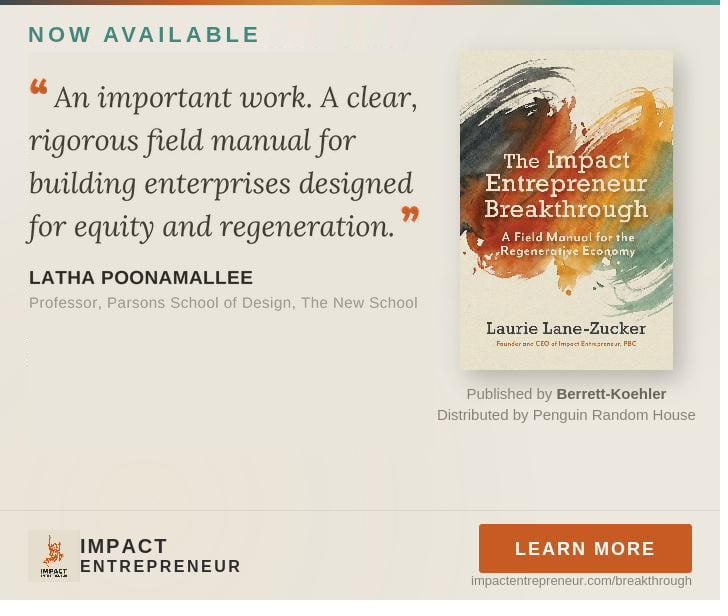
Deep Dives

December 3 - 12:00 PM EST
RECENT
 233
0
 270
0
 258
0
Editor's Picks
 25
0
 65
0
 158
0
25
0
65
0
25
0
65
0
158
0
Webinars
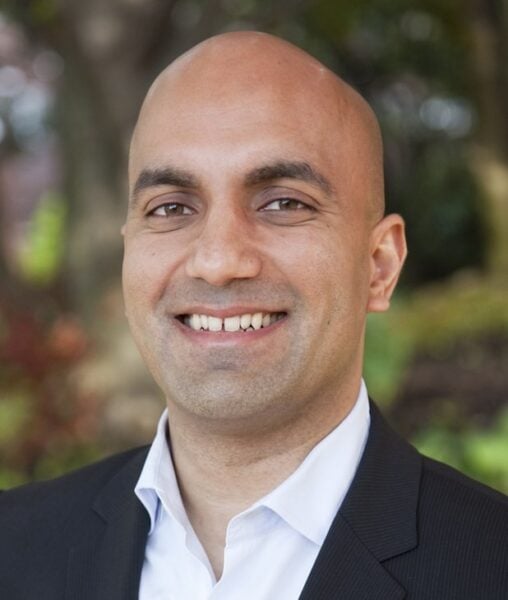
Featuring
Amit Bouri
CEO & Co-Founder, Global Impact Investing Network
December 17 - 12:00 PM EST
Signed and personally inscribed — you'll write the inscription as you order. Limited · 50…
News & Events

Social Value International tests what accounting rules assume

Access to finance and the economic climate are the top barriers

Most have heard of social innovation; about a third understand it
Subscribe to our newsletter to receive updates about new Magazine content and upcoming webinars, deep dives, and events.
Become a Premium Member to access the full library of webinars and deep dives, exclusive membership portal, member directory, message board, and curated live chats.


0 Comments