The Largest IPO in History Belongs to a Benefit Corporation
What Anthropic’s charter binds, and who can still rewrite it



What Anthropic’s charter binds, and who can still rewrite it
 29
 0

Predictable grants and local control over budgets can help coastal communities sustain marine stewardship.
 135
0
Why prevention economics changes the math of SDG finance
149
0

For mission-led organizations, a change of manager tests whether workplace inclusion is built to last.
 223
0

Artist Rob Strati on inherited objects, the limits of market price, and the creative possibilities…
256
0
Counting what we fail to prevent, sixty seconds at a time
239
0
Upcoming Events
 29
0

The public market can fund a mission-driven company without necessarily redistributing the power to govern it.
Anthropic’s completed $93.5 billion IPO is the largest on record, and the company is a Delaware public benefit corporation. A reading of its prospectus, charter and trust agreement against the ownership frameworks of The Impact Entrepreneur Breakthrough shows what the structure binds, who holds the votes and who can still rewrite it.
On November 18, Anthropic priced 980 million shares at $83 apiece, an $81.34 billion initial offering that surpassed SpaceX’s June record. By November 20, the underwriters had exercised their full option for another 147 million shares, bringing the public offering to $93.5 billion. A separate $26 billion private placement brought combined gross proceeds to $119.5 billion. The company’s legal name ends in three letters that deserve a closer reading than its ticker. Anthropic, PBC, is a Delaware public benefit corporation.
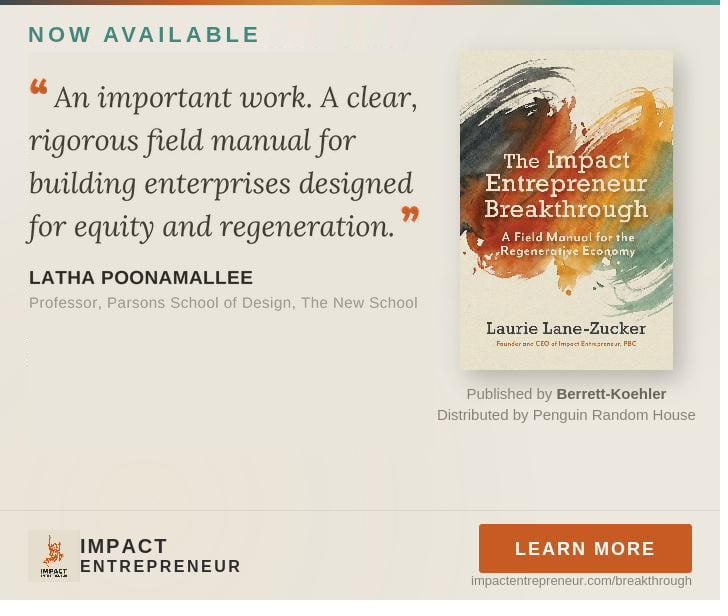
Those letters are familiar to me. Impact Entrepreneur is a public benefit corporation, and Hotfrog, which I founded, was a Founding B Corporation. I have also spent this fall arguing, in The Impact Entrepreneur Breakthrough and in a run of articles, that a benefit charter on its own protects less than its admirers believe. So I read Anthropic’s prospectus, its charter and its trust agreement the way I ask boards to read their own papers, with the four questions I gave them in American Business Magazine this month. They ask who can appoint or remove the directors, who can approve a sale or rewrite the governing documents, who has standing and a remedy if the mission is breached, and where the economic rights sit relative to the votes.
Start with the promise. Under Delaware law, the directors of a benefit corporation must balance the shareholders’ financial interests, the best interests of people materially affected by the company’s conduct, and a public benefit named in the charter. Anthropic’s is “the responsible development and maintenance of advanced AI for the long-term benefit of humanity.” The prospectus tells buyers that this balancing may cost them money. It adds that the company has already restricted model releases and declined some uses on safety grounds, choices it says may forgo revenue.
A benefit charter is a promise whose balancing duty only qualifying shareholders can enforce, graded on a rubric the board writes.
The enforcement behind that duty is light. At least every two years the company must give shareholders a statement of its progress, measured against standards its own board sets, and Anthropic says it will post the statement publicly. Delaware allows a charter to require more frequent reporting, an outside standard or third-party certification, and Anthropic’s requires none of them. A suit to enforce the balancing duty faces a statutory ownership threshold: for a listed company, plaintiffs must hold at least 2 percent of the shares or shares worth $2 million, whichever is less. The people the statute calls materially affected cannot bring that statutory claim, and the same law says directors owe them no duty merely by virtue of being materially affected.
In the terms I use with founders, a mission statement is a wish and a contract is a promise. A benefit charter is a promise whose balancing duty only qualifying shareholders can enforce, graded on a rubric the board writes.
Ownership is a will, and here Anthropic went further than its charter. It put control where the money is not.
A single Class T share belongs to the Long-Term Benefit Trust, a Delaware purpose trust with no beneficiaries. Its five trustee seats, one of them held by former Federal Reserve chairman Ben Bernanke, go to people barred from directly owning Anthropic securities. That share elects four of the board’s seven authorized directors. A single Class F share belongs to a company formed by the seven co-founders and carries 50.1 percent of the vote on everything else, the other three directors included. Neither share has any claim on profits. The public bought Class A stock with one vote a share, and the prospectus is candid that those votes will seldom decide anything.
In the book I describe steward ownership as voting control held in trust while the economic shares remain free to trade. Patagonia called its version “going purpose” instead of going public. Anthropic is attempting both at once.
The clause I would show every founder is in the charter. Anthropic cannot change its stated public benefit or stop being a benefit corporation, by amendment or by merger, without the trust’s consent and an 80 percent board vote — unless the trust is overridden under the governing documents. Ben & Jerry’s independent directors learned in August that their agreement with Unilever gave them no right to sue on the company’s behalf. Anthropic’s trust holds a veto over changes to the mission, and it appoints most of the people in the room. A sale that does not change the benefit provisions is a different question: the trust elects a board majority, but the founders’ share still controls ordinary shareholder voting.

Legal purpose becomes durable only when the votes, vetoes and amendment thresholds make it so.
A will can be rewritten, and this one says how. While the founders’ share exists, the trust’s powers can be amended or its share redeemed for nothing, even over the trustees’ objection, through two specified voting routes. For the first three years after the offering, one requires unanimous approval by the continuing founders, majorities of votes cast by Class E employee shareholders and Class A public shareholders, and the applicable quorums. A second route, available while Class F survives, requires two-thirds of continuing founders, 75 percent of Class E votes cast and a majority of Class A votes cast, again subject to quorum requirements. After Class F expires, the override takes 85 percent of all outstanding Class A shares.
That founders’ share expires after fewer than three qualifying continuing founders remain for 90 consecutive days, followed by a 450-day transition; limited founder-successor provisions can affect who counts toward the threshold. Once triggered, the transition cannot simply be extended or waived.
A board lawyer would circle some fine print. The trustees choose their own successors and receive $400,000 a year from the company whose board they elect. One trustee seat and one of the trust’s four board seats were vacant at the offering. Filling one designated trust board seat requires the concurrence of a nominating committee on which founder-elected directors hold a majority or, failing that, a vote of employee shareholders. On listing day the trust’s directors were three of six.
My fourth question is where Anthropic and Patagonia part. Yvon Chouinard gave the votes to a trust and the profits to a nonprofit. At Anthropic the economic rights stay where they sit in most publicly traded companies, with the founders, employees, strategic partners and now the public.
Two commitments point some of that wealth toward public purposes, and they differ in weight. Each co-founder has pledged 80 percent of their personal equity to philanthropy, a pledge the prospectus describes as voluntary, revocable and not legally binding. By the prospectus’s own description, that is a wish. The Anthropic Public Benefit Fund, which this magazine reported on in October, is firmer. It holds 846.8 million nonvoting Class N shares — equivalent to 5 percent of fully diluted equity as measured on June 30, 2026, using the prospectus’s stated conversion assumption, not necessarily 5 percent of the post-IPO company. It is also a wholly owned subsidiary whose first managers are three co-founders and the trust’s chair, with the board deciding for now where the money goes.
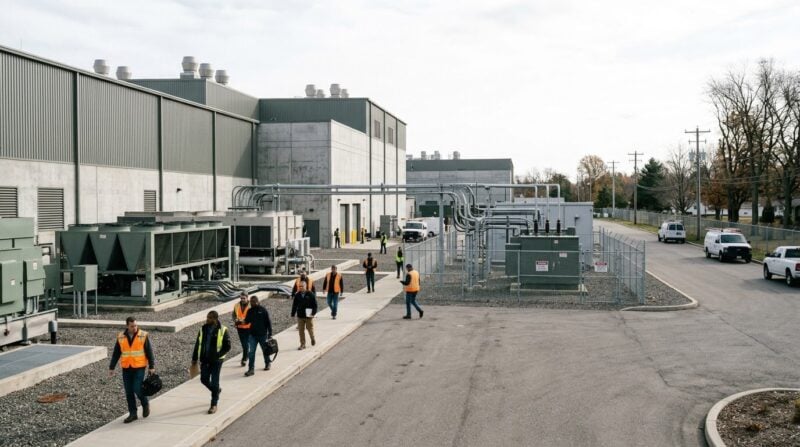
The people most affected by AI infrastructure and work transitions do not receive guaranteed representation in the governance structure.
The book asks one thing of every ownership design: “Are we designing ownership to concentrate power (even if benevolently) or to distribute it?” Anthropic’s design concentrates it, in seven founders and five trustees. The company’s case is that the structure lets its leaders weigh the long term against the market’s short-term pressure. The book’s caution applies all the same, which is that concentrated power, however well intended, tends toward extraction. Employees receive a class of stock that votes on disputes over the trust and earns nothing. The workers whose jobs this technology will change, a prospect Anthropic’s chief executive has himself raised, and the communities around the data centers that run its models appear in the statute as the “materially affected.” They have no reserved seats or votes in Anthropic’s governance.
For the impact economy, the offering retires an old objection. Founders have been told for a generation that locking a mission frightens capital. Anthropic priced above its range and enlarged the sale, on a prospectus that says plainly that returns may give way to purpose and that public votes will rarely count. I would read that result narrowly. Investors paid for growth in a scarce asset and accepted the governance that came with it. A regional food company should not expect the same indulgence, though its founders now have a precedent to cite.
The offering also puts weight on the form’s weakest part. Only a small number of benefit corporations had reached American exchanges before this one, all far smaller, and the prospectus itself notes how little the courts have said about the balancing duty. Our field has spent well over a decade building standards for measuring impact. The largest benefit corporation in the world is not obliged to use any of them. The field should say now, in public, that it expects Anthropic’s first benefit statement to begin annual reporting against an outside standard, independently verified.
Investors paid for growth in a scarce asset and accepted the governance that came with it.
For public markets, the change is one of scale. A company valued at more than a trillion dollars now sits in ordinary portfolios with directors bound by law to weigh the interests of people who own no shares. Analysts and fiduciaries will have to learn to read a benefit statement with the care they give an earnings report.
The tests are still ahead: the first benefit statement, the first shareholder challenge over the balancing duty, the first vote on which the trust’s directors and the founders’ directors divide, and the day the continuing-founders threshold is crossed. Anthropic wrote its will early. The trust dates to 2023, when the company was two years old, and writing it early is the advice I give every founder. The estate is now among the largest on earth. After the founders’ share sunsets, any shareholders seeking to override the trust will need 85 percent of Class A shares outstanding behind them.

Related Content
Predictable grants and local control over budgets can help coastal communities sustain marine stewardship.
135
0
Why prevention economics changes the math of SDG finance
149
0
How culture shapes who benefits from AI
 150
0
At OFN42, leaders explored new ways to fund affordable community finance.
 143
0
Comments
Deep Dives
December 3 - 12:00 PM EST
RECENT
 223
0
 256
0
 239
0
Editor's Picks
 29
0
 135
0
 149
0
29
0
29
0
135
0
149
0
Webinars
Featuring
Amit Bouri
CEO & Co-Founder, Global Impact Investing Network
December 17 - 12:00 PM EST
Signed and personally inscribed — you'll write the inscription as you order. Limited · 50…
News & Events
Access to finance and the economic climate are the top barriers
Most have heard of social innovation; about a third understand it
A GIIN survey finds capital concentrated and confidence steady
Subscribe to our newsletter to receive updates about new Magazine content and upcoming webinars, deep dives, and events.
Become a Premium Member to access the full library of webinars and deep dives, exclusive membership portal, member directory, message board, and curated live chats.


0 Comments