Love and Care in the Future of Public Markets
Gabriel Grant on giving shareholders a way to express what matters to them


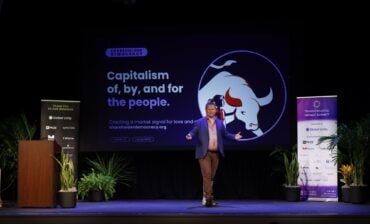
Gabriel Grant on giving shareholders a way to express what matters to them
 61
 0

For mission-led organizations, a change of manager tests whether workplace inclusion is built to last.
 68
0

Artist Rob Strati on inherited objects, the limits of market price, and the creative possibilities…
105
0

Why free education tools need reliable access, credible evidence, and lasting support
 316
0

What Islamic finance and impact investing can learn from each other
 394
0

After the flood, recovery capital must do more than replace what was lost
 384
0
 61
0
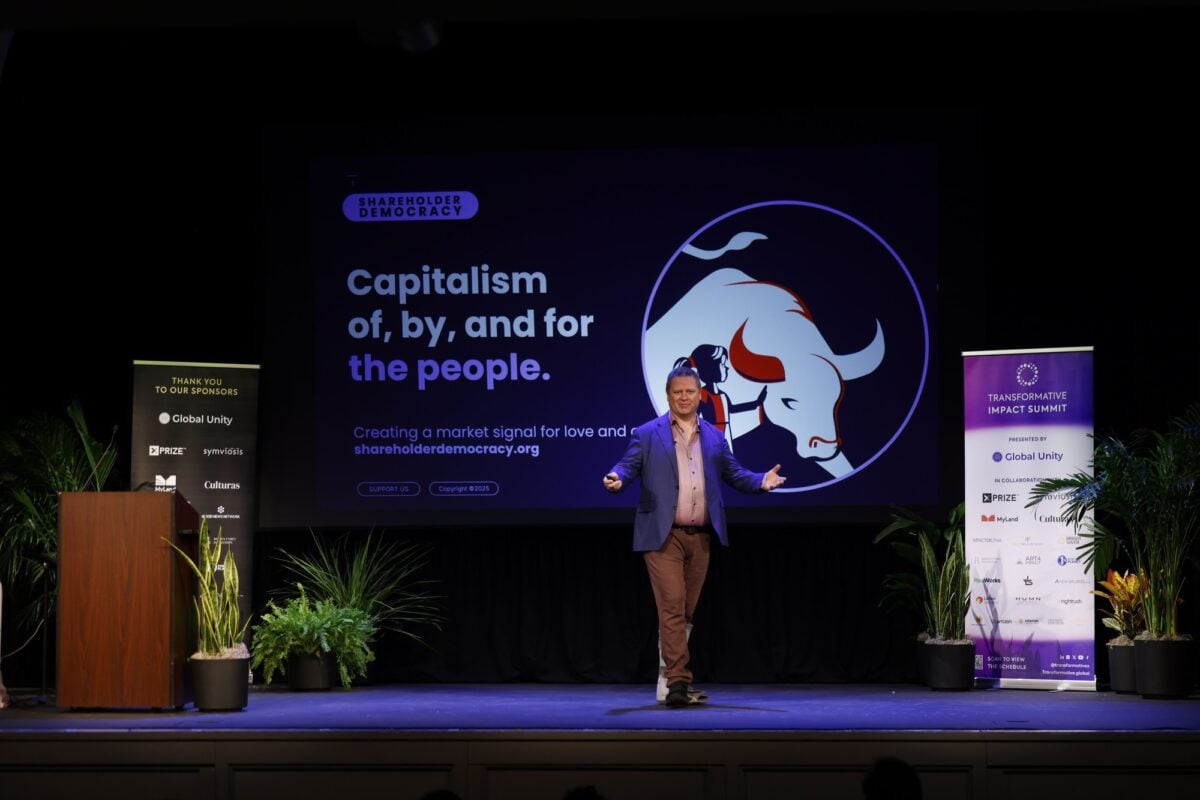
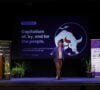
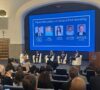
Gabriel Grant presents Shareholder Democracy at the Transformative Impact Summit; Photo courtesy of Gabriel Grant
Gabriel Grant explores how investors might vote alongside organizations they trust — and what that could mean for worker influence, corporate purpose, and people with few or no shares.
What would public markets look like if they could carry more of the care people bring to the rest of their lives? Gabriel Grant, a co-founder of Shareholder Democracy, is working to give investors a practical way to vote alongside civil society organizations they trust. His ambition reaches beyond individual resolutions to the relationship between personal motivation and corporate purpose.
In this conversation, we explore the promise of that approach and the questions it raises about participation, power, and whose values shape a company’s future.
Laurie Lane-Zucker: Your doctoral research included interviews with employees at Patagonia and New Belgium. What did you learn about what makes work meaningful?
Gabriel Grant: A Patagonia employee I interviewed for my doctorate often stayed late because the work felt like his, not because a bonus would reward him for staying.
A New Belgium brewer, before the company was sold, leaned forward in their chair and whispered: “You know how people ask, if you won the lottery, would you stay in your job? I won the lottery. I haven’t told anyone here. This is exactly what I want to be doing.”
I spent dozens of hours interviewing employees at Patagonia and New Belgium during my doctoral research at Yale, then hundreds more transcribing and coding those interviews. They were organizing their work around what mattered to them. The work did not compete with a person’s inner life. It was a way of living it.
Love and care can add to a person’s sense of vitality. Someone acting from care is often more capable, not less, of doing the next hard thing. That is what I mean when I say love is regenerative.
LLZ: How does that connect to the way public companies are governed?
GG: Many of the companies shaping our climate, workplaces, and shared resources are owned by millions of people, many of whom care deeply about environmental and social causes. At Patagonia, the owner could carry his values straight into the C-suite. In public markets, that care struggles to travel from investors to the boardroom.
To build large organizations around love and care, markets need signals beyond profit and risk. Shareholders might prefer to leave a river intact for their grandchildren or to keep forced labor out of the supply chain. Public markets have a channel for those preferences: the vote attached to a voting share.
However, as diversification and intermediaries grew, people lost sight of what they owned and even the idea of voting. Dual-class share structures can further concentrate power by giving some owners more votes per share than others; some share classes carry no votes at all. I worry that this century’s dual-class shares will become a dual-class citizenship challenge. A growing movement aims to give investors more say over how shares held through funds and retirement plans are voted.
Yet, with hundreds of companies in a portfolio, voting every share ourselves doesn’t make sense. Owners need a representative they trust. One question opens the door: Who would you like to vote alongside when you do not vote your own shares? The aim is to make expressing those values as simple as one click.
LLZ: What does that look like for someone holding company shares through a brokerage account? And what changes if they own a fund?
GG: People who own eligible company shares through a brokerage account and have access to their voting control numbers can create an Iconik account and choose an available voting policy, such as the Sierra Club Foundation’s. For investments through a mutual fund or a retirement plan, access depends on the holdings and whether the relevant financial institution offers passthrough or choice voting. As these voting options become available to more funds, Shareholder Democracy is working to ensure investors have access to civil society voting recommendations within whatever fund they own.
LLZ: If an investor disagrees with how their chosen organization would vote on a particular issue, can they override that choice?
GG: Of course. We are building ways for investors to auto-vote alongside a representative they choose: a church, union, professional association, human rights or environmental organization, or management. Few people want to log in for every vote at every company they own. The goal is for people to choose how their shares vote by default when they open a 401(k) or brokerage account. Where these options are available, investors can choose a different policy or vote differently, subject to the provider’s rules and deadlines. On Iconik, investors can change and resubmit their votes before the cutoff.
Voting alongside a group gives people a voice they could never have alone. Representatives can accomplish more through dialogue with management than through voting. Shareholder advocacy can also include proposals and director nominations, subject to the applicable eligibility rules. If you vote your own shares, alone, you’re voting on options crafted without your voice in the room. Our goal is for all shares to be represented and voted, all of the time, based on owners’ values.
LLZ: The Sierra Club Foundation and Iconik launched a pilot making the foundation’s voting policy available to investors. What has it demonstrated so far?
GG: The pilot demonstrates feasibility. Shareholder Democracy Network was able to facilitate collaboration between a civil society organization and a fintech platform, making it possible for people to vote alongside a not-for-profit rather than voting alone. In our experience, people intuitively prefer to vote with a group. The collaboration showed us that we could put that idea into practice.
LLZ: You connect this work to people and other living things with little power over financial decisions. Why do you place so much emphasis on future generations?
GG: Personally, I love the idea of leaving society and our planet better for future generations. However, Shareholder Democracy emphasizes democracy over any specific care or concern. We are pluralistic in that respect. We want all people to have the ability to vote their values, and public corporations will then express the milieu of public values, which includes everything from short-term profit maximization to deep ecology.
A regenerative market is not a market with a single moral signal.
LLZ: How do you see shareholder democracy working alongside labor organizing to give workers more influence?
GG: My neighbor, a concrete mason, asked me what I did, and I told him I was making it one-click easy for people to give their shareholder votes to a not-for-profit they trusted to express their values. He lit up with enthusiasm. I asked him who he’d want to vote with — aren’t your shares already voted by your union? He said he has one account that is voted by his union and another dozen between himself and his wife that he thinks are probably voted against the shares controlled by his union. He wants his union to have all his votes.
Another person I spoke to said they’d be excited to own Walmart in their portfolio if they could give their votes to a labor union. This points to the possibility that people may buy shares of companies they otherwise would not if they had a voice, and unions, as shareholder democracy representatives, may accrue additional power.
Employees can also hold stock through a 401(k) without being able to direct the votes attached to the underlying shares. Shareholder Democracy aims to unlock voices that have not yet been expressed in how we’ve been organizing together.
LLZ: You acknowledge that owners will vote in different directions. What does that mean for your vision of a regenerative market?
GG: The votes would not all move in the same direction. They would move in the directions their owners already live, which is the point. A regenerative market is not a market with a single moral signal. It is a market capable of carrying the full complexity and diversity of human care and concern for life.
LLZ: How do you hold that openness alongside the possibility that some votes could deepen harm? What would accountability look like for the civil society organizations representing owners, especially toward people affected by a company who own few or no shares?
GG: To deepen harm, it would have to be worse than now, correct? I suppose if you’re worried that people voting to express their values will deepen harm, I am curious what benevolent omniscient being you think is voting on behalf of everyone today. A 2018 Institutional Investor report described the outsized influence of an eight-person team at Institutional Shareholder Services on contested board elections. I would bet they do their best and likely better than what was happening without them. Call me crazy, but I think more voices are more likely to prevent harm than to deepen it.
Perhaps I was brainwashed in my civics class, but I’m a big fan of democracy over autocracy. I think, in general, giving people choice over how they vote increases accountability because if you don’t like the result, you can change how you’re voting.
Regarding people with the least power, those who own few or no shares, if they don’t have the power to express their own voice, what’s left is people standing up on their behalf. Shareholder democracy gives people a means to do that.
LLZ: What has to happen for this to grow beyond the pilot?
GG: The work ahead will require lots of small requests, from readers of articles like this, to financial institutions asking for the right to representation and to vote their values. We also need to increase the number of participating civil society organizations and engage their supporters to vote together.
If you’re a shareholder, or if you’re a member of a church, a union, an advocacy organization, or another civil society organization you’d like to have a more powerful voice, please get involved through our website. You can explore what shareholder advocacy is happening around the issues you care about and help us scale up people, together, voting their values, creating the market signal for love and care.
LLZ: If that work succeeds, what is the future you most want people to imagine?
GG: A future where all votes are represented and voted based on shareholders’ values, all of the time. A future in which boards reflect the diversity of society’s cares and concerns, where corporate purpose is aligned with societal values, where businesses are unleashed to solve our greatest challenges.
And, ultimately, a future where employees come to work not simply to earn enough money to pursue meaning elsewhere, but to express their own love and care through what they do every day.
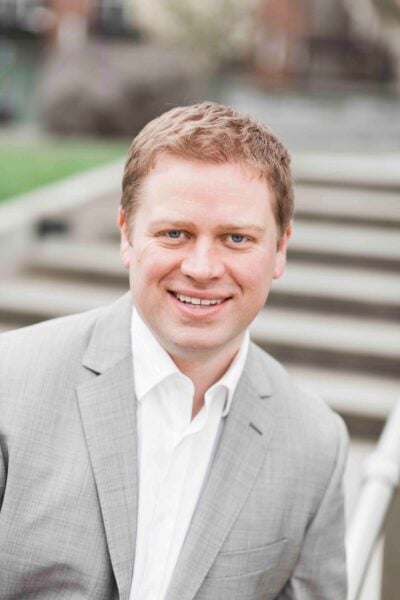
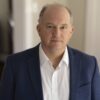
Gabriel Grant; Photo courtesy of Gabriel Grant
Gabriel Grant, PhD, is co-founder of Shareholder Democracy, a nonprofit initiative working to align corporate governance with the values of beneficial owners. He completed his doctoral dissertation, “A self-determined pursuit of personal, organizational, and planetary flourishing,” at Yale.

Related Content
For mission-led organizations, a change of manager tests whether workplace inclusion is built to last.
68
0
Artist Rob Strati on inherited objects, the limits of market price, and the creative possibilities…
105
0

Counting what we fail to prevent, sixty seconds at a time
99
0

How collateral rules and payment terms keep impact capital out of reach
242
0
Comments
Deep Dives
RECENT
 316
0
 394
0
 384
0
Editor's Picks
 61
0
 68
0
 105
0
61
0
61
0
68
0
105
0
Webinars
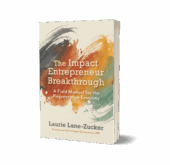
Signed by the author. Collected at the door at Lipton Hall, NYU School of Law,…
News & Events
The 2025–2026 edition also tries to count benefit corporations
The only craft-focused project in Catalytic Capital Consortium’s new cohort.
The September 14 program and a live IFI Tool demo are online
Subscribe to our newsletter to receive updates about new Magazine content and upcoming webinars, deep dives, and events.
Become a Premium Member to access the full library of webinars and deep dives, exclusive membership portal, member directory, message board, and curated live chats.


0 Comments