How Climate Risk Is Rewriting Infrastructure Investment Decisions
Who pays for resilience, who decides, and who gets protected


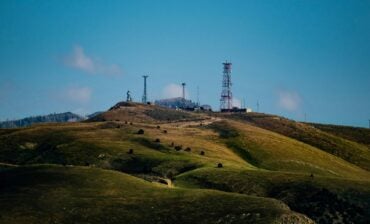
Who pays for resilience, who decides, and who gets protected

 63
 0

What Anthropic’s charter binds, and who can still rewrite it
 87
0
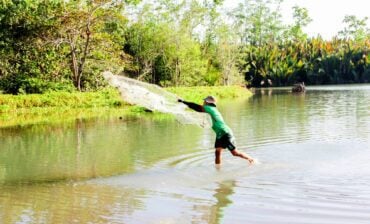
Predictable grants and local control over budgets can help coastal communities sustain marine stewardship.
 177
0
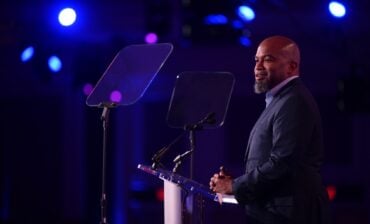
At OFN42, leaders explored new ways to fund affordable community finance.
 170
0

Can impact investing’s flagship gathering become more than a meeting ground?
 189
0

Why verified human judgment remains essential to digital scale
 220
0
Upcoming Events
 11
0
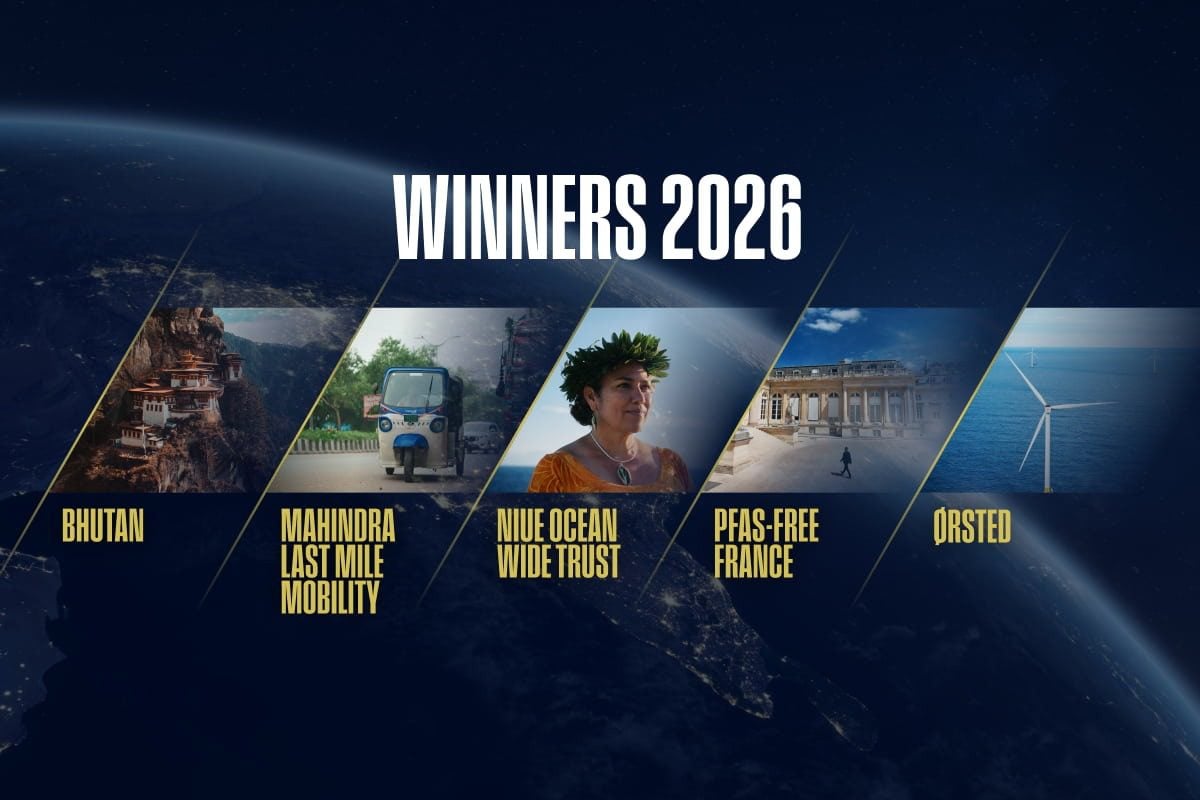
Announcement from The Earthshot Prize, November 17, 2026
The Earthshot Prize named its five 2026 winners on November 17 at its Awards Night in Mumbai: Bhutan, Mahindra Last Mile Mobility, Niue Ocean Wide Trust, PFAS-Free France and Ørsted. Each receives £1 million and the backing of the prize’s Global Alliance of partners. Read together, the five also make a study in who pays for environmental repair. In Bhutan it is forest finance, in India the drivers’ lower running costs, in Niue a worldwide roll of ocean sponsors, in France the polluters, and at Ørsted the balance sheet of a company that rebuilt itself around offshore wind.
For the first time, the science of positive tipping points informed the choice of winners across all five Earthshots, with the aim of finding the solutions most likely to reach the moment when change starts to fuel itself. “Change is not only possible. It is already happening,” said Prince William, Founder and President of The Earthshot Prize.
Bhutan’s constitution requires at least 60 percent of the country to stay under forest cover. The country keeps nearly 70 percent forested and protects more than half its land. Bhutan has 800,000 people; the Himalayan water systems its forests help regulate serve around 1.6 billion people downstream across South Asia. That security is under pressure. Nearly 2,000 of Bhutan’s water sources are drying, and forest fires affected almost 18,000 hectares between 2021 and 2024.
Restore Bhutan, which the Royal Government launched in 2025 with the Department of Forests and Park Services, the Bhutan Trust Fund for Environmental Conservation, the Bhutan Ecological Society and Conservation International, aims to restore 50,000 hectares of degraded forest, farmland and urban land by 2030. Its financing combines blended finance with Jurisdictional REDD+, a mechanism that pays for verified, country-wide reductions in forest loss.
In India’s busiest cities, three-wheelers and small vans carry commuters and deliveries over the last stretch of the trip, and on fossil fuel they are a significant source of urban air pollution. Around 90 percent are used commercially, so an electric model has to make sense for the driver who earns a living from it. Mahindra Last Mile Mobility, one of India’s biggest three-wheeler manufacturers, rebuilt its supply chains to make electric vehicles that work financially for drivers. It has sold more than 400,000 electric last-mile vehicles, over 100,000 of them in a single year. Earthshot reports that lower running costs can raise drivers’ take-home income by 25–30 percent, and that the company has trained 500 women to drive and repair electric three-wheelers.
The company aims to put one million electric vehicles on India’s roads. Winning, Earthshot says, will help speed the rollout of electric rickshaws in Mumbai, Ahmedabad, Bengaluru and Delhi, where parking, charging points and policy still stand in the way.
Niue, a Pacific island nation of 1,700 people, looks after an ocean territory 1,200 times the size of its land. All 327,000 square kilometers of it now lie within the Niue Nukutuluea Multipurpose Marine Park, and 40 percent is a no-take area, Niue Moana Mahu, where no fishing or extraction is allowed. Short-term grants cannot pay for that protection over the decades it needs.
The Niue Ocean Wide Trust, founded by siblings Coral and Brendon Pasisi with their colleague Dr. Josie Tamate, puts a price on the job. It calculates the real annual cost of protecting and managing Niue’s ocean and sells it as Ocean Conservation Commitments: NZ$250 per square kilometer a year for 20 years, bought by individuals, companies, governments and philanthropies. More than 800 sponsors have taken up around 40,000 of them. A 2023 survey found fish biomass up 60 percent since 2016 and top predators up 45 percent. Winning should help the Trust raise a further US$10 million by 2028 toward the US$18 million permanent fund it needs, and carry the model to other Pacific island nations.
PFAS, the “forever chemicals” valued for resisting heat and water, do not break down, and they now turn up everywhere from Arctic wildlife to human blood. PFAS-Free France began in 2022, when scientists alerted Member of Parliament Nicolas Thierry to the scale of contamination in France and Europe. His team built a coalition of scientists, elected officials, NGOs and citizens, among them Générations Futures and Notre Affaire à Tous, and more than 200,000 citizens contacted their representatives while the bill was before Parliament.
The National Assembly passed the law in February 2025 by 231 votes to 51. Since it came into force on January 1, 2026, businesses must publicly report and track PFAS pollution, and a polluter-pays levy funds the clean-up. The law restricts PFAS in cosmetics, ski waxes, consumer clothing, footwear and waterproofing products from 2026 and in most textiles from 2030, with exemptions for essential uses. By 2030 the campaign aims to see similar bans in five more major countries or regions.
In 2006 Ørsted, then known as DONG Energy, was one of Europe’s most coal-intensive utilities. It has since sold its oil and gas business and left coal behind. Its Scope 1 and 2 emissions are down by more than 98 percent, and it kept investing and earning revenue throughout. The company built the world’s first offshore wind farm in 1991 and has since put more wind farms at sea than any other company; in the UK, its 12 operating offshore wind farms generate more than 7 percent of the country’s electricity. Next comes Hornsea 3 in UK waters, which Earthshot says will be the world’s largest single offshore wind farm once it is running. Earthshot calls Ørsted’s transformation proof that the biggest energy companies can move away from fossil fuels.
Prince William and The Earthshot Prize Council chose the winners from 15 finalists. The other ten were the Indigenous Desert Alliance (Australia), the Yellowstone to Yukon Conservation Initiative (Canada), Satellites on Fire (Argentina), AirQo (Uganda), the Zero Emission Maritime Buyers Alliance (ZEMBA, United States), the City of Barcelona, the South Korea Zero Waste Movement Network, the Mother Earth Foundation (Philippines), Pula (Kenya) and Mahila Housing Trust (India). All 15 gain access to Earthshot’s network of businesses, investors, philanthropists and environmental organizations, and join the 75 finalists the prize has supported since 2020.
The Awards Night, attended by the Prince and Princess of Wales and hosted by Karan Johar before 5,000 guests, streams exclusively on Prime Video from November 30 in more than 240 countries and territories and over 40 languages. Earthshot’s announcement and its 2026 page carry the full detail on every winner and finalist.
Sources: The Earthshot Prize’s announcement of November 17, 2026, and its pages on the 2026 winners and finalists. Image courtesy of The Earthshot Prize.
Disclosure: Impact Entrepreneur is an Official Nominator for The Earthshot Prize.

Related Content
Comments
Deep Dives

December 3 - 12:00 PM EST
RECENT
 170
0
 189
0
 220
0
Editor's Picks
 63
0
 87
0
 177
0
63
0
87
0
63
0
87
0
177
0
Webinars
Featuring
Amit Bouri
CEO & Co-Founder, Global Impact Investing Network
December 17 - 12:00 PM EST
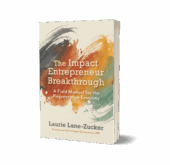
Signed and personally inscribed — you'll write the inscription as you order. Limited · 50…
News & Events

A nation, a campaign, a trust and two firms each win £1 million

Social Value International tests what accounting rules assume

Access to finance and the economic climate are the top barriers
Subscribe to our newsletter to receive updates about new Magazine content and upcoming webinars, deep dives, and events.
Become a Premium Member to access the full library of webinars and deep dives, exclusive membership portal, member directory, message board, and curated live chats.


0 Comments