Building an Impact Economy in Georgia
Connecting Georgia’s social enterprises to markets and capital



Connecting Georgia’s social enterprises to markets and capital

 72
 0
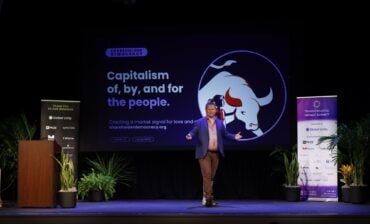
Gabriel Grant on giving shareholders a way to express what matters to them
 92
0

For mission-led organizations, a change of manager tests whether workplace inclusion is built to last.
 76
0

Why free education tools need reliable access, credible evidence, and lasting support
 404
0

What Islamic finance and impact investing can learn from each other
 440
0

After the flood, recovery capital must do more than replace what was lost
 407
0
 4159
0

Photo by Yannis H
Indonesia’s Islamic social finance system is quietly evolving from informal charity into a sophisticated engine for development. Through zakat, waqf, and philanthropreneurship, institutions like Muhammadiyah are demonstrating how faith-based capital can function as catalytic impact finance at national scale.
When it comes to Islamic philanthropy, Western observers often conjure images of localized, informal acts of religious charity, driven by individual piety. This perception, however, overlooks a profound transformation unfolding in countries like Indonesia, where Islamic social finance is evolving from a moral framework into a sophisticated, quasi-institutional ecosystem that functions as a nascent impact capital market.
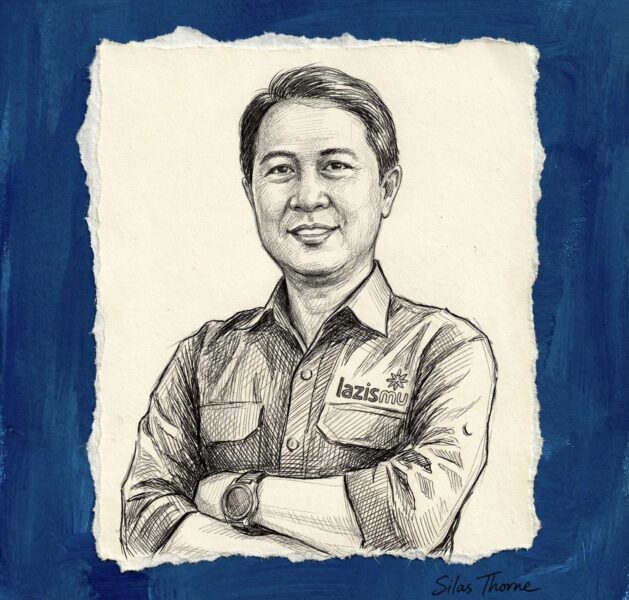
Hilman Latief
At the heart of this quiet revolution sits Hilman Latief, General Treasurer of Muhammadiyah, one of the world's largest and most established Islamic civil society organizations. His work merges the ethical imperatives of faith with the rigor of modern finance and corporate governance, creating a system that is part moral obligation, part engine for systemic development.
Indonesia’s system of Islamic finance is anchored by specific tenets. Zakat is an obligatory annual contribution, essentially a mandatory social tax. Waqf operates as a public endowment fund. Infaq and sadaqah are voluntary contributions aimed at community welfare. As Hilman observes, the theological principle is clear: "In Islam, when you become wealthy, it means that within the wealth you hold, there is a portion that actually belongs to those in need." Zakat, he notes, is a method to purify one's wealth.
For most of Indonesia’s history, this system remained largely informal. Contributions were paid directly to family, neighbors, or local mosques. Only in the last three decades did formal zakat institutions emerge, a result of intersecting religious revivalism, state regulatory efforts, and a crucial exposure to global NGO-led development concepts. Hilman highlights that Indonesian Muslim organizations absorbed lessons not only from their religious heritage but also from the global development discourse, often via activists who had studied abroad or through partnerships with Western-funded NGOs.
This external influence spurred a critical evolution: “Zakat institutions were initially charitable in character, but over the last two decades they have transformed into development-oriented models,” he explains. This trajectory mirrors the familiar shift in the broader impact investing world from immediate relief to long-term resilience, and from one-off grants to systems-building.
A defining feature of the Indonesian model, and a significant departure from Western philanthropic norms, is the sheer breadth of its donor base. Zakat is not a niche pursuit reserved for the ultra-high-net-worth. It is routinely contributed, often in modest monthly amounts, by a mass of professionals, teachers, civil servants, and small business owners.
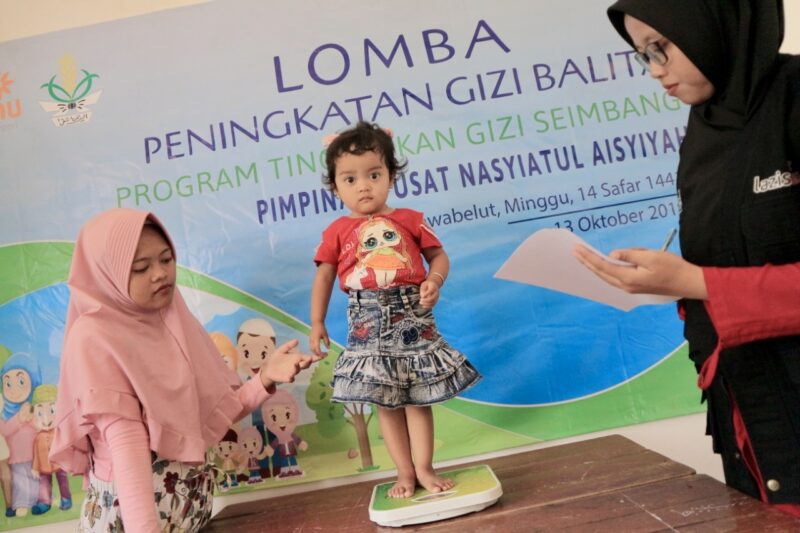
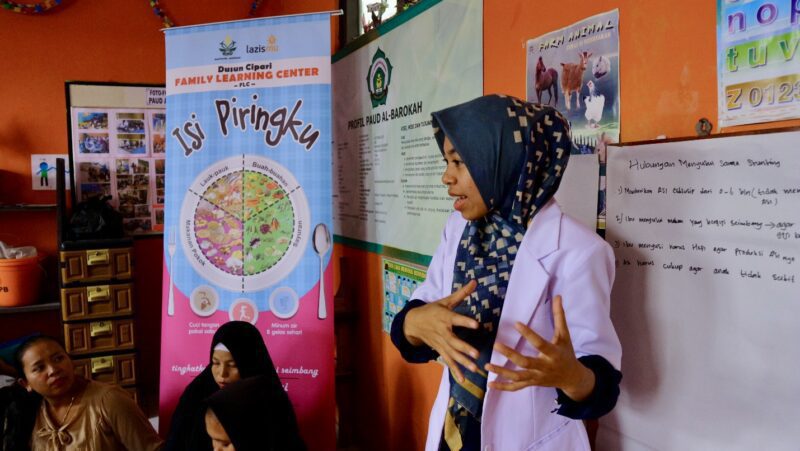
"Stunting" in rural areas involves comprehensive engagement across nutrition, healthcare, and education to shift daily community behavior
Muhammadiyah, for example, has over 50 million members. “Participation is broad-based,” Hilman confirms. For Western impact investors accustomed to soliciting funds from a thin stratum of billionaires, this mass-based model presents a unique set of dynamics: it confers deep social legitimacy but simultaneously imposes an exceptionally high expectation for transparency and public trust.
Hilman’s tenure as the former chairman of Lazismu, Muhammadiyah’s national zakat institution, demonstrates his commitment to institutional overhaul. Before 2015, Lazismu was largely volunteer run. He focused on consolidating governance and implementing good corporate governance practices, including the introduction of external audits, standardizing financial reporting, and professionalizing staff.
Hilman refers to this as philanthropreneurship, a synthesis where entrepreneurs embody philanthropic values, and philanthropic organizations adopt rigorous entrepreneurial thinking.
Managing zakat, in Hilman’s view, is a matter of amanah, or trust. “We welcomed audit findings as learning tools,” he says. Today, Lazismu’s central Jakarta office employs approximately 40 paid staff, and over 200 local offices nationwide are subject to annual audits. While the professionalisation process remains incomplete and uneven across the vast archipelago, it signifies a decisive, top-down transition away from informal charity toward institutional social finance.
For all the similarities in ambition, Hilman is careful to delineate where Islamic social finance diverges fundamentally from impact investing. The funds collected via zakat are legally and theologically constrained: they must be distributed to beneficiaries and cannot be directly invested for profit. Unlike impact capital, zakat explicitly eschews a financial return. Support for students, farmers, or micro-enterprises is typically provided as a grant, with no requirement for repayment. Though Lazismu has experimented with interest-free benevolent loans (qard al-hasan), and collective revolving fund models, their success has been limited.
Under Hilman’s leadership, the organization is now pursuing a more progressive, corporate model
In this context, Islamic philanthropy acts as a pure form of catalytic capital: it absorbs risk, seeds capacity, and prepares vulnerable communities (those often too remote or low-income for traditional impact investors) for future engagement with formal markets and public systems. The objective is not just to provide immediate relief, but to construct long-term pathways to economic self-reliance. A case in point is Lazismu’s work on stunting in rural areas, which involves comprehensive engagement across nutrition, healthcare, and education to shift daily community behavior.
However, the greatest opportunity for convergence with modern impact investing lies outside the strictures of zakat itself. Muhammadiyah is not merely a social service provider; it runs thousands of hospitals, schools, and clinics. It also owns or influences dozens of businesses spanning manufacturing, construction, trading, and healthcare. Historically, these enterprises were fragmented and loosely governed. Under Hilman’s leadership, the organization is now pursuing a more progressive, corporate model: shifting these businesses from informal ownership or dispersed foundations into professionalized corporate structures.
This move represents a fundamental paradigm shift: from a social mission sustained purely by donations toward one supported by profitable, sustainable enterprise. Hilman refers to this as philanthropreneurship, a synthesis where entrepreneurs embody philanthropic values, and philanthropic organizations adopt rigorous entrepreneurial thinking.
The road ahead is complex. Hilman readily admits that Islamic social finance remains in an “early phase of institutional maturity.” Governance is inconsistent, impact measurement is rudimentary, talent pipelines are shallow, and technology adoption lags ambition. Yet, the trajectory is clear. “I believe that for the next fifty years, Muhammadiyah’s social mission must be supported by two pillars: social services like schools and hospitals, and strong, professionally managed businesses,” he asserts.
As global foundations and Western impact investors relentlessly search for scalable models in emerging markets, they often overlook established systems, like Muhammadiyah, that already mobilize billions through a deep-seated foundation of religious obligation, social trust, and mass participation. For those seeking to deploy capital in Indonesia, Muhammadiyah presents a living, national-scale system already delivering systemic impact. As this institution continues its slow, deliberate, albeit uneven march toward professionalization, it compels global actors to reassess where authentic impact truly begins, and whose indigenous institutions are most worthy of investment.


Related Content
Connecting Georgia’s social enterprises to markets and capital
72
0
Gabriel Grant on giving shareholders a way to express what matters to them
92
0
For mission-led organizations, a change of manager tests whether workplace inclusion is built to last.
76
0

Artist Rob Strati on inherited objects, the limits of market price, and the creative possibilities…
115
0
Comments
Deep Dives
RECENT
 404
0
 440
0
 407
0
Editor's Picks
 72
0
 92
0
 76
0
72
0
92
0
72
0
92
0
76
0
Webinars
Signed and personally inscribed — you'll write the inscription as you order. Limited · 50…
News & Events

The board can add 2% for each 50% rise in the company’s value

Applications close December 2, or sooner once 250 arrive
Repeat borrowers in Colombia and Indonesia took it over the line
Subscribe to our newsletter to receive updates about new Magazine content and upcoming webinars, deep dives, and events.
Become a Premium Member to access the full library of webinars and deep dives, exclusive membership portal, member directory, message board, and curated live chats.


0 Comments