Building an Impact Economy in Georgia
Connecting Georgia’s social enterprises to markets and capital




Connecting Georgia’s social enterprises to markets and capital

 101
101
 0
0
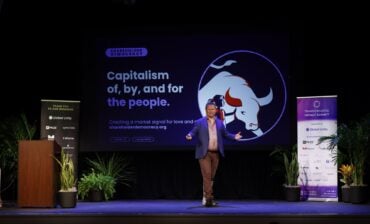
Gabriel Grant on giving shareholders a way to express what matters to them
 106
0
106
0

For mission-led organizations, a change of manager tests whether workplace inclusion is built to last.
 83
0
83
0

Why free education tools need reliable access, credible evidence, and lasting support
 453
0
453
0

What Islamic finance and impact investing can learn from each other
 465
0
465
0

After the flood, recovery capital must do more than replace what was lost
 424
0
424
0


 286
0
286
0

When suppliers need immediate payment but corporate buyers take months to pay, smaller enterprises carry the financing gap; Photo by Getty Images
When an impact enterprise pays farmers immediately but waits months for a corporate buyer, who finances the gap? Drawing on work with 24 enterprises, Bonnie Chiu and Sinethemba Mafanya examine how collateral rules, payment terms, and investor proximity shape access to capital.
An impact enterprise buys from smallholder farmers or informal waste workers, paying cash when materials arrive. It then supplies a large corporate buyer whose payment terms stretch to 90 or even 180 days. For months, the smaller enterprise carries the financing gap between people who cannot afford to wait and a company that can.
In TRANSFORM's work with enterprises connecting these suppliers to corporate supply chains, this mismatch kept surfacing. What investors might describe as an investment-readiness problem was often a problem with how money moved through the value chain.
We helped 24 impact enterprises in 13 emerging economies access finance and engaged with 60 investor institutions through TRANSFORM, an impact accelerator led by Unilever, the UK government’s Foreign, Commonwealth and Development Office (FCDO), and EY. That work points to a persistent mismatch between the capital enterprises need and the capital available to them — rooted in how risk is assessed, priced, and allocated.
The lessons extend beyond preparing a better pitch. They concern working capital, the conditions under which businesses can borrow, and the relationships that allow investors to understand risk.
TRANFORM's work with enterprises in regenerative agriculture and circular plastics brought the working-capital problem into focus. These businesses connect informal producers with global corporate supply chains, but operate between incompatible payment expectations.

For enterprises connecting informal waste workers to corporate supply chains, access to working capital can be as consequential as investment in equipment; Photo by Getty Images
Paying farmers and waste workers promptly secures supplies and sustains trust. Waiting months for corporate invoices to be paid leaves the enterprise acting as an uncompensated credit buffer. It absorbs the cash-flow pressure between upstream suppliers and downstream buyers, even though it may be the least able to finance the gap.
Yet obtaining working capital can be difficult. Lenders looking for fixed assets as security may be reluctant to finance a short-term operating cycle. Some ventures consequently raise dilutive equity to cover day-to-day cash gaps; others rely on donor grants. A request for working capital can itself be treated as a warning about the business, rather than examined as a consequence of payment terms.
A timing mismatch does not establish that a business is viable. But neither does it establish that the business is unviable. Investors need to distinguish between weak underlying economics and the cost of waiting to be paid.
That requires examining the whole value chain. Who must pay immediately? Who can defer payment? Who carries the cost and risk in between? Assessing enterprises one by one can obscure relationships that shape each firm’s financing needs.
The response should include better corporate payment practices alongside supply-chain and receivables finance. Short-term bridge finance can help with temporary funding gaps: Open Road Impact, for example, specializes in bridge loans that help mission-driven organizations access delayed capital. Grants can support working-capital needs at an earlier stage. The appropriate instrument depends on the gap; a recurring delay imposed by a buyer also calls for a change in the buyer’s terms.
The mismatch also appears in debt financing. Within the portfolio we analyzed, 83% of enterprises requested non-equity capital, including debt. A credit assessment found that only two of the 24 met traditional commercial-bank lending criteria.
For founders, the appeal of debt is understandable: it can fund growth without giving up ownership too early. For lenders, the concerns are also real. Fund mandates, requirements for security, and the cost of assessing small transactions can narrow the range of enterprises they can finance. International lenders must also consider currency volatility, transfer restrictions, and country risk.
These constraints can work against asset-light enterprises or businesses reinvesting early earnings in growth. Dedicated venture debt can offer another route, sometimes combining interest with warrants that give the lender potential equity upside. But access to such financing is uneven, and it does not remove the need for a credible repayment path.
One counterintuitive pattern we've observed was that grants could contribute to later financing constraints. Where grant rules allowed spending on capacity building, pilots, or market entry but restricted machinery and other productive assets, enterprises could develop their operations without building the collateral a future lender would require.

Grants that help enterprises acquire productive equipment can also build the collateral they need to access debt financing; Photo by Getty Images
Grant programs can help address that constraint by allowing an appropriate share of funding to build productive assets. This should accompany preparation for borrowing: realistic cash-flow forecasts, an understanding of repayment capacity, and financial records that a lender can assess. Acquiring an asset alone does not make a business creditworthy, but preventing asset acquisition can close off a potential route to finance.
Other approaches can help distribute risk differently. Existing equity investors may provide additional finance as debt, drawing on knowledge of the enterprise and its market that a new lender would have to acquire. Guarantees and blended risk-sharing arrangements can also help local banks extend credit. Where those loans are in local currency, enterprises can reduce the exposure that comes with borrowing in a different currency from their revenues.
These are ways to design capital around enterprise needs, while taking lenders’ constraints seriously. Their value lies in changing who can assess and bear a particular risk.
The distance between financial centers in the Global North and enterprises operating across Asia, Africa, and Latin America adds another difficulty. A cold introduction offers little of the context an investor needs to distinguish a manageable operating challenge from a fundamental weakness.
Across the portfolio we worked with, the overwhelming majority of successful investments came from existing investors who already held a stake and understood the business and its local context. That is a finding from this group of enterprises, not a rule for every market. It nevertheless underscores the importance of relationships and local knowledge in financing decisions.
A stronger enterprise matters. So does a financing system prepared to meet it.
Building proximity also means understanding investors’ constraints. Limited-partner mandates and return expectations shape what a fund can do. The relatively fixed costs of underwriting can make a small investment harder to justify than a large one. Currency and country risks can further raise the threshold for an international investor.
Treating these choices simply as a failure of goodwill misses the structural problem. Better information and stronger relationships matter, but some gaps also require different mandates, instruments, or allocations of risk.
Investment-readiness support remains useful. Enterprises need sound finances, clear plans, and an understanding of the capital they seek. The question is whether we ask them to become ready for financing that was never designed around their operations.
Donors can permit grants to build productive assets and meet early working-capital needs. Investors can consider guarantees, local-currency lending, and financing from existing shareholders. Corporate buyers can improve payment terms instead of leaving smaller suppliers to fund long delays.
The task is to combine different forms of capital around the risks that actually arise. For those of us supporting impact enterprises, that means looking beyond the pitch to the rules governing credit, procurement, and payment. A stronger enterprise matters. So does a financing system prepared to meet it.



Related Content
Connecting Georgia’s social enterprises to markets and capital
101
0
Gabriel Grant on giving shareholders a way to express what matters to them
106
0
For mission-led organizations, a change of manager tests whether workplace inclusion is built to last.
83
0

Artist Rob Strati on inherited objects, the limits of market price, and the creative possibilities…
121
0
Comments
Deep Dives
RECENT
 453
0
453
0
 465
0
465
0
 424
0
424
0
Editor's Picks
 101
0
101
0
 106
0
106
0
 83
0
101
0
106
0
83
0
83
0
101
0
106
0
83
0
Webinars
Signed and personally inscribed — you'll write the inscription as you order. Limited · 50…
News & Events

The board can add 2% for each 50% rise in the company’s value

Applications close December 2, or sooner once 250 arrive

Repeat borrowers in Colombia and Indonesia took it over the line
Subscribe to our newsletter to receive updates about new Magazine content and upcoming webinars, deep dives, and events.
Become a Premium Member to access the full library of webinars and deep dives, exclusive membership portal, member directory, message board, and curated live chats.


0 Comments