What a Broken Plate Reveals About Value
Artist Rob Strati on inherited objects, the limits of market price, and the creative possibilities…



Artist Rob Strati on inherited objects, the limits of market price, and the creative possibilities…

 60
60
 0
0

Counting what we fail to prevent, sixty seconds at a time
73
0

How collateral rules and payment terms keep impact capital out of reach
 182
0
182
0

How states can crowd in local early-stage capital
357
0

Why last-mile healthcare needs an operating model, not just more mobile clinics
 333
0
333
0

How Australia’s succession wave could turn ownership into a funding model
 442
0
442
0



 560
0
560
0

Combining angel investment with regulated crowdfunding can give impact entrepreneurs access to both concentrated expertise and a broader community of investors; Photo credit: Getty Images
Impact entrepreneurs often face not just a shortage of capital, but a mismatch between available financing and the enterprises they are building. By combining angel investment with regulated crowdfunding, founders can create more flexible capital stacks — if they navigate structure, signaling, regulation, and investor risk with care.
For many impact entrepreneurs, the financing problem is not simply a shortage of capital. It is a mismatch between the capital available and the enterprise being built.
Traditional venture capital suits companies capable of rapid growth and large exits. Bank financing generally requires collateral, predictable cash flow, or a track record early-stage ventures lack. Many impact enterprises sit between those models: capable of durable returns and meaningful outcomes without fitting the conventional venture-capital profile.
Two communities can help close that gap: impact-oriented angel investors and people who invest through regulated crowdfunding platforms. Their strengths can be complementary. Angels bring experience, networks, and concentrated capital; crowdfunding can broaden participation and mobilize a company’s community.
The opportunity is not to replace one source with the other. It is to combine them thoughtfully as part of a purpose-suited capital stack.
Regulation Crowdfunding, commonly known as Regulation CF or Reg CF, allows eligible U.S. companies to raise up to $5 million in a 12-month period through an SEC-registered broker-dealer or funding portal. Non-accredited investors may participate subject to investment limits. Issuers must disclose financial, operating, and risk information and, in many circumstances, file annual reports. Reg CF securities are generally exempt from state registration requirements, although state anti-fraud authority still applies.
Regulation A also permits exempt public offerings, but with different limits, qualification requirements, costs, and reporting obligations. For many early-stage enterprises considering a community raise, Reg CF is the more relevant starting point.
Reg CF also appears to reach founders who remain underrepresented in conventional venture finance. KingsCrowd’s 2024 annual report found that 34% of new Reg CF offerings launched that year had at least one woman founder, and 34% had at least one minority founder. Crowdfunding has not solved inequity in startup finance, but it may widen the range of founders able to approach the market.
Angel investors often contribute more than money, helping founders refine strategy, strengthen governance, navigate later financing, and build relationships. Impact-oriented angels can also bring an interest in mission integrity and patient value creation.
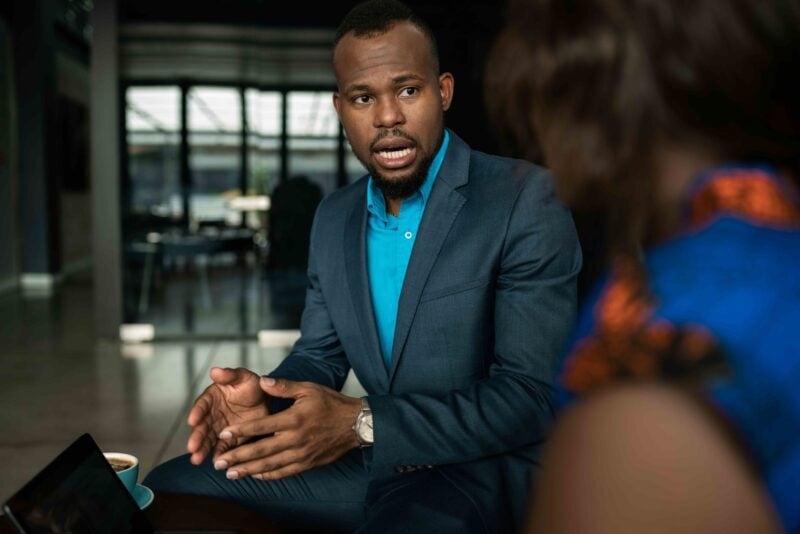 Angel capital can bring more than financing: experienced early-stage investors can contribute strategic guidance, networks, governance experience, and credibility; Photo credit: Getty Images
Crowdfunding contributes something different. A well-structured campaign can reach customers, employees, community members, and smaller investors who may never enter a traditional angel network. For consumer-facing or place-based enterprises, those investors may become advocates as well as shareholders or lenders.
Neither community is uniform, and some ventures are poor candidates for either channel. The question is whether a particular mix of investors, instruments, terms, and time horizons fits the enterprise.
Founders may be able to raise from angels and the crowd sequentially or, when properly structured, in parallel. Because different exemptions carry different conditions, companies pursuing multiple offerings should work with experienced securities counsel and understand the SEC’s integration framework before approaching investors.
Angel participation can provide a credibility signal in a crowdfunding campaign. Wefunder maintains a curated category of venture-backed and notable-angel offerings, illustrating real overlap between professional investors and the crowd. Research on equity crowdfunding has found that angels and crowd investors can play complementary roles in co-investment. But an angel’s presence is not a substitute for independent due diligence on the company. Each investor still needs to evaluate the company’s disclosures, terms, valuation, risks, and impact claims.
The reinforcing effect can work in reverse. A crowdfunding campaign may show that a company can attract a community around its product or mission. That can interest angels, but campaign momentum is not proof of business quality, sound unit economics, or long-term viability.
The opportunity is not to replace one source with the other. It is to combine them thoughtfully as part of a purpose-suited capital stack.
Credible hybrid raises involve substantive participation from both groups: angels bringing real capital, conviction, or expertise, and crowd investors receiving clear information and equitable treatment.
PittMoss, a Pittsburgh-area sustainable soil technology company in the Investors Circle portfolio, illustrates the layered approach. After early angel backing, including a Shark Tank investment from Mark Cuban, PittMoss added regulated crowdfunding to its financing mix.
Across two Republic campaigns, PittMoss raised $718,546 from 2,493 investors, with the second campaign closing in 2021. It then raised approximately $275,000 on StartEngine in 2023 through a convertible note, followed by $31,500 through PicMii in 2024 using a Crowd SAFE. Most recently, a Wefunder revenue-share offering closed in March 2026 after raising $293,630 from 298 investors. Wefunder’s campaign page also identifies Mark Cuban and several angel groups among PittMoss’s featured investors.
The sequence matters: PittMoss used different channels and instruments at different stages rather than replacing angel capital with crowdfunding. The broader lesson is that founders can design financing around the enterprise rather than around a single investor category.
Angel and crowdfunding channels can support a wide range of instruments. Depending on the company, platform, exemption, and applicable law, these may include:
This flexibility matters because many impactful businesses are not natural candidates for conventional venture equity. A social enterprise with recurring revenue and moderate growth may be able to repay a loan or share revenue without a realistic pathway to a large acquisition or public offering.
Investors Circle members, for example, consider equity as well as debt and revenue-based financing. Crowdfunding platforms also host varied securities, though similarly named instruments can carry very different rights and obligations.
 Building a purpose-suited capital stack requires more than finding investors — it requires aligning financing terms, growth strategy, and stakeholder expectations; Photo by Dylan Gillis
This is not an argument against venture capital, which is indispensable for enterprises that require large amounts of risk capital and can scale rapidly. But its portfolio economics favor outsized outcomes. For many impact entrepreneurs, the question is whether VC should be the primary financing model, one layer in a broader stack, or absent altogether.
Capital should serve the enterprise’s mission and strategy — not force the enterprise to become something it was never intended to be.
For some businesses, crowdfunding can generate value beyond the money raised. A campaign may help a company:
These benefits are especially relevant for consumer-facing or community-rooted enterprises. But investment interest can signal audience engagement without validating pricing, margins, repeat demand, or product-market fit.
Capital should serve the enterprise’s mission and strategy — not force the enterprise to become something it was never intended to be.
Angels bring complementary support: sector knowledge, mentorship, governance experience, and professional networks. Combined with a broader investor community, that can give founders both strategic depth and market momentum.
The model works best when engagement continues after the raise. A large investor community becomes an asset only if the company communicates consistently and treats investors as stakeholders.
A hybrid strategy is not automatically faster, cheaper, or simpler. A wider capital pool can bring significant complexity.
Founders should account for legal and accounting costs, cap-table management, platform commissions, campaign expenses, financial-statement requirements, and staff time. An SEC analysis of Regulation CF offerings estimated total intermediary compensation at roughly 7.7% to 8.1% of proceeds across the offerings studied, before some other professional and campaign costs.
Terms require careful coordination. Different valuations, security classes, information rights, or repayment obligations can create friction and complicate future financing. Poor design can leave commitments that later investors will not accept.
The value lies in design, not the mere presence of multiple investor types.
Investor protection is equally important. Regulation CF investments are speculative and often illiquid; investors may lose their entire investment and may be unable to resell securities for an extended period. Mission does not eliminate financial risk, and founders should communicate both without exaggeration.
Before combining angels and the crowd, an entrepreneur should be able to answer five questions:
Collaboration among angel networks, crowdfunding platforms, and impact entrepreneurs can widen participation, offer more flexible structures, and connect strategic expertise with community commitment.
But the value lies in design, not the mere presence of multiple investor types. Offerings must be legally coordinated, terms compatible, angel participation meaningful, and crowd investors treated fairly. The capital structure must strengthen — rather than distort — the enterprise’s capacity to create durable impact.
Impact finance should not ask every enterprise to follow the same funding path. It should create a wider range of capital pathways and assemble them around the business, its stakeholders, and the change it exists to make.
--
Disclosure: Don Megrath is Executive Director of Investors Circle; Annarie Lyles is Board Chair of Investors Circle; and Devin Thorpe is Founder and CEO of The Super Crowd. Investors Circle and The Super Crowd offer programs, memberships, and resources for entrepreneurs and investors discussed in this article. This article is for general informational purposes and does not constitute legal or investment advice.




Related Content
Artist Rob Strati on inherited objects, the limits of market price, and the creative possibilities…
60
0
Counting what we fail to prevent, sixty seconds at a time
73
0
How collateral rules and payment terms keep impact capital out of reach
182
0

Why free education tools need reliable access, credible evidence, and lasting support
 241
0
241
0
Comments
Deep Dives
RECENT
 357
0
357
0
 333
0
333
0
 442
0
442
0
Editor's Picks
 60
0
60
0
 73
0
73
0
 182
0
60
0
60
0
73
0
182
0
182
0
60
0
60
0
73
0
182
0
Webinars
Signed by the author. Collected at the door at Lipton Hall, NYU School of Law,…
News & Events

The September 14 program and a live IFI Tool demo are online

Pre-seed and seed startups can apply on a rolling basis

Their Built platform helps teams design, launch and run funds
Subscribe to our newsletter to receive updates about new Magazine content and upcoming webinars, deep dives, and events.
Become a Premium Member to access the full library of webinars and deep dives, exclusive membership portal, member directory, message board, and curated live chats.


0 Comments