Building an Impact Economy in Georgia
Connecting Georgia’s social enterprises to markets and capital



Connecting Georgia’s social enterprises to markets and capital

 74
74
 0
0

Gabriel Grant on giving shareholders a way to express what matters to them
 95
0
95
0

For mission-led organizations, a change of manager tests whether workplace inclusion is built to last.
 78
0
78
0

Why free education tools need reliable access, credible evidence, and lasting support
 412
0
412
0

What Islamic finance and impact investing can learn from each other
 444
0
444
0

After the flood, recovery capital must do more than replace what was lost
 412
0
412
0

 546
0
546
0
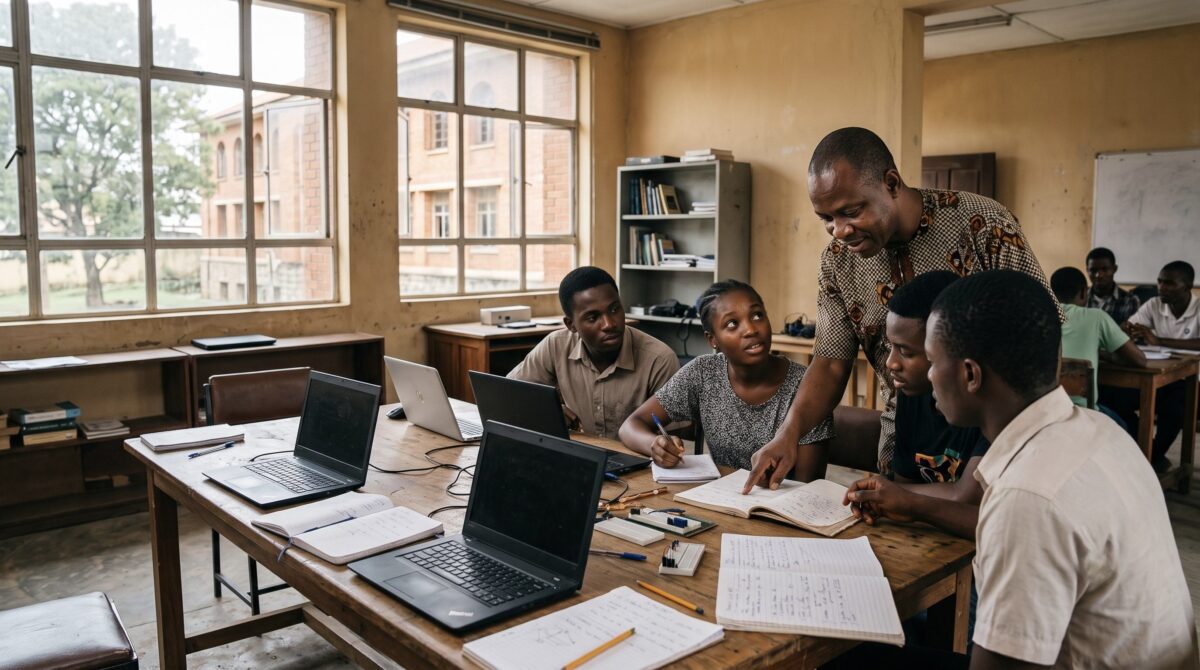
Local innovation ecosystems depend not only on talent, but on the mentorship, institutional support, and practical infrastructure that help ideas move toward implementation.
Calabar’s emerging innovation ecosystem offers a glimpse of what becomes possible when local talent, civic institutions, and ecosystem partners are coordinated around climate and food-security challenges. The lesson is not that hackathons are enough, but that place-based innovation needs infrastructure, relationships, and follow-through.
Nigeria’s innovation economy is growing rapidly, but its opportunity map remains uneven. Lagos and Abuja attract the incubators, accelerators, investment, and international attention that help turn ideas into ventures. Lagos, for example, was identified in the 2025 Global Tech Ecosystem Index as the world’s fastest-growing emerging tech ecosystem, with five unicorns and an ecosystem valuation that has grown 11.6x since 2017.
That success matters. But if innovation infrastructure remains concentrated in a few dominant hubs, many of the communities most exposed to climate change, food insecurity, and youth unemployment will be left trying to solve urgent local problems without the networks, mentorship, finance, or institutional pathways that make innovation possible. For low-resourced regions, the question is not whether young people have ideas. It is whether the surrounding ecosystem can help those ideas become practical solutions.
Calabar, the capital of Cross River State in southern Nigeria, offers one useful lens into this challenge. The city has ambitious young people and a history of civic and commercial significance, but it has not benefited from the same depth of innovation infrastructure found in Nigeria’s leading tech hubs. That gap matters because the challenges facing Cross River State are not abstract development concerns. They are immediate, interconnected, and local.
Cross River State sits at the intersection of climate vulnerability, food-system fragility, and economic exclusion. According to Global Forest Watch, Cross River lost roughly 140,000 hectares of tree cover from non-fire drivers between 2001 and 2024. In 2024, a joint post-flood report documented flood impacts across Cross River, including displacement and damage to farmlands that many households depend on for income and food.
Poverty compounds these risks. Nigeria’s 2022 Multidimensional Poverty Index found that 63% of Nigerians were multidimensionally poor, with rural poverty significantly higher than urban poverty. For regions where livelihoods depend heavily on land, crops, small enterprises, and informal systems of support, environmental stress quickly becomes economic stress. Flooding can destroy farms; damaged farms can deepen food insecurity; food insecurity can intensify poverty and migration pressures.

Building innovation capacity outside dominant technology hubs requires coordinated spaces where local talent can test ideas, access support, and connect to opportunity.
This is why the geography of innovation matters. Climate adaptation and food-system resilience cannot be built only from national capitals, investor centers, or elite technology corridors. They also require place-based innovation ecosystems that connect local talent with the tools, mentors, partners, and policy channels needed to design solutions around lived realities.
The Calabar Borderless Hackathon was designed as one response to this gap. Conceived by the Global Shapers Community, Calabar Hub — a World Economic Forum initiative — with ecosystem supporters including the Office of the Commissioner for Youth in the Cross River State Government, the hackathon invited builders to develop technology-driven responses to development challenges affecting the state.
Climate adaptation and food-system resilience cannot be built only from national capitals, investor centers, or elite technology corridors.
Slessor Labs initiated the sprint model, bringing together talent, technology, mentorship, ecosystem support, and a policy interface in a single coordinated process. Abelar provided financial support for the program. Rather than treating a hackathon as a one-off competition or promotional event, the organizers framed it as a coordination mechanism: a way to surface local ideas, expose early-stage teams to mentorship, and connect innovators with institutions that could help move promising solutions beyond the pitch stage. The effort also drew on a wider local support network, including Guru Innovation Hub as technical partner, Today Skill Hub for mentorship, Hack 51 as MVP partner, and the Cross River State Commissioner for Youth and Sports for institutional support.
That distinction is important. Hackathons are often criticized, fairly, for generating prototypes that disappear once the event ends. Their value depends on what surrounds them: whether participants receive practical support, whether local institutions pay attention, whether teams can continue developing their models, and whether the event helps reveal a deeper pipeline of talent and need. In Calabar, the argument for the model is not that one event can transform an ecosystem. It is that a well-designed sprint can show what the ecosystem is missing — and what becomes possible when local actors begin coordinating around shared problems.
The final event convened seven finalists, with three winning teams illustrating different dimensions of local innovation capacity.
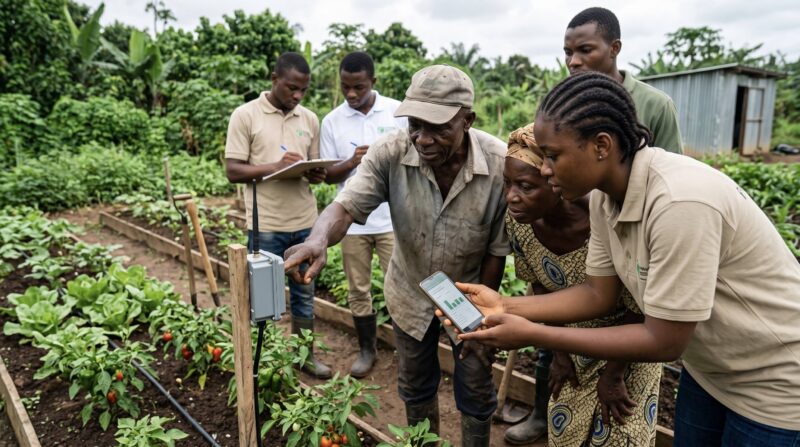
Climate and food-security solutions often become most practical when they are developed close to the farmers, landscapes, and constraints they are meant to serve.
H-Garden developed an automated, AI-enabled smart farming system for local farmers. The system is designed to monitor environmental conditions in real time, detect pests and disease early, and help farmers reduce crop losses while improving yields. For a region facing climate volatility and food insecurity, this kind of practical agricultural technology points to the value of locally adapted tools rather than imported solutions designed for different production contexts.
Agro Flow Tech focused on aquaponics, combining fish farming with soilless crop cultivation. By using fish waste as a nutrient source for plants and circulating filtered water back into the system, aquaponics can reduce water use, minimize waste, and support year-round food production in constrained spaces. The team’s concept speaks directly to the need for climate-resilient food systems that can support farmers as weather patterns become less predictable.
A sprint has value only if it strengthens the relationships and capacities that remain after the event.
SciWorld approached the problem from a different angle: science education. Its EdTech platform turns science curriculum into cinematic, story-driven learning experiences intended to help young people connect scientific concepts to real-world challenges. While less immediately tied to farm productivity, the premise is important. Long-term climate resilience depends not only on today’s prototypes, but also on whether young people are equipped to understand systems, experiment, and imagine solutions in agriculture, renewable energy, environmental conservation, and public health.
Together, the finalists suggest that local innovation is not confined to a single sector. It can emerge through agricultural technology, water-efficient food production, education, and the broader confidence that communities gain when their own problem-solvers are taken seriously.
Slessor Labs also prepared an internal cost comparison to examine the hackathon as a low-cost coordination model. The analysis compared the program’s estimated direct cost of $1,245 with an estimated $12,000 counterfactual for running comparable activities separately across 15 intervention components, including knowledge development, talent support, prototype development, mentorship, and policy engagement.
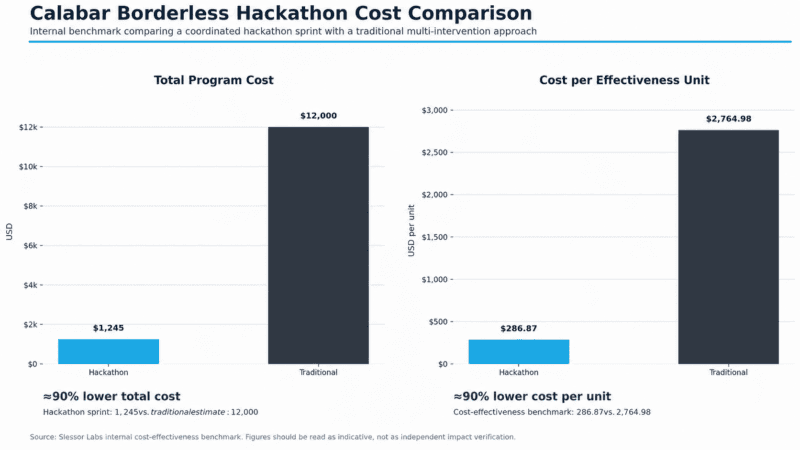
Slessor Labs’ internal benchmark suggests that the Calabar Borderless Hackathon delivered a lower-cost coordination model than a traditional multi-intervention approach, though the figures should be read as indicative rather than independent impact verification.
The more important lesson is not the exact ratio between the hackathon cost and a traditional program estimate. It is the possibility of reducing overhead and accelerating learning by aligning community energy, mentorship, technical support, and government attention around a specific set of local challenges. For low-resourced regions, speed and cost matter. So does institutional memory. A sprint has value only if it strengthens the relationships and capacities that remain after the event.
The Calabar experience points to a broader challenge for Nigeria and other countries with concentrated innovation economies. If the goal is inclusive development, then innovation cannot be treated as something that happens only where capital, universities, accelerators, and policymakers are already clustered. It must be deliberately distributed.
That does not mean every city needs to become Lagos. It means regional ecosystems need fit-for-purpose infrastructure: mentorship networks, affordable digital access, applied learning spaces, local conveners, patient capital, government responsiveness, and pathways from prototype to procurement, partnership, or investment. In climate- and food-stressed regions, these supports are not luxuries. They are part of resilience infrastructure.
Local innovation does not flourish simply because talent exists. It flourishes when talent is connected to institutions.
Cross River State’s recent launch of a Deforestation-Free Policy to support sustainable agriculture underscores the policy context in which local innovation will have to operate. If such policies are to translate into better livelihoods, stronger supply chains, and more resilient communities, they will need local problem-solvers who can build tools, generate data, support farmers, and adapt solutions to conditions on the ground.
The lesson from Calabar is modest but significant. Local innovation does not flourish simply because talent exists. It flourishes when talent is connected to institutions, when ideas are tested against real problems, and when communities are given the conditions to build from where they are. For the Impact Economy, that is the deeper promise of decentralizing innovation: not spreading technology for its own sake, but expanding the capacity of communities to shape their own climate-resilient and inclusive futures.
--
Disclosure: The author is Founder of Abelar and Research Lead of Slessor Labs, an Abelar initiative. Abelar provided financial support for the Calabar Borderless Hackathon, and Slessor Labs developed the sprint model and internal cost comparison discussed in this article.


Related Content
Connecting Georgia’s social enterprises to markets and capital
74
0
Gabriel Grant on giving shareholders a way to express what matters to them
95
0
For mission-led organizations, a change of manager tests whether workplace inclusion is built to last.
78
0

Artist Rob Strati on inherited objects, the limits of market price, and the creative possibilities…
116
0
Comments
Deep Dives
RECENT
 412
0
412
0
 444
0
444
0
 412
0
412
0
Editor's Picks
 74
0
74
0
 95
0
95
0
 78
0
74
0
95
0
74
0
95
0
78
0
78
0
74
0
95
0
74
0
95
0
78
0
Webinars
Signed and personally inscribed — you'll write the inscription as you order. Limited · 50…
News & Events

The board can add 2% for each 50% rise in the company’s value

Applications close December 2, or sooner once 250 arrive

Repeat borrowers in Colombia and Indonesia took it over the line
Subscribe to our newsletter to receive updates about new Magazine content and upcoming webinars, deep dives, and events.
Become a Premium Member to access the full library of webinars and deep dives, exclusive membership portal, member directory, message board, and curated live chats.


0 Comments