Free Test Preparation Is Infrastructure
Why free education tools need reliable access, credible evidence, and lasting support



Why free education tools need reliable access, credible evidence, and lasting support

 48
48
 0
0

What Islamic finance and impact investing can learn from each other
 121
0
121
0

After the flood, recovery capital must do more than replace what was lost
 279
0
279
0

How states can crowd in local early-stage capital
285
0

Why last-mile healthcare needs an operating model, not just more mobile clinics
 244
0
244
0
How Australia’s succession wave could turn ownership into a funding model
 355
0
355
0


 401
0
401
0
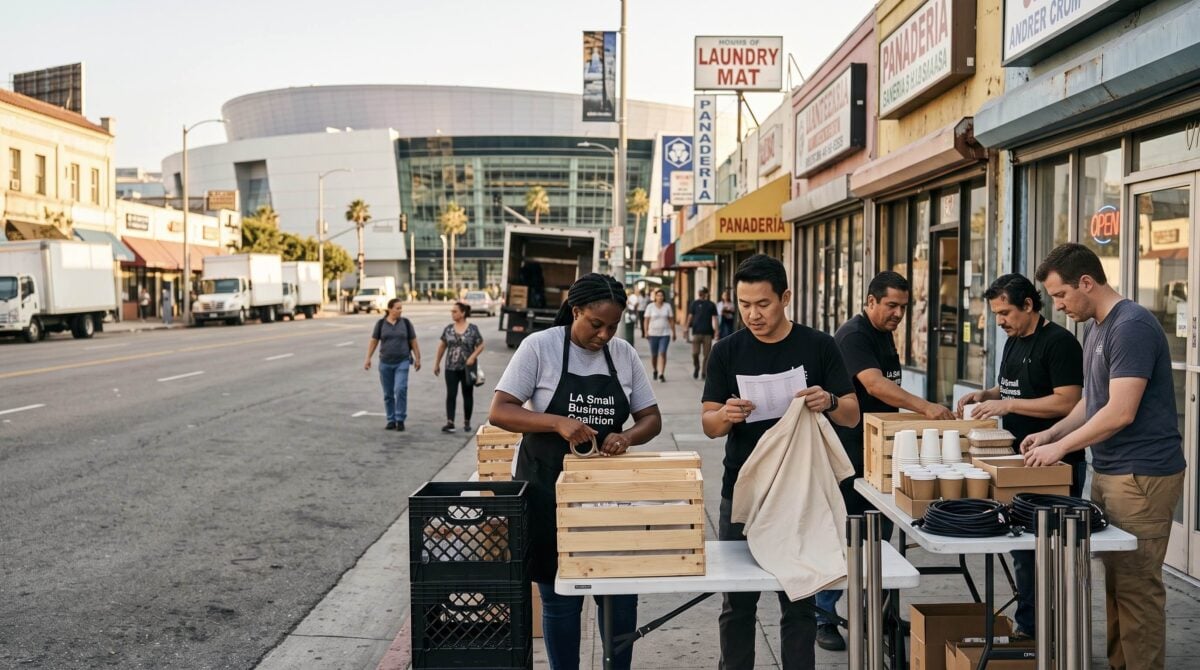
Local businesses do not benefit from major events automatically. Turning LA28 spending into lasting community value will depend on whether smaller enterprises can access contracts, build capacity, and compete successfully.
LA28’s venues will largely be inherited, not newly built. Its most consequential legacy may therefore be the businesses it strengthens, the workers it reaches, and the community wealth its purchasing power leaves behind.
When the Olympic and Paralympic flame leaves Los Angeles in 2028, what will remain for the people who live there?
LA28 will be the first Games since 1948 to build no new permanent infrastructure. That should help Los Angeles avoid the abandoned stadiums and costly “white elephants” that have shadowed some past host cities. But it also changes the meaning of Olympic legacy. If LA28 is not chiefly leaving behind new buildings, its most important legacy may be found in the money it spends — who wins the contracts, who gets hired, which businesses grow, and whether that value stays in local communities.
The Games will need an extraordinary range of goods and services: food, uniforms, transportation, staffing, technology, cleaning, waste management, event production, venue support, and much more. Every purchase is a choice about where money and opportunity will flow.
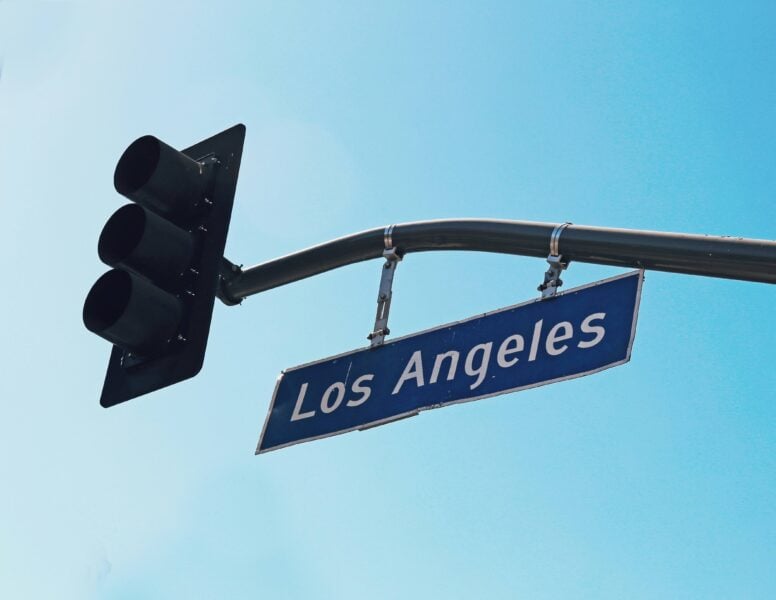
LA28’s procurement targets span a five-county region, making transparent reporting essential to understanding where opportunity actually lands; Photo by Tommao Wang
LA28 has already made meaningful commitments. Its 2026 Procurement Plan aims to direct 75% of the spending that can reasonably be sourced locally to businesses in the Greater Los Angeles region, and 25% to small businesses. LA28 is also posting opportunities through the Regional Alliance Marketplace for Procurement and developing a supplier-readiness program with Intuit.
Those are important steps. But spending locally is not automatically the same as creating lasting community benefit. A contract can go to a company based in the region without creating good jobs, reaching neighborhoods that have been left behind, reducing environmental harm, or strengthening businesses that exist to serve their communities.
That is where impact-led enterprises can play a larger role. These are businesses that build social or environmental purpose into the way they operate — perhaps by hiring people who face barriers to employment, reducing waste, sourcing responsibly, sharing ownership, or reinvesting profits in community needs.
Paris 2024 treated purchasing as more than a way to stage a sporting event. Organizers set clear goals for opening contracts to smaller businesses and enterprises in France’s social and solidarity economy. They also created support systems to help those businesses find opportunities, understand complicated tenders, and join together when a contract was too large for one company to handle alone.

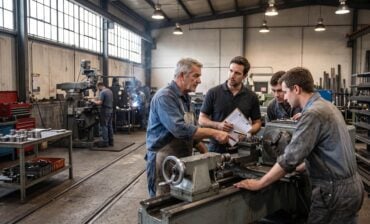
The legacy of LA28 will depend partly on whether small, community-rooted enterprises can access contracts, build capacity, and convert one-time Games opportunities into durable growth; Photo by Curated Lifestyle
The results were substantial. According to the OECD’s post-Games assessment, €826 million — 37% of the relevant infrastructure contract value — went to local small and medium-sized businesses and social-economy organizations, exceeding the 25% target. Nearly one-quarter of the hours worked on Games-related construction were completed by people participating in employment-integration programs.
One reason Paris made progress was ESS 2024, an intermediary that helped connect buyers with mission-driven suppliers. It did more than list companies in a directory. It explained upcoming opportunities, coached businesses through the bidding process, helped them form partnerships, and worked with procurement teams to make contracts more accessible.
Paris’s experience offers a simple lesson for Los Angeles: opening the door is not enough. Smaller and impact-led businesses also need a realistic path through it.
“LA28 has already committed to targeting 25% of addressable spend with small businesses and 75% within the Greater Los Angeles area,” said Rebecca Dunn, Executive Director of Fair Trade LA. “The opportunity is there, but turning those commitments into real community impact means creating clearer pathways for local and impact-led businesses to participate. It is not just about opening the door, but making sure businesses understand how to walk through it and have the capacity to compete.”
Every purchase is a choice about where money and opportunity will flow.
LA28 does not need to build another procurement website. It already has a public marketplace and a plan to prepare suppliers. The next step is to make impact-led businesses easier to find and easier to engage.
That could include a clearly marked, voluntary pathway for companies that can demonstrate social or environmental impact. The standards should be credible and transparent, but flexible enough to recognize different business models and established certifications. One existing example is People and Planet First, a low-cost global verification built around five core standards. LA28 should not be tied to any single badge, but it does not need to invent a way of identifying purpose-led suppliers from scratch.
First, give smaller businesses enough time and support to compete. Olympic contracts can be large, complex, and intimidating. Early notice, simpler applications, smaller contract packages, prompt payment, and practical help with insurance or working capital can determine whether a local enterprise can participate at all. LA28’s plan already calls for breaking some large contracts into smaller opportunities. That commitment should be applied consistently and tracked publicly.

Supplier-readiness programs can turn major-event spending into pathways for local and impact-led businesses — but only when smaller enterprises receive the time, guidance, and connections needed to compete
Second, measure who benefits — not only how much is spent. LA28 should report where contracts go, how many small and hyper-local businesses win work, and whether first-time suppliers gain lasting capacity. It should also track outcomes that matter to communities: good jobs for people excluded from the labor market, money retained locally, reduced waste, responsible sourcing, and businesses that continue to grow after 2028.
The definition of “local” makes this especially important. For LA28’s spending goals, the Greater Los Angeles region covers five counties. That is a vast and diverse economy. Transparent reporting can show whether opportunities are broadly shared and whether neighborhoods closest to the Games receive a meaningful part of the benefit.
Opening the door is not enough. Smaller and impact-led businesses also need a realistic path through it.
Third, build something that survives the closing ceremony. LA28 is temporary, but the relationships, supplier lists, training resources, and purchasing practices it creates do not have to be. They could be carried forward by Los Angeles governments, venue operators, universities, hospitals, corporate partners, and future major events. A business that becomes ready to supply the Games should also become better prepared to win other customers.
“The Games will generate billions in economic activity across Greater Los Angeles,” said Rebecca Dray, Executive Director of Purchasing with Purpose. “The question is not whether that wealth will be created. It will be. The question is who it reaches, and whether the infrastructure built around it outlasts the closing ceremony.”
LA28 is not starting from zero. It has ambitious local and small-business goals, a public platform for opportunities, a supplier-support program, and a commitment to responsible sourcing. That foundation deserves recognition.
The opportunity now is to go further: to make it easier for businesses that create community value to compete, to track the outcomes honestly, and to leave behind a stronger market than the one LA28 inherited.
If that happens, Olympic legacy in Los Angeles will not be measured only in memorable races, full stadiums, or television audiences. It will also be visible in the businesses that grew, the workers who gained a foothold, the neighborhoods that retained more wealth, and a regional economy better equipped to deliver value for people and planet long after the final medal has been awarded.
--
Disclosure
Chris Gale leads impact-led purchasing work at Purchasing with Purpose, a nonprofit organization that promotes purchasing from enterprises that prioritize people and planet. Purchasing with Purpose is one of the stewards of the People and Planet First verification mentioned in this article. Rebecca Dunn is Executive Director of Fair Trade LA and serves on the LA28 Community Business & Procurement Working Group. Neither author nor either organization holds an LA28 contract, receives LA28 funding, or has another financial interest in Games procurement.



Related Content
Why free education tools need reliable access, credible evidence, and lasting support
48
0
What Islamic finance and impact investing can learn from each other
121
0
After the flood, recovery capital must do more than replace what was lost
279
0
How Mishkā links women’s livelihoods to Cairo’s regeneration
 338
0
338
0
Comments
Deep Dives
RECENT
 285
0
285
0
 244
0
244
0
 355
0
355
0
Editor's Picks
 48
0
48
0
 121
0
121
0
 4351
0
48
0
121
0
4351
0
48
0
121
0
 279
0
279
0
Webinars
Signed by the author. Collected at the door at Lipton Hall, NYU School of Law,…
Signed and personally inscribed — you'll write the inscription as you order. Limited · 50…
News & Events
Seeking a new generation of leaders in coastal sustainability

A public-interest foundation keeps 63.3% of the voting rights

A pilot loan program returns the interest to borrowers who repay
Subscribe to our newsletter to receive updates about new Magazine content and upcoming webinars, deep dives, and events.
Become a Premium Member to access the full library of webinars and deep dives, exclusive membership portal, member directory, message board, and curated live chats.

0 Comments