Beyond Investment Readiness
How collateral rules and payment terms keep impact capital out of reach


How collateral rules and payment terms keep impact capital out of reach

 106
106
 0
0

Why free education tools need reliable access, credible evidence, and lasting support
 120
0
120
0

What Islamic finance and impact investing can learn from each other
208
0

How states can crowd in local early-stage capital
320
0

Why last-mile healthcare needs an operating model, not just more mobile clinics
 288
0
288
0

How Australia’s succession wave could turn ownership into a funding model
 399
0
399
0

 399
0
399
0
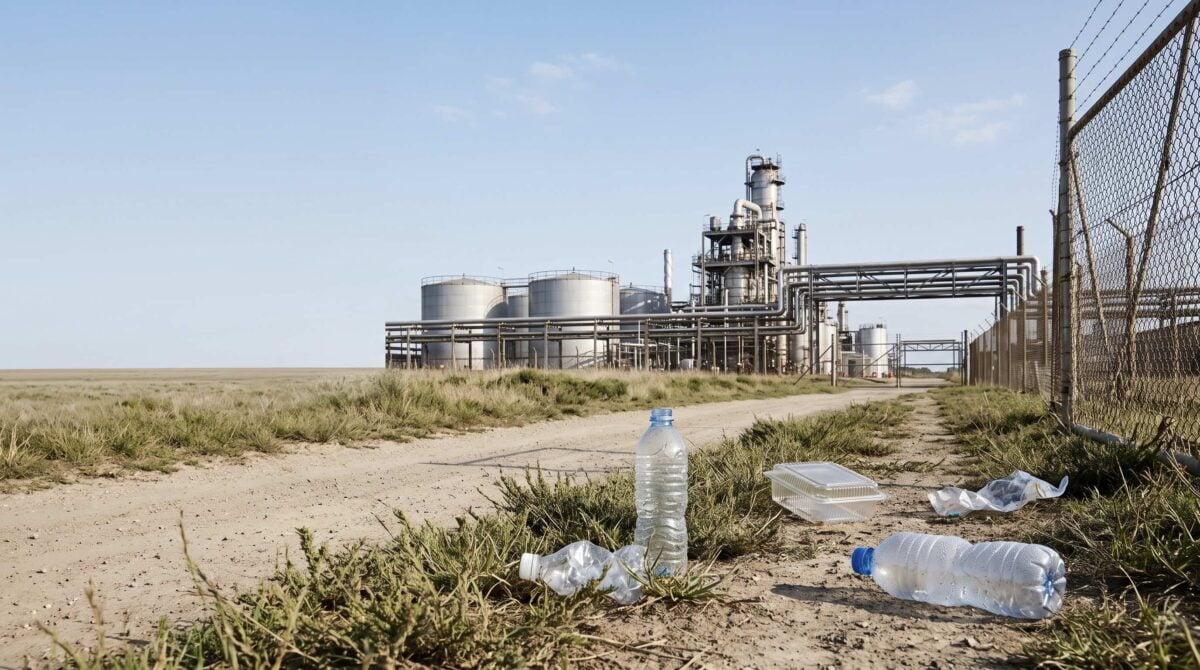
The plastic crisis begins upstream, in the feedstocks, infrastructure, and production incentives that make disposability cheap and ubiquitous.
Plastic pollution is usually framed as a waste problem. Beth Gardiner argues that its deeper roots lie upstream — in fossil-fuel economics, disposable design, and public policy.
For decades, the dominant public story about plastic has been intensely personal: recycle diligently, carry a reusable bottle, avoid the straw. In Plastic Inc.: The Secret History and Shocking Future of Big Oil’s Biggest Bet, journalist Beth Gardiner moves the lens upstream. Her reporting traces how oil and petrochemical companies helped build a business model around disposability, how the U.S. fracking boom supplied cheap feedstocks for plastics, and why petrochemicals matter to an industry facing slowing growth in transport-fuel demand.
Gardiner’s second book, published in February 2026 and named a New York Times Book Review Editors’ Choice, arrives as the International Energy Agency continues to identify petrochemical feedstocks as a major source of oil demand even as road transport electrifies. Impact Entrepreneur spoke with Gardiner about the political economy of plastic, the health evidence, and what intervention at the scale of the system might actually look like.
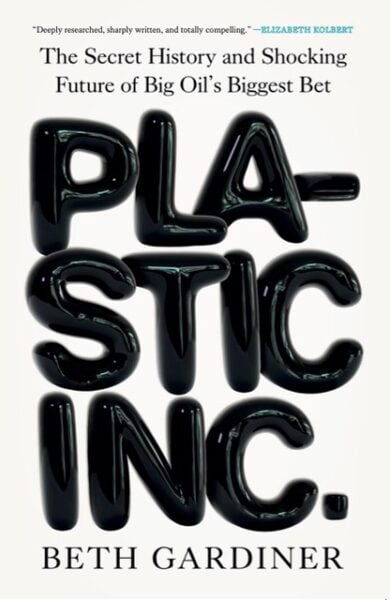
Plastic Inc. by Beth Gardiner (Avery, 2026).
The reframe
Impact Entrepreneur: The comfortable story about plastic is that it’s a problem of individual habits — recycle more, carry a reusable bottle. Your book argues that this framing is itself a product of corporate strategy. What’s the single most important thing people have been misled about?
Beth Gardiner: The number one thing I’ve tried to do with this book is help readers see the plastic waste issue through a lens of corporate and political accountability, rather than personal responsibility, which is the way we’ve been taught to think about it.
That reframing came out of my own shock, as someone who had spent years trying to reduce my plastic use, when I learned that big oil and gas companies were pouring enormous sums into plans to make more plastic, not less. It made me realize how much coverage of our plastics mess focuses either on how each of us can use less or on where plastic ends up. We hear much less about where it comes from — the fossil fuel and petrochemical industry.
The companies that make and use plastic have long tried to frame the issue as a problem of waste management rather than overproduction. If plastic ends up in the right place, in that view, they can keep making more of it every year and everything will be fine. I think it’s really important to challenge that framing.
Consumers did not simply choose the single-use system. Powerful companies had strong incentives to build it
What shocked me most in researching Plastic Inc. was how intentionally industry built the single-use, throwaway world we live in today. After World War II, oil and petrochemical companies, packaging companies, and consumer brands all saw money in the then-novel idea of disposability. Coca-Cola, for example, once operated a vast reuse system in which bottles could be returned and refilled dozens of times. Moving to single-use meant bottle makers could sell many more containers, while beverage companies shifted the cost of dealing with empties onto the public. By one estimate based on company reporting, Coca-Cola sells roughly 134 billion single-use plastic bottles a year. That’s one example of a larger reality: consumers did not simply choose the single-use system. Powerful companies had strong incentives to build it.
Impact Entrepreneur: The heart of your reporting is that plastic is a hedge: as climate action and electrification threaten demand for fuels, petrochemicals become a way to keep extracting value from oil and gas. How does that logic work?
Beth Gardiner: Single-use plastic is not simply a matter of consumer preference. It is embedded in the systems of production, packaging, distribution, and retail that shape what choices are available in the first place.Oil and gas companies understand that clean energy, EVs, and battery technology pose a real threat to their traditional business model. The industry is staring at a future in which demand for oil as a transport fuel may flatten and, eventually, decline. Plastic has become a central plank in its strategy for navigating that future.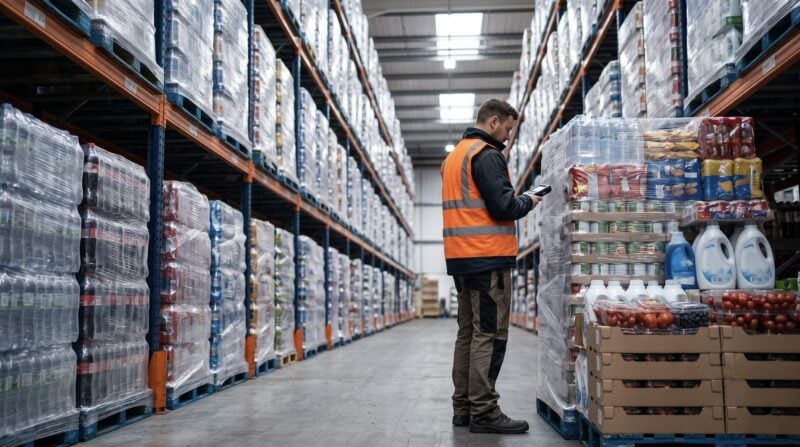
Many plastics are made from refinery streams or from natural-gas liquids that come out of the ground alongside methane. If you can turn those lower-value streams and by-products into petrochemicals and then into plastic, you create another source of revenue. For an industry whose core commodities are subject to volatile price swings, that additional revenue matters.
As consumers, we tend to assume goods are produced because people are asking for them. The plastics industry talks a lot about consumer demand, essentially placing responsibility on us for ever-rising production. But plastic can reverse the usual relationship between supply and demand. Its fossil-fuel feedstocks are often cheap, and that helps make plastic cheap. That low price is a big part of why it is everywhere. Consumers are often not demanding plastic so much as finding it almost impossible to avoid.
Impact Entrepreneur: You describe a fracking–plastic feedback loop. What is the loop, and why does cheap natural gas make the plastic problem harder to solve?
Beth Gardiner: The American fracking boom transformed the country’s energy landscape and helped make the United States the world’s largest producer of both crude oil and natural gas. Less visibly, it also helped make the U.S. a major petrochemical producer.
When natural gas is produced, methane is the main component, but you also get natural-gas liquids such as ethane. Ethane can be processed in an ethane cracker into ethylene, which is then used to make polyethylene, the world’s most common plastic. As fracking expanded, fossil fuel and petrochemical companies announced more than $200 billion in U.S. chemical and plastics investment linked to abundant shale gas and natural-gas liquids.
Consumers are often not demanding plastic so much as finding it almost impossible to avoid.
Once those plants are built, the incentives reinforce one another. Petrochemical production creates another revenue stream that can support continued drilling. The plants, in turn, need a steady supply of feedstock. And once companies have invested billions in crackers, pipelines, and processing capacity, they have an incentive to keep those facilities running and to sell as much output as possible. To me, that is a vivid illustration of why it has been in these companies’ interests to keep finding new uses for plastic.
Impact Entrepreneur: The microplastics-and-health evidence is still emerging. Without overstating what’s known, where do you think the science is heading, and how should investors or entrepreneurs think about latent liability?
Beth Gardiner: There are two different things to unpack. One is the chemicals used in plastics, where we have decades of research. The second is microplastics, where the science is much younger.
There is plenty of reason for concern about microplastics because these particles have been found throughout the environment and in human tissues, including the brain. But the research is still developing, and there is active scientific debate about how best to measure microplastics and nanoplastics inside the body. One challenge is that there is effectively no completely unexposed control group; plastic-associated chemicals and particles are now extraordinarily widespread.
On the chemicals side, the evidence is more mature. Many substances added to plastics to create properties such as flexibility, durability, or color can have endocrine-disrupting effects, interfering with sensitive hormonal systems. Research has associated exposure to some plastic-associated chemicals with a range of reproductive, metabolic, cardiovascular, neurodevelopmental, and cancer-related harms.
Whether that becomes a major liability issue for companies is a different question. The potential is certainly there, but it is notoriously difficult to connect an individual case of cancer or another disease that develops over a long time frame to one particular chemical exposure. I would not rule that kind of liability out, but we will have to see how the science, regulation, and litigation evolve.
Impact Entrepreneur: If the engine of the crisis is corporate and political power rather than individual choice, what does a response at that same scale look like? Where are the genuine leverage points?
Beth Gardiner: When I spoke to policy experts, the idea I heard most often was extended producer responsibility. For decades, industry has pushed much of the cost of plastic waste onto the public — through the taxes and fees we pay for collection and waste management, along with broader environmental and health costs.
Extended producer responsibility laws require producers to shoulder more of the costs associated with the packaging and products they put into the world. The idea is not just to save taxpayers money. If plastic’s price begins to reflect more of its real cost, it can change the incentives that encouraged companies to produce so much unnecessary packaging in the first place.
The fundamental issue is less plastic as a material than disposability as a model.
We are beginning to see this in Europe and in places such as California. But the devil is in the details, and industry has historically been very good at reshaping policy in its own favor.
Impact Entrepreneur: A lot of proposed solutions — better recycling, novel materials, cleanup technology — operate downstream. How do you distinguish an intervention that meaningfully changes the system from one that mostly allows it to continue?
Beth Gardiner: In 1950, at the dawn of the modern plastics era, global production was about 2 million metric tons. Today, it is roughly half a billion metric tons a year, and the trajectory is still upward. Fundamentally, any meaningful intervention has to change that trajectory.
I don’t think a zero-plastic world makes sense; plastic has many valuable and sometimes essential applications. But there are also many wasteful and unnecessary uses that we would not miss for a minute if they disappeared tomorrow.
I’m skeptical of the idea that we can simply substitute our way out of the problem with bioplastics, compostable plastics, paper, or cardboard. Different materials bring different trade-offs. The fundamental issue is less plastic as a material than disposability as a model.
That is why I keep coming back to reuse. Shifting from single-use to reuse is the key to reducing plastic use and production. We need answers that lead to less — less packaging, less waste, less plastic. Anything else risks leaving the central problem intact.
--
About Beth Gardiner
Beth Gardiner is an American journalist based in London. Plastic Inc., named a New York Times Book Review Editors’ Choice, is her second book. Her first, Choked: Life and Breath in the Age of Air Pollution, was named one of 2019’s best books by The Guardian and was a finalist for the National Association of Science Writers’ Science in Society book award. Her work has appeared in The New York Times, The Atlantic, The Guardian, National Geographic, The Washington Post, Scientific American, and Yale Environment 360. A former longtime Associated Press reporter, Gardiner is a three-time Pulitzer Center grantee and a recipient of the McGraw Fellowship for Business Journalism.


Related Content
How collateral rules and payment terms keep impact capital out of reach
106
0
Why free education tools need reliable access, credible evidence, and lasting support
120
0
What Islamic finance and impact investing can learn from each other
208
0

After the flood, recovery capital must do more than replace what was lost
 315
0
315
0
Comments
Deep Dives
RECENT
 320
0
320
0
 288
0
288
0
 399
0
399
0
Editor's Picks
 106
0
106
0
 120
0
120
0
 208
0
106
0
106
0
120
0
208
0
208
0
106
0
106
0
120
0
208
0
Webinars
Signed by the author. Collected at the door at Lipton Hall, NYU School of Law,…
Signed and personally inscribed — you'll write the inscription as you order. Limited · 50…
News & Events

The foundation begins putting the larger pool to work in 2027

Federal policy uncertainty and limited grants top 2026 risks

An introductory program for foundations and family offices
Subscribe to our newsletter to receive updates about new Magazine content and upcoming webinars, deep dives, and events.
Become a Premium Member to access the full library of webinars and deep dives, exclusive membership portal, member directory, message board, and curated live chats.

0 Comments