“I Didn’t Know My DAF Could Do This!”
How donor-advised funds are becoming catalytic capital platforms



How donor-advised funds are becoming catalytic capital platforms

 51
51
 0
0

Why circular migration may offer a better path than mass repatriation
 130
0
130
0

Financing historic cities for housing, livelihoods, and resilience
 203
0
203
0

How Haverford’s student investing program pivoted toward more purpose-suited capital
 638
0
638
0

Abrupt UK cuts threaten coastal resilience, food security, and community-led adaptation
 917
0
917
0
At MIE 2026, investors reframed risk as a tool for scale, resilience, and courage
 805
0
805
0
 12029
0
12029
0

We have arrived at a ”Golden Age” of responsible investing — a time when even the world’s largest private equity investors are “among ESG’s most enthusiastic boosters”. Unfortunately, while the enthusiasm for solutions that require limited or no financial sacrifice, or perhaps, even better, deliver “impact alpha,” are at an all-time high, there seems to be a profound disconnect between the intensity of the rhetoric and the relative lack of interest we see in the corners of the “impact-first” universe that may require one to accept more modest, “concessionary” financial returns.
The answer to a search for impact-first peers might be found in religions. Faith-based investors represent trillions of global assets under management (AuM) and have a long history as pioneers in responsible investing. For example, Ceniarth, Aliter Invest, and Meso Impact Finance are guided by faith-based doctrine, as are Quadia and Eventide.
There seems to be a profound disconnect between the intensity of the rhetoric and the relative lack of interest we see in the corners of the “impact-first” universe.
Despite faith-based institutions being among the original impact investors, most faith-based investors, broadly speaking, have yet to pursue major impact investing portfolios.
For faith-based investors already deploying other responsible investing strategies, impact investing is a natural extension to continue deepening the impact their investment portfolios can achieve. Given the vast wealth held by faith-based investors, activating their assets toward impact can lead to substantive contributions both to Agenda 2030 and the Paris Climate Agreement.

Religious communities of all creeds have long known that faith without action is empty. Intention without willingness to sacrifice for the good of others does little good. Hence, as we ponder the future direction of the impact investing movement, we would be wise to acknowledge its faith-based roots. One notable example is the Nun Funds, which were among the very first to provide low interest loans.
As we ponder the future direction of the impact investing movement, we would be wise to acknowledge its faith-based roots.
While enthusiastic about various faith-based efforts, Diane Isenberg and Greg Neichin (2021) express soberness about “the resource constraints and budget realities faced by many institutions in the sector”.
In 2019, the Global Impact Investing Network (GIIN) undertook a project to deepen engagement with the faith-based investing community. The purpose of the engagement was to understand how to best support more conscious and deeper impact allocations within faith-based investing portfolios. The GIIN team did this through a faith-based investing survey. An ensuing GIIN paper (2019) outlines the following key insights from the survey, interviews, and convenings:
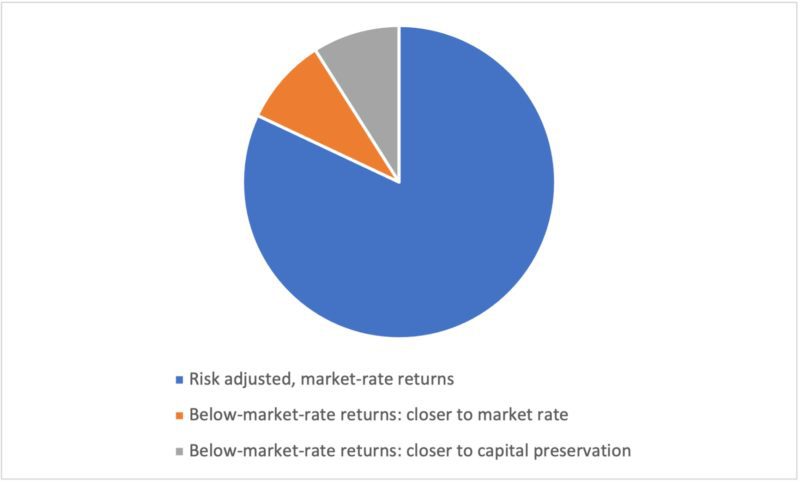 Figure 1: Target Returns; Source: GIIN.
GIIN survey respondents were asked what would help them or other faith-based investors allocate more capital to impact investments. Over 50% of respondents indicated a) research and data on the financial and impact performance of impact investments, and b) convening with and learning from other impact investors would be significantly helpful resources.
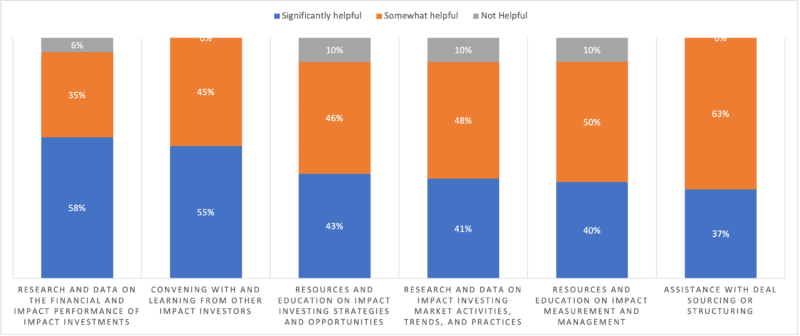 Table 1: Fund manager challenges in raising capital from faith-based investors; Source: GIIN.
It will be important to engage influential faith-based investing peers and faith leaders in shaping this messaging and helping to disseminate the case for impact investing, as pursued, for example, by the Swiss Impact Investment Association (SIIA)’s new Faith-based investor working group.
According to the GIIN’s 2019 annual impact investor survey, fund managers who raise capital from faith-based investors were asked about their experience. Similar to the faith-based investing survey findings, the top challenge cited by fund managers was that their fund did not target specific impact themes of interest to faith-based investors. A deeper investigation into these results will be done by the SIIA working group to determine what is causing this misalignment.
There could, for example, be a mismatch in the impact offered by fund managers and impact sought by the faith-based investors, so the development of new faith-based investor products may be needed.
There are existing tools and resources that can be shared with faith-based investors on the technical aspects of impact investing. Common impact measurement and management (IMM) systems can guide faith-based investors in measuring, managing, and optimizing the impact of their investments. In addition, financial performance studies on impact investments can be utilized by the faith-based investing community.

In order to engage faith-based investors, it is advantageous to already be active in faith communities or to collaborate with other organizations trusted by faith-based investors. Moreover, a number of faith-based networks have indicated that their members would like to learn more about impact investing.
This interest provides an opportunity and entry point for partnership between faith-based networks, such as FaithInvest and Geneva Agape Foundation (GAF), and impact investing specialists, such as SIIA, looking to support faith-based investors in moving more capital to achieve positive, measurable social and environmental impact results.
The scaling-up of opportunities and partnerships can happen through conferences such as the GAF’s Faith-based Investment Conferences and The Vatican Conferences on Impact Investment.
Through tailored messaging about the case for impact investing, practical guidance, resources on how to get started, and strategic partnerships, faith assets can be reallocated with deeper purpose. Younger generations increasingly seem interested in how its faith speaks to the larger issues of the world. Thus, to show what they are for, faith-based organizations must mobilize to redesign and push the field of impact-first investing forward and help the economy shift towards improving equity and social justice.


Related Content
How donor-advised funds are becoming catalytic capital platforms
51
0
Why circular migration may offer a better path than mass repatriation
130
0
Financing historic cities for housing, livelihoods, and resilience
203
0

Democracy, narrative, and systems change
 260
0
260
0
Comments

Deep Dives
RECENT
 638
0
638
0
 917
0
917
0
 805
0
805
0
Editor's Picks
 51
0
51
0
 4476
0
4476
0
 7948
0
51
0
51
0
7948
0
51
0
51
0
 130
0
130
0
 203
0
203
0
Webinars
News & Events

Helping founders and impact investors align

For three craft enterprises in India

Subscribe to our newsletter to receive updates about new Magazine content and upcoming webinars, deep dives, and events.
Become a Premium Member to access the full library of webinars and deep dives, exclusive membership portal, member directory, message board, and curated live chats.

Join our global community of systems-minded changemakers.
Subscribe to the Impact Entrepreneur newsletter for the latest insights, magazine features, and invitations to exclusive webinars, Deep Dives, and events.


0 Comments