What a Broken Plate Reveals About Value
Artist Rob Strati on inherited objects, the limits of market price, and the creative possibilities…



Artist Rob Strati on inherited objects, the limits of market price, and the creative possibilities…

 77
77
 0
0

Counting what we fail to prevent, sixty seconds at a time
84
0

How collateral rules and payment terms keep impact capital out of reach
 191
0
191
0

How states can crowd in local early-stage capital
362
0

Why last-mile healthcare needs an operating model, not just more mobile clinics
 343
0
343
0

How Australia’s succession wave could turn ownership into a funding model
 461
0
461
0

 1601
0
1601
0
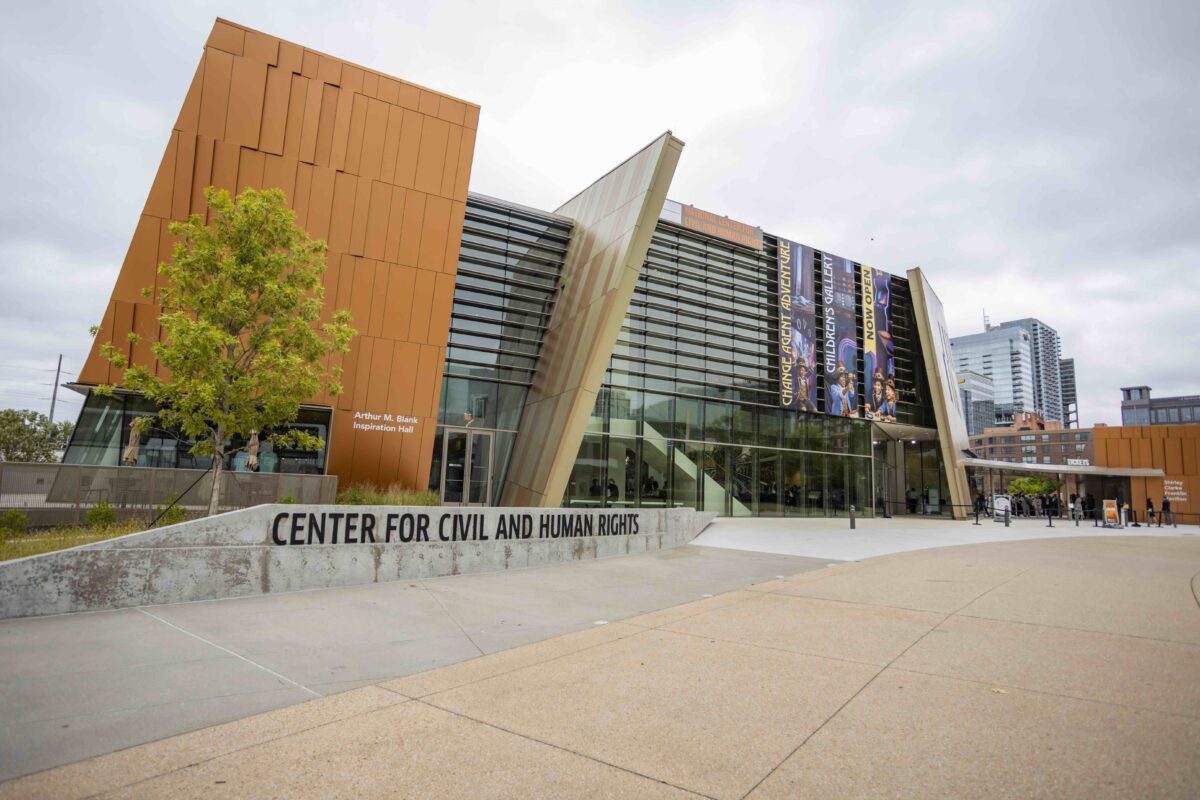
At the 2026 Mission Investors Exchange National Conference in Atlanta, impact investors confronted a difficult question: what does it mean to pursue economic justice when democracy itself is under strain? Drawing lessons from civil rights leaders, Bryan Stevenson, Tonya Allen, Stephen Heintz, Rey Ramsey, Mike Kubzansky, and others, Dmitriy Ioselevich argues that the impact investing field must become bolder, more systemic, and more capable of shaping the narratives that determine what futures become possible.
It has been more than 60 years since President Lyndon B. Johnson signed the Civil Rights Act of 1964 into law, officially prohibiting discrimination based on race, color, religion, sex, or national origin. The following year, the Voting Rights Act of 1965 sought to protect one of the most fundamental rights in a democracy: the right to cast a ballot and have that vote count.
And yet recent events show that the struggle for equal participation in American democracy remains far from settled.
On April 29, as 800-plus attendees gathered in Atlanta for the final day of the Mission Investors Exchange (MIE) National Conference, professionals from across the impact investing community woke up to news of a historic Supreme Court ruling that could dramatically reshape the legacy of the Voting Rights Act by weakening protections for Black political representation in redistricting.
“It means that you have entire communities that can go without having representation,” said Cliff Albright, a co-founder of Black Voters Matter. “It is literally throwing us back to the Jim Crow era unapologetically, and that’s not exaggeration.”
Just hours earlier, many of these same impact professionals had attended an evening reception at the National Center for Civil and Human Rights, where exhibits chronicled many of the key figures, milestones, and moral confrontations of the Civil Rights Movement. Walking through the museum and hearing the immortalized voices of leaders like Martin Luther King Jr. and John Lewis, it was impossible not to consider what that movement still has to teach those working today to build a more just economy.
Call it the impact movement. Call it the sustainability movement. Call it the economic empowerment movement. Call it whatever you like — there is no denying that the current convergence of crises demands a collective response, not only in the name of civil rights, but also human rights, democratic rights, and the right to a habitable planet.
Political rights and economic rights cannot be neatly separated. Democracy without shared prosperity is fragile.
The impact investing field should be careful not to overstate the comparison. The Civil Rights Movement was a historically specific struggle against legally sanctioned racial apartheid, rooted in Black leadership, sacrifice, organizing, and courage. But its lessons remain urgent for anyone committed to structural change.
Fortunately, there is much that today’s impact leaders can learn from the civil rights leaders who came before them.
Physical attacks and threats have long been used to control and silence populations. From police brutally beating marchers on Bloody Sunday in Selma to more recent federal immigration enforcement actions and protest confrontations that have raised serious concerns about the use of force, intimidation through violence remains a common tactic of authoritarian power.
For the leaders of the Civil Rights Movement, racially motivated attacks were not a surprise. They were part of the system being exposed. By meeting violence with disciplined moral clarity, civil rights leaders turned these confrontations into public reckonings. They forced Americans to see the cruelty that many had been willing to ignore, and in doing so helped activate a broader base of support for the next fight.
For today’s leaders, continued attacks on immigrants, protesters, voters, and other marginalized communities are a reminder that pushing back requires speaking out and standing up, not sitting down.
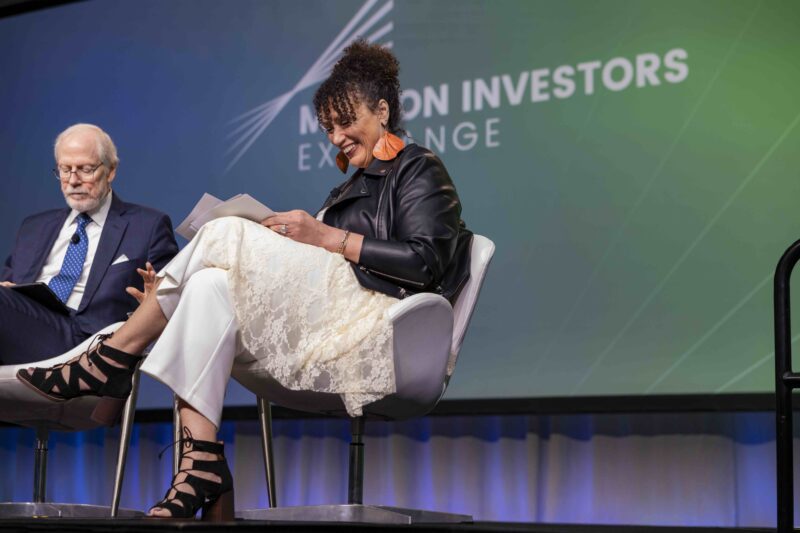
Tonya Allen on stage at MIE 2026; Photo by Ashley Gilmer, Divine Eye Media
“What I learned in Minnesota is that the fight to protect democracy doesn’t just happen in hallways — it’s also fought on doorsteps, neighborhood streets, and commercial districts,” said Tonya Allen, president of the Minneapolis-based McKnight Foundation, during a lunchtime plenary on “Investing and Leading Amidst Uncertainty.” “When you’re in unpredictable times, that’s not the time to shrink, but the time to get bolder.”
Also speaking on the panel was Stephen Heintz, the outgoing president and CEO of Rockefeller Brothers Fund.
“We are at a hinge moment where I think we risk losing the democracy we have,” said Heintz. “If we don’t defend the democracy we have, we will lose the opportunity to build the democracy we need.”
Capital must be deployed in service of the democratic, cultural, and institutional conditions that make an impact economy possible.
On an earlier panel about “Investing for Collective Prosperity,” Rey Ramsey, president and CEO of the Nathan Cummings Foundation, made a similar point.
“For anyone who’s in a leadership position, you don’t spend your life and your career as a responder, so don’t be in response,” Ramsey said. “We didn’t change language, we didn’t take things sitting down, and we continued with what we were doing, which is fighting for racial, economic, and environmental justice.”
With greenhushing still the default strategy for many impact entrepreneurs and investors, speakers across the conference seemed to agree that it is long past time for more bold statements and actions — and perhaps even a dash of greenshouting.
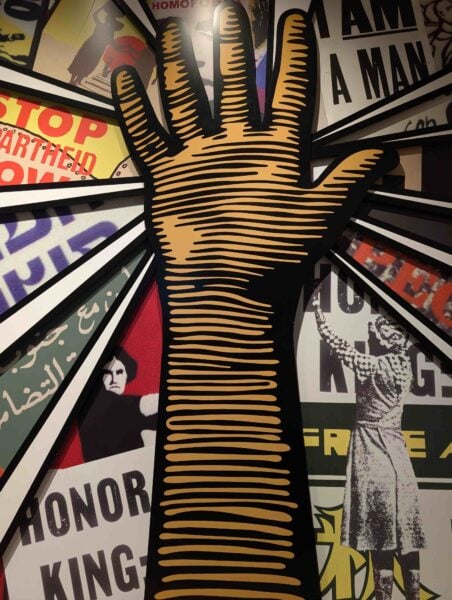
Photo by Dmitriy Ioselevich
The Civil Rights Movement of the 1950s and 1960s was a direct response to Jim Crow, the failures of Reconstruction, and the systemic racism and subjugation that segregated Black Americans from the rest of society. But many people forget that the historic 1963 March on Washington was not simply a march for civil rights. It was the March on Washington for Jobs and Freedom.
Of the 10 demands listed by organizers in the official program, many focused directly on segregation and discrimination. But others spoke to the broader economic foundations of freedom: quality jobs, a living minimum wage, and stronger labor protections.
The point was clear then, and remains clear now: political rights and economic rights cannot be neatly separated. Democracy without shared prosperity is fragile. Prosperity without justice is exclusion by another name.
While the Johnson administration helped pass legislation that responded to many of the civil rights demands, the broader economic agenda of the movement remained unfinished. And it is the legacy of those unresolved issues — wealth inequality, labor insecurity, racialized exclusion from opportunity, and mistrust between communities and institutions — that many impact entrepreneurs and investors are now confronting.
Bryan Stevenson, founder and executive director of the Equal Justice Initiative, spent much of his closing keynote at MIE reflecting on the Civil Rights Movement and the ways in which the United States is “still living with the stain of slavery.” From the structural flaws in the criminal justice system to the widening wealth gap, Stevenson described how the country’s history of racial inequity continues to shape our institutions, pollute our relationships, and erode trust between communities.
“We need to think about how everything we do in philanthropy can shift the systems under which global society lives, because the current systems are playing to the strengths of a very small subset of the global population,” said Heintz. “We need to be thinking about systems-level change, and that’s why a number of us are trying to take a systems-level approach to investing, and thinking about the 360 degrees of our philanthropic assets.”
That 360-degree approach became especially urgent during a panel on “The Intersection of Ethical AI and Impact Investing.” Mike Kubzansky, who recently left his role as CEO of Omidyar Network to launch an ethical AI platform called Andaris.ai, called on allocators to “use your full toolkit right now” to help shape a better AI future.
The connection to the March on Washington’s economic demands is not accidental. If the 1963 march insisted that freedom required jobs, wages, and labor protections, the rise of AI raises a similar question for our time: who will share in the gains of technological progress, and who will bear its costs?
As AI tools advance, the risk is not merely technological disruption. It is the possibility that automation could displace millions of workers, depress economic mobility, concentrate wealth and power among a small number of companies and capital owners, and deepen the very inequities the impact investing field claims to address.
Neither AI safety regulation nor a federal jobs program, on its own, will be enough to prevent that future. The challenge requires investors, philanthropies, policymakers, entrepreneurs, workers, and communities to address the full system: ownership, governance, labor markets, capital allocation, data rights, public policy, and democratic accountability.
A more systemic approach does more than widen the tent of the impact movement. It creates a multiplier effect, reinforcing the interconnected systems on which genuine prosperity depends.
Among the prominent figures of the Civil Rights Movement, artists and cultural leaders played a powerful role in bringing wider visibility to the cause. Musicians like Bob Dylan and Joan Baez, actors like Paul Newman and Marlon Brando, as well as writers and other public figures helped amplify the movement’s moral claims and show that support for civil rights extended across a broad and multiracial cross-section of society.
The impact movement has experimented with celebrity voices as well, from Bono and Leonardo DiCaprio to Chris Paul and Steph Curry. These figures can help with fundraising and visibility, but impact investors have often hesitated to empower public storytellers, preferring to leave much of the field’s messaging to the “real” experts.
That instinct is understandable. The work is complex. The risks of oversimplification are real. But culture wars are not won by the side with the longest track record or the most impressive credentials. They are won by the side that can tell a more compelling story, build trust, and invite people into a future they can imagine themselves inhabiting.
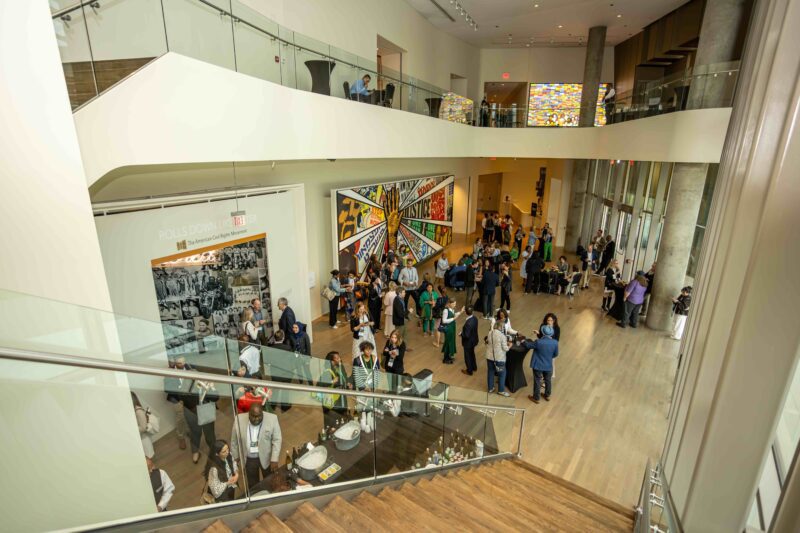
MIE 2026 gathering at the Center for Civil and Human Rights; Photo by Ashley Gilmer, Divine Eye Media
On that front, impact entrepreneurs and investors often find themselves fighting with sticks and shovels against entrenched interests armed with a finely tuned misinformation machine.
If there was one theme that ran throughout the MIE National Conference, it was the importance of narrative in widening the tent and catalyzing the movement.
“The best thing a founder can do is be really good at storytelling,” said Serena Williams in her keynote on the first day of the conference. Williams has leveraged her tennis fame and wealth to launch Serena Ventures, an early-stage venture capital firm that invests in diverse founders, with a particular focus on addressing funding gaps for underrepresented entrepreneurs in sectors such as fintech, healthcare, and consumer goods.
“We have to name the issues that we’re facing, and we have to narrate it so that people can put together all the pieces,” said Allen. “And then we have to also provide a plan for going forward. That navigation may not always be clear, but it’s important to make a choice that is grounded in our values.”
Stevenson put the point even more directly.
Impact investing cannot afford to be quiet, narrow, or technocratic. It must be willing to stand up, fix systems, and help tell the story of the world it is trying to build.
“We are in the midst of a massive narrative struggle,” he said, adding that narrative work cannot be separated from policy work. As an example, he pointed to how the Civil Rights Movement succeeded in dismantling much of the legal infrastructure of Jim Crow, but did not fully transform the narrative around racial equality. That unfinished narrative work, Stevenson suggested, continues to undermine progress across a range of impact issues.
His closing message to attendees was to move beyond the fear and anger that have defined recent years and focus instead on hope and freedom.
“There’s something better waiting for us in this country,” Stevenson said, “something that feels more like freedom, more like hope, more like equality, and it’s waiting for us.”
For impact investors, the lesson is not that capital alone can deliver that future. It is that capital must be deployed in service of the democratic, cultural, and institutional conditions that make such a future possible.
The Civil Rights Movement reminds us that structural change requires more than good intentions. It requires courage, discipline, narrative power, and a willingness to confront systems rather than merely soften their consequences.
That may be the most important lesson MIE 2026 offered: in this moment, impact investing cannot afford to be quiet, narrow, or technocratic. It must be willing to stand up, fix systems, and help tell the story of the world it is trying to build.



Related Content
Artist Rob Strati on inherited objects, the limits of market price, and the creative possibilities…
77
0
Counting what we fail to prevent, sixty seconds at a time
84
0
How collateral rules and payment terms keep impact capital out of reach
191
0

Why free education tools need reliable access, credible evidence, and lasting support
 250
0
250
0
Comments
Deep Dives
RECENT
 362
0
362
0
 343
0
343
0
 461
0
461
0
Editor's Picks
 77
0
77
0
 84
0
84
0
 191
0
77
0
77
0
84
0
191
0
191
0
77
0
77
0
84
0
191
0
Webinars
Signed by the author. Collected at the door at Lipton Hall, NYU School of Law,…
News & Events

The September 14 program and a live IFI Tool demo are online

Pre-seed and seed startups can apply on a rolling basis

Their Built platform helps teams design, launch and run funds
Subscribe to our newsletter to receive updates about new Magazine content and upcoming webinars, deep dives, and events.
Become a Premium Member to access the full library of webinars and deep dives, exclusive membership portal, member directory, message board, and curated live chats.


0 Comments