We Are Not Counting the Full Economy




 1448
1448
 0
0

Why militarized security keeps making us less safe
 1676
0
1676
0
Risk-sharing, resilience, and post-genocide Rwanda
 1585
0
1585
0

Can immersive experiences move people beyond consumption toward lasting change?
 2213
0
2213
0

As the extractive model sheds human workers to AI, a new regenerative economy is emerging
1812
0

How narrow strategies are helping ventures survive volatile ecosystems
1789
0
 3577
0
3577
0
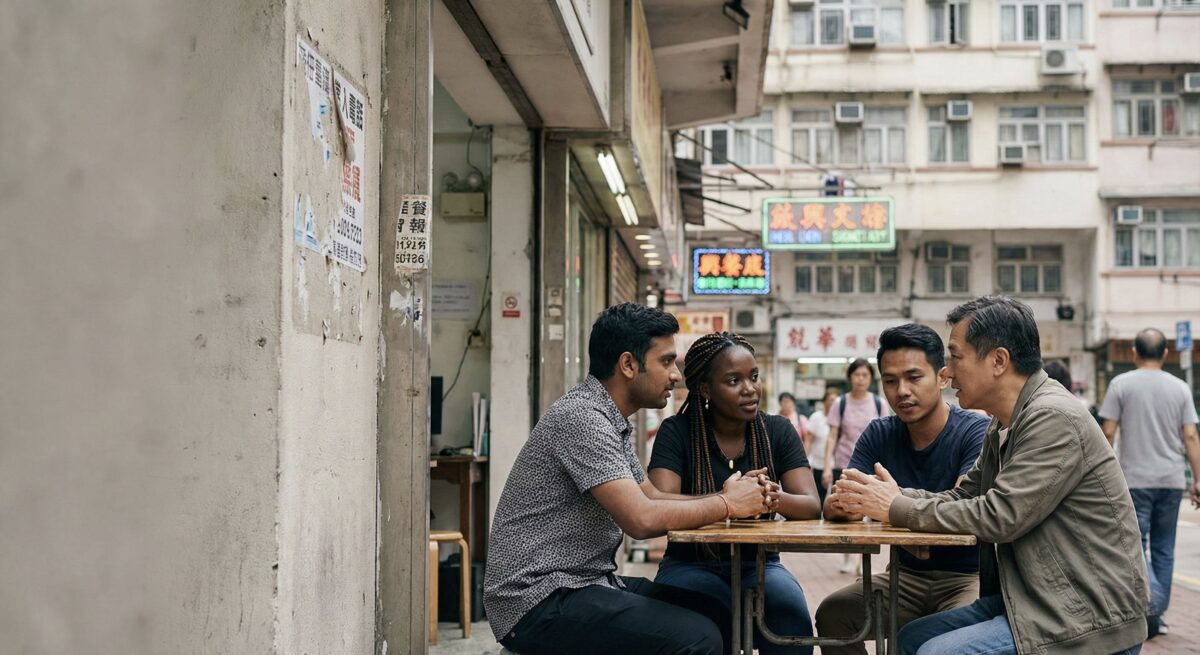
Hong Kong is often seen as a global hub of opportunity, yet its entrepreneurial ecosystem remains deeply uneven. This article explores how the Foundation for Shared Impact is redefining inclusive entrepreneurship — treating access, trust, and community as economic infrastructure rather than charity.
Hong Kong is often celebrated as one of the world’s most entrepreneurial cities — a global financial hub where capital, talent, and opportunity converge. Yet beneath this reputation lies a persistent structural contradiction: entrepreneurship in Hong Kong remains deeply uneven, particularly for the city’s ethnically diverse, non-Chinese communities.
As of the latest population census, ethnically diverse residents make up approximately 8.4 percent of Hong Kong’s population. Despite living in an economy with rising GDP per capita — increasing from USD 49,771 in 2021 to USD 50,532 in 2023 — one in five people from these communities were living in poverty, a rate significantly higher than the population average. These disparities are not incidental; they are systemic.

FSI Executive Director Vivian Seo
Lower educational attainment, language barriers, and unrecognized professional credentials continue to limit access to mainstream employment and entrepreneurial pathways. Many ethnically diverse workers are concentrated in lower-skilled, lower-mobility roles such as construction, security services, food delivery, or informal retail. For those who attempt to start businesses, the barriers multiply: limited access to local business networks, difficulties navigating Cantonese-dominated systems, high operating costs, constrained access to capital, and a lack of culturally responsive government support for micro, small, and medium enterprises.
The result is a pattern common across many global cities: ethnically diverse entrepreneurs are often “pushed” into serving only their own communities, forming economic enclaves that offer survival but rarely scale. Even second- and third-generation ethnic minority youth — often fluent in Cantonese and more socially integrated — report persistent discrimination and exclusion from mainstream entrepreneurial and corporate networks.
Against this backdrop, the question is not whether talent exists, but whether Hong Kong’s entrepreneurial ecosystem is designed to recognize and support it.
Founded in 2018, the Foundation for Shared Impact (FSI) emerged as a response to precisely this gap. Rather than treating inclusion as an adjunct to entrepreneurship — something addressed through isolated grants or short-term programs — FSI operates from a different premise: that equitable access to entrepreneurial resources is a form of economic infrastructure.
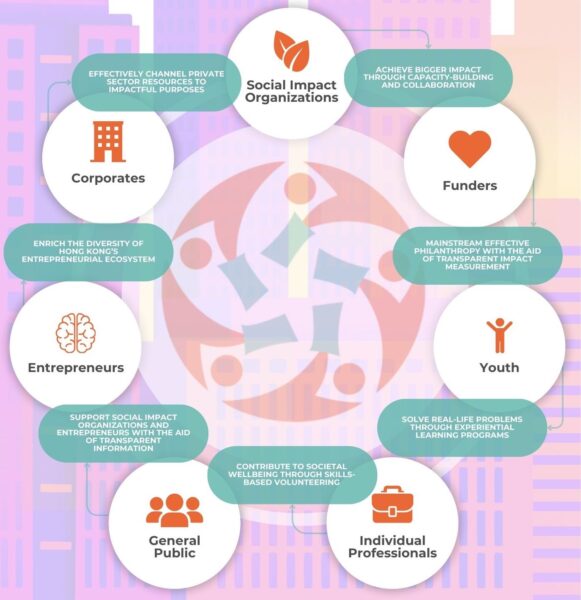
Shared Impact Model; Courtesy of FSI
Over seven years, FSI has worked with nearly 300 early-stage entrepreneurs, more than 85 ethnically diverse founders, and over 160 community partners. Its “shared impact” philosophy focuses on breaking down barriers to resources that are often invisible to well-resourced founders but insurmountable to those who are under-privileged or under-resourced.
FSI’s model challenges another assumption embedded in many impact initiatives: that benefit flows in only one direction.
FSI does this not by imposing standardized growth models, but by meeting founders “where they are.”
“We cannot expect every business owner in our programs to achieve the same learning outcomes or grow at the same pace,” explains Vivian Seo, FSI’s Executive Director. “Grassroots business owners are typically time-starved. We don’t impose rigid timelines or KPIs that don’t reflect their lived realities.”
This rejection of one-size-fits-all entrepreneurship is central to FSI’s approach — and marks a departure from many accelerator and incubation models that privilege speed, scale, and investor readiness over resilience and viability.
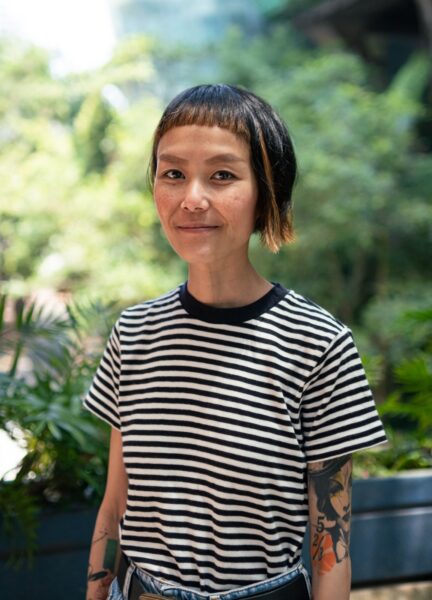
TC Li, FSI's Manager
FSI’s work spans mentorship programs for ethnically diverse founders, corporate skills-based volunteering, youth fellowships and internships, and GuideFong — Hong Kong’s first online directory for grassroots businesses, complemented by immersive community events.
Together, these initiatives form an ecosystem rather than a pipeline, as TC Li, FSI’s Communications Manager stresses.
For the Filipino husband-and-wife founders of The Blomstre, Aaron Que & Jerwine Bonafe,a retail business based in Hong Kong, the shift was transformative. After joining FSI’s inaugural mentorship program in 2022, they returned as mentors themselves in later cohorts.
“As a Filipino-owned business in Hong Kong, we felt we had to work twice as hard,” they recall. “We were constantly doing pop-ups, wherever and whenever we could. Our mentor helped us understand how to be realistic without limiting our dreams — to plan three or six months ahead, something we’d never done before.”
What the program offered was not capital alone, but perspective. “We realized we already had resources — we just didn’t know how to use them.”
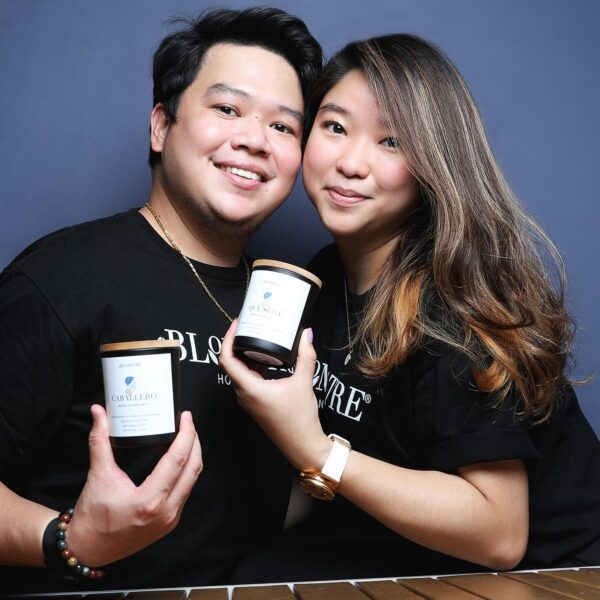
Aaron Que & Jerwine Bonafe, Blomstre's Filipino founders
For others, the barriers are even more fundamental. Kebba Jallow, a Gambian entrepreneur who arrived in Hong Kong in January 2023, built JK Auto Recycling from scratch through FSI’s mentorship program. Navigating business registration, banking, and physical space would have been daunting alone.
“When you come to a new city, you don’t know how things work,” Kebba explains. “Through the program, I registered my business, opened a bank account, secured a yard, and got the company running within four months.”
By conventional accelerator standards, this might be considered slow. By human standards, it represents meaningful progress — and a foundation for durability.
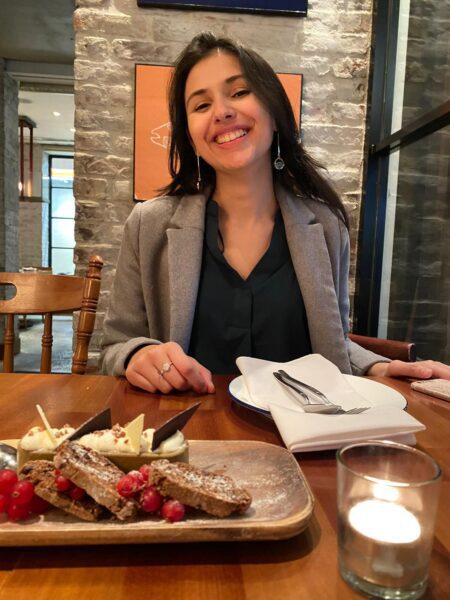
Maryam Khan, Founder of ExplorerZ
For solo and micro-entrepreneurs, FSI’s most valuable contribution may be neither capital nor training, but community.
Maryam Khan, founder of halal and vegetarian food blog Foodie Explorerz, describes the experience as entering a support system rather than a program. “This community is where we support each other,” she says. “Not just through mentors, but through other entrepreneurs. You learn from their mindsets, even if they’re in completely different industries.”
Her mentor, a full-time entrepreneur, helped her envision monetization pathways beyond social media — a rarity in Hong Kong’s creator economy. “Seeing someone who has actually done this validates what I want to build.”
This relational infrastructure extends to mentors as well. Naman Tekriwal, co-founder of upcycled craft beer company Breer, has been mentoring since FSI’s program launched in 2022.
“I know firsthand how difficult it is to start a company as an ethnically diverse founder,” he says. “Language barriers, not knowing where to begin — these things slow everything down.”
By referring Kebba to his own banking relationship manager, Naman shortened a process that had taken him years to navigate. “Once you build a connection, you can pass it forward.”
FSI’s model challenges another assumption embedded in many impact initiatives: that benefit flows in only one direction.
Volunteer legal practitioners, for example, provide pro bono support to early-stage founders navigating contracts, online sales platforms, and influencer agreements. In return, they gain a deeper understanding of how legal frameworks interact with the realities of one-person businesses.
“We have to rethink how contracts work when margins are thin and capacity is limited,” one volunteer reflects.
How should success be measured when outcomes are relational, contextual, and non-linear?
In this way, “shared impact” becomes reciprocal — a feedback loop that reshapes both sides of the ecosystem.
As FSI enters its eighth year, its leadership is notably resistant to conventional growth narratives. In its 2023–2025 Impact Report, Vivian Seo writes of reinforcing FSI’s role as “connector, facilitator, and enabler” within Hong Kong’s social impact sector — not as a replicable export model.
FSI has deliberately chosen not to expand beyond Hong Kong and does not currently receive government funding, relying instead on programmatic support from local private foundations and corporates. Vivian argues there is little urgency to diversify revenue sources, noting that working with under-resourced founders rarely produces a “viable business model” in financial terms.
FSI does not “cherry-pick” founders who can afford to pay.
This stance raises important questions for the broader impact economy. Is non-scalability a feature or a vulnerability? Can ecosystem-building survive without public funding? And how should success be measured when outcomes are relational, contextual, and non-linear?
For FSI, these tensions are not bugs — they are the work.
Vivian’s long-term vision is paradoxical: a Hong Kong where FSI is no longer needed because equitable access to entrepreneurial resources is embedded in the system itself.
At that point, she suggests, FSI could become obsolete.
Whether that horizon is near or distant remains uncertain. But in the meantime, FSI offers a compelling lesson for impact practitioners globally: inclusive entrepreneurship does not emerge from capital alone. It requires time, trust, cultural fluency, and institutions willing to operate at human scale.
In a city defined by speed, FSI is building something slower — and perhaps more durable.


Related Content

What FLY paper reveals about the limits of bespoke financial tools
 1387
0
1387
0

How impact and revenue can scale together
 1978
0
1978
0
Purpose language is not enough
 2356
0
2356
0
Why climate advocates need a stronger narrative
 1666
0
1666
0
Comments
Deep Dives
RECENT
 2213
0
2213
0
 1812
0
1812
0
 1789
0
1789
0
Editor's Picks
 12179
0
12179
0
 10004
0
10004
0
 10253
0
10253
0
 1448
0
1448
0
 1676
0
1676
0
 1585
0
1585
0
Webinars
News & Events
Subscribe to our newsletter to receive updates about new Magazine content and upcoming webinars, deep dives, and events.
Become a Premium Member to access the full library of webinars and deep dives, exclusive membership portal, member directory, message board, and curated live chats.

Join our global community of systems-minded changemakers.
Subscribe to the Impact Entrepreneur newsletter for the latest insights, magazine features, and invitations to exclusive webinars, Deep Dives, and events.





0 Comments