Can Diaspora Capital Strengthen Nigeria’s Health Workforce?
Community health workers offer a practical starting point



Community health workers offer a practical starting point

 429
429
 0
0

How donor-advised funds are becoming catalytic capital platforms
 595
0
595
0

Why circular migration may offer a better path than mass repatriation
 472
0
472
0

Abrupt UK cuts threaten coastal resilience, food security, and community-led adaptation
 1149
0
1149
0

At MIE 2026, investors reframed risk as a tool for scale, resilience, and courage
 1053
0
1053
0

Local economies as a bulwark against cross-border extraction and violence
 1127
0
1127
0
Upcoming Events

 2703
0
2703
0

Building a regenerative economy requires more than better deals — it requires shared stewardship over the institutions, ownership models, and financial structures that shape economic life.
The following is adapted from the conceptual framework of my forthcoming book, The Impact Entrepreneur Breakthrough: A Field Manual for the Regenerative Economy (September 2026), which examines the necessary evolution of capital to meet the demands of our converging crises.
There are two kinds of investors in impact — and the difference between them may help determine whether the regenerative economy arrives in time.
The first is the impact investor: deploying capital for measurable social and environmental returns, screening portfolios, tracking metrics, and celebrating exits. This investor has done real good — funding mission-driven enterprises, advancing ESG and impact measurement, and helping prove that finance can serve more than profit.
The second is the impact economy investor — and this is where the frontier lies. This investor does not simply seek returns with impact attached. This investor helps build the infrastructure of a different economy altogether: one designed for resilience, inclusion, shared prosperity, ecological regeneration, and democratic accountability.
One invests with impact. The other invests in the systems that make impact durable.
This is not a semantic distinction. It is the difference between reform and redesign, between making the extractive economy less harmful and helping build the regenerative economy that can replace it.
Impact investing’s achievements over the past fifteen years are real and significant. The field demonstrated that financial returns and social outcomes are not inherently at odds. It created measurement frameworks, attracted institutional capital, legitimized values-aligned investing, and helped mainstream the idea that investors have responsibilities beyond shareholder yield.
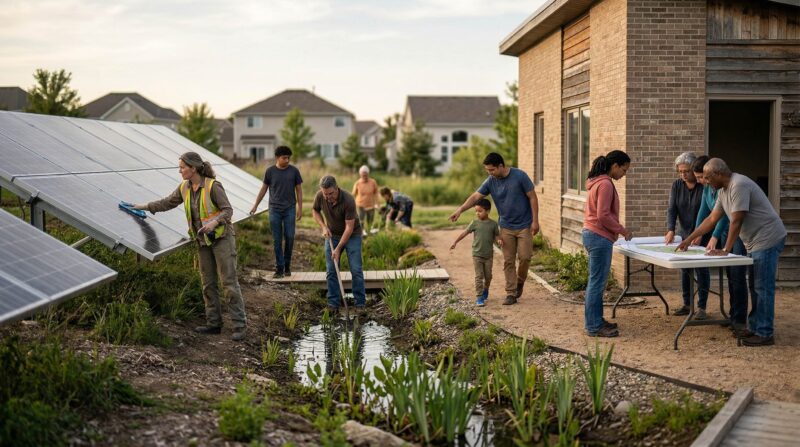
An economy worth building depends on commons that no single firm owns — ecological, civic, and social foundations that make resilience possible.
These are meaningful contributions. Many impact investors are motivated by deep commitment, and many of the enterprises they fund are measurably improving lives. The pioneers who proved that values and viability can coexist deserve enormous credit.
But something structural remained under-addressed. As I argue in The Impact Entrepreneur Breakthrough, the conventional impact investing model has generally operated within the architecture of the economy as it is, not as it must become. It has often financed better actors within extractive systems rather than financing the redesign of those systems themselves.
The result is that capital labeled “impact” often still reflects the impatience, volatility, and detachment of the extractive economy it seeks to transcend. Impact becomes an overlay — a reporting layer, a portfolio allocation, a set of metrics — rather than a redesign of the economic logic underneath.
This is not an indictment. It is a diagnosis. And the diagnosis matters because the gap between what impact investing has achieved and what the converging crises of our time now demand is not principally a gap of intention. It is a gap of economic design.
The most sophisticated response to these limitations has come from the systems-level investing movement. Architects like Bill Burckart and Steve Lydenberg at The Investment Integration Project, along with others working in systems-aware finance, have rightly argued that investors must understand how climate change, inequality, public health breakdown, and institutional fragility affect the long-term performance of entire portfolios.
The result is that capital labeled “impact” often still reflects the impatience, volatility, and detachment of the extractive economy it seeks to transcend.
Systems-level investing gets a great deal right. It recognizes that systemic challenges create feedback loops across the whole economy, and that investors cannot insulate themselves from the deterioration of the systems on which markets depend.
This is valuable work, and it represents a meaningful evolution beyond conventional impact investing. But it also has a structural ceiling of its own. Systems-level investing, as most commonly practiced, still tends to begin with portfolio preservation. It asks: how do I protect long-term value by addressing systemic risk?
The impact economy investor starts from a different premise. The question is not simply, “How do I make my portfolio more resilient to systemic breakdown?” It is, “How do I help build the economic systems that reduce the likelihood of breakdown in the first place?”
That is a deeper shift. It moves from managing exposure to redesigning foundations.
If impact investing asks, “What returns can I generate with impact?” and systems-level investing asks, “How do systemic risks affect my portfolio?” then impact economy investing asks a more foundational question:
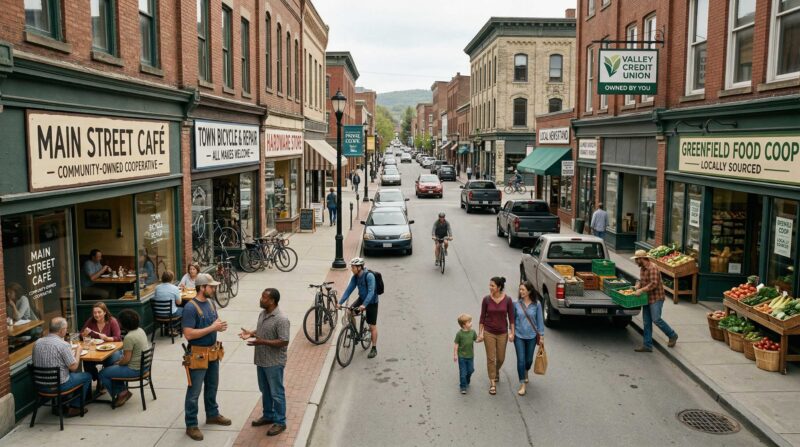
The real test of impact is not only what happens inside a portfolio, but whether capital helps produce local economies that are more resilient, inclusive, and alive.
What kinds of capital, ownership, institutions, and accountability structures are required to build an economy organized for regeneration?
The answer spans four interconnected domains.
Capital architecture
The impact economy requires capital that moves at the speed of regeneration, not extraction. This means patient capital structures — perpetual purpose vehicles that deploy funds without fixed exit timelines, evergreen funds that recycle returns into mission, revenue-based financing aligned with the actual rhythms of enterprise growth, and catalytic vehicles that absorb risk in order to unlock broader ecosystem participation.
The institutional infrastructure already exists in embryonic form. Values-aligned banks like Triodos Bank in Europe and Beneficial State Bank in the United States demonstrate that commercial banking can be structured around mission. Community development financial institutions and credit unions such as Self-Help show how place-based capital can serve historically excluded communities while preserving local accountability.
The infrastructure of the regenerative economy will not build itself. It requires investors who see the economy itself as the product — a design challenge and a moral project.
What distinguishes impact economy investing in this domain is not the use of any single instrument, but the intent behind the design: capital is structured to build durable infrastructure, not simply to extract returns from promising opportunities.
Ownership and governance
Conventional impact investing often accepts existing corporate structures, relying on enlightened leadership to maintain stakeholder focus. Impact economy investing recognizes that leadership changes, incentives drift, and capital markets exert pressure. If mission is to endure, it must be built into governance.

A regenerative economy is built not only through financial innovation, but through forms of ownership, labor, and stewardship that root economic life in place.
This means investing in enterprises built on steward ownership, where control rights are held in trust for purpose rather than traded on capital markets. It means perpetual purpose trusts that protect against mission drift after founder transition. It means cooperatives, employee ownership structures, community equity models, and governance systems that distribute voice and power more broadly.
The shift is from asking, “Is this leader committed to impact?” to asking, “Can this enterprise’s mission survive any leader?” Impact economy investors fund the structures that make mission durability possible.
Commons and public goods
Perhaps the most radical dimension of impact economy investing is its recognition that the economy depends on shared infrastructure that no single enterprise owns or controls — and that this infrastructure must itself be financed, protected, and stewarded.
My framework identifies five pillars of genuine security that function as the foundational commons of any healthy economy: ecological stability — watersheds, biodiversity, and climate systems; public health; democratic trust; knowledge and education; and community resilience.
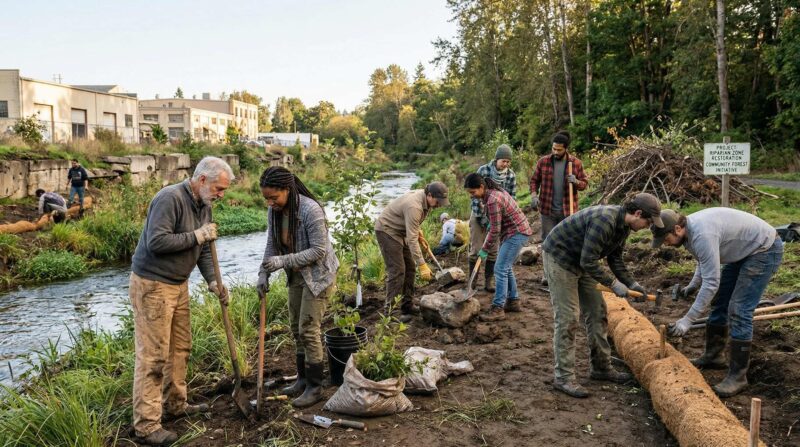
The commons are not peripheral to the economy — they are part of the living infrastructure on which any durable prosperity depends.
Impact economy investors fund the commons not as charity, but as strategic investment. Community land trusts that remove land from speculative markets. Open knowledge systems that democratize access to learning and innovation. Cooperative energy systems that localize resilience. Public-interest media and civic infrastructure that strengthen democratic legitimacy. These are not peripheral to the economy. They are preconditions for any economy worth building.
Measurement and accountability
Impact investing helped bring measurement into the mainstream, and that contribution remains foundational. But the dominant measurement paradigm still focuses primarily on portfolio-level indicators: jobs created, emissions reduced, households reached, women served.
Impact economy investors measure differently. The question shifts from “What impact did my portfolio generate?” to “Are the systems becoming healthier?” That means tracking not only enterprise-level outcomes, but also changes in ownership patterns, institutional resilience, wealth distribution, democratic participation, ecological restoration, and local self-determination.
This is harder to measure. But the difficulty of measurement does not diminish the importance of the question. New frameworks — from commons-based accounting to ecological footprint analysis to well-being economics — suggest that more systemic forms of accountability are both possible and increasingly necessary.
For investors willing to examine which side of this line they occupy, five diagnostic questions can help clarify the territory.
What is your time horizon?
The impact investor often operates on fund cycles — typically three to seven years — with defined exit targets. The impact economy investor operates on generational timelines, aligning capital with the actual pace of ecological restoration, institutional development, and community wealth building.
Who holds governance power?
In conventional impact structures, capital providers often retain disproportionate board control, veto rights, and liquidation preferences. Impact economy investors reconfigure governance so that workers, communities, mission stewards, and other affected stakeholders hold meaningful voice.
What counts as return?
Impact investors measure financial return alongside social and environmental metrics — the blended value proposition. Impact economy investors expand the definition further: community resilience, institutional durability, trust, ecological renewal, and democratic legitimacy are not side benefits. They are central returns.
Are you building enterprises or building an economy?
Impact investors fund enterprises that generate positive outcomes. Impact economy investors fund the connective infrastructure — capital vehicles, governance systems, public goods, place-based institutions, and networks of reciprocity — that allows positive enterprises to thrive at scale.
What happens when you exit?
The impact investor’s exit strategy is designed for investor liquidity — selling a position, going public, returning capital to limited partners. The impact economy investor asks whether the enterprise, the mission, and the surrounding community will be stronger after capital leaves than before it arrived.
This distinction is not meant to divide the field but to advance it. Many investors currently operating as impact investors already have the values, relationships, and commitment required to become impact economy investors.

The deeper question is not only whether an enterprise does good, but whether its capital, governance, and operating logic are aligned with regeneration rather than extraction.
The transition does not require abandoning everything impact investing has built. It requires extending it. Concretely, this means lengthening time horizons, moving from fixed fund cycles toward evergreen or mission-protective structures; embedding governance protections that outlast founders and markets; and investing not only in enterprises, but in the institutional and civic infrastructure those enterprises depend on. For institutional limited partners accustomed to the liquidity and predictable rhythms of standard fund cycles, this shift introduces real operational friction, requiring a fundamental reassessment of what constitutes acceptable risk and return.
It means funding infrastructure, not just companies — recognizing that some of the most strategic deployments of capital may be in the connective tissue of the economy: CDFIs, cooperative networks, community land trusts, public-interest media, open knowledge platforms, local energy systems, and field-building institutions.
None of this is easy. Patient capital requires patience. Shared governance requires surrendering control. Commons investment requires accepting forms of return that do not fit neatly on a balance sheet. But if the goal is not merely to improve outcomes within an extractive economy, but to help build a regenerative one, these are not optional tradeoffs. They are design requirements.
The impact investing field spent fifteen years proving the concept: that capital can be deployed for social and environmental benefit without necessarily sacrificing financial performance. That was an essential achievement. But it is no longer enough.
The next era demands proof of system — evidence that we can build an economy organized around regeneration rather than extraction, shared prosperity rather than concentrated wealth, and resilience rather than fragility.
The infrastructure of the regenerative economy will not build itself. It requires investors who see the economy itself as the product — not as a static backdrop against which deals are made, but as a design challenge and a moral project.
The impact economy will not be built by investors who merely add impact to finance. It will be built by investors who help finance a new economy from its foundations.
The question for every investor who claims the language of impact is no longer only: What good am I doing?
It is: What kind of economy am I helping make possible?
--
Laurie Lane-Zucker's book, The Impact Entrepreneur Breakthrough: A Field Manual for the Regenerative Economy, is forthcoming from Berrett-Koehler Publishers in September 2026.


Related Content
Why circular migration may offer a better path than mass repatriation
472
0

Financing historic cities for housing, livelihoods, and resilience
 558
0
558
0

Democracy, narrative, and systems change
 549
0
549
0
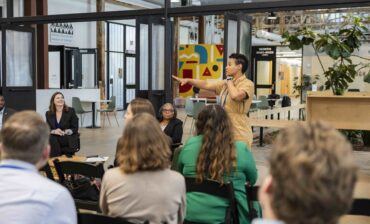
Lessons from Atlanta’s BeltLine and Pittsburgh Yards
766
0
Comments
Deep Dives

Featuring
Laurie Lane-Zucker
Founder & CEO, Impact Entrepreneur
July 30 - 12:00 PM EST
RECENT
 1149
0
1149
0
 1053
0
1053
0
 1127
0
1127
0
Editor's Picks
 429
0
429
0
 595
0
595
0
 4684
0
429
0
595
0
4684
0
429
0
595
0
 472
0
472
0
Webinars
News & Events

Recognizing America’s fastest-growing purpose-driven companies

Across the cohort, founders are creating solutions at the intersection of sustainability and social impact
Subscribe to our newsletter to receive updates about new Magazine content and upcoming webinars, deep dives, and events.
Become a Premium Member to access the full library of webinars and deep dives, exclusive membership portal, member directory, message board, and curated live chats.

Join our global community of systems-minded changemakers.
Subscribe to the Impact Entrepreneur newsletter for the latest insights, magazine features, and invitations to exclusive webinars, Deep Dives, and events.


0 Comments