We Are Not Counting the Full Economy


 1457
1457
 0
0

Why militarized security keeps making us less safe
 1685
0
1685
0
Risk-sharing, resilience, and post-genocide Rwanda
 1606
0
1606
0

Can immersive experiences move people beyond consumption toward lasting change?
 2223
0
2223
0

As the extractive model sheds human workers to AI, a new regenerative economy is emerging
1825
0

How narrow strategies are helping ventures survive volatile ecosystems
1810
0
 7899
0
7899
0
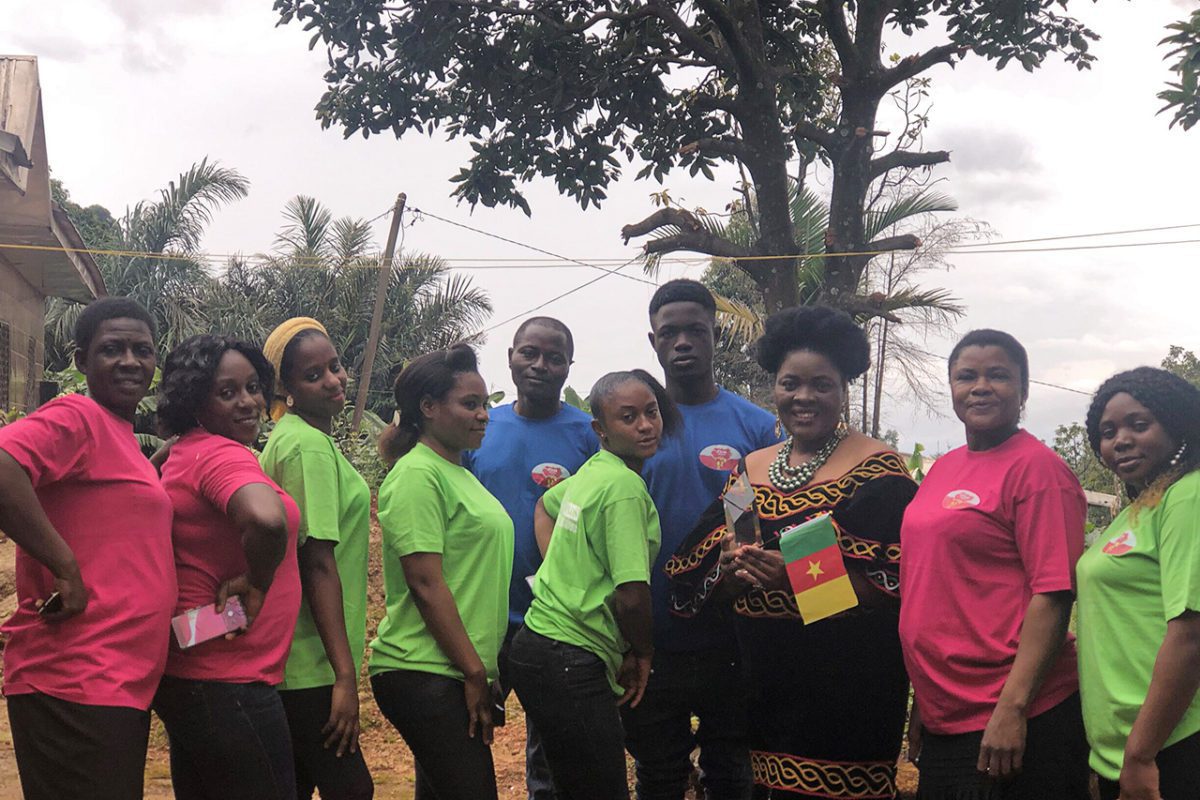
Growing up in Cameroon, Marie-Claire Kuja worked hard in school. Although her family was relatively poor, with her parents’ support and their belief in the value of education, she earned a scholarship to attend university in the United States. One of the most surprising – and exciting – things she experienced soon after she arrived in Ohio in 2002 was making a trip to CVS with her roommate and finding something she’d never had the opportunity to buy — sanitary pads.
In villages like Marie-Claire’s, not only was women’s health and menstruation not taught or even discussed, most girls and women did not have the money to purchase imported sanitary pads. This meant they used scraps of cloth, foam, or even leaves each month when they had their period.
Then, as now, when faced with these unsanitary and ineffective options, girls often skip school for up to five days a month. According to Marie-Claire, the number of women in Cameroon who need but cannot afford sanitary pads each month is 11 million. This lack of access is directly linked with the female illiteracy rate of roughly 30% in the country. The World Bank says that globally 500 million girls and women lack access to basic personal hygiene and supplies.
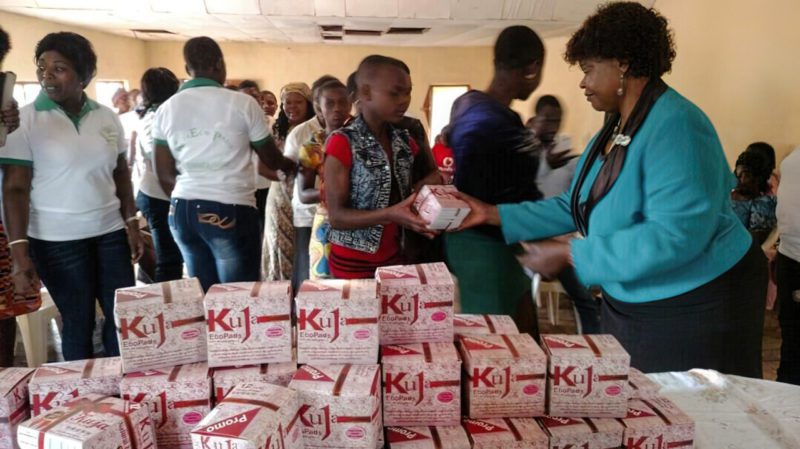
After graduating from college, Marie-Claire worked in the U.S. as a phlebotomist and an EKG tech, before going to nursing school. In 2015, when she was working as a nurse in New York, she decided to purchase sanitary pads and send them to villages in Cameroon. These pads were given to 5,000 girls, and she wanted to reach even more. So, in 2016, she launched the Million Pad Initiative to get 1,000,000 pads to girls in Cameroon by 2020. As word spread and others wanted to help, she founded a non-profit to be able to accept donations.
“Many people joined the Million Pad Initiative which was really good,” Marie-Claire says. “But the cost to ship the pads from the United States or Europe was too expensive.” This led her to seek other ways to meet the need.
As she explored options, Marie-Claire learned that commercial mainstream menstrual pads are made up primarily of plastic – making them resource-intensive to produce, and an ongoing hazard to the environment. While doing research at the New York Public library, she learned that in the 18th century, Japanese women used banana fibers to absorb menstrual blood. In other regions of the world, use was made of bamboo and sugar cane – depending on what materials were locally available.
Northwest Cameroon, where Marie-Claire is from, has extensive banana crops, and so she sent fibers from banana stems to a lab in France for testing. She was told that “it was one of the best natural absorbents you could find.”
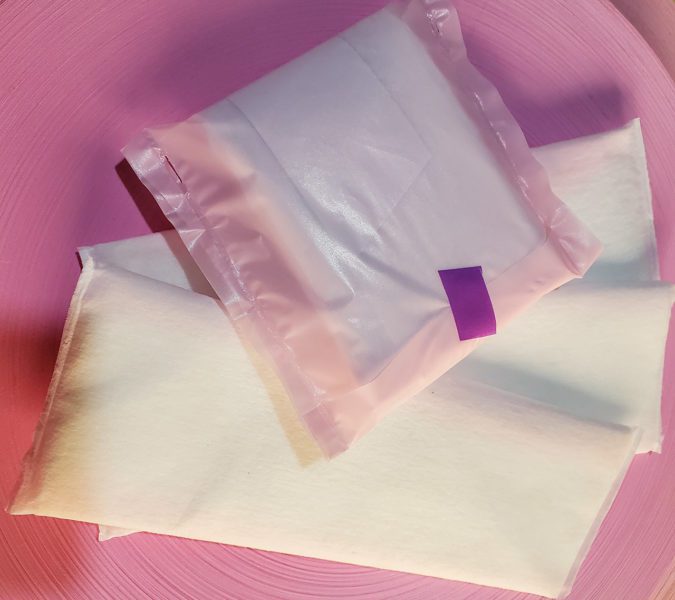
To make the pads, the stems are shredded, dried, and the fibers are fluffed to make the cotton-like core of the pad, which is covered with organic fabric.
While still working in New York, she tried to figure out how the sanitary pads could be produced in Cameroon, and the solution came from a man in India who had invented a machine to make menstrual pads. Marie-Claire saved until she was able to purchase one, and then returned to Cameroon and launched Kuja Ecopads. The company began production in January 2018, with a mission to sell affordable sanitary pads that are good for women and the environment.
Banana stems are an unused by product of banana harvesting. To make the pads, the stems are shredded, dried, and the fibers are fluffed to make the cotton-like core of the pad, which is covered with organic fabric. They are assembled by a team of fifteen women employees – with additional temporary staff used if demand (such as a large order from an NGO) warrants it. Because they are all-natural and don’t contain any plastic, they completely biodegrade in six to 18 months.
Growing up, Marie-Claire was never taught about menstruation, and she has learned that education is vital. She has developed a curriculum to teach women about menstruation. “It’s a natural biological process and should be respected,” Marie-Claire states. Their curriculum is taught at schools, universities, and in community groups.
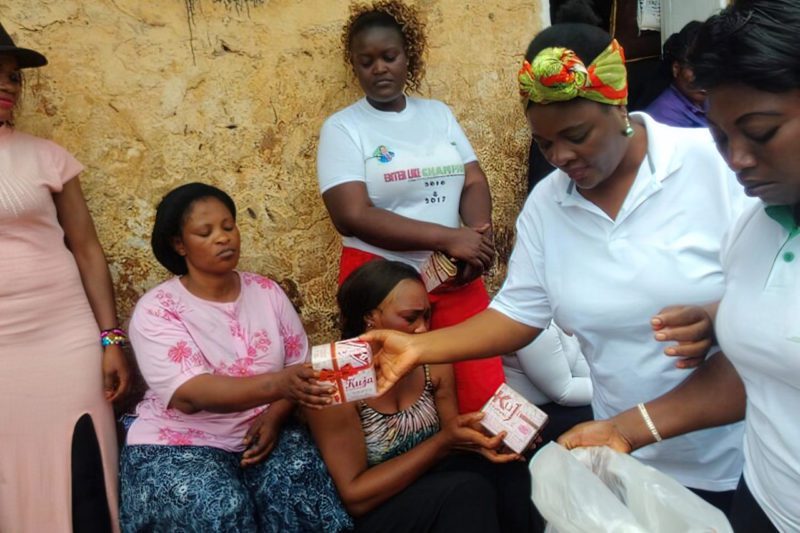
“No matter how many pads you have, if you don’t educate women why you’re giving (them) sanitary pads, how to use them, and their importance, they will never know about it.” They also teach the importance of disposing of the pads appropriately.
“We are breaking the silence and encouraging people to talk about it at home.” She believes that sons and daughters who learn about puberty, will not only be better equipped to take care of themselves, they will become mothers and fathers who will understand and respect this fundamental part of life.
Without a formal business education, Marie-Claire has had to learn how to create and grow a business through trial and error. She says that she’s made several mistakes along the way, including hiring too many people initially, and renting a facility she couldn’t afford. She has participated in several business accelerator programs, and one of the biggest lessons she’s learned is to hire slowly, training current employees to take on new tasks as needed.
 With the guidance of an experienced social entrepreneur mentor, she has developed a business plan and pitch deck for investors. She is also working on a franchise model that she plans to roll out in 2024. Interest in her products from adjoining countries, has led her to apply for an export license.
The availability of raw materials, and enormous potential demand for her products, are strong indicators of future growth. However, the biggest constraint is production capacity due to a lack of machinery. Marie-Claire is seeking funding to buy the equipment needed to expand the business, and is applying for grants, contests, and talking with investors.
However, complicating every aspect of the business, as well as the attraction of investors, is the widespread violence in the region. Separatists have clashed with government forces in the area since 2016, resulting in thousands of deaths.
She dreams that someday Kuja Ecopads will be “a household name not only in Cameroon but in other African countries.” And that it will be one of the tools that will help vulnerable women and girls work toward a brighter future. And so, despite all the challenges, Marie-Claire continues to forge ahead. “Funding is the main thing and if we could have it, I swear we will fly.”


Related Content

What FLY paper reveals about the limits of bespoke financial tools
 1400
0
1400
0
How impact and revenue can scale together
 1988
0
1988
0
Purpose language is not enough
 2373
0
2373
0

Why climate advocates need a stronger narrative
 1683
0
1683
0
Comments
Deep Dives
RECENT
 2223
0
2223
0
 1825
0
1825
0
 1810
0
1810
0
Editor's Picks
 12207
0
12207
0
 10036
0
10036
0
 10274
0
10274
0
 1457
0
1457
0
 1685
0
1685
0
 1606
0
1606
0
Webinars
News & Events
Subscribe to our newsletter to receive updates about new Magazine content and upcoming webinars, deep dives, and events.
Become a Premium Member to access the full library of webinars and deep dives, exclusive membership portal, member directory, message board, and curated live chats.

Join our global community of systems-minded changemakers.
Subscribe to the Impact Entrepreneur newsletter for the latest insights, magazine features, and invitations to exclusive webinars, Deep Dives, and events.





0 Comments