“I Didn’t Know My DAF Could Do This!”
How donor-advised funds are becoming catalytic capital platforms



How donor-advised funds are becoming catalytic capital platforms

 65
65
 0
0

Why circular migration may offer a better path than mass repatriation
 136
0
136
0

Financing historic cities for housing, livelihoods, and resilience
 209
0
209
0

How Haverford’s student investing program pivoted toward more purpose-suited capital
 651
0
651
0
Abrupt UK cuts threaten coastal resilience, food security, and community-led adaptation
 923
0
923
0

At MIE 2026, investors reframed risk as a tool for scale, resilience, and courage
 812
0
812
0
 2954
0
2954
0
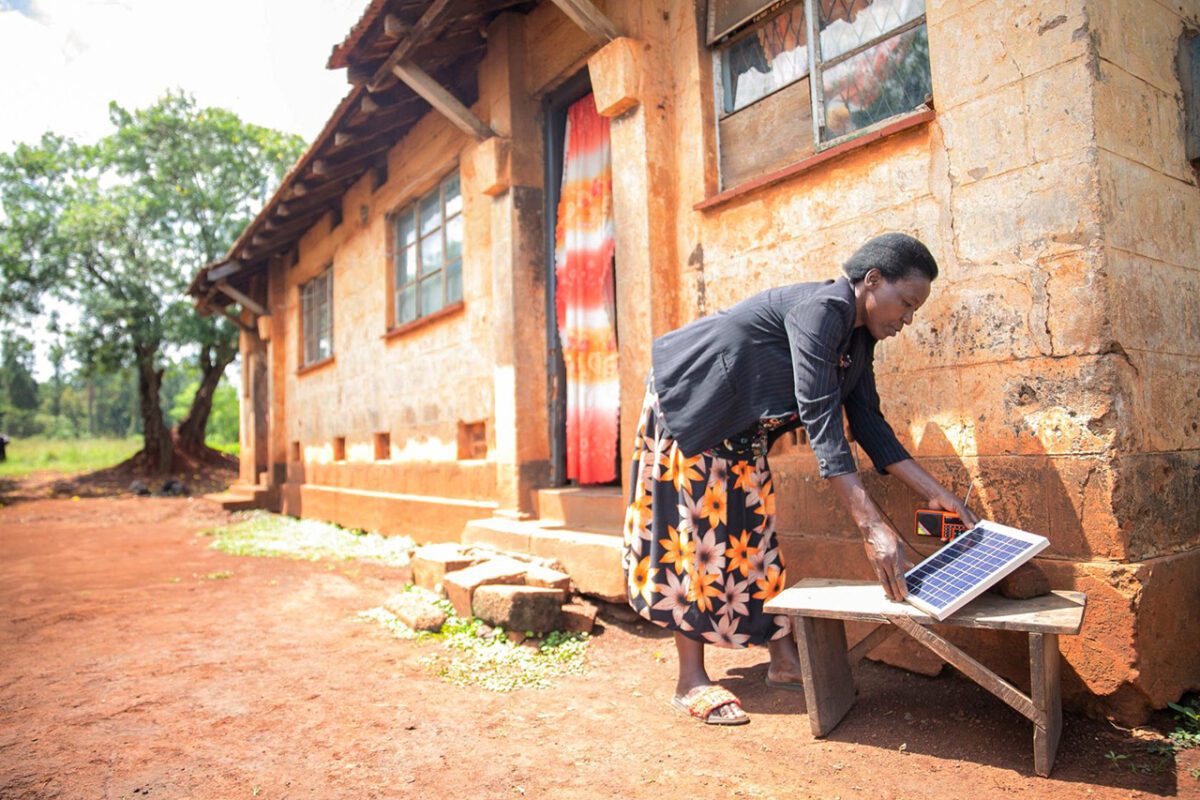
Image Courtesy of New Energy Nexus
While some industries move away from the JEDI acronym, we haven’t — and for good reason. If your north star is an abundant world powered by 100% clean energy for 100% of people, who gets to build that future isn’t a side issue; it’s the strategy. Diverse founders are essential to distributed solutions and to ensuring the clean energy transition’s benefits reach communities equitably. That’s been our working premise at New Energy Nexus, one of the largest non-profit entrepreneur support organizations (ESOs) in the sector.
Recently, we turned the lens inward and asked harder questions about our own practice: Who was missing from the ecosystems we support? What barriers were we not seeing? Two conclusions reshaped our approach. First, across every region where we operate, women entrepreneurs remain consistently underrepresented and underpaid in energy — making support for women a global priority. Second, “underrepresentation” beyond gender can’t be defined from headquarters; local teams must lead, country by country, to identify who’s excluded and why.
For founders, funders, and ESOs reading this, the takeaway is practical, not philosophical. Equity isn’t a compliance box; it’s how you unlock pipeline, product-market fit, and durable impact. That’s why we equipped country teams — not a central committee — to diagnose gaps and design responses. We also created a JEDI Council to provide a simple framework and guiding questions that build local capacity and keep equity work disciplined and actionable.
What follows are early lessons from applying that approach — insights from Southeast Asia and East Africa that any ESO or impact investor can adapt to their context. Our aim in sharing them here is straightforward: help peers avoid the generic playbook and instead invest in inclusion as a growth strategy for climate innovation.
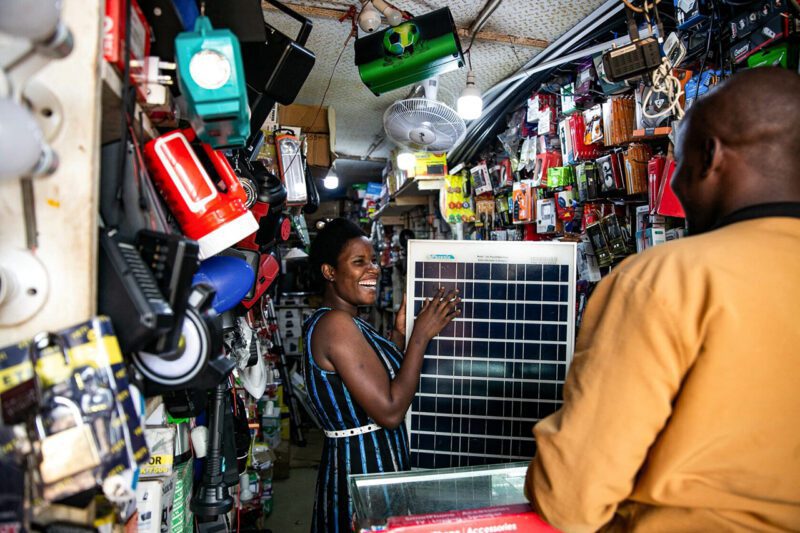 Image Courtesy of New Energy Nexus
To support local teams in making critical decisions — especially those lacking prior expertise — our Justice, Equity, Diversity, and Inclusion (JEDI) Council developed a set of guiding questions. These questions were designed to help teams:
This framework surfaced important regional insights:
Regional Diversity
In many Southeast Asian countries, such as Indonesia, Vietnam, Thailand, and the Philippines, clean energy innovation ecosystems remain nascent. Resources and opportunities are often concentrated in major cities. According to the NEX Philippines 2024 Clean Energy Ecosystem Report, there are only 91 startups operating in the clean energy and climate sector, with most (65) clustered in the capital region and a handful in northern Mindanao and Calabarzon.
Even in China, where the ecosystem is more mature, resources are still concentrated in tier-one cities like Shanghai and Beijing. These patterns prompted teams to develop entrepreneurship programs in rural and underserved regions, bridging gaps and supporting local solutions where they are most needed.
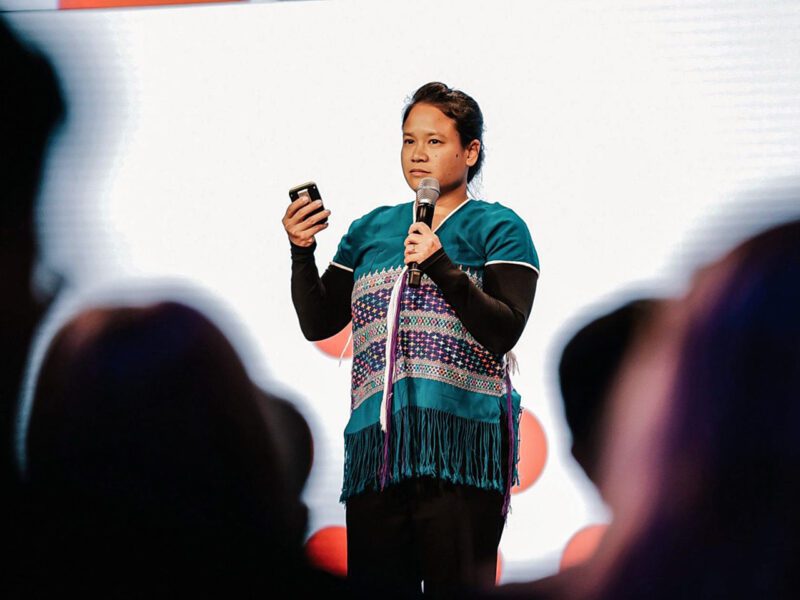 Salinee Hurley, founder of the solar energy social enterprise SunSawang; Image Coutesy of New Energy Nexus
Youth as a Priority
Uganda identified youth as a key demographic priority. Over 75% of Uganda’s population is under 30, yet youth unemployment remains high at 13.3%. By empowering young people to start renewable energy businesses, New Energy Nexus Uganda is tackling both employment gaps and energy access.
Tribal and Indigenous Groups
Uganda also prioritized marginalized tribal groups such as the Batwa and Ik communities. Often living in remote areas with limited access to clean energy or entrepreneurial opportunities, these groups face structural exclusion. Supporting sustainable income-generation pathways for them has become a central dimension of inclusion in Uganda’s program.
These early insights underscored that underrepresentation looks different in every geography — and that local leadership is essential to defining and addressing it.
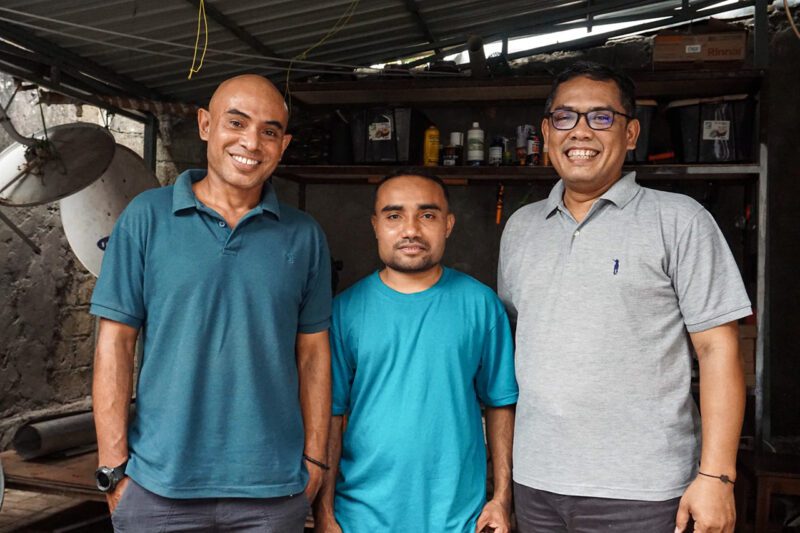 Kuantek community-driven climate solutions; Co-founders Abraham Talluta (CEO), Abdi Nenotek (CTO), and Ben Vasco Tarigan; Image Courtesy of New Energy Nexus
To sustain progress, organizations must embed an equity lens in their Monitoring, Evaluation, and Learning (MEL) practices. At New Energy Nexus, we have begun disaggregating data across key dimensions: representation, access, inclusion, empowerment, and long-term success.
Across every region where we operate, women entrepreneurs remain consistently underrepresented and underpaid in energy.
This data-driven approach ensures that equity work is not episodic but continually shapes decision-making and strategy. By linking inclusion to measurable outcomes, MEL practices become a tool for accountability as well as learning.
Not all organizations operate with globally dispersed teams. Yet even without direct local presence, impact actors can support excluded communities effectively. Our colleagues on the ground in Indonesia (Rainy Putri), the Philippines (Hilda Carreon), and Uganda (Cyprian Odyek), shared practical strategies that any organization can adopt:
By thinking beyond a Western lens of diversity, entrepreneur support organizations can drive meaningful, inclusive climate action in the Global South. At New Energy Nexus, locally informed strategies remind us that empowering underrepresented entrepreneurs isn’t just a goal — it’s a pathway to a just and abundant energy transition.


Related Content
How donor-advised funds are becoming catalytic capital platforms
65
0
Why circular migration may offer a better path than mass repatriation
136
0
Financing historic cities for housing, livelihoods, and resilience
209
0

Democracy, narrative, and systems change
 265
0
265
0
Comments

Deep Dives
RECENT
 651
0
651
0
 923
0
923
0
 812
0
812
0
Editor's Picks
 65
0
65
0
 4480
0
4480
0
 7961
0
65
0
65
0
7961
0
65
0
65
0
 136
0
136
0
 209
0
209
0
Webinars
News & Events

Helping founders and impact investors align

For three craft enterprises in India

Subscribe to our newsletter to receive updates about new Magazine content and upcoming webinars, deep dives, and events.
Become a Premium Member to access the full library of webinars and deep dives, exclusive membership portal, member directory, message board, and curated live chats.

Join our global community of systems-minded changemakers.
Subscribe to the Impact Entrepreneur newsletter for the latest insights, magazine features, and invitations to exclusive webinars, Deep Dives, and events.


0 Comments