Why Impact Finance Innovation Struggles to Scale
What FLY paper reveals about the limits of bespoke financial tools



What FLY paper reveals about the limits of bespoke financial tools

 3552
3552
 0
0

Why reconnecting education, work, and opportunity matters
 3926
0
3926
0

 2790
0
2790
0

What Colombia’s ex-FARC cooperatives reveal about reintegration
 598
0
598
0

What EOTs reveal about trust, transparency, and long-term value creation
886
0

Why the impact economy must reprice security — and fund prevention before the crisis
 751
0
751
0

 1004
0
1004
0
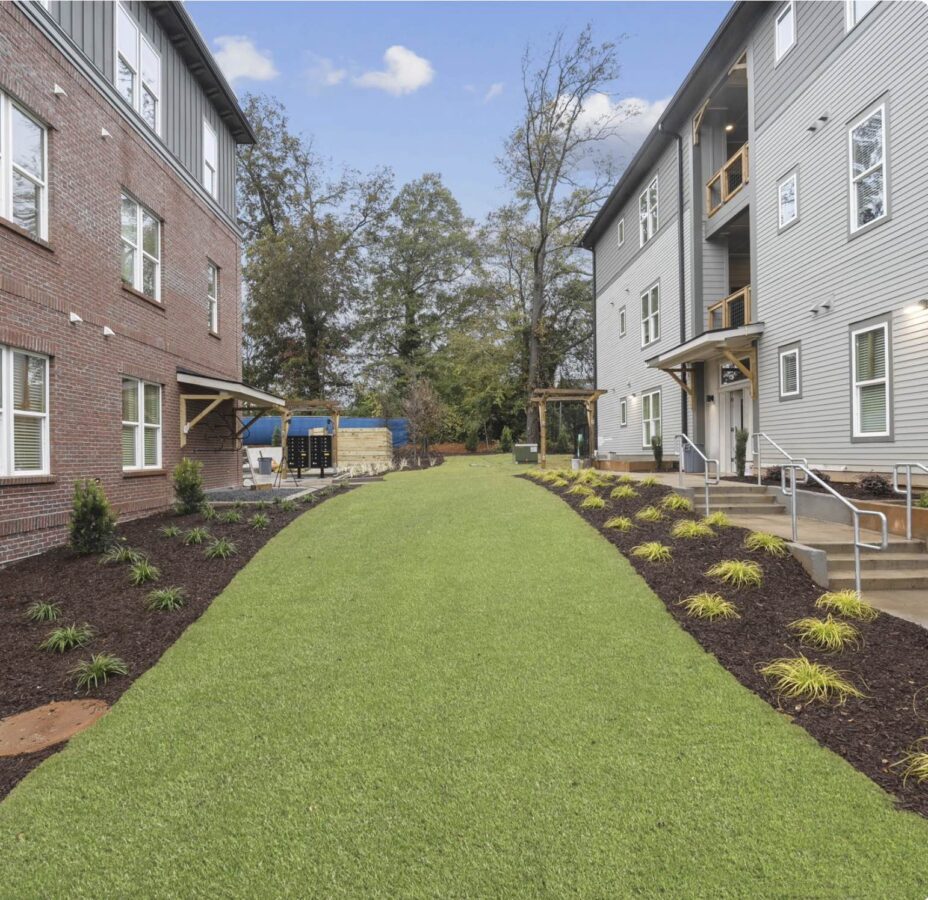
New and restored housing in Atlanta’s Westside reflects Westside Future Fund’s effort to connect neighborhood revitalization with housing stability, ownership pathways, and long-term community wealth; Photo courtesy of Westside Future Fund / Instagram
In Atlanta’s historic Westside, Westside Future Fund is working to ensure that neighborhood revitalization does not become another form of displacement. Through place-based capital, affordable housing, down-payment assistance, anti-displacement tax relief, and community-rooted homeownership pathways, the organization offers impact investors a practical case study in how reinvestment can help residents stay, build wealth, and shape the future of the place they call home.
Revitalization can be a promise or a threat. In neighborhoods shaped by decades of disinvestment, new capital can bring housing, infrastructure, jobs, and long-overdue public attention. But without careful design, the same investment can raise property values, accelerate displacement, and leave longtime residents watching transformation happen around them rather than for them.
That tension is especially visible in Atlanta’s historic Westside, a community that has played an important role in the Civil Rights Movement. Martin Luther King Jr. lived there with his family, and civil rights leaders gathered across its living rooms and church sanctuaries to organize and share their vision of a more just America.
The Westside — which includes the neighborhoods of English Avenue, Vine City, Ashview Heights, Atlanta University Center, and Just Us — once had a thriving population of roughly 60,000 during the 1960s and offered a powerful example of Black economic empowerment. Local families had access to shops, restaurants, and some of the country’s leading Historically Black Colleges and Universities, including Morehouse College, Spelman College, and Clark Atlanta University.
But the decades that followed were devastating for many residents and the broader community. Redlining, disinvestment, population loss, and neglect left the Westside among the country’s most distressed neighborhoods. One 2017 study estimated that 38% of households had incomes of $15,000 or less, while 43% of housing in the Westside was abandoned — the kinds of indicators that reveal not individual failure, but deep structural distress.
Those conditions made the Westside an important launching ground for the Westside Future Fund, a place-based nonprofit created to help revitalize historic neighborhoods and rebuild a community that “Dr. King would be proud to call home.” Launched in December 2014 with the support of former Atlanta Mayor Kasim Reed, Westside Future Fund works to restore neighborhoods where families can remain, flourish, and participate in the upside of reinvestment.
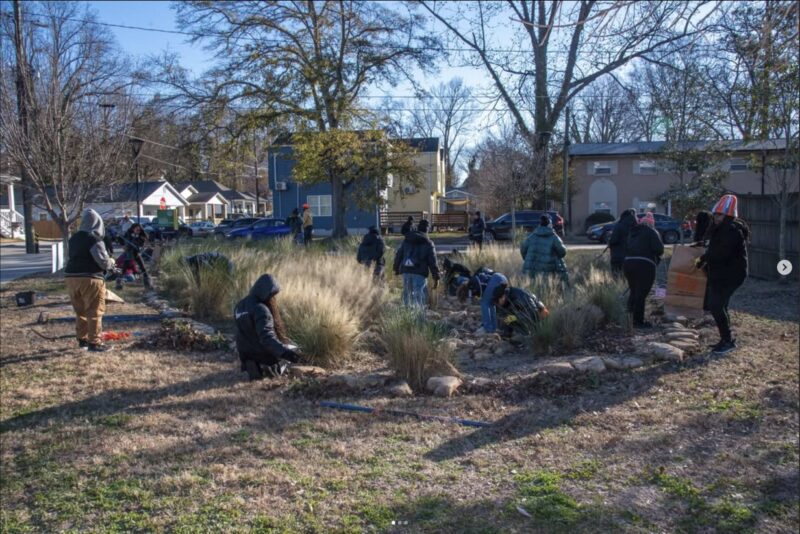
Community green-space work in Atlanta’s Westside points to a broader revitalization strategy: one that treats housing, climate resilience, neighborhood trust, and resident participation as interconnected; Photo courtesy of Westside Future Fund / Instagram
To date, Westside Future Fund has completed construction on more than 200 affordable rental units and 60 new single-family homes, and has distributed nearly $2 million in down-payment assistance to mortgage-ready buyers with community ties. At the center of these efforts is a 10-year, $120 million impact fund designed to finance multiple parts of the development process, from purchasing land and funding construction to offering affordable terms and other incentives to local residents. With more than 45 acres of real estate purchased and more than $130 million invested, Westside Future Fund reported a 50% reduction in blight between 2017 and 2023.
Revitalization can be a promise or a threat.
During a recent “Impact in Action” experience hosted as part of the Mission Investors Exchange National Conference, impact investors and philanthropists toured the Westside with members of the Westside Future Fund team. The visit offered a practical look at how community partnerships and innovative financing can help bring growth and prosperity back to a neighborhood without making displacement the price of progress.
The Westside’s downward slide into blight and poverty was well known to local policymakers and community advocates. What was missing was an organization that could connect public, private, philanthropic, and community actors around a shared strategy.
That is how Westside Future Fund became known as a “community quarterback” — an organization helping move the ball down the field by connecting key partners and catalyzing funding for the elements any community needs to thrive: affordable mixed-income housing, education, health and wellness, safety, and economic opportunity.
John Ahmann, president and CEO of Westside Future Fund, said during a panel at WFF’s offices that he is cautious about the quarterback framing because he sees the organization’s role less as making decisions for funders and more as influencing, aligning, and coordinating them. But he acknowledged the need for a trusted intermediary that could create a “velocity of funding” beyond what was already happening.
That role became especially important as major development pressures began reshaping nearby neighborhoods.
When Home Depot co-founder Arthur Blank was raising financing for the construction of Mercedes-Benz Stadium in downtown Atlanta — home of the Atlanta Falcons, Atlanta United, and one of the host venues for the 2026 FIFA World Cup — he wanted to help protect nearby communities, including the Westside, from rising costs and gentrification. That required partnership among public, private, corporate, philanthropic, and community institutions, including Westside Future Fund, Atlanta Neighborhood Development Partnership, Invest Atlanta, and local corporate and family foundations such as the Chick-fil-A Foundation, The Coca-Cola Foundation, and The Home Depot Foundation.
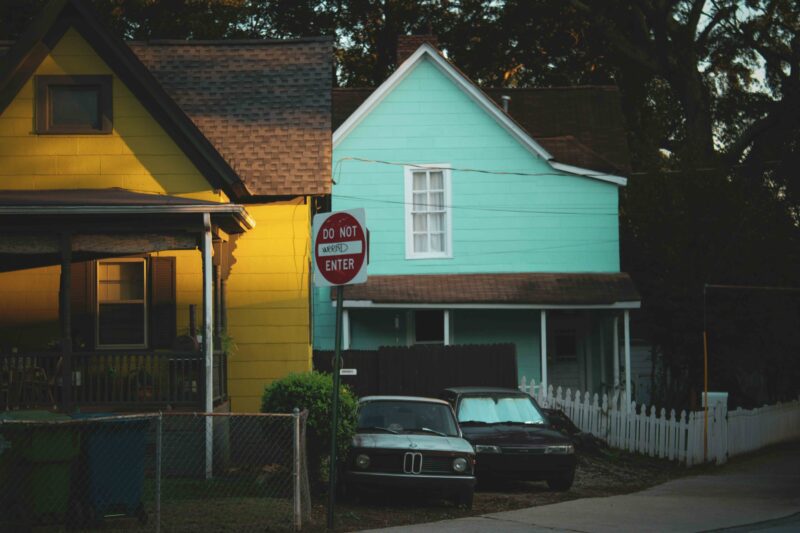
In historically disinvested neighborhoods, the challenge is not whether new capital arrives, but whether residents can stay, build wealth, and help shape the future of the place they call home; Photo by Adaobi B.
WFF has played a similar role in other local initiatives, connecting strategic partners and funders to the areas they care about most, from housing and schools to community spaces. In each case, the broader lesson is the same: place-based capital requires more than money. It requires an institution capable of coordinating capital, building trust, and holding the long-term interests of residents at the center of the work.
Building and selling houses is a major part of Westside Future Fund’s work, but housing alone is not enough to form a community. That is why WFF has been intentional about offering education, training, and other resources to help residents put down stronger roots.
A recent partnership with Spelman College illustrates the power of this approach. Beginning in 2025, WFF’s Home on the Westside program offered qualified Spelman employees access to newly restored units near campus through a two-year lease at about $1,500 per month, or 60% of area median income. Renters also receive education on the basics of homeownership, priority access to new for-sale homes, and the potential for as much as $60,000 in down-payment assistance.
The goal is not simply to provide affordable rental housing. It is to create a pathway from housing stability to ownership.
Westside Future Fund has also invested in green spaces, including a new “sponge” park in Vine City that gives residents a place to gather while helping the neighborhood manage stormwater and climate-related flooding risk. WFF estimates that, on average, residents gain nearly $200,000 in wealth through these community improvements, creating an added incentive for residents to stay in or move into the neighborhood.
The goal is not simply to provide affordable rental housing. It is to create a pathway from housing stability to ownership.
Another part of this holistic approach is the Transform Westside Summits, regular public gatherings where residents receive updates on community programs, share feedback, and provide input into major decisions. Rather than relying only on door-to-door surveys, which were not always effective at capturing the true resident experience, the summits became a way to bring residents together and deepen community trust.
“It took years of talking to people and building relationships to earn the trust of residents,” said Tamika Askew, director of Home on the Westside. “Many people here are naturally distrustful of outsiders, so we need to show them that we were ‘with’ the community rather than doing something ‘to’ the community.”
Askew told the story of Destiny Motley, a woman she met in 2019 who was homeless and showering at a local Planet Fitness before heading to work. Askew and her team worked directly with Motley to help her build savings and improve her credit score so that, by 2023, she could qualify for a home of her own.
“Five years ago, I was sleeping in my car,” Motley said in a testimonial for WFF’s 2025 impact report. “Today, I’m a homeowner on the historic Westside. Because of Westside Future Fund, I found community, I found purpose, I found home.”
Stories like Motley’s help explain why the bright yellow Westside Future Fund signs in front of new and in-development homes have become so visible throughout the Westside in recent years. They are markers not only of construction, but of an effort to turn reinvestment into belonging.
The Westside Future Fund model is still unfolding, and the pressures around the neighborhood remain real. Stadium investment, university growth, infrastructure improvements, new housing, and Atlanta’s role in the 2026 World Cup all create opportunities. They also increase the risk that rising land values could push longtime residents out.
Revitalization becomes equitable not when new investment arrives, but when residents are able to stay, build wealth, and help shape the future of the place they call home.
That is why WFF’s work matters beyond Atlanta. For impact investors and philanthropic capital providers, the Westside offers a case study in how place-based capital can be structured around anti-displacement, resident ownership, and long-term community wealth.
The work is not only about building units, important as that is. It is about building a system in which residents can remain in place, move toward ownership, access support, and share in the value that revitalization creates.
Both Ahmann and Askew acknowledge how much work remains to be done, and how important it is to have impact investors and local philanthropists — especially corporate and community foundations — ready and willing to deploy capital at scale in their own backyards. But the deeper lesson from the Westside is that capital must be coordinated around trust. It must be patient enough to meet residents where they are, flexible enough to respond to changing needs, and disciplined enough to ensure that growth does not become displacement by another name.
Revitalization becomes equitable not when new investment arrives, but when residents are able to stay, build wealth, and help shape the future of the place they call home.



Related Content
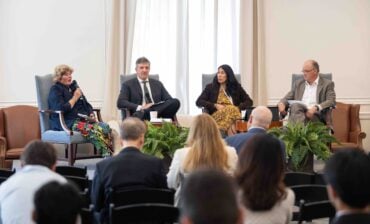
How legal design reshapes voice, risk, capital, and value
821
0

A Calabar case for climate resilience
 538
0
538
0
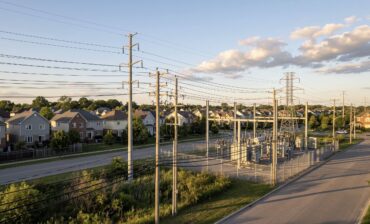
Why income policy needs a systems-accounting lens
 665
0
665
0

Why recovery depends on the systems that move capital, power, and goods
 614
0
614
0
Comments

Deep Dives
RECENT
 598
0
598
0
 886
0
886
0
 751
0
751
0
Editor's Picks
 25438
0
25438
0
 14556
0
14556
0
 13524
0
13524
0
 3552
0
3552
0
 3926
0
3926
0
 2790
0
2790
0
Webinars
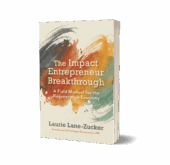
Signed and personally inscribed — you'll write the inscription as you order. Limited · 50…
News & Events
Helps foundations, DAF holders, and family offices model how impact-first investing can extend charitable capital

To amplify entrepreneur voices in impact investing

Subscribe to our newsletter to receive updates about new Magazine content and upcoming webinars, deep dives, and events.
Become a Premium Member to access the full library of webinars and deep dives, exclusive membership portal, member directory, message board, and curated live chats.


0 Comments