Upcycling India’s Construction Waste
And the limits of scaling circular economy solutions




And the limits of scaling circular economy solutions

 2267
2267
 0
0

How good jobs create durable competitive advantage
 2612
0
2612
0

 2449
0
2449
0

Why Palestinian startups remain structurally trapped—and what might change that
2077
0

From deals to ecosystems in financing real transformation
 3037
0
3037
0

A conversation with Laura Ranzato of Clean Creatives
 3065
0
3065
0

 2771
0
2771
0
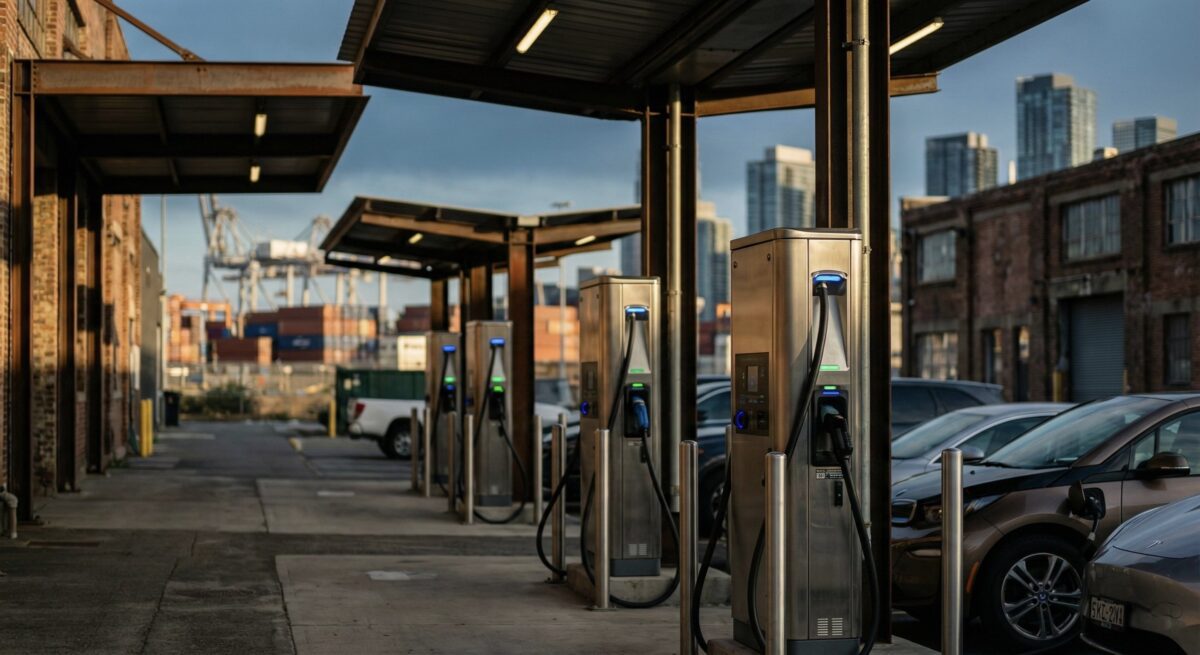
Electric vehicles are often framed as a technological fix for climate change, but the global EV transition is far more complex. From China’s overproduction and supply-chain dominance to uneven infrastructure, grid readiness, and equity challenges across regions, electrification is reshaping mobility through interconnected economic, political, and social systems.
The electric vehicle (EV) revolution is often portrayed as a singular solution to our transportation and environmental crises. Yet this narrative oversimplifies a far more complex reality. EVs are not a standalone fix, but one component of a deeply interconnected global system — bound up with energy infrastructure, industrial policy, supply chains, labor markets, social equity, and cultural values.
As the world races toward a more sustainable future, the EV market is experiencing unprecedented growth. Whether this transition delivers on its environmental and social promise will depend less on technological breakthroughs alone and more on how well governments, markets, and societies align the systems that surround electrification.
To understand where this transition is headed, EV adoption must be examined through a global, systems-oriented lens — one that acknowledges regional disparities, geopolitical dynamics, and the structural conditions shaping outcomes.
The global EV landscape is far from uniform. Adoption levels vary widely based on local policy frameworks, infrastructure readiness, energy systems, and economic conditions.

Over the past decade, China has made aggressive, strategic investments across the entire EV ecosystem. It is home to some of the world’s largest battery manufacturers, including CATL and BYD, and has paired industrial scale with extensive infrastructure build-out. Shenzhen, for example, reached a new vehicle sales penetration rate of approximately 75.9% by October 2024. Nationally, EV sales reached 8.1 million units in 2023, supported by the world’s largest public charging network, with more than 2.27 million public charging piles by mid-2023. Government-backed policies dating back to 2009 have played a decisive role in enabling this rapid adoption.
The United States, by contrast, possesses formidable technological capabilities but faces significant non-technological barriers to widespread EV adoption. While advances in vehicle range, efficiency, and performance position U.S. firms as global innovators, adoption is slowed by uneven charging infrastructure, particularly in rural areas, where gaps remain pronounced. Surveys suggest that as many as 80% of potential buyers cite charging availability as a primary concern. These infrastructure challenges are compounded by concerns about grid reliability, especially in the absence of robust Vehicle-to-Grid (V2G) integration strategies. Political polarization and economic anxieties — including higher upfront vehicle costs and uneven regional policy alignment — further dampen consumer confidence.
As the world races toward a more sustainable future, the EV market is experiencing unprecedented growth.
Europe has emerged as a major EV market, with electric vehicles accounting for roughly 21% of new car sales in 2024. Yet adoption is sharply uneven. Norway leads globally, with EVs representing approximately 92% of new car sales, while parts of Eastern Europe lag behind due to infrastructure constraints, affordability challenges, and differing cultural attitudes toward electrification.
In India and parts of Latin America, including Brazil and Chile, governments are beginning to explore electric mobility through targeted incentives and pilot programs. However, high vehicle costs, limited charging infrastructure, and economic volatility pose persistent obstacles. In India’s case, heavy reliance on coal-fired power generation complicates the environmental calculus, reducing the net emissions benefits of EV adoption in regions with carbon-intensive grids.
Across much of Africa, EV adoption remains nascent, accounting for less than 1% of global EV sales. Countries such as Morocco are positioning themselves as manufacturing hubs, with plans to increase EV production capacity to 100,000 units by 2025. Yet widespread adoption remains constrained by high import costs, limited consumer financing, and unreliable electricity access beyond major urban centers.
The pace and success of EV adoption depend not only on technological readiness but on coordinated progress across infrastructure development, policy coherence, and consumer behavior.
Effective electrification requires governments to establish enabling conditions through incentives, standards, and grid modernization, while private firms supply the innovation, capital, and manufacturing capacity needed to scale. Nowhere is this interdependence more evident than in the challenge of charging infrastructure and energy systems integration.
In the United States, companies such as Tesla, Rivian, and Lucid Motors continue to push the frontier of battery technology, vehicle performance, and autonomous systems. Yet the absence of a comprehensive, nationwide EV strategy — one that aligns federal, state, and local efforts — remains a critical constraint. While states like California have moved aggressively, other regions remain resistant, reflecting deeper socio-political divisions around climate policy.
The pace and success of EV adoption depend not only on technological readiness but on coordinated progress across infrastructure development, policy coherence, and consumer behavior.
Economic perceptions also shape adoption. Despite declining costs, EVs are still widely perceived as expensive, with high upfront prices deterring a majority of potential buyers. In regions where gasoline remains relatively cheap, electrification is often framed as an economic burden rather than a long-term investment in resilience, public health, and energy security.
One of the most underexamined dimensions of the global electrification narrative is the issue of overproduction — particularly in China — which has emerged as both a catalyst and a disruptor in the EV market.
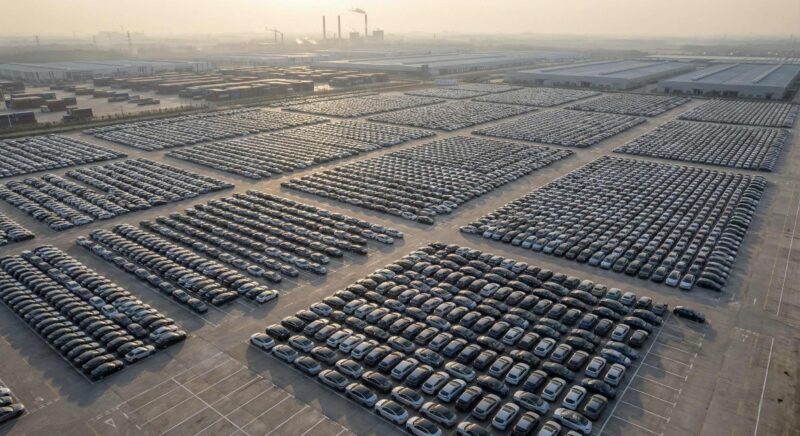
China’s leadership in EV development is undeniable. By 2023, New Energy Vehicles accounted for approximately 37% of all new car sales. This rapid expansion was enabled by a comprehensive policy framework that included purchase subsidies (largely phased out by 2023), manufacturer credit mandates, tax exemptions, and large-scale public investment in infrastructure and domestic production.
Yet scale has introduced new risks. Chinese manufacturers produced nearly 9.6 million NEVs in 2023, with domestic sales slightly lower, leading to inventory surpluses and intense price competition. In a notable policy shift, NEVs were excluded from China’s draft 2026–2030 Five-Year Plan list of strategic industries, signaling a move away from targeted state support toward greater reliance on market forces.
China’s EV overcapacity has triggered far-reaching global effects. As domestic price wars compress margins, Chinese manufacturers have turned aggressively toward export markets, with NEV exports surging dramatically between 2019 and 2023. This influx of lower-cost vehicles has placed downward pressure on global EV prices and disrupted the strategies of traditional automakers, particularly in Europe and Southeast Asia.
According to BloombergNEF, China’s excess capacity has reshaped global supply chains, forcing Western and Japanese manufacturers to cut prices, accelerate EV rollouts, and reassess sourcing strategies. For developing markets, more affordable EVs offer an opportunity to accelerate electrification and reduce oil dependence, displacing an estimated one million barrels of oil consumption per day globally.
At the same time, China’s dominance in battery mineral processing — including control over more than 90% of global graphite processing — raises significant supply chain security concerns. In response, North American and European governments are pursuing policies to localize production and diversify sourcing. These efforts, however, introduce new ethical and environmental challenges, particularly around mining practices, labor conditions, and community impacts.

The future of electric mobility will be shaped not only by how quickly EVs scale, but by how responsibly the systems surrounding them are governed. Electrification holds immense potential to reduce emissions, create new forms of industrial employment, and enhance energy security. Yet without careful management, it also risks reproducing new forms of dependency, inequality, and environmental harm.
A responsible electrification pathway will require coordinated approaches to production discipline, ethical supply chains, grid decarbonization, and equitable infrastructure development. For investors, policymakers, and manufacturers alike, the challenge is not merely to accelerate EV adoption, but to ensure that electrification advances broader goals of shared prosperity, resilience, and systemic sustainability.
Only by embedding EVs within a coherent Impact Economy framework — one that values long-term social and environmental outcomes alongside market efficiency — can the global transition to electric mobility realize its full potential.


Related Content

Rebalancing support between tech ventures and traditional SMEs in MENA
1620
0

Can immersive experiences move people beyond consumption toward lasting change?
 2505
0
2505
0

As the extractive model sheds human workers to AI, a new regenerative economy is emerging
 2046
0
2046
0

Blended finance, resilience bonds, and the emerging infrastructure of the impact economy
 1896
0
1896
0
Comments

Deep Dives
RECENT
 2077
0
2077
0
 3037
0
3037
0
 3065
0
3065
0
Editor's Picks
 12003
0
12003
0
 2267
0
2267
0
 2612
0
2612
0
 2449
0
2449
0
Webinars
News & Events
Subscribe to our newsletter to receive updates about new Magazine content and upcoming webinars, deep dives, and events.
Become a Premium Member to access the full library of webinars and deep dives, exclusive membership portal, member directory, message board, and curated live chats.

Join our global community of systems-minded changemakers.
Subscribe to the Impact Entrepreneur newsletter for the latest insights, magazine features, and invitations to exclusive webinars, Deep Dives, and events.





0 Comments