When Impact Stops at the Office Door
For mission-led organizations, a change of manager tests whether workplace inclusion is built to last.



For mission-led organizations, a change of manager tests whether workplace inclusion is built to last.

 63
63
 0
0

Artist Rob Strati on inherited objects, the limits of market price, and the creative possibilities…
 101
0
101
0

Counting what we fail to prevent, sixty seconds at a time
95
0

How states can crowd in local early-stage capital
 387
0
387
0

Why last-mile healthcare needs an operating model, not just more mobile clinics
 372
0
372
0
How Australia’s succession wave could turn ownership into a funding model
 490
0
490
0

 3023
0
3023
0
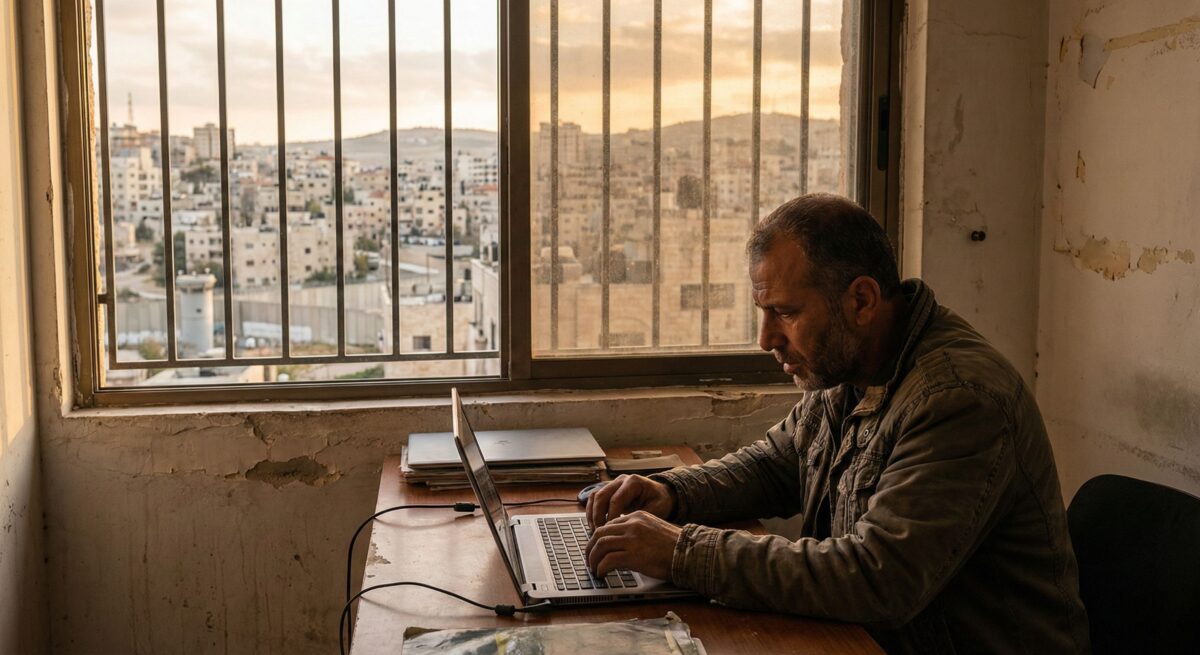
As Palestinian entrepreneurs work under occupation, dense startup ecosystems coexist with deep structural barriers. This analysis explores why ventures remain trapped at the early stage — and what systemic shifts could change that.
As the world debates the future of a devastated Gaza, the scale of what lies ahead is staggering. Tens of thousands of Palestinians have been killed, marking one of the darkest chapters of our time. United Nations agencies estimate that Gaza’s recovery will require at least $53 billion over the coming decade, with $20 billion needed in the first three years alone.
Yet beyond humanitarian relief and physical reconstruction lies another challenge that receives far less attention: how to rebuild an economy capable of sustaining livelihoods under conditions of prolonged occupation and fragmentation.
During a recent visit to the occupied West Bank, I spoke with Palestinian entrepreneurs, investors, and ecosystem builders who are attempting to do just that — build businesses under circumstances that systematically undermine scale, continuity, and access to markets. Their experiences reveal a paradox at the heart of Palestinian entrepreneurship: one of the densest entrepreneurship support ecosystems in the Arab region exists alongside some of the most severe structural barriers to growth.
Over the past two decades, Palestine has seen a proliferation of incubators, accelerators, donor-backed programs, and entrepreneurship support organizations. International donors, development agencies, and NGOs have invested heavily in early-stage capacity building, idea incubation, and startup creation.

Yet despite this density of support, most Palestinian ventures remain trapped at the early stage. Very few scale beyond local markets. Even fewer manage to attract growth capital or expand regionally or internationally.
This is not a failure of talent or ambition. It is a structural outcome of occupation.
Movement restrictions fragment markets and raise operating costs. Checkpoints, permit regimes, and border controls disrupt supply chains and limit access to customers. Political uncertainty makes long-term planning risky, while repeated shocks — from flare-ups of violence to sudden regulatory changes — deter private investment.
The result is an entrepreneurial ecosystem optimized for survival, not scale.
Capital, especially private and patient capital, is acutely sensitive to risk. In Palestine, political risk is compounded by legal ambiguity, currency constraints, and limited exit pathways. As a result, most funding takes the form of grants rather than investment.
What Palestinian entrepreneurship needs is not more early-stage programs, but a rebalancing of the ecosystem toward scale, continuity, and long-term value creation.
While grants play a critical role in sustaining early-stage activity, they also create unintended consequences. Ventures become dependent on short-term project funding rather than long-term business models. Scaling capital remains scarce, and incentives tilt toward compliance with donor priorities rather than market expansion.
This dynamic reinforces the early-stage trap: startups are created, supported briefly, and then stalled.
In conversations across Ramallah, Nablus, and Bethlehem, one theme emerged repeatedly: digitalization and internationalization are not optional strategies — they are economic lifelines.
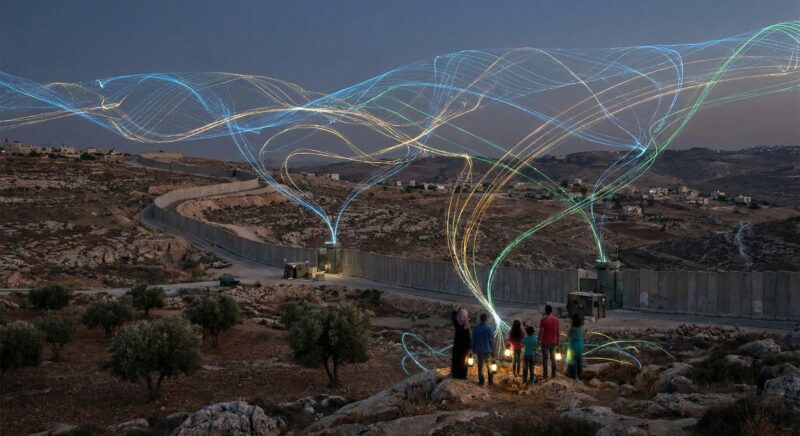
For Palestinian entrepreneurs, digital platforms offer a partial workaround to physical restrictions. Software development, digital services, e-commerce, and remote work enable access to global markets without crossing borders. Internationalization, whether through export of services, partnerships, or diaspora networks, becomes a way to escape the confines of a fragmented local economy.
Initiatives such as Gaza Sky Geeks, Ibtikar Fund, and Build Palestine illustrate how digital skills, global networks, and alternative financing models can open pathways beyond the local market. These efforts are not about bypassing political realities, but about building resilience within them.
However, digital pathways are not a silver bullet.
Digitalization reduces some barriers, but it does not eliminate structural constraints. Access to reliable infrastructure, payment systems, and cross-border financial services remains uneven. Regulatory uncertainty and platform dependence introduce new vulnerabilities. And not all sectors can digitize their way to scale.
Moreover, internationalization often shifts risk rather than removes it. Ventures become exposed to global market volatility while remaining rooted in fragile local conditions.

Recognizing these limits is essential. Otherwise, digital entrepreneurship risks becoming another donor-driven narrative that overpromises and underdelivers.
What Palestinian entrepreneurship needs is not more early-stage programs, but a rebalancing of the ecosystem toward scale, continuity, and long-term value creation.
This requires:
These lessons extend beyond Palestine. In fragile and conflict-affected contexts globally, dense ecosystems can coexist with structural stagnation. Without addressing the political economy of scale, entrepreneurship risks becoming a holding pattern rather than a pathway to economic sovereignty.
Palestinian entrepreneurs are not waiting for perfect conditions. They are building under constraint, improvising pathways where formal ones are blocked, and testing models of resilience that deserve serious attention.
But resilience alone is not enough.
If entrepreneurship is to contribute meaningfully to reconstruction and long-term stability, it must be supported by systems — of capital, governance, and access — that allow ventures to grow beyond the borders meant to contain them.
The challenge is not a lack of ideas. It is whether the impact economy is willing to confront the structures that keep those ideas small.


Related Content
For mission-led organizations, a change of manager tests whether workplace inclusion is built to last.
63
0
Artist Rob Strati on inherited objects, the limits of market price, and the creative possibilities…
101
0
Counting what we fail to prevent, sixty seconds at a time
95
0

How collateral rules and payment terms keep impact capital out of reach
224
0
Comments
Deep Dives
RECENT
 387
0
387
0
 372
0
372
0
 490
0
490
0
Editor's Picks
 63
0
63
0
 101
0
101
0
 95
0
63
0
101
0
95
0
95
0
63
0
101
0
95
0
Webinars
Signed by the author. Collected at the door at Lipton Hall, NYU School of Law,…
News & Events

The only craft-focused project in Catalytic Capital Consortium’s new cohort.

The September 14 program and a live IFI Tool demo are online

Pre-seed and seed startups can apply on a rolling basis
Subscribe to our newsletter to receive updates about new Magazine content and upcoming webinars, deep dives, and events.
Become a Premium Member to access the full library of webinars and deep dives, exclusive membership portal, member directory, message board, and curated live chats.


0 Comments