Love and Care in the Future of Public Markets
Gabriel Grant on giving shareholders a way to express what matters to them


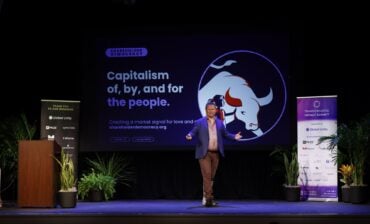
Gabriel Grant on giving shareholders a way to express what matters to them

 69
69
 0
0
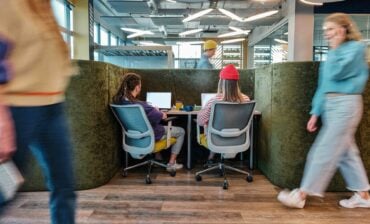
For mission-led organizations, a change of manager tests whether workplace inclusion is built to last.
 71
0
71
0

Artist Rob Strati on inherited objects, the limits of market price, and the creative possibilities…
109
0

Why free education tools need reliable access, credible evidence, and lasting support
 325
0
325
0

What Islamic finance and impact investing can learn from each other
 405
0
405
0

After the flood, recovery capital must do more than replace what was lost
 388
0
388
0
 15048
0
15048
0

We are living in a world in which growing inequities are acute and problem-solving outside pre-existing structures is a must. A world that moves toward a digital future at the speed of light, leaving billions in the dark. Years of progress towards Sustainable Development Goals (SDGs) has been dramatically interrupted by COVID-19. It's time to ask ourselves if we are doing enough to meet the 2030 deadline for achieving the SDGs.
In practice, what will it take for youth to drive an impact- based economic recovery and growth? Here are five steps:
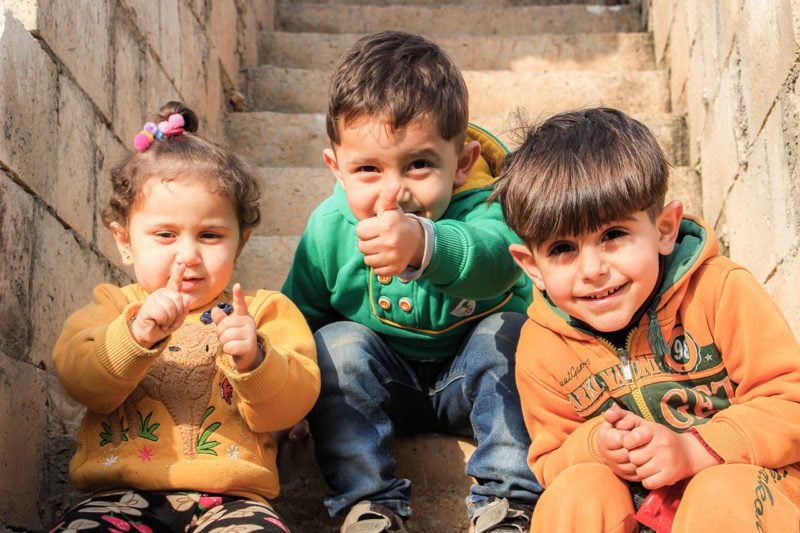
For starters, children and young people need us to support them as the agents of change in their own lives. A recent poll done in partnership with Gallup revealed a generation of young people that are 50% more likely than adults to believe that the world is becoming a better place with each generation. Despite their optimism, they express restlessness for action on climate change and are struggling with feelings of depression and anxiety. Yet, as we clearly hear in the #OnMyMind global conversation, young people are passionate about many causes.
Let us prove them right. Alongside youth changemakers, the KIDsforSDGs community, with the support of Global Citizen Capital, has been nurturing youth to up-learn and up-skill. In parallel, we must do all we can to encourage their design and technology skills development. We should encourage the entrepreneurial mindset necessary to tackle the challenges they face in their daily lives and in an increasingly unpredictable future.
We should encourage the entrepreneurial mindset necessary to tackle the challenges they face in their daily lives and in an increasingly unpredictable future.
Partnerships between non-profits and business must be grounded in shared values, common action, and joint accountability for results, while balancing inclusion and sustainability in all business models and impact goals. We share a few promising examples below, but we need more partners to align and more ideas for building alternative futures together.
Learning Passport with Microsoft illustrates what can be achieved with a shared goal of equity. The mobile and offline platform has made high quality, flexible learning possible for 1.6 million children in 13 countries, even where reliable web connection is unavailable. Used widely to keep children learning when schools around the world closed due to COVID-19 containment measures, the platform was recognized as one of TIME’s 100 Best Inventions in 2021.
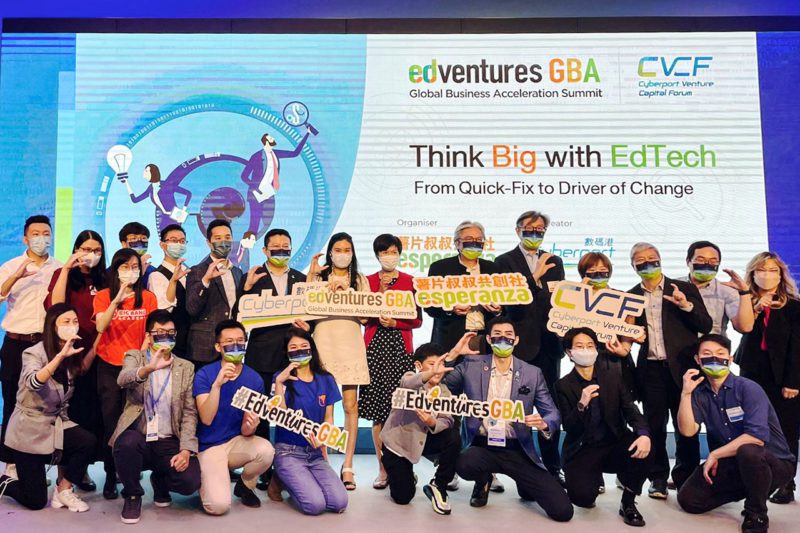
To drive systemic change towards a more sustainable and resilient economy, an inter-generational and multi-capital approach to impact is required. Source: KIDsforSDGs
The best educational experiences not only build skillsets but also develop a mindset that encourages optimism, innovation, and empowerment. In such a learning environment: a) students discover that failure is a natural part of the learning process, not an embarrassment to avoid, and b) youth learn that consistent practice and hard work — rather than innate talent only — lead to positive outcomes.
Thanks to role models from similar backgrounds, young people envision a future in which they have the agency to make a positive impact on their families, communities, and the broader world. In spite of educational institutions and youth-serving, non-governmental organizations (NGOs) demonstrating success in building this mindset, research shows us that optimism peaks in late youth and diminishes for the rest of our lives. Through this approach, we help youth develop businesses, create jobs and contribute to economic resilience and recovery.

Cognitive reframing focuses on skill-building instead of self-worth. “I’m terrible at public speaking so I’ll never get financing for my start-up” becomes "I haven't prioritized public speaking so far in my life, but now that it’s something I want to master for my growing business, I have no doubt that I'll learn this new skill in the same way I've learned so many others.”
Just as young people can master a musical instrument with the help of a good teacher and plenty of practice, students can also master reframing. Imagine a classroom in which educators are empowered to teach a practice of reframing so that, when a student proclaims: “I’m hopeless at mathematics”, the teacher immediately begins the reframing process. This could bypass a lifetime belief in mathematics ineptitude on the part of the student.
How many times have you daydreamed about a different life, job, or situation? Nothing wrong with that! No one is born knowing how to move from vision to action, however. That’s why all students would benefit from instruction in how to pluck their vision out of the clouds, make it so concrete that it would rival a business plan for specificity, and then begin to turn it into small, actionable steps – which translates into building blocks for a more sustainable economy.
When we are talking about reaching hundreds of millions of children, the movement of public and private financial capital cannot be overlooked.
Traditional aid alone cannot solve the challenges facing the world.
Traditional aid alone cannot solve the challenges facing the world. In partnership with the development finance sector across Asia, KIDsforSDGs are working to unlock more public and private capital to drive impact for children, including child-aligned impact ventures.
 Another 2022 demonstration of success is the current design of a digital literacy equity outcomes fund, announced at the Generation Equality Forum where $40 billion in financial commitments were pledged for gender equality results within five years. The fund holds the promise to support every girl to be a tech trailblazer, grounded on existing investment flows of more than $21 billion in relevant school-to-work transitions in emerging markets.
At the heart of every child is innovation — a natural curiosity that is universal. Together let us dare, like children, to think big. Let us be bold in challenging the prevailing norm that equity goals are pursued as a “levelling up” to the pace of the digital revolution. Closing geographical, gender, and generational digital divides must set the pace of the revolution.
Let us be bold as we innovate, and challenge each other. Only then will we live up to our best effort toward a truly equitable, inclusive, and sustainable economy.


Related Content
Gabriel Grant on giving shareholders a way to express what matters to them
69
0
For mission-led organizations, a change of manager tests whether workplace inclusion is built to last.
71
0
Artist Rob Strati on inherited objects, the limits of market price, and the creative possibilities…
109
0

Counting what we fail to prevent, sixty seconds at a time
101
0
Comments
Deep Dives
RECENT
 325
0
325
0
 405
0
405
0
 388
0
388
0
Editor's Picks
 69
0
69
0
 71
0
71
0
 109
0
69
0
69
0
71
0
109
0
109
0
69
0
69
0
71
0
109
0
Webinars
Signed by the author. Collected at the door at Lipton Hall, NYU School of Law,…
News & Events
The 2025–2026 edition also tries to count benefit corporations
The only craft-focused project in Catalytic Capital Consortium’s new cohort.

The September 14 program and a live IFI Tool demo are online
Subscribe to our newsletter to receive updates about new Magazine content and upcoming webinars, deep dives, and events.
Become a Premium Member to access the full library of webinars and deep dives, exclusive membership portal, member directory, message board, and curated live chats.


0 Comments