The Missing Infrastructure of Systems Change
Why durable impact requires trust, culture, and capital



Why durable impact requires trust, culture, and capital

 729
729
 0
0

Community health workers offer a practical starting point
 468
0
468
0

How donor-advised funds are becoming catalytic capital platforms
 692
0
692
0

Abrupt UK cuts threaten coastal resilience, food security, and community-led adaptation
 1238
0
1238
0
At MIE 2026, investors reframed risk as a tool for scale, resilience, and courage
1104
0

Local economies as a bulwark against cross-border extraction and violence
 1225
0
1225
0
Upcoming Events
 130
0
130
0

Employee ownership is gaining momentum as mission-driven founders look for succession strategies that protect jobs, culture, and long-term enterprise value; Photo by Getty Images
Employee ownership is no longer a fringe succession strategy. As retiring founders, aligned investors, and mission-driven companies look for ways to preserve jobs, culture, and community wealth, ESOPs, employee ownership trusts, and worker cooperatives are moving into the impact economy spotlight. But conversion is not magic. As Sandra Stewart reports from the B Corp Champions Retreat, the companies that succeed prepare early, choose the right model, secure aligned capital, and build a real ownership culture.
For many mission-driven founders, one of the hardest questions is not how to grow the business, but how to leave it without compromising the mission, jobs, culture, or community value they spent years building.
Employee ownership, long a niche business structure in the U.S., is rapidly gaining momentum as one answer to two painful economic realities: a “silver tsunami” of retiring baby-boomer business owners that is leaving closures and asset-stripping sales in its wake, and an extreme level of wealth inequality, with the top 10% of U.S. households holding 67.2% of total wealth while the bottom half holds just 2.5%.
As Impact Entrepreneur noted in February, employee ownership’s capacity to strengthen business performance and build worker wealth is attracting new attention from investors and policymakers. Ownership Capital Lab and Transform Finance reported that assets held in employee ownership investment funds rose 73%, from $500 million across 27 funds in December 2024 to $865 million across 29 funds in December 2025. The U.S. Department of Labor, meanwhile, has elevated employee ownership through an initiative focused on the three major models: employee stock ownership plans (ESOPs), worker cooperatives, and employee ownership trusts (EOTs).
Employee ownership is especially appealing to impact-driven founders, and there is an expanding support system for owners seeking an exit or growth capital while putting a premium on local economic health, shared prosperity, and mission preservation. That system was highly visible at the recent B Corp Champions Retreat, where multiple sessions dug into the promise and on-the-ground realities of employee ownership conversions, and at a slate of ownership-focused spring events. The upshot: preparation, aligned financing, and culture building are the keys to success.
The benefits of employee ownership are real: companies can boost productivity and sales, improve resilience, and reduce turnover. Employee-owners tend to have higher wages, more retirement savings, and, depending on the structure, more engagement in business decisions. But converting to employee ownership will not fix a broken business model or magically erase culture deficits.
Donna Sky, senior manager of business engagement and strategic partnerships at Project Equity, a national nonprofit that helps businesses transition to employee ownership, ticked off the business fundamentals at a Champions Retreat panel with employee-owned B Corps: converting companies need a history of profitability, a path to continued success, and minimal debt.
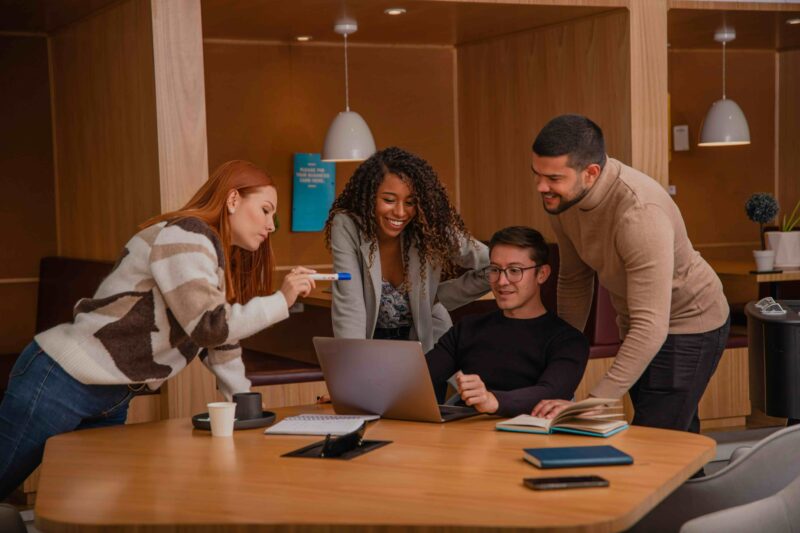
Successful employee ownership depends not only on legal structure, but on building the habits of transparency, participation, and shared decision-making; Photo by Pablo Merchán Montes
They should also start now on operational moves that will strengthen the business regardless of what is down the road: reducing a retiring owner’s responsibilities, strengthening the management team, giving employees greater insight into the business’s finances and operations, engaging more employees in business planning processes, and, depending on what the model demands of them, making sure employees are up for ownership.
“What I think really set us up nicely for this transition was we did a lot of ownership thinking prior to becoming a worker-owned co-op,” said Katie Stone, CEO of PixelSpoke. “If this is something that’s on your map, even if it’s five, 10 years down the road, that’s what you can start working on now.”
Miren Oca, founder and CEO of Ocaquatics Swim School in Miami, began thinking about succession in 2014 when she discovered her son was not interested in running the business. Over time, she investigated the full menu of options for selling the company and sharing equity with employees.
“I was calling every single CEO of every single employee-owned company I could find,” she said. “I spoke to 50 different CEOs.”
Converting to employee ownership will not fix a broken business model or magically erase culture deficits.
Her ultimate decision: transition to 100% employee ownership through an EOT, which she completed in 2024. The company now has 55 co-owners.
EOTs, which hold ownership on behalf of employees and share profits, are a good fit for owners like Oca who want a flexible model that protects their mission and ensures long-term employee ownership. Other priorities and goals lead to different models.
With ESOPs, employees earn stock within a qualified retirement plan. ESOPs yield tax benefits for the seller and company but are relatively expensive to set up and maintain; they typically do not make sense for businesses with fewer than 40 employees and less than $1 million in earnings before interest, taxes, depreciation, and amortization (EBITDA). Worker co-ops are democratic at the core, lower cost, and also provide tax benefits; they typically require employee-owners to buy in. (See this comparison for pros and cons of various models.)
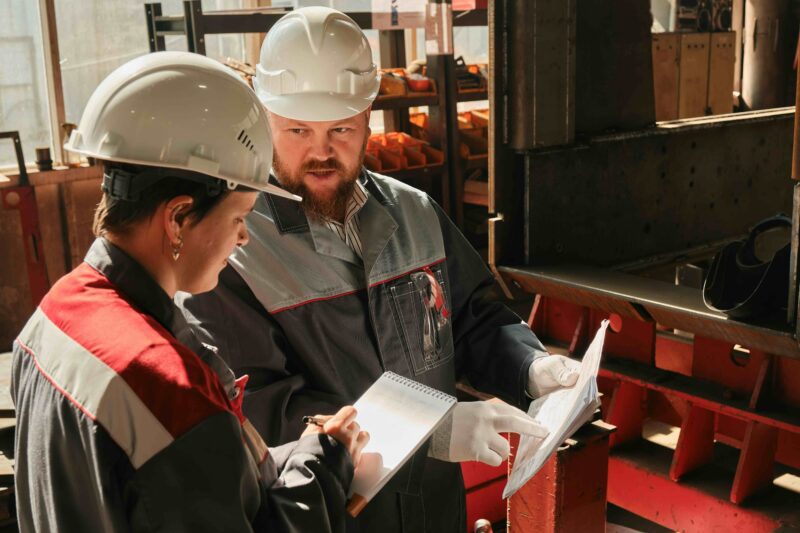
Before converting, companies need strong fundamentals, clear operating systems, and employees prepared to participate in the responsibilities of ownership; Photo by Andrej Lišakov
Many owners are more comfortable starting with a partial conversion. Research suggests that meaningful performance benefits emerge when employee ownership reaches a substantial share of the company — often cited at around 30%, said Malini Ram Moraghan, managing director of the employee ownership investment firm Torana Group, who spoke at the annual NCEO conference in April.
“Three considerations we often hear from business owners are transaction complexity — and who on their team has to engage — what their employees actually get, and how a partial employee ownership plan might impact their sale prospects down the road,” said Ram Moraghan. “As an investor, we start the structuring exercise with a different set of questions: What is the owner’s tax sensitivity? What helps the company remain competitive? And how can we relate employee ownership to value creation to reinforce the alignment of interests?”
Alignment of interests with investors is especially crucial for owners who want to secure a legacy.
If employee ownership is on your map, even if it’s five, 10 years down the road, that’s what you can start working on now.
Speaking on a Champions Retreat panel on values-driven pathways for growth and ownership transitions, Todd Leverette, co-founder and co-managing partner of Apis & Heritage Capital Partners, stressed the importance of deep engagement. His firm, which provides debt and equity financing for ESOP conversions to long-standing businesses whose owners want to make their workforce their exit partner or growth partner, works with portfolio companies to create a culture that maximizes the benefits.
“If you just set up an ESOP and don’t do anything related to culture, don’t do anything related to governance, you actually don’t develop what we call an ownership mindset,” Leverette said.
“So many people ask me if this transition to employee ownership is like poof, it’s a light switch, and everybody starts thinking like an owner,” Oca said. “That’s not it. It takes a while to do your ownership transition. It also takes a while to build that culture.”
Employee ownership is more than an exit strategy. Done well, it is a way to keep mission-driven businesses rooted, resilient, and broadly wealth-building across generations.
PixelSpoke, which became a worker-owned cooperative in 2020, now has 11 co-owners on a team of 14. “One of the biggest things that we’re still trying to figure out and is still changing is our decision-making structure,” Stone said. “When we first made the transition, we still had day-to-day decision making really with the management team. And recently, there’s been a push to move that more to the co-owners. So we started creating more operational structures around it,” including a team that decides how to allocate the compensation budget across the organization and a finance committee that sets the annual budget.
King Arthur Baking Company, a 100% ESOP since 2004, illustrates a mature implementation. “Being an employee-owned company impacts everything that we do,” said Champions Retreat panelist Molly Lawrence, senior manager of social impact. “And employees see it culturally from day one. We have an Owner’s Summit that talks about, what does it mean to be an owner? King Arthur also has what we call brain food classes — half-hour sessions where experts at King Arthur talk about the cultural awesomeness of employee ownership and the financial component as well.”
Ultimately, Leverette said, “when you do it the right way, employee ownership is the most powerful tool for wealth creation for working people in the United States, and probably one of the most powerful tools for creating and maintaining high-quality businesses and high-quality jobs.”
For the impact economy, that makes employee ownership more than an exit strategy. Done strategically, it is a way to keep mission-driven businesses rooted, resilient, and broadly wealth-building across generations.
--
Disclosure: Torana Group, which is quoted in this article, is a client of Thinkshift Communications, where the author works.


Related Content

Why circular migration may offer a better path than mass repatriation
 526
0
526
0

Financing historic cities for housing, livelihoods, and resilience
 661
0
661
0

Democracy, narrative, and systems change
 605
0
605
0
Lessons from Atlanta’s BeltLine and Pittsburgh Yards
792
0
Comments

Deep Dives

Featuring
Laurie Lane-Zucker
Founder & CEO, Impact Entrepreneur
July 30 - 12:00 PM EST
RECENT
 1238
0
1238
0
 1104
0
1104
0
 1225
0
1225
0
Editor's Picks
 729
0
729
0
 468
0
468
0
 692
0
729
0
468
0
692
0
692
0
729
0
468
0
692
0
Webinars

Featuring
Sateesh Nori
Legal Futurist
July 23 - 12:00 PM EST
News & Events


Recognizing America’s fastest-growing purpose-driven companies

Across the cohort, founders are creating solutions at the intersection of sustainability and social impact
Subscribe to our newsletter to receive updates about new Magazine content and upcoming webinars, deep dives, and events.
Become a Premium Member to access the full library of webinars and deep dives, exclusive membership portal, member directory, message board, and curated live chats.

Join our global community of systems-minded changemakers.
Subscribe to the Impact Entrepreneur newsletter for the latest insights, magazine features, and invitations to exclusive webinars, Deep Dives, and events.


0 Comments