Regenerative AI
The metaphysics, the machine, and the future of the Impact Economy



The metaphysics, the machine, and the future of the Impact Economy

 1216
1216
 0
0

What FLY paper reveals about the limits of bespoke financial tools
 1536
0
1536
0

Why reconnecting education, work, and opportunity matters
 1792
0
1792
0

Why investing with impact is no longer enough
2664
0

What Ramadan reveals about solidarity as economic infrastructure
 1400
0
1400
0

Rebalancing support between tech ventures and traditional SMEs in MENA
1613
0

 1901
0
1901
0
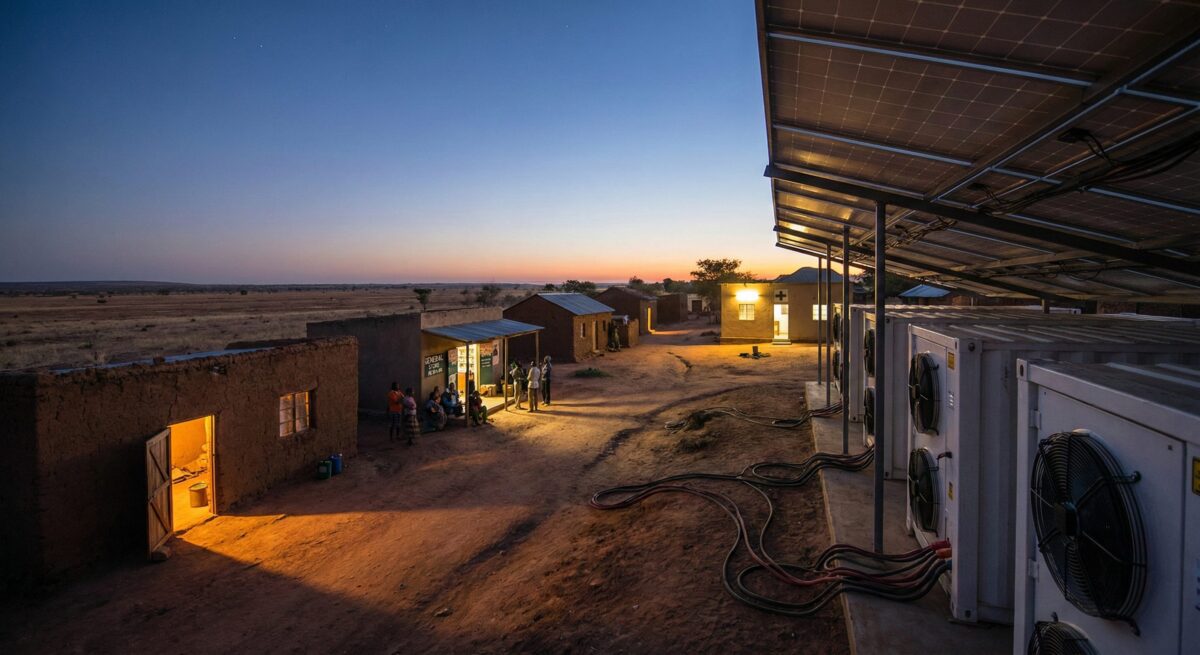
Mission 300 has set an ambitious target for electrifying Africa. But without a fundamental redesign of mini-grid finance, policy, and operations, the math simply does not work.
One of the most sobering figures in the Mission 300 agenda is not aspirational — it is arithmetic. To meet its target, Africa would need to build more than 760 mini-grids every month between now and 2030. Last year, fewer than 600 were built in total.
That gap between ambition and current capacity captures the central challenge facing Africa’s electrification efforts. Mission 300 has succeeded in creating urgency. Whether it succeeds in delivering power at scale will depend on something far harder: a fundamental redesign of the systems meant to support it.
Mini-grids have long been recognized as a critical solution for rural and peri-urban electrification. They do far more than light homes. When designed and operated well, they power clinics, schools, agro-processing, refrigeration, and small enterprises — the foundations of local economic activity. The World Bank and others have made this clear for years. Yet despite broad consensus on their importance, deployment remains far below what the moment demands.
The problem is not technology. It is architecture.
Results-based financing (RBF) has become one of the sector’s most important tools, but in practice, many RBF programs unintentionally slow deployment. Too often, they specify technologies, suppliers, metering systems, and operational details that leave little room for adaptation or innovation.
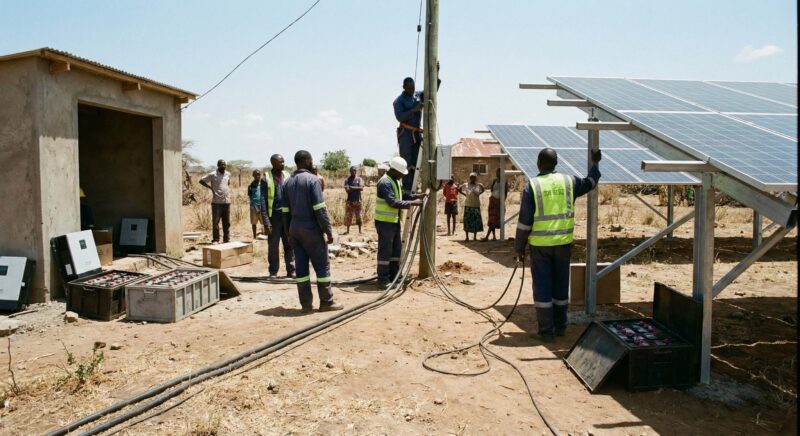
If speed and scale are the goal, RBF must reward outcomes, not compliance. What matters is how many people gain access to reliable electricity — and at what level of service — not whether a donor-approved hardware stack has been installed. When developers are paid for results, they innovate. When they are paid for paperwork, systems stagnate.
Capital structure presents an equally stark mismatch between theory and reality. Mini-grids are frequently modeled at connection costs of $1,200–$2,000, with the expectation that operators will charge tariffs affordable to low-income rural customers while remaining financially viable. That math simply does not hold.
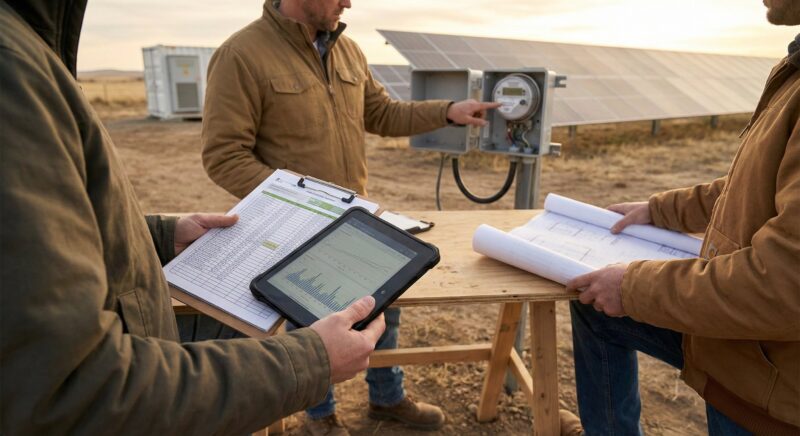
Closing this gap requires a different financing architecture — one that reflects the economics of real communities. Targeted capital support is most effective at the point of equipment procurement, where hard-currency exposure and import duties inflate costs. At the same time, developers need access to local-currency debt, so foreign exchange volatility does not erase already-thin margins. Emerging domestic debt instruments in countries like Nigeria offer a promising model, but they remain the exception rather than the rule.
Even improved financing will fall short if mini-grids remain structurally misaligned with national electrification strategies. Across much of Africa, national grids are heavily subsidized, while rural mini-grids — serving poorer, harder-to-reach populations — are expected to operate without any form of operational support.
Mini-grids have long been recognized as a critical solution for rural and peri-urban electrification.
The result is predictable. Tariffs become either too high for customers to use electricity productively, or too low for operators to survive. Neither outcome delivers development impact.
If mini-grids are truly part of national electrification plans, policy must reflect that reality. Ongoing, structured operational support is not charity; it is policy coherence.
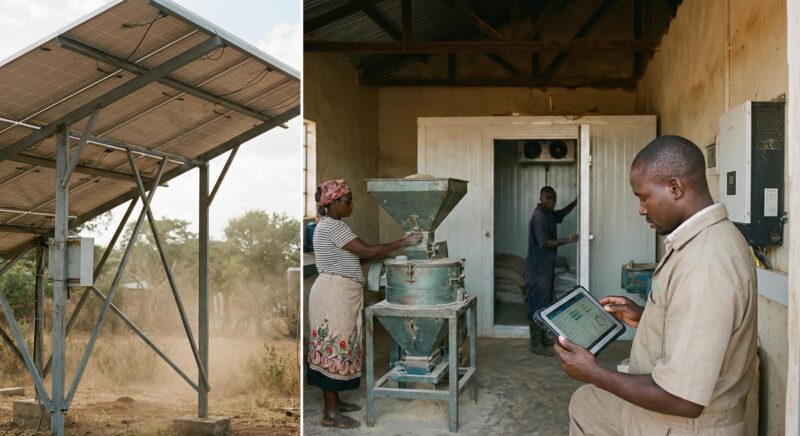
Trust is another critical, and often overlooked, constraint. Developers cannot invest at scale if tariff structures or licensing agreements can be altered midstream. Political risk remains one of the strongest deterrents to capital. External guarantees, backed by donors or multilateral institutions, can help mitigate this risk — not as a subsidy, but as a stabilizing mechanism. Tanzania’s experience offers a cautionary example of what happens when regulatory certainty erodes.
Responsibility for scaling mini-grids does not rest solely with governments and donors. Developers themselves must change how they design and operate systems.
First, electrification must move beyond a one-technology mindset. Not every community needs a mini-grid. A mix of solar home systems, standalone solutions, mesh-grids, and mini-grids better reflects the diversity of demand across regions.
Second, developers must resist the urge to oversize systems. Solar is modular by nature. Installing a decade’s worth of capacity on day one inflates capital costs and raises tariffs unnecessarily. Starting smaller and expanding as demand grows improves affordability and resilience.
If we succeed, mini-grids can become one of the great engines of Africa’s development, powering farms, clinics, schools, and small enterprises across the continent.
Third, power availability should be matched to real needs. Designing for 16–20 hours of reliable electricity is often far more economical than aiming for 24/7 uptime backed by diesel generators, which undermine both financial and environmental sustainability.
Finally, the sector must invest as much in operating mini-grids as it does in building them. Long-term impact depends on maintenance, monitoring, and adaptive management. AI-driven diagnostics, predictive maintenance, and digital oversight are no longer optional — they are prerequisites for scale.
Taken together — outcome-based financing, realistic capital structures, policy alignment, risk mitigation, smarter system design, and long-term operational discipline — these elements form the foundation of a mini-grid ecosystem built for scale.
Mission 300 has given the sector a target and a timeline. What it has not yet delivered is the architecture required to meet them.
If we succeed, mini-grids can become one of the great engines of Africa’s development, powering farms, clinics, schools, and small enterprises across the continent. If we fail, we risk another decade of pilot projects and unmet potential.
Mission 300 is ultimately about building energy-enabled economies. Mini-grids can play a defining role — but only if we are willing to redesign the system around how scale actually happens.
--
Disclosure: The author is CEO of Ignite Energy Access, a company active in distributed energy solutions in Africa. This article reflects a practitioner’s perspective informed by direct operating experience in the sector.


Related Content

Abrupt UK cuts threaten coastal resilience, food security, and community-led adaptation
 1115
0
1115
0

At MIE 2026, investors reframed risk as a tool for scale, resilience, and courage
 1024
0
1024
0

Local economies as a bulwark against cross-border extraction and violence
 1089
0
1089
0

An introduction to our new magazine department from the Editors
 1046
0
1046
0
Comments

Deep Dives
RECENT
 2664
0
2664
0
 1400
0
1400
0
 1613
0
1613
0
Editor's Picks
 4158
0
4158
0
 7108
0
7108
0
 12926
0
12926
0
 1216
0
1216
0
 1536
0
1536
0
 1792
0
1792
0
Webinars
News & Events

Over $200k to six or more winners will be awarded

$22 Million raise is democratizing investment in community wealth building

Subscribe to our newsletter to receive updates about new Magazine content and upcoming webinars, deep dives, and events.
Become a Premium Member to access the full library of webinars and deep dives, exclusive membership portal, member directory, message board, and curated live chats.

Join our global community of systems-minded changemakers.
Subscribe to the Impact Entrepreneur newsletter for the latest insights, magazine features, and invitations to exclusive webinars, Deep Dives, and events.


0 Comments