Sea Cucumber Ranching Supports Equitable Ocean Conservation




 10518
10518
 0
0

 15577
1
15577
1

 10648
0
10648
0

An interview with SOCAP President Robert Munson
 8208
0
8208
0
Accelerating post-wildfire recovery in ways conventional solutions can’t achieve
 15208
0
15208
0

 9679
0
9679
0
 3537
0
3537
0
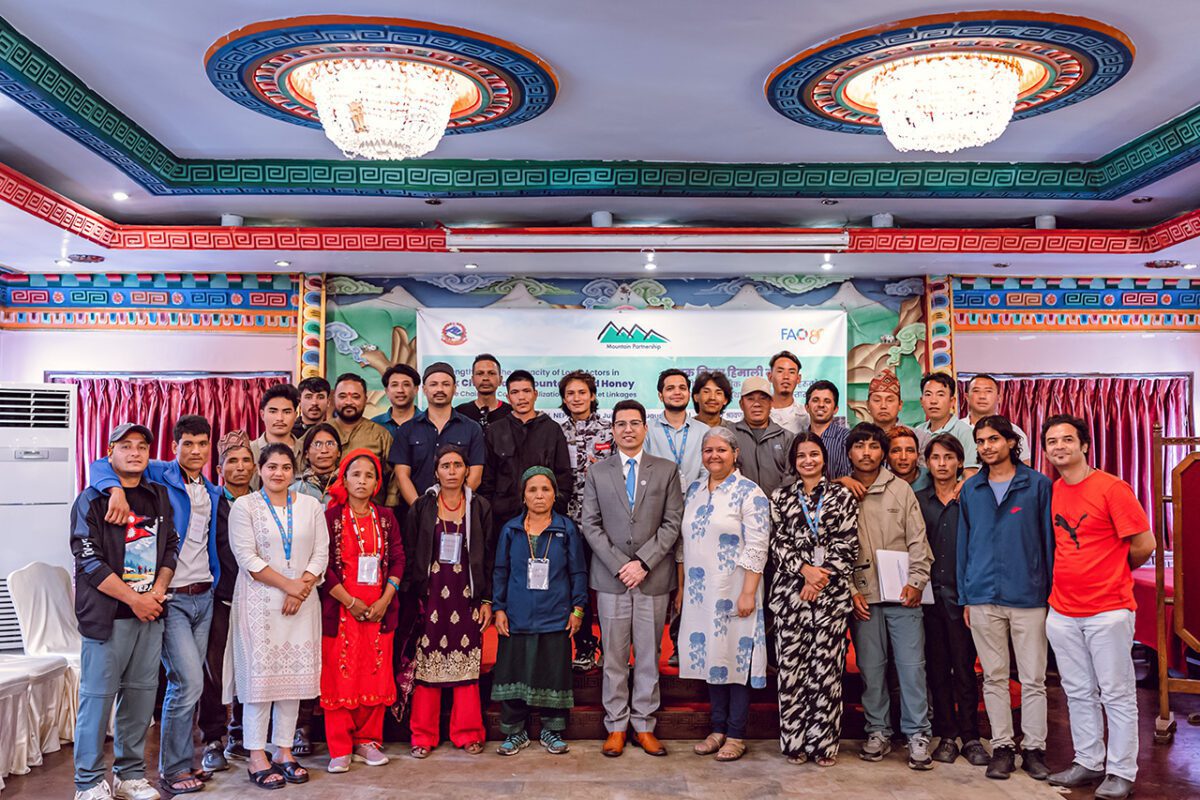
Capturing the spirit of collaboration, this group photo with the FAO Nepal team was taken on the final day of the Kathmandu workshop described in the article.
How skills, networks, and trust are helping high-mountain producers move from extraction to regeneration
High in Nepal’s rugged mountains, where snow-fed rivers carve through narrow valleys, yak cheese processors and wild mountain honey harvesters — often working in isolation and without formal market access — are reimagining what sustainable enterprise looks like in some of the world’s most remote regions.
Earlier this year, Ennovent Nepal, in collaboration with the Government of Nepal, FAO, ICIMOD, Mountain Partnership, and Yunus Environment Hub, convened 22 producers from Nepal’s most remote, high-altitude districts — Panchthar, Dolpa, Jajarkot, Rukum, and Jumla — for a six-day residential workshop in Kathmandu.
What unfolded was more than a training program. It was an experiment in building what can be called the invisible infrastructure of rural impact entrepreneurship: the skills, confidence, and networks that enable small producers to participate in regenerative markets long after a project ends.
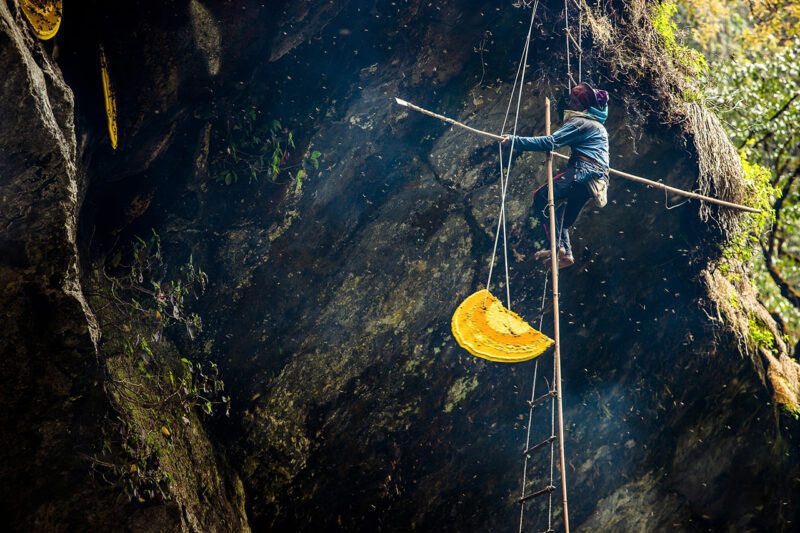
Hanging from bamboo ladders on steep Himalayan cliffs, Nepal’s honey hunters keep alive an ancient tradition shaped by courage, skill, and deep respect for nature. Their work is a powerful reminder of how cultural heritage and sustainable livelihoods can thrive together.
Capacity building as infrastructure
Traditional development often treats training as a one-off event. Here, capacity building functioned as infrastructure — equipping producers with business acumen, digital fluency, and cooperative models to sustain market linkages.
Over the week, participants worked on practical skills ranging from food safety and hygiene to branding, storytelling, and business planning. Experts guided sessions on compliance, value addition, and marketing, while producers co-created solutions to their own challenges. The goal wasn’t to simply “train” them but to support ownership of a transformation journey.
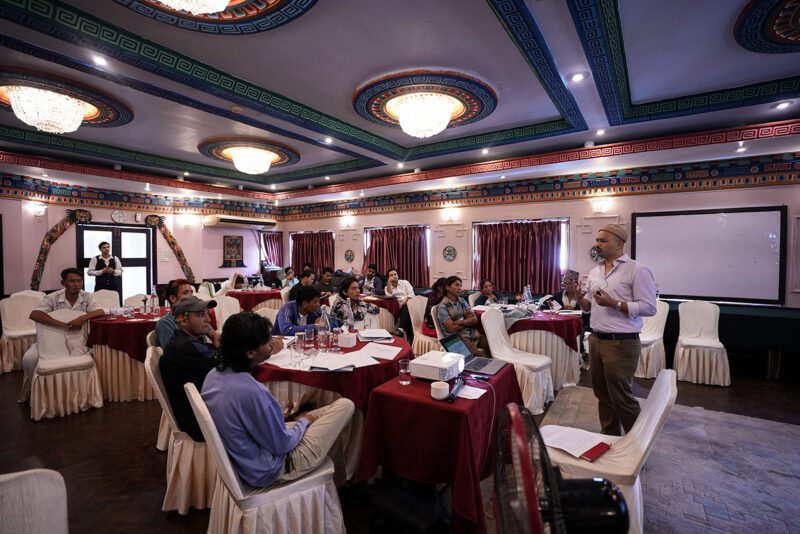
A glimpse from a week-long workshop that empowered rural cheese processors and honey harvesters with practical skills to improve quality and access better markets.
By the end, more than 90% of participants rated the workshop “very useful.” Beyond numbers, mindset shifts were visible. Young participants such as 19-year-old Dipesh Rawal (Dolpa) and 25-year-old Abiraj Jhankri (Rukum) began to see themselves not merely as suppliers but as entrepreneurs capable of shaping their own market futures.
“Before, when we collected honey, we only thought about taking out as much as we could. We didn’t really understand sustainable methods or the long-term impact of our actions. But now, we will remember what we learned and follow more sustainable practices,” Rawal said.
From extraction to regeneration
Mountain economies in Nepal have long been defined by extractive or subsistence models — exporting raw commodities or labor with limited local value creation. Yet a different vision is emerging.
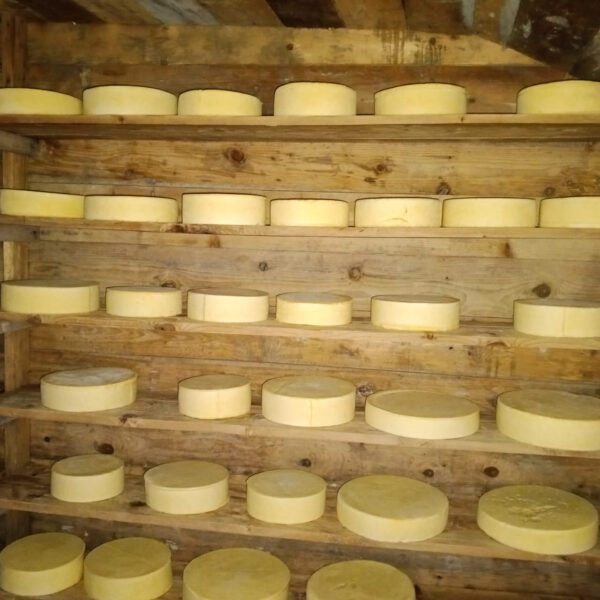
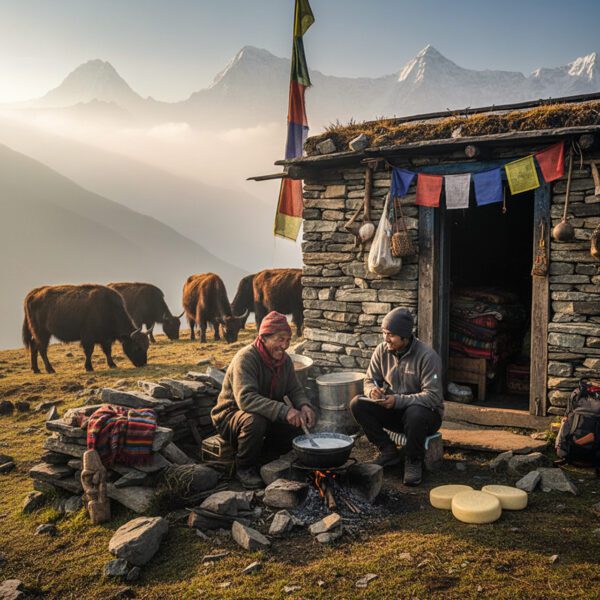
A glimpse into Nepal’s rural cheese-making tradition, where skill, patience, and locally made wooden shelves shape every wheel of Himalayan cheese.
In Panchthar, dairy entrepreneurs are piloting a “gothstay” model: inviting travelers to stay alongside yak herders at 3,500 meters, blending ecotourism with artisanal cheese production. The model retains value at the source, preserves biodiversity, and celebrates cultural heritage.
Wild honey producers are adopting sustainable harvesting methods that protect pollinators and forest ecosystems while opening access to premium ethical markets. Exposure visits to Kathmandu’s farmers’ markets and ethical retailers showed how storytelling and authenticity can command higher prices without sacrificing integrity.
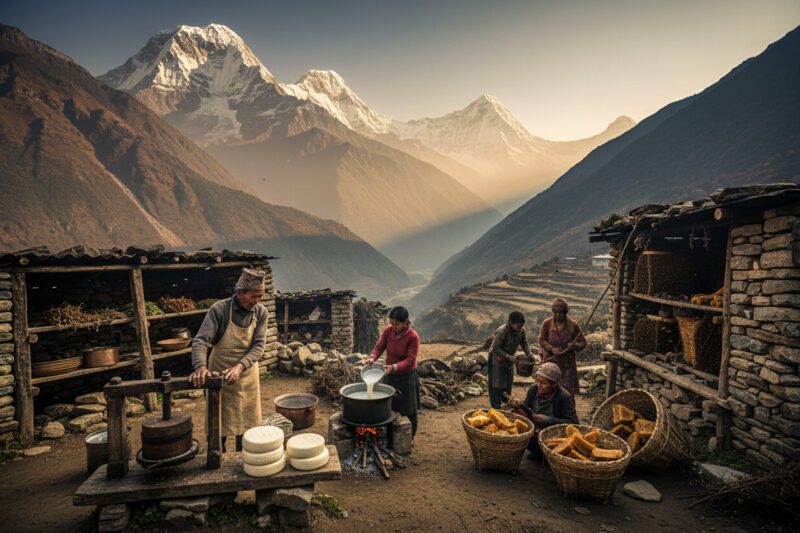
“I didn’t know that certifications like PGS even existed or that they could support grassroots entrepreneurs like us,” said Chandra Lal Nepal, one of the participants. “Learning about PGS and branding made me realize how important they are for our value chain. If we strengthen these areas, we can reach better markets and earn fair prices for our products.”
These cases suggest a shift in development logic: from extraction to regeneration, from aid dependency to local agency.
Building ecosystems, not just enterprises
Cross-sector collaboration multiplied impact. Ennovent Nepal’s role as venture catalyst bridged local realities with national and international market systems, aligning technical experts, policymakers, and private actors toward shared outcomes. Participation by Nepal’s former Minister of Tourism and a sitting MP signaled a broader policy recognition: resilient rural economies are foundational to national prosperity.
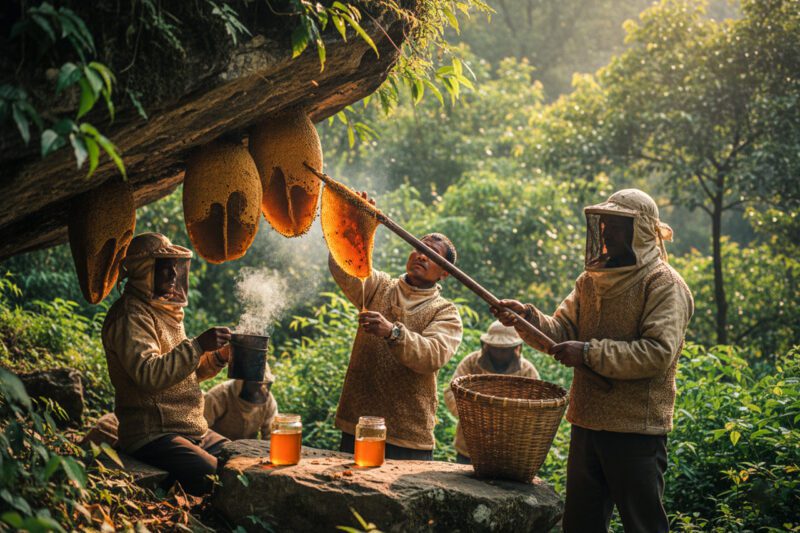
Honey processing
Early signs of trust-based value chains are emerging as ethical retailers express interest in sourcing from these producers. To sustain momentum, post-training accompaniment matters: mentoring, market linkages, and affordable assurance tools such as the Participatory Guarantee System (PGS) can help small producers meet expectations for transparency and quality without prohibitive costs.
Capital also has a role. Interest from impact investors and catalytic capital providers — from revenue-based finance to blended instruments — can help fund equipment upgrades, working capital, and market development while respecting community ownership and pacing.
Real constraints, realistic paths
Progress is tangible, but constraints remain. Producers face financing gaps for basic equipment, challenging logistics across difficult terrain, costly certification/compliance hurdles, and climate-related risks affecting forage, pollinators, and seasonal access. These tensions do not negate the gains — they clarify what durable support requires: fit-for-purpose capital, lighter-weight certifications, bundled logistics, and policy alignment on quality and origin.
 Lessons for a global audience
What’s unfolding in Nepal’s highlands offers lessons for other emerging markets:
The bigger picture
What’s happening here is more than a local success story. It’s a case study in how micro-economies — nurtured with capacity building, policy alignment, and market access — can contribute to a global impact economy. By empowering rural producers to become entrepreneurs, Nepal shows that sustainable development is less about top-down scale and more about ground-up growth — one yak herder, one honey harvester, one community at a time.


Related Content

Re-imagining our economy in service of ecological harmony and equitable well-being
 11737
0
11737
0

Innovative Solar Solutions for Energy Resilience in Underserved Communities
7787
0

Revitalizing a family business and becoming leaders in food banking
 14080
0
14080
0

Start early!
7468
0
Comments

Deep Dives
RECENT
 8208
0
8208
0
 15208
0
15208
0
 9679
0
9679
0
Editor's Picks
 10518
0
10518
0
 15577
1
15577
1
 10648
0
10648
0
Webinars
News & Events
Subscribe to our newsletter to receive updates about new Magazine content and upcoming webinars, deep dives, and events.
Become a Premium Member to access the full library of webinars and deep dives, exclusive membership portal, member directory, message board, and curated live chats.

Join our global community of systems-minded changemakers.
Subscribe to the Impact Entrepreneur newsletter for the latest insights, magazine features, and invitations to exclusive webinars, Deep Dives, and events.


0 Comments