“I Didn’t Know My DAF Could Do This!”
How donor-advised funds are becoming catalytic capital platforms



How donor-advised funds are becoming catalytic capital platforms

 51
51
 0
0
Why circular migration may offer a better path than mass repatriation
 131
0
131
0
Financing historic cities for housing, livelihoods, and resilience
 203
0
203
0
How Haverford’s student investing program pivoted toward more purpose-suited capital
 639
0
639
0
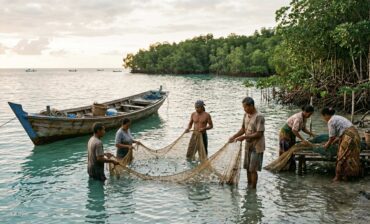
Abrupt UK cuts threaten coastal resilience, food security, and community-led adaptation
 917
0
917
0

At MIE 2026, investors reframed risk as a tool for scale, resilience, and courage
 805
0
805
0

 4200
0
4200
0
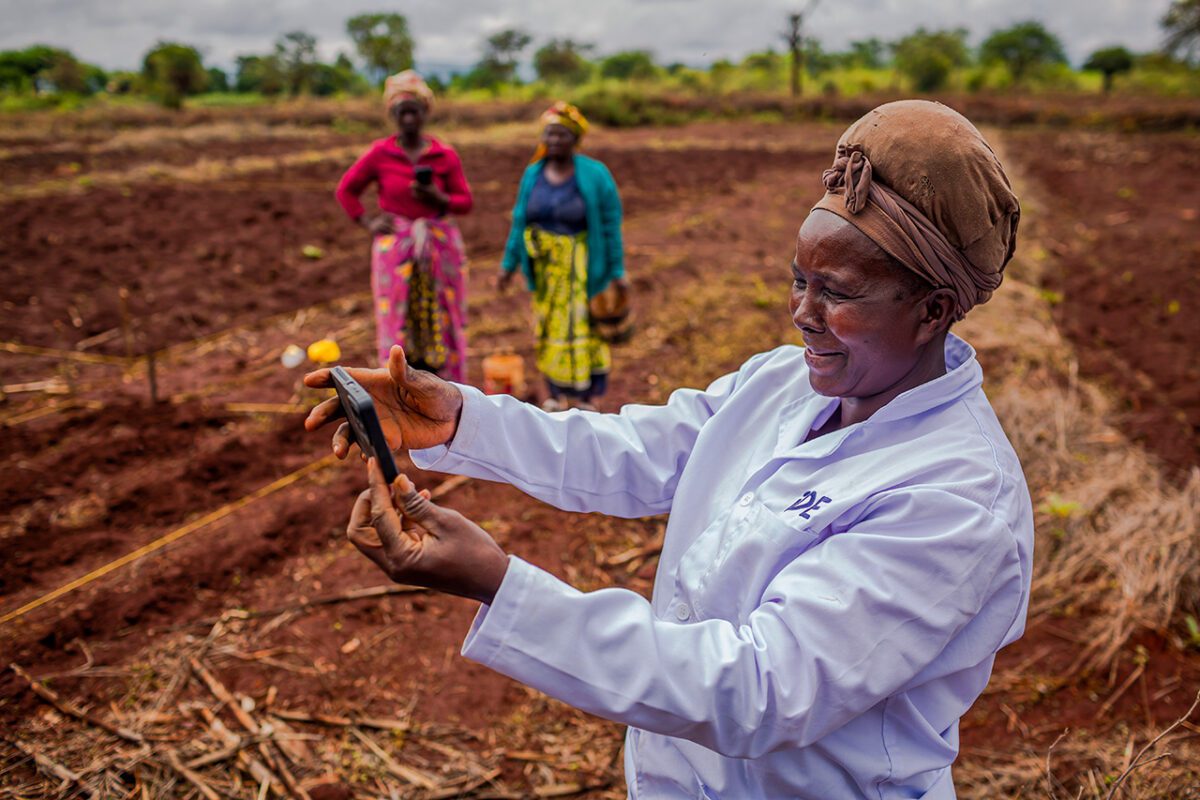
Fedha Kyevo — The She Feeds Africa project, which focuses on advancing women-led agricultural enterprises, is one of many initiatives supported by iDE Kenya to build entrepreneurship and market linkages for rural and last-mile farmers.
In the drought-stricken village of Kiusiana in eastern Kenya, water is hard to come by. Nearly every day, Fedha Kyevo, 55, travels more than five miles to fetch water from a town well — sometimes by shared motorbike, sometimes on foot with jerry cans strapped to her back.
Her homestead sits in an arid region where climate change has led to erratic rainfall. At the same time, rivers, lakes, and underground reserves are steadily drying up. Electricity and other essentials are also costly.
But through her work as a smallholder farmer and post-harvest service provider, Fedha has transformed her circumstances. “I used to take loans just to buy food when the crops failed,” she said. “Now, I shell maize for others. My income has increased four times over.”
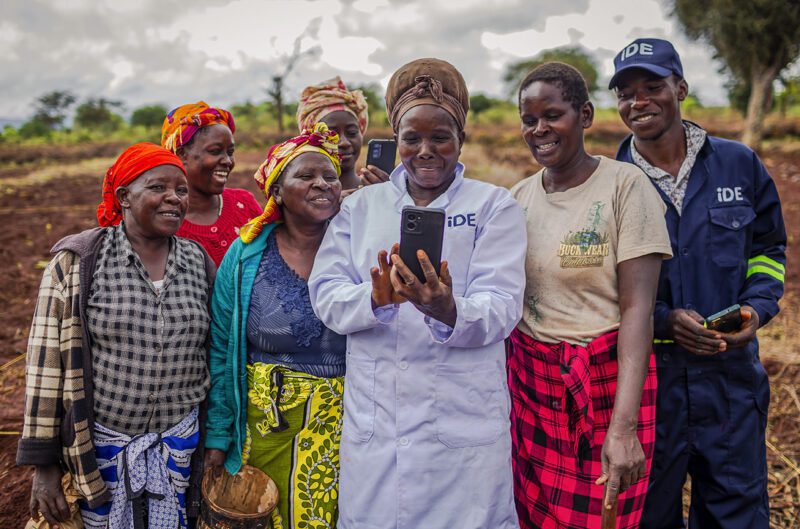 Upendo Enterprise entrepreneurs, Kuisiana; Photo courtesy of IDE
A maize farmer, mother, and entrepreneur, Fedha’s work ethic has made her a leader in her remote community. In 2023, she joined 60 other rural Kenyan entrepreneurs who began using modern post-harvest machinery with support from iDE.
Through the She Feeds Africa program, iDE helped Fedha gain access to machinery and loans, training her to operate a maize sheller — a portable, high-capacity machine that processes up to 1,500 kg of maize per hour while minimizing grain breakage and spoilage.
Because maize farming in these dryland regions demands significant labor, Fedha quickly built a business around the sheller. Local farmers now hire her rather than doing the post-harvest work by hand.
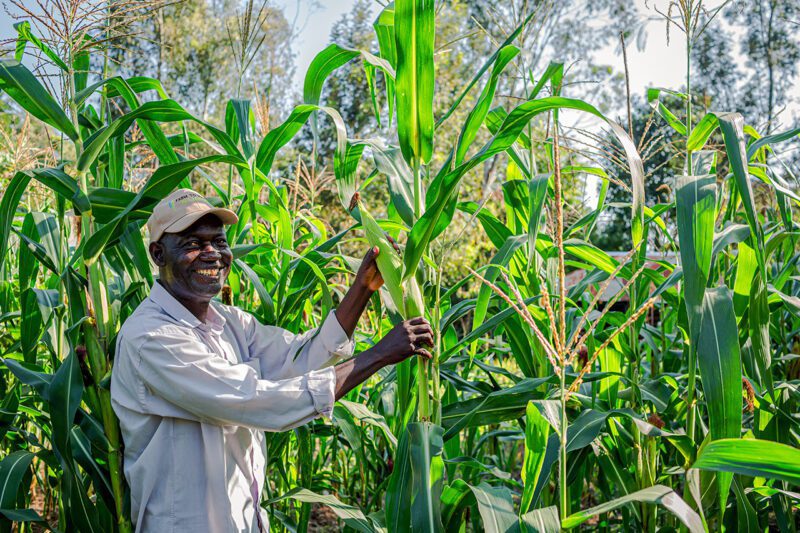 With support from iDE and partners, Fred runs the Fredica Service Center, a thriving business serving over 500 farmers with shelling, ploughing, and climate-smart training. Photo by George Opejo for iDE, 2024
“I shell for three farmers in a day, and I’m not just earning — I’m building my business,” Fedha said. The machine, designed for remote, off-grid locations, can be transported by motorbike to reach scattered farms.
Agriculture accounts for 33 percent of Kenya’s GDP and supports more than 70 percent of the rural population. Yet food insecurity remains high, with nearly 28 percent of the population undernourished in 2023. Post-harvest losses of up to 30 percent — often due to limited access to modern processing tools, especially for women — compound the challenge.
That’s why iDE is providing entrepreneurs, particularly women, with agricultural technology, tailored training, and support designed to meet the needs of micro-entrepreneurs. These efforts help women boost profits from crops like maize, millet, and cassava. Many are expanding their businesses into fortified flours, peanut butter, and animal feed — products that command higher market prices — while building stronger linkages to scale their impact.
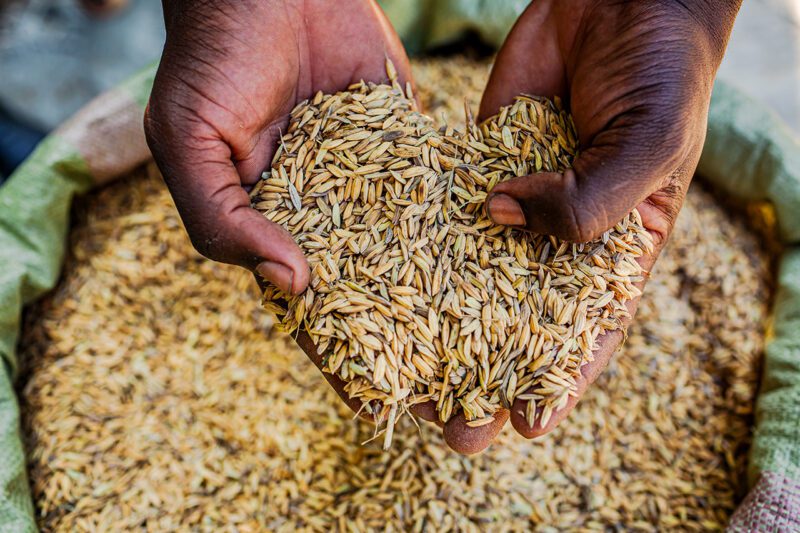 Amos holds some of the grains they process with the maize sheller they helped acquire through iDE; Photo courtesy of IDE
In Fedha’s case, iDE supported her in accessing a Ksh 70,000 (about US$540) loan, enabling her to buy her sheller, which she repaid within a year. Using the machine, she now generates about Ksh 150,000 ($1,160) per 100 kilograms of maize during harvest. Serving an average of three farmers a day, each with 20 bags, she earns around Ksh 9,000 ($70) daily.
As climate change continues to threaten Kenyan crops and food security, localized, community-driven solutions are essential to help smallholder farmers like Fedha stay sustainable and resilient.
In a good season, her income reaches Ksh 225,000 ($1,740), with a profit margin of Ksh 135,000 ($1,040). She also earns from aggregating grain, milling, and selling farm inputs, while farmers report stronger incomes from working with her.
“iDE conducts capacity assessments for entrepreneurs to identify gaps, which we address through participatory training and delivery approaches,” said Geoffrey Nyamota, iDE Kenya’s team leader.
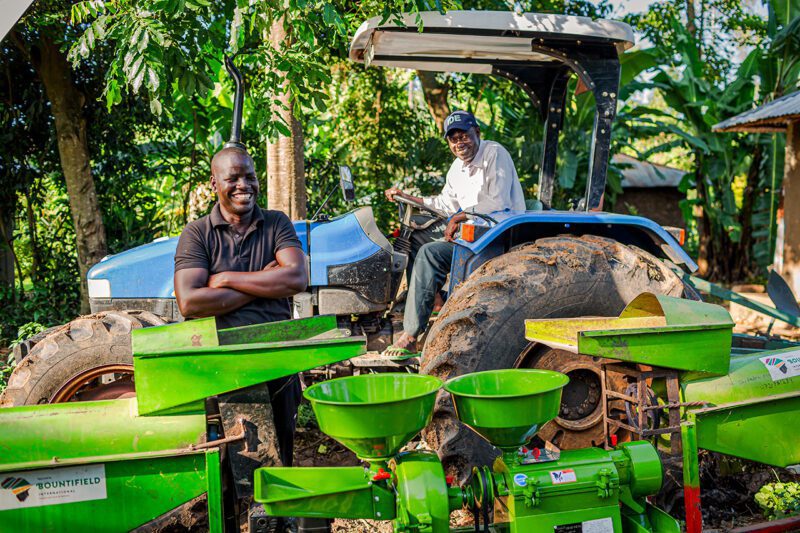 Fred—father of seven, grandfather of one—now owns and operates two maize shellers, a tractor, and a rice mill with his son, Amos. “We’ve come from disaster to building something that helps others,” he said; Photo courtesy of IDE
To scale this model, Nyamota explained, iDE engages successful entrepreneurs like Fedha to recruit, train, and mentor others, while partnering with financial providers to offer blended financing that supports women and other impactful but often “unbankable” entrepreneurs in western and eastern Kenya.
This value-addition work equips entrepreneurs with technology and skills to produce fortified flour and peanut butter, marketed through Facebook, WhatsApp, local shops, and schools. For many entrepreneurs, this continued support has helped increase profit margins fourfold.
In 2024, women entrepreneurs working with iDE across Kenya processed more than 2.9 million kilograms of grain — representing 80 percent of all grain processed since the project’s inception and marking a 61 percent increase over the previous year. The work generated $27,243 in revenue during the same period. Each of the 3,771 smallholder farmers involved — 80 percent from women-headed households — earned an average of $1,000 in additional income.
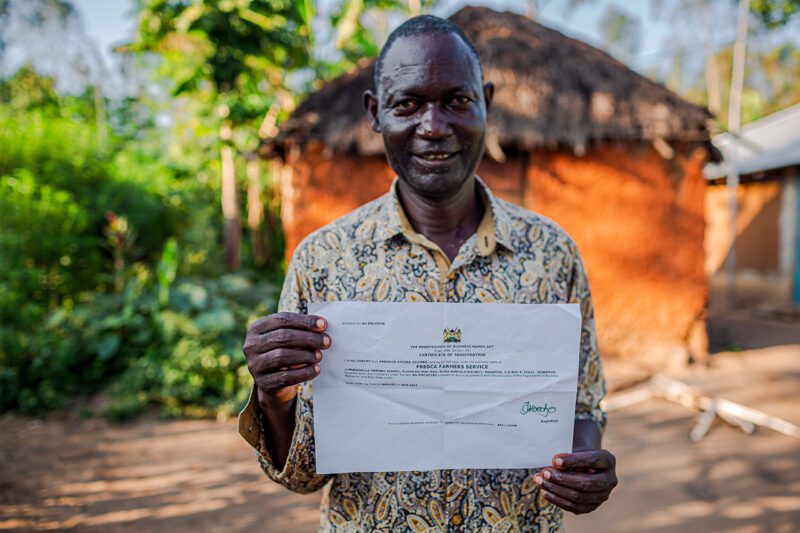 Since joining iDE in 2021, Fred has created a growing and diversified agricultural business which supports and trains other members of his community; Photo courtesy of IDE
As climate change continues to threaten Kenyan crops and food security, localized, community-driven solutions are essential to help smallholder farmers like Fedha stay sustainable and resilient.
Helping her community adapt to droughts and floods, Fedha also trains farmers in regenerative agricultural practices, demonstrating each method on her own land. Techniques such as Zai pits, composting, sunken beds, and climate-resilient crop varieties have led to more reliable harvests and faster adoption among her neighbors.
“Since I started working with iDE, I’ve shared my skills with 60 local farming groups and seen how farming increases incomes in my community,” Fedha said. “In my experience, women are more likely to use that money to pay school fees, reinvest in their families, or buy something valuable like a cow.”
By improving soil health and water retention, these practices not only boost yields but also reduce vulnerability to extreme weather. Women from nearby farms often spend time with Fedha — sometimes working as employees — while learning skills they can apply on their own fields.



Related Content
How donor-advised funds are becoming catalytic capital platforms
51
0
Why circular migration may offer a better path than mass repatriation
131
0
Financing historic cities for housing, livelihoods, and resilience
203
0
Democracy, narrative, and systems change
 261
0
261
0
Comments

Deep Dives
RECENT
 639
0
639
0
 917
0
917
0
 805
0
805
0
Editor's Picks
 51
0
51
0
 4477
0
4477
0
 7948
0
51
0
51
0
7948
0
51
0
51
0
 131
0
131
0
 203
0
203
0
Webinars
News & Events

Helping founders and impact investors align
For three craft enterprises in India

Subscribe to our newsletter to receive updates about new Magazine content and upcoming webinars, deep dives, and events.
Become a Premium Member to access the full library of webinars and deep dives, exclusive membership portal, member directory, message board, and curated live chats.

Join our global community of systems-minded changemakers.
Subscribe to the Impact Entrepreneur newsletter for the latest insights, magazine features, and invitations to exclusive webinars, Deep Dives, and events.


0 Comments