Upcycling India’s Construction Waste
And the limits of scaling circular economy solutions



And the limits of scaling circular economy solutions

 2273
2273
 0
0

How good jobs create durable competitive advantage
 2614
0
2614
0

 2455
0
2455
0

Why Palestinian startups remain structurally trapped—and what might change that
2082
0

From deals to ecosystems in financing real transformation
 3042
0
3042
0

A conversation with Laura Ranzato of Clean Creatives
 3081
0
3081
0
 4925
0
4925
0

Many purpose-driven businesses feel stuck — wedged between fear of being targeted by government actors who oppose “woke” practices and anxiety about turning off stakeholders who want to see companies live up to their commitments (emphasis on see). In the battle between risk management and brand strength, no one wins.
That’s partly because maintaining brand strength is risk management — and because duck-and-cover moves like greenhushing or scrubbing scarlet letters (ESG, DEI) from communications are emergency reactions, not solutions. Backpedaling certainly is not the way out (note Target’s cautionary tale). Customer-driven communications that embed sustainability into brand experience have always been a smart move, but they’re not a complete answer.
To escape this bind, businesses must pursue collaboration strategies that build a strong, self-healing, unified purpose-driven business sector. With this approach, everyone wins.

Any company can begin taking action now — whether through operations, public affairs, capital networks, or cross-functional projects.
Filling out your roster of purpose-aligned suppliers — including service providers, which typically don’t receive as much scrutiny as goods providers — is both a sustainability booster and an act of solidarity.
Most businesses buy goods and services whose impact they haven’t fully considered — not just on climate emissions, but also on value for money and their social license to operate. Stocking your supply chain with purpose-driven suppliers reduces your contribution to negative impacts, increases positive impacts, and ensures you have partners who truly understand your mission and will help you advance it.
 Ceres President and CEO Mindy Lubber's Remarks at Climate Week NYC 2025; Image Courtesy of Ceres
Upgrading your supply chain does more than improve internal sustainability — it also strengthens the entire purpose-driven business ecosystem. If we want a thriving marketplace of high-quality, sustainable goods and services, we need to make buying from the companies that provide them a priority. Ideally this inspires a race to the top — and at minimum, it increases the odds that impact-focused businesses can survive this storm and those to come.
For smaller or resource-constrained businesses, even modest moves — shifting one category to mission-aligned providers or prioritizing suppliers with verified impact practices — can build momentum.
Deepening noncommercial ties with purpose-driven businesses is essential. When everyone retreats into their own panic room, we cut ourselves off from the knowledge and support of peers. Plus, then we’re all panicked.
Expanding and strengthening network ties generates collective power and support. There are many ways to do this, including:
Plug into affinity networks.
Whether they’re based on values alignment, identity, or other affinities, these networks are rooted in mutual support. Many are doubling down on this role.
The Social Venture Network, for example, has formed a Mutual Aid Circle to help members deal with fallout from radical federal policy changes. The Circle comprises marketing, fundraising, legal, corporate finance, and human resources experts who are available for free one-hour consultations. “It’s about being a community of leaders who are really there for each other,” says board member and Green Retirement CEO Rose Penelope Yee.
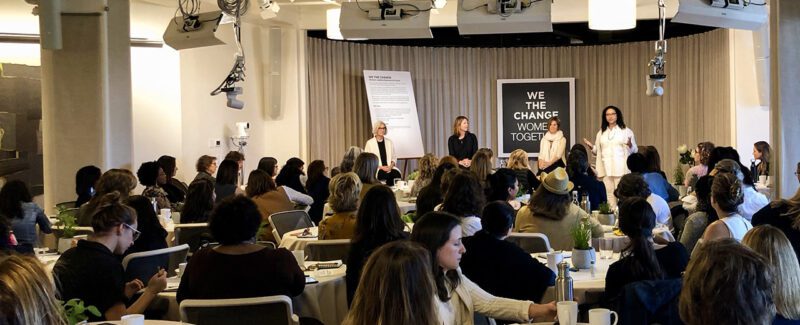 Image Courtesy of We The Change
WeTheChange, a network of women and nonbinary leaders of purpose-driven businesses, is expanding on its mandate to provide community, connections, and advocacy opportunities by taking on a longer-term challenge: filling the capital gap for small- and midsized women-owned businesses.
“Women-owned businesses continue to be underserved by everyone from venture capital to SBA loans, and options are particularly slim for service businesses,” says Director of Strategic Partnerships Lindsay LaShell, who is raising money and seeking advisors for a loan fund serving WeTheChange members.
Mission-aligned asset owners and managers can amplify advocacy through shareholder action, public letters, and thematic capital allocation.
Around the world, this same pattern is visible: organizations such as Social Enterprise UK and AVPN in Asia are deepening community and capital support for purpose-led firms — demonstrating that network activation is a global phenomenon, not limited to the U.S.
Join — or start — local networks.
For a real feeling of community, there’s nothing like face-to-face interaction. B Corps can access affinity networks as well as B Local groups across the U.S. and Canada. Conscious Capitalism has local chapters in 19 cities and regions.
 Image Courtesy of Conscious Capitalism.
Or start your own group. Marissa Rosen of Climate Social and Tia Christopher of The Orange Peel recently launched a monthly Network for Impact meet-up series in Pittsburgh for mission-driven individuals from across industries and sectors. “We’re breaking down silos and bubbles,” Rosen says.
For smaller or resource-constrained businesses, even modest moves...can build momentum.
In many regions outside North America, informal social-impact meetups — aligned with ESG, climate, or social enterprise — offer powerful community-building opportunities.
Consider precompetitive collaboration.
Political, cultural, and technological upheavals (looking at you, AI) create systemic challenges that are at least as complex as the environmental and social issues precompetitive collaborations typically tackle. What does the purpose-driven business sector — or your slice of it — need right now to maintain long-term profitability and positive impact? That’s a great place to collaborate.
As the old aphorism goes: there is strength — and safety — in numbers. This has never been truer than when advocating for or against government policies.
Business voices (still) carry outsize weight in legislatures. Customers and employees expect companies to stand up for their stated values. And note this warning from Edelman’s 2025 Trust Barometer report: “Those with a higher sense of grievance are more likely to believe that business is not doing enough to address societal issues.”
When everyone retreats into their own panic room, we cut ourselves off from the knowledge and support of peers.
Together, these factors make a clear case for joining coordinated business advocacy campaigns, which are among the simplest ways to take collective action.
Check out the Ceres Policy Network, which involves larger businesses in climate and clean-energy advocacy at state and federal levels, or the American Sustainable Business Network, which engages businesses of all sizes across a spectrum of policy issues. Globally, groups like Business for Nature are aligning companies behind unified sustainability policy agendas.
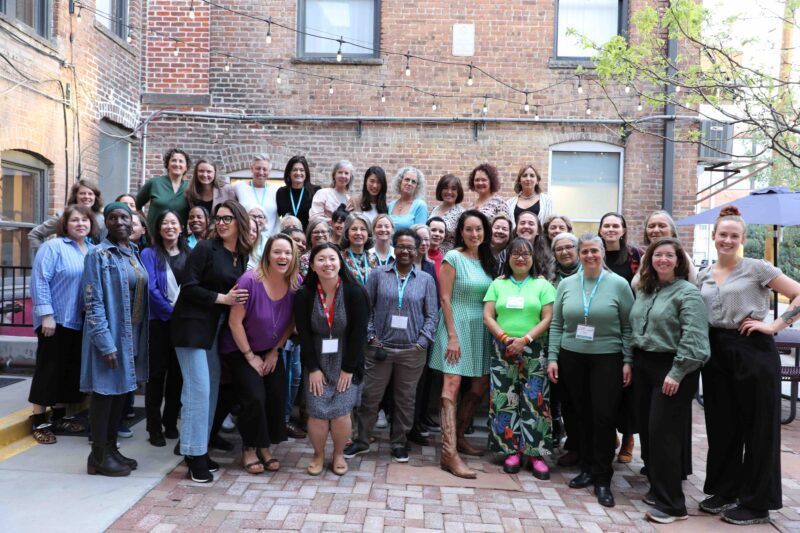 WeTheChange 2025 Retreat group photo
Investors can play a reinforcing role: mission-aligned asset owners and managers can amplify advocacy through shareholder action, public letters, and thematic capital allocation.
At heart, these collaboration strategies are about shifting systems: building connective tissue, strengthening collective voice, and realigning incentives so that organizations are not forced to navigate in isolation. They recognize that no business can meet today’s intertwined social, political, economic, and climate challenges alone.
Taken together, these strategies build power and resilience without sacrificing reputation — something no sustainable brand should be willing to do.


Related Content

Rebalancing support between tech ventures and traditional SMEs in MENA
1627
0

Can immersive experiences move people beyond consumption toward lasting change?
 2510
0
2510
0

As the extractive model sheds human workers to AI, a new regenerative economy is emerging
 2057
0
2057
0

Blended finance, resilience bonds, and the emerging infrastructure of the impact economy
 1953
0
1953
0
Comments
Deep Dives
RECENT
 2082
0
2082
0
 3042
0
3042
0
 3081
0
3081
0
Editor's Picks
 12009
0
12009
0
 2273
0
2273
0
 2614
0
2614
0
 2455
0
2455
0
Webinars
News & Events
Subscribe to our newsletter to receive updates about new Magazine content and upcoming webinars, deep dives, and events.
Become a Premium Member to access the full library of webinars and deep dives, exclusive membership portal, member directory, message board, and curated live chats.

Join our global community of systems-minded changemakers.
Subscribe to the Impact Entrepreneur newsletter for the latest insights, magazine features, and invitations to exclusive webinars, Deep Dives, and events.





0 Comments