Upcycling India’s Construction Waste
And the limits of scaling circular economy solutions



And the limits of scaling circular economy solutions

 2142
2142
 0
0

How good jobs create durable competitive advantage
 2371
0
2371
0

 2246
0
2246
0

Why Palestinian startups remain structurally trapped—and what might change that
1977
0

From deals to ecosystems in financing real transformation
 2872
0
2872
0

A conversation with Laura Ranzato of Clean Creatives
 2865
0
2865
0

 1895
0
1895
0
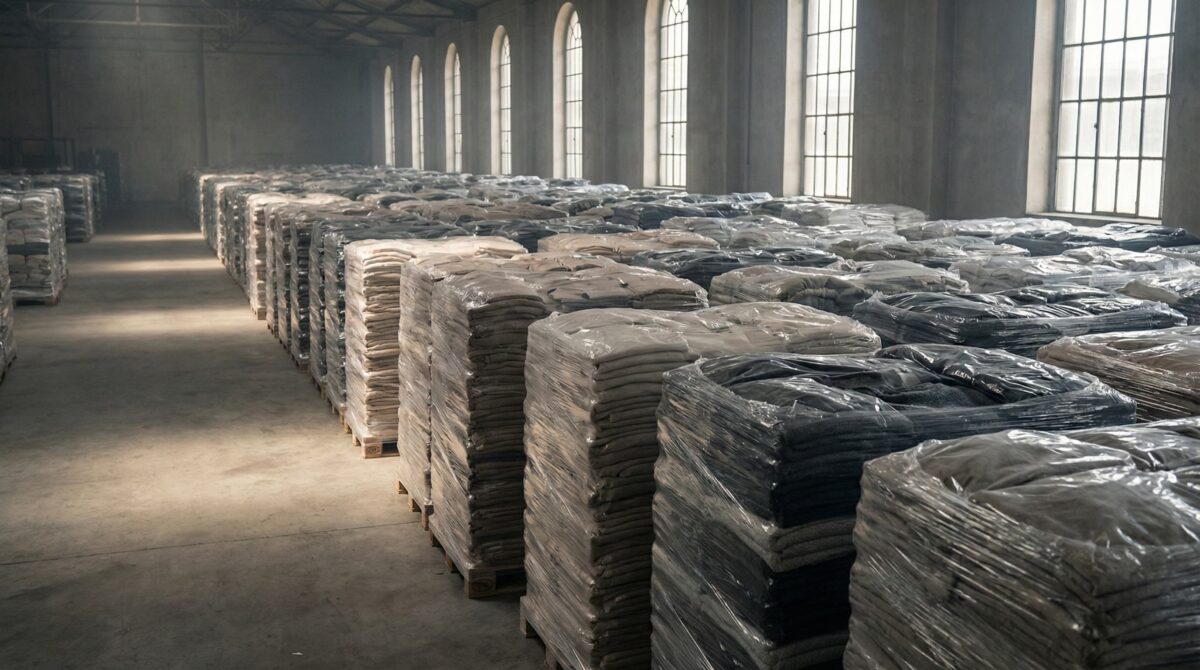
Rows of unsold garments awaiting their fate. In fashion’s climate equation, emissions are often fully realized long before products ever meet a buyer.
Fashion’s climate challenge is not only about cleaner materials or better supply chains. It’s about preventing garments from being produced unnecessarily in the first place. A demand verification approach could eliminate millions of tonnes of emissions before they ever occur — aligning climate discipline with financial discipline.
I first met Tatiana Alexa through a NYSERDA program at Columbia Ventures at Columbia University. She’s the co-founder of Sangrove, and early in our conversations she shared a number that stuck with me: $500 billion. That’s what the UNEP and the Ellen MacArthur Foundation estimate the fashion industry destroys in unsold inventory every year. Not marked down. Not donated. Destroyed. Burned, shredded, buried in landfills, or shipped to deserts in Chile and coastlines in Ghana.
Half a trillion dollars of product that no consumer ever asked for and no consumer ever bought.
I’ve spent three decades building and advising companies at the intersection of sustainability and technology. I’ve seen big numbers before. This one felt different because it pointed to something structural: fashion’s climate problem isn’t only about how garments are made. It’s about how many are made that never needed to exist.
The sustainability community has built powerful tools over the past two decades. Scope 1, 2, and 3 accounting gives companies a way to measure their footprint. Life-cycle assessments help designers choose lower-impact materials. Circular economy initiatives are extending textile life and reducing landfill waste.
These are real advances.
 The most consequential climate decision in fashion may not happen on the factory floor — but at the moment production is approved.
But nearly all of them share a common starting point: they operate after a production decision has already been made. They aim to make existing production cleaner and more efficient. They rarely interrogate the decision to produce in the first place.
That gap is enormous.
The fashion industry produces roughly 150 billion garments per year. About 30% are never sold. McKinsey has estimated excess stock in the tens of billions annually. Major luxury conglomerates have reported billions in impaired inventory in a single year.
Every unsold garment carries a fully realized carbon footprint. Raw materials were extracted. Factories ran. Ships crossed oceans. Energy was consumed. By the time an item hits a landfill unsold, its emissions are already in the atmosphere.
Fashion has spent decades optimizing how garments are produced and how waste is managed. It has invested far less in preventing waste from occurring in the first place.
We’re talking about roughly 300 million tonnes of CO₂e annually from overproduction alone — comparable to the annual emissions of an industrialized nation.
No amount of downstream optimization fixes a product that should never have been made.
That realization drew me deeper into the work Sangrove was developing. The idea is straightforward: instead of manufacturing based on forecast models and absorbing the waste when forecasts miss, brands verify demand before committing to production. If consumers signal real purchase intent, production proceeds. If they don’t, it doesn’t.
 Prevented production must be measurable to matter. Quantifying avoided emissions brings climate discipline into alignment with financial decision-making.
The emissions never occur. The inventory never accumulates.
But good intentions are not enough. If demand verification is to be taken seriously by brands, investors, or regulators, it needs rigor. If a company produces 40% fewer units because of verified demand signals, how do we calculate the emissions avoided? How do we distinguish real prevention from hypothetical savings?
Over several months, working with Tatiana Alexa, Natalia Miinea, and Stan Mashov — and with methodological input from Michelle O’Keeffe at the University of Edinburgh Business School — we developed a framework for calculating what we call consumer demand-driven emissions avoidance. It draws from established carbon accounting and environmental market principles, uses conservative baselines, and is designed to complement — not replace — Scope 1, 2, and 3 reporting.
This matters because capital markets increasingly demand measurable climate performance. If avoided production can be quantified credibly, it becomes legible not only to sustainability teams, but to CFOs and investors.
Forecast-based overproduction is not unique to apparel. It exists across consumer goods, electronics, furniture, and food systems. We have developed increasingly sophisticated tools to reduce the footprint of what we produce. We have spent far less time designing systems that prevent unnecessary production in the first place.
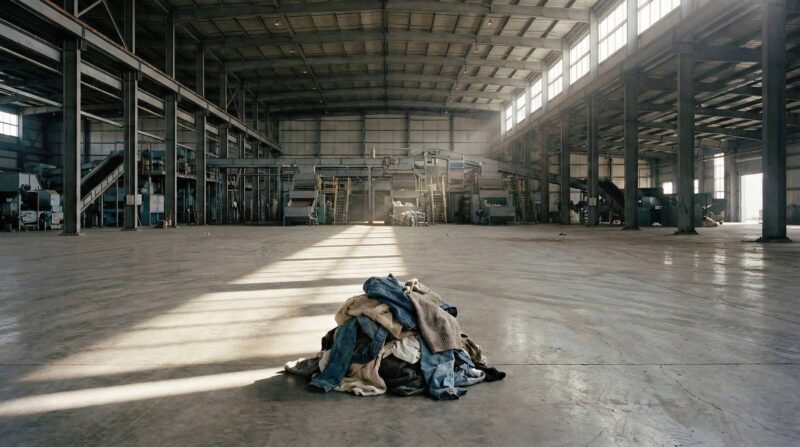 What does climate impact look like when production is disciplined? Often, it looks like absence — fewer garments made, fewer emissions released.
Demand verification introduces a different leverage point: pre-production discipline.
Unlike many sustainability interventions, this one does not inherently add cost. Cleaner materials, energy retrofits, and offsets require capital. Producing fewer unwanted goods reduces capital outlay, frees working capital, and improves margins. In this case, climate alignment and financial rationality converge.
That convergence is particularly important in a regulatory environment that is tightening. The European Union’s Ecodesign for Sustainable Products Regulation requires companies to report unsold textiles, and bans on the destruction of unsold goods are expanding. Brands operating in European markets will need to address overproduction structurally, not cosmetically.
Demand verification is not a silver bullet. Forecasting will always exist. Markets are dynamic. Consumer intent signals can be imperfect. But shifting even a portion of production from speculative forecasting to validated demand could materially reduce waste and emissions.
In my experience building companies, the highest-leverage interventions are often deceptively simple. They reframe the problem at the right point in the system.
Fashion has spent decades optimizing how garments are produced and how waste is managed. It has invested far less in preventing waste from occurring in the first place.
The best emissions are the ones that never happen.
If the impact economy is serious about systemic decarbonization, it must look upstream — not only at cleaner production, but at disciplined production. The decision to manufacture is itself a climate decision.
And that decision deserves better tools.


Related Content

As the extractive model sheds human workers to AI, a new regenerative economy is emerging
 1817
0
1817
0

Blended finance, resilience bonds, and the emerging infrastructure of the impact economy
 1733
0
1733
0

What frontline job quality reveals about value, resilience, and scalable impact
 1458
0
1458
0

What Iran and Ukraine reveal about the failure of militarized security
2315
0
Comments

Deep Dives
RECENT
 1977
0
1977
0
 2872
0
2872
0
 2865
0
2865
0
Editor's Picks
 2142
0
2142
0
 2371
0
2371
0
 2246
0
2246
0
Webinars
News & Events
Subscribe to our newsletter to receive updates about new Magazine content and upcoming webinars, deep dives, and events.
Become a Premium Member to access the full library of webinars and deep dives, exclusive membership portal, member directory, message board, and curated live chats.

Join our global community of systems-minded changemakers.
Subscribe to the Impact Entrepreneur newsletter for the latest insights, magazine features, and invitations to exclusive webinars, Deep Dives, and events.





0 Comments