Addressing the Massive Gap in Africa's Agricultural Sector
Improperly irrigated land has led to low income and food insecurity.



Improperly irrigated land has led to low income and food insecurity.

 9743
9743
 1
1

 14913
1
14913
1

Value manifests in diverse and various ways but is always more than economic value alone.
 11608
0
11608
0

 12100
0
12100
0

A new perspective
 10808
0
10808
0

The world is not on track, and more off track than four years ago
 16125
0
16125
0

 4293
0
4293
0

As the climate crisis intensifies and public trust in traditional ESG models declines, the search for scalable, transparent, and community-empowered solutions has reached a boiling point. Amidst this urgency, blockchain-enabled regenerative finance (ReFi) has emerged not just as a theory, but as a series of functioning, high-impact ecosystems.
This article takes a deeper, practitioner-focused dive into Regen Network, Toucan Protocol, and a selection of other blockchain-based initiatives leading the regenerative finance revolution. We’ll explore their mechanisms, evaluate their effectiveness, and reflect on how these platforms are moving from speculative promise to actionable infrastructure.
Regen Network is one of the most advanced examples of blockchain’s integration with ecological data. Its core offering lies in providing a verification system for ecosystem services notably soil carbon sequestration, biodiversity gains, and improved land stewardship.

How It Works: Regen utilizes a proof-of-impact model. Land stewards such as regenerative farmers or indigenous communities submit data to the platform, which is then validated via remote sensing, third-party verification, and peer-reviewed science. Once verified, the ecological outcomes are minted into ecocredits, which are unique, on-chain digital assets that can be purchased by companies, individuals, or DAOs looking to offset their footprint or support regeneration directly.
Blockchain-based regenerative finance is no longer just a whitepaper concept.
This is not the opaque, paper-based carbon offset model. Every transaction is recorded on the Regen blockchain, and credit issuance is tied to specific geospatial data and ecological performance metrics.
Real-World Example: One pilot program involved farmers in Latin America documenting improved grazing practices, which led to quantified increases in soil organic carbon. These results were minted into ecocredits, later purchased by mission-aligned brands seeking traceable carbon removal.
Why It Matters: Regen doesn’t just tokenize impact; it makes ecological health a financially viable asset class, and redirects capital into the hands of those directly working to heal the Earth.
While Regen focuses on origination and verification, Toucan Protocol addresses another bottleneck: the lack of transparency and liquidity in voluntary carbon markets.
Core Innovation: Toucan built the Base Carbon Tonne (BCT) a fungible, on-chain asset backed by real carbon credits sourced from verified registries like Verra. Using Toucan’s “Carbon Bridge,” legacy carbon credits are bridged onto the blockchain, aggregated, and made tradable via DeFi protocols like SushiSwap and KlimaDAO.

This unlocks carbon for the web3 ecosystem, enabling composability, transparency, and programmable utility. Developers can build carbon-negative applications; DAOs can offset in real time; investors can participate in price discovery all without leaving the chain.
The Big Shift: Historically, carbon markets were fragmented and closed. Toucan transforms them into liquid, borderless markets with instant settlement, fractional ownership, and smart contract-enabled flows of capital.
Criticism & Response: The protocol faced criticism for allowing the bridging of older, low-quality credits, which some argued diluted impact integrity. In response, Toucan introduced stricter quality filters and is now focused on enabling project-specific carbon pools.
Celo: A climate-first blockchain that has pledged to become carbon-negative and supports ReFi projects at the infrastructure level. Their ecosystem includes tools like Mento stablecoins for local regenerative economies, and climate-focused hackathons supporting ReFi ventures.
Solid World: Focused on pre-financing regenerative agriculture and forestry projects. Through tokenized forward contracts, Solid World ensures that capital flows before ecological work begins, solving the “chicken-and-egg” problem of impact finance.
Open Forest Protocol (OFP): Built for MRV (Measurement, Reporting, Verification), OFP allows forest projects worldwide to upload data, receive third-party validation, and unlock funding via tokenized impact. It’s particularly valuable for smallholder or indigenous forestry efforts, often excluded from legacy systems.

Yet these are challenges of growth, not failure, a natural part of scaling frontier innovations.
Blockchain-based regenerative finance is no longer just a whitepaper concept. It’s a living network of protocols, people, and projects tackling some of the planet’s most complex challenges. By aligning incentives, increasing transparency, and decentralizing access to capital, these platforms are laying the rails for a post-extractive economy.
For impact investors, entrepreneurs, and policymakers alike, the message is clear: Regeneration is no longer optional. Now, thanks to blockchain, it’s also operational.


Related Content

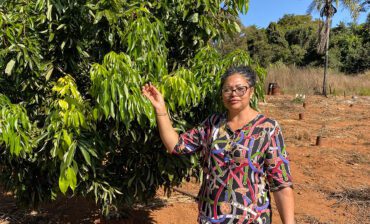
Transforming agriculture to incentivize climate resilience
 8898
0
8898
0
 9394
0
9394
0

An urgent call for intentional design and transparent governance
 7705
0
7705
0
Comments

Deep Dives
RECENT
 12100
0
12100
0
 10808
0
10808
0
 16125
0
16125
0
Editor's Picks
 9743
1
9743
1
 14913
1
14913
1
 11608
0
11608
0
Webinars
News & Events
Subscribe to our newsletter to receive updates about new Magazine content and upcoming webinars, deep dives, and events.
Become a Premium Member to access the full library of webinars and deep dives, exclusive membership portal, member directory, message board, and curated live chats.

Join our global community of systems-minded changemakers.
Subscribe to the Impact Entrepreneur newsletter for the latest insights, magazine features, and invitations to exclusive webinars, Deep Dives, and events.


0 Comments