Sea Cucumber Ranching Supports Equitable Ocean Conservation




 10660
10660
 0
0

 15919
1
15919
1

 10822
0
10822
0
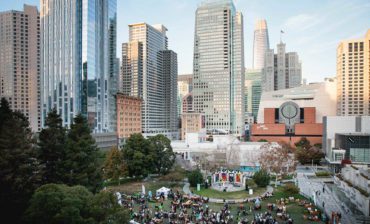
An interview with SOCAP President Robert Munson
 8328
0
8328
0
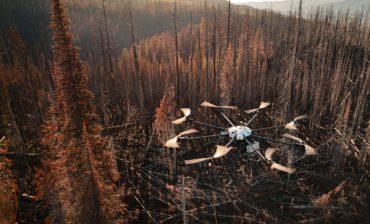
Accelerating post-wildfire recovery in ways conventional solutions can’t achieve
 15342
0
15342
0

 9782
0
9782
0
 4365
0
4365
0
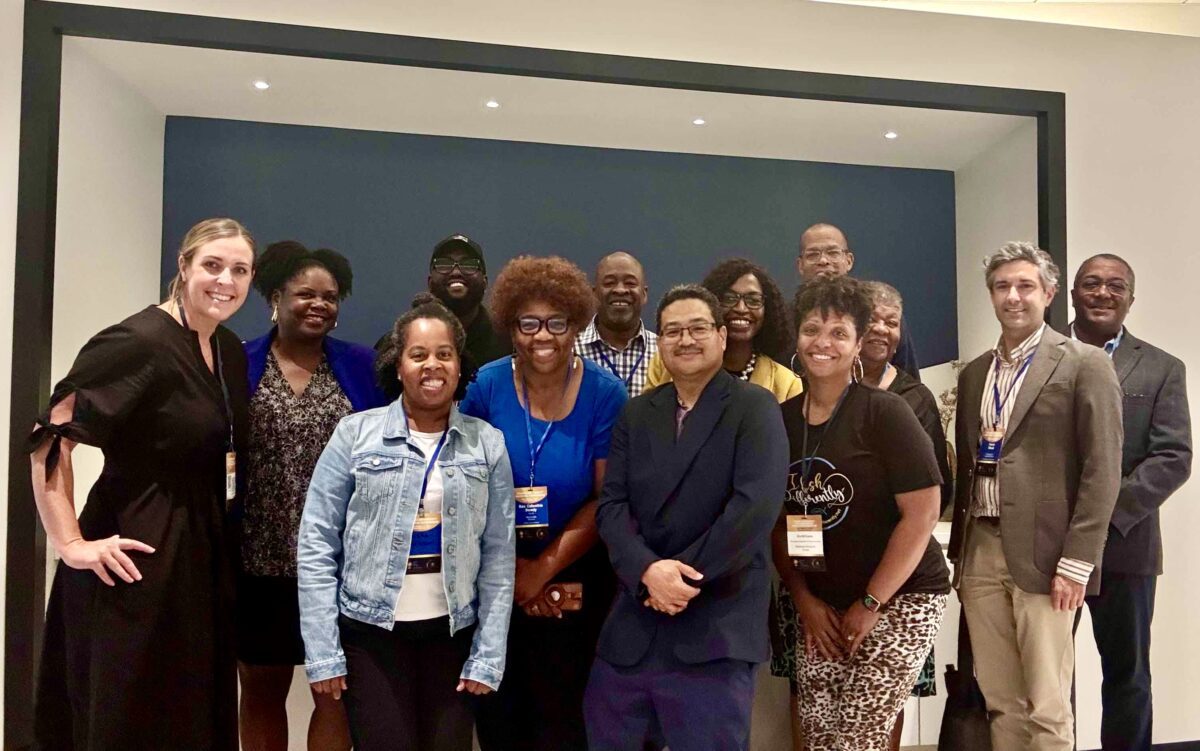
At the 2025 Fishing Differently Conference, hosted by the Oikos Institute for Social Impact in Philadelphia, faith-rooted leaders, investors, and ecosystem builders gathered to explore a bold question: What if sacred spaces could be leveraged for community transformation? The three-day convening featured keynote dialogues, interactive design labs, worship experiences, and powerful preaching that reimagined the role of congregations in place-based investing. Catalyzed by the book Fishing Differently: Ministry Formation in the Marketplace authored by Oikos Institute Founder, Rev. Dr. Sidney Williams Jr., the conference illuminated a growing movement: faith-based development as a strategy for sustainable impact.
Faith institutions collectively own over 2.6 million acres of land across the United States — much of it underutilized. This land represents a massive, largely untapped asset base that could support up to 800,000 new affordable homes, according to a 2025 Forbes report. In an age of housing shortages, climate challenges, and growing economic inequality, houses of worship are uniquely positioned to repurpose their land for community benefit.
Yet most congregations are not equipped to become real estate developers. That’s where mission-aligned intermediaries come in — organizations that bridge the gap between spiritual vision and technical execution.
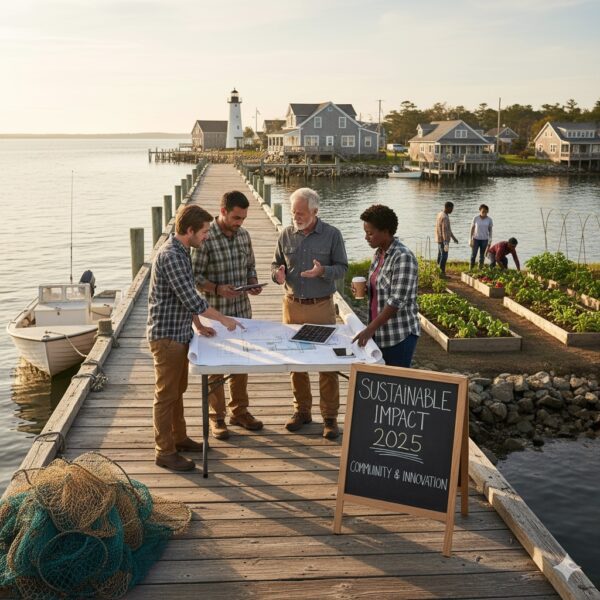 A Legacy of Leadership: Churches as Engines of Social Reform and Community Care
Historically, churches have been central to American social progress — not only as advocates for justice, but as providers of essential services. From the antebellum reform movements and the Social Gospel era to the Civil Rights movement, faith communities have mobilized moral conviction and social infrastructure to challenge injustice and uplift the marginalized.
But their impact has never been limited to policy or protest. Churches have long served as first responders to common community needs, offering food, shelter, education, and healthcare — often in neighborhoods where other institutions are absent or under-resourced. Food pantries, emergency housing, recovery programs, and childcare services are just a few examples of how congregations meet tangible, everyday needs.
This legacy continues today, as churches confront modern challenges like housing insecurity, food deserts, climate resilience, and economic inequality. In many communities, they remain the most trusted and accessible institutions — making them ideal partners in place-based development.
However, speakers at Fishing Differently claimed that to scale their impact faith institutions must embrace a mindset rooted in abundance rather than scarcity since as people of faith, we believe that “what we are called to do, God will equip us to do”. This spiritual conviction must be matched with practical strategies, including the call to “engage the professionals in the pews” — architects, lawyers, developers, and entrepreneurs who can help translate vision into viable projects.
Churches can also reimagine their underutilized spaces as community-serving assets. For example, renting out a commercial kitchen to emerging food businesses not only generates revenue to strengthen congregational vitality but also supports local entrepreneurship. These creative models of stewardship allow churches to stabilize operations while deepening their impact.
The conference illuminated a growing movement: faith-based development as a strategy for sustainable impact.
To scale their impact, however, faith institutions need new tools, sources of capital, and partnerships that honor their mission while equipping them to steward land, assets, and influence for long-term community benefit.
One pioneering model is Trinity Church NYC’s Mission Real Estate Development (MRED) initiative. MRED empowers churches to creatively steward their property through mission-aligned, income-generating projects. These include affordable housing, early childhood education centers, and solar energy farms.
Trinity provides:
Trinity Church also partnered with the Nonprofit Finance Fund (NFF) to launch the Faith in Our Communities Fund, a $1.5 million pilot initiative designed to help faith-based organizations plan and finance affordable housing and other community assets. The fund provides flexible pre-development loans backed by Trinity’s credit guarantee, allowing congregations to explore development opportunities without sacrificing long-term mission goals. NFF complements this capital with technical assistance, financial coaching, and strategic guidance, helping faith institutions become confident stewards of their land. This partnership is a model for how impact capital can be deployed through trusted faith institutions to advance housing, education, health, and economic vitality — while preserving the spiritual and social mission at the heart of these organizations.
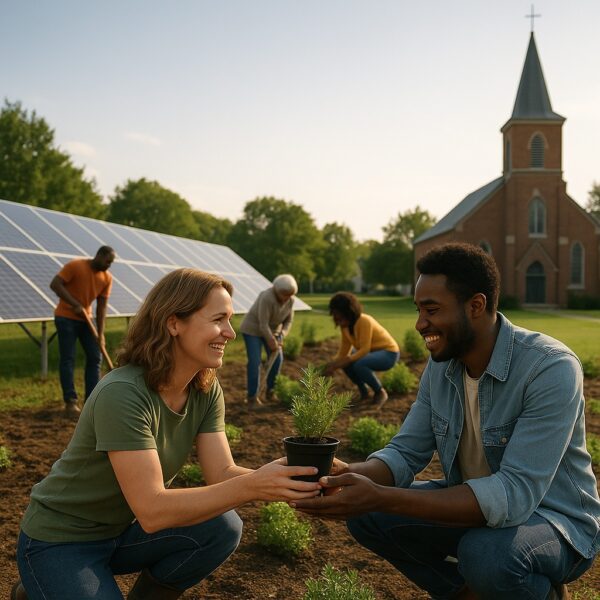
Another national leader is Enterprise Community Partners, whose Faith-Based Development Initiative (FBDI) equips houses of worship to convert underutilized land into affordable homes and community facilities.
FBDI offers technical assistance, training, peer learning, and access to experts — from architects to legal counsel. Their work ensures that congregations act as anchor institutions without bearing the full burden of development.
This movement has even earned a name: Yes in God’s Backyard (YIGBY). In contrast to NIMBY (“Not In My Backyard”) resistance, YIGBY champions the transformation of church land into community assets. Organizations like LEAP Housing in Idaho are helping churches lease land for $1/year to build affordable homes — without giving up ownership or becoming landlords. The result? Renewed purpose, stronger neighborhoods, and scalable models of impact.
Long before the term “impact investing” was coined, faith-based investors were already aligning capital with values. Religious institutions have historically used their financial resources to support social missions — through community lending, ethical investing, or shareholder advocacy.
This convergence is not accidental; it reflects a growing recognition that faith is not only a source of values, but also a source of infrastructure.
Faith-based investment funds were among the first to screen portfolios for social and environmental criteria. They led early campaigns for corporate accountability, divestment from apartheid South Africa, and sustainable agriculture.
Today, this legacy continues through partnerships like:
These partnerships demonstrate that faith-based investors are not just moral voices — they are market actors capable of shaping capital flows toward justice.
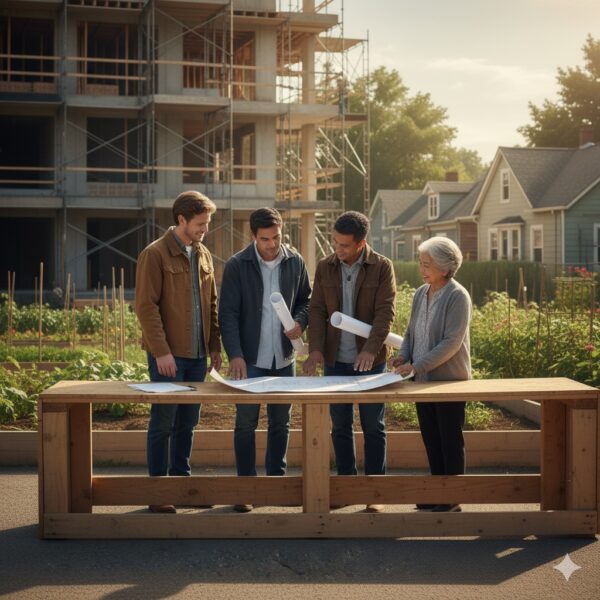 From Capital to Community: A Holistic Vision for Faith-Based Development
As faith-based investors increasingly align their portfolios with mission-driven outcomes, a broader ecosystem is emerging — one that connects capital, land, leadership, and lived experience. This convergence is not accidental; it reflects a growing recognition that faith is not only a source of values, but also a source of infrastructure.
From the pews to the portfolios, congregations are reimagining their role in economic development — not as passive landholders or charitable donors, but as active agents of transformation. Whether through housing, education, climate resilience, or entrepreneurship, faith institutions are uniquely positioned to catalyze inclusive growth.
This holistic vision — rooted in spiritual conviction and economic strategy — is what the Fishing Differently Conference called us to embrace.
Faith-based development is not just a niche strategy, it’s a systems-level opportunity. With millions of acres, deep community trust, and a moral imperative to serve, houses of worship can become impact hubs for housing, education, and economic renewal.
As the Fishing Differently Conference affirmed, the sacred is not separate from the social. When faith communities fish differently — casting their nets toward justice, regeneration, and innovation — they help build a future where everyone can flourish.

Related Content



Re-imagining our economy in service of ecological harmony and equitable well-being
 11997
0
11997
0
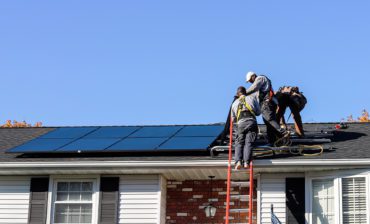
Innovative Solar Solutions for Energy Resilience in Underserved Communities
7949
0
Comments
Deep Dives
RECENT
 8328
0
8328
0
 15342
0
15342
0
 9782
0
9782
0
Editor's Picks
 10660
0
10660
0
 15919
1
15919
1
 10822
0
10822
0
Webinars
News & Events
Subscribe to our newsletter to receive updates about new Magazine content and upcoming webinars, deep dives, and events.
Become a Premium Member to access the full library of webinars and deep dives, exclusive membership portal, member directory, message board, and curated live chats.

Join our global community of systems-minded changemakers.
Subscribe to the Impact Entrepreneur newsletter for the latest insights, magazine features, and invitations to exclusive webinars, Deep Dives, and events.


0 Comments