Regenerative AI
The metaphysics, the machine, and the future of the Impact Economy



The metaphysics, the machine, and the future of the Impact Economy

 1306
1306
 0
0

What FLY paper reveals about the limits of bespoke financial tools
 1555
0
1555
0

Why reconnecting education, work, and opportunity matters
 1813
0
1813
0

Why investing with impact is no longer enough
2674
0

What Ramadan reveals about solidarity as economic infrastructure
 1413
0
1413
0

Rebalancing support between tech ventures and traditional SMEs in MENA
1633
0
 4734
0
4734
0

Why impact leaders must rethink climate communications in an attention economy that punishes nuance and rewards hot takes.
When Bill Gates published his recent climate memo — arguing that climate change, while serious, “will not lead to humanity’s demise” and that global development challenges deserve more attention — he unleashed a firestorm of outrage and distortion that was as inevitable as it was avoidable. Within hours, headlines lifted the sharpest fragments of his message and stretched them into stark binaries. Climate activists accused him of soft-pedaling the crisis. Climate skeptics celebrated. Politicians jumped in. And regular people posting on their favorite social platforms erupted with claims that ranged from mild frustration to outright conspiracy.
The actual substance of the memo — some reasonable, some nonsense — no longer mattered. The real story, like so many other stories in the digital age, became the reaction to the memo. Instead of being treated to a nuanced analysis about Gates’ arguments, most news consumers found themselves unwittingly caught in a high-stakes competition among an army of armchair experts determined to be the loudest voice in the room. The continued fallout from the Gates memo shows how our media and algorithmic systems are losing their capacity to hold complexity — especially when it comes to issues like climate change.

For those of us working in and around impact, that breakdown carries real implications. It affects trust. It affects capital flows. It affects policy. And it affects how climate solutions are understood, supported, or rejected. Gates’ experience is not an isolated communications blunder; it’s a case study in how narrative framing can reinforce or undermine the work we’re all trying to advance.
In the days after Gates published his letter, each media outlet imposed their preferred framing: Gates reverses course. Gates cools down on climate. Gates says climate change isn’t so bad after all. Not one of these headlines accurately reflected the nuance of his memo, but each rewarded the incentives of digital media — compression, emotional clarity, and clickability.
News editors know readers won’t click a headline like:
“Gates argues poverty, disease, and climate require simultaneous attention.”
True, but not clickable.
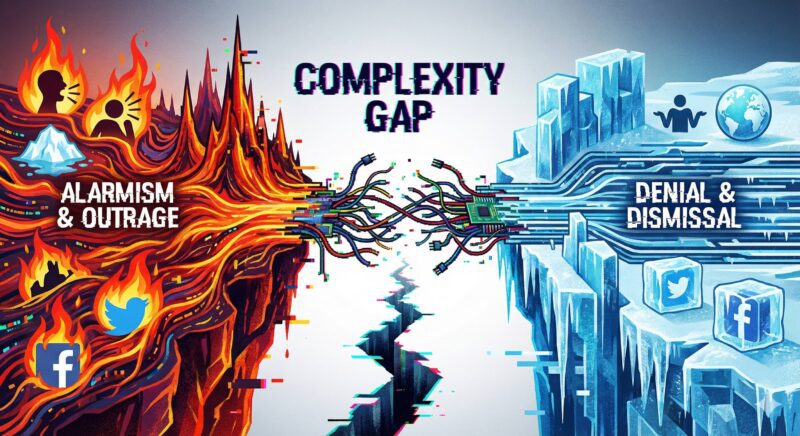
And this is now the media ecosystem impact leaders must operate in. An environment in which accuracy and attention are often at odds, and in which headlines flatten complex ideas into single-note provocations. most people never make it past the headline or the social media post. They skim. They scroll. They react to signals, not substance.
In a media environment that can only hold one crisis at a time, complex ideas are whittled down to the most basic argument, often resulting in misinformation or even outright contradictions.
The Gates memo also offered a glimpse into something newer and far scarier: how generative AI models and platform algorithms are beginning to reinterpret, reshape, and sometimes distort public-facing narratives.
This article isn’t just about the importance of media literacy. It’s about narrative infrastructure.
Using Rolli IQ, an AI platform that tracks how narratives spread online, I analyzed the social-media chatter in the days after the memo was released. Out of nearly 5,000 combined mentions of “Bill Gates” AND “climate,” more than half (67%) skewed negative. On Twitter, reactions ranged from “Gates admits climate alarmism was wrong” to “Gates is perpetuating a hoax.” On Bluesky, criticism focused on how Gates was downplaying the climate crisis. Reddit and YouTube displayed their own polarized mixes of praise, skepticism, conspiracy, and confusion.
Nuance vanished almost immediately.
For Nick Toso, founder and CEO of Rolli IQ, the reaction to the Gates letter “highlighted how social media users often process information emotionally first, contextually later." Instead of “slowing down, checking sources, understanding motives, and recognizing how algorithms amplify outrage over nuance,” many users cling to their initial reaction.
I also ran an analysis using FiveBlocks AIQ, a tool that shows how different generative AI models interpret an individual’s or brand’s public stance. ChatGPT, Gemini, and Perplexity each produced similar summaries of Gates’ views because each model is trained to detect and reproduce the dominant patterns in massive datasets, not to offer an objective analysis.
This matters. AI and social platforms no longer simply transmit or amplify narratives; they shape them. And increasingly, these platforms are shaping how investors, policymakers, founders, philanthropists, and the broader public perceive the climate conversation.
The reaction to the Gates memo also highlighted the unique challenge that many well-known individuals face in trying to communicate potentially controversial opinions to a public with deep-seated views. For example, to some people, Gates is a longtime climate champion. To others, a techno-optimist who oversimplifies. To still others, a billionaire with opaque motives. And they’re all convinced their opinion is the right one! So when Gates says climate activists are “wrong” to obsess about reducing emissions, casual observers are more likely to see hypocrisy or retreat rather than an attempt at pragmatism or reconciliation.
“Once public trust erodes, especially around complex topics like climate, it’s difficult to restore,” said Toso. “Sentiment doesn’t change gradually; it snaps…once that narrative takes hold, it spreads faster than any single clarification can counteract it.”
This dynamic applies not just to Gates, but to any public figure or brand navigating politically sensitive terrain. Any company that recently found itself caught in the culture wars — including Budweiser, Disney and Target — knows firsthand the power of narrative shifts and how hard it is to win back people’s trust.
Narrative framing is no longer optional for impact entrepreneurs. It is a strategic competency.
For leaders in the impact space, who often operate at the intersection of climate, equity, technology, and politics, the consequences of that narrative volatility are very real.
Where impact leaders get caught in the crossfire
This article isn’t just about the importance of media literacy. It’s about narrative infrastructure. And for anyone building climate solutions, social enterprises, or new financial instruments, the implications are profound:
Impact leaders cannot communicate as if we still live in a media ecosystem that rewards nuance. We don’t.
How [do we] communicate the interconnected truth through media systems that still demand tidy, binary framings?
As Toso puts it: “Any major shift, especially on moral or scientific issues, needs to be narrated: what changed, why it changed, and how it fits into a broader story of growth or learning. Without that bridge, the public fills in the blanks with suspicion.”
Narrative framing is no longer optional for impact entrepreneurs. It is a strategic competency.
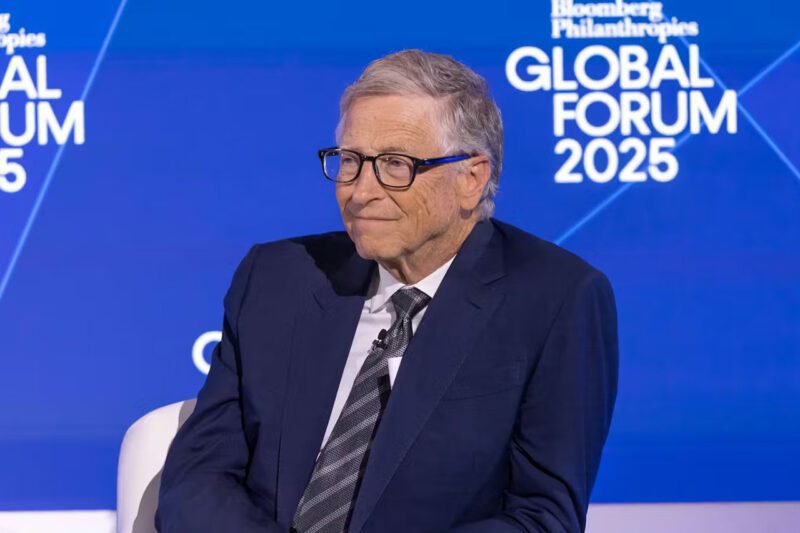 Photo Courtesy of Brazil Photo Press
This work is not just about telling your story well; it’s about understanding how your story will be sliced, reinterpreted, and redistributed across platforms you don’t control.
That means:
Gates did none of these things. The potential connective tissue of his argument was left unstated, and so the media ecosystem filled in the blanks for him with messages that may have distorted his actual views. Impact leaders cannot afford that kind of information gap.
The relevant question here isn’t “Was Gates right?” It’s: How should impact stories be told?
The uproar over the Gates memo shows us that:
Taken together, the lesson for impact entrepreneurs is that complexity requires narrative architecture — not just explanation.
If you don’t own the narrative over what you believe and why, then someone else will — and you probably won’t like their version of the story.
Climate activists, impact investors, entrepreneurs, and systems-change practitioners face the same challenge Gates stumbled into: how to communicate the interconnected truth of a polycrisis world through media systems that still demand tidy, binary framings.
Our job isn’t just to build better solutions, or more effective finance mechanisms, or more equitable systems. It’s also to build narratives that can travel intact through digital media channels without losing their meaning. If we can’t find a way to hold people’s attention – and win their trust – nothing else matters.


Related Content

Abrupt UK cuts threaten coastal resilience, food security, and community-led adaptation
 1129
0
1129
0
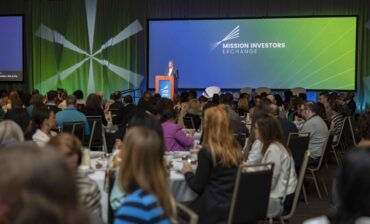
At MIE 2026, investors reframed risk as a tool for scale, resilience, and courage
 1036
0
1036
0

Local economies as a bulwark against cross-border extraction and violence
 1103
0
1103
0

An introduction to our new magazine department from the Editors
 1057
0
1057
0
Comments
Deep Dives
RECENT
 2674
0
2674
0
 1413
0
1413
0
 1633
0
1633
0
Editor's Picks
 4174
0
4174
0
 7134
0
7134
0
 12948
0
12948
0
 1306
0
1306
0
 1555
0
1555
0
 1813
0
1813
0
Webinars
News & Events

Over $200k to six or more winners will be awarded

$22 Million raise is democratizing investment in community wealth building
Subscribe to our newsletter to receive updates about new Magazine content and upcoming webinars, deep dives, and events.
Become a Premium Member to access the full library of webinars and deep dives, exclusive membership portal, member directory, message board, and curated live chats.

Join our global community of systems-minded changemakers.
Subscribe to the Impact Entrepreneur newsletter for the latest insights, magazine features, and invitations to exclusive webinars, Deep Dives, and events.


0 Comments