When Impact Finance Stops Being a Niche
Blended finance, resilience bonds, and the emerging infrastructure of the impact economy




Blended finance, resilience bonds, and the emerging infrastructure of the impact economy

 1717
1717
 0
0

What frontline job quality reveals about value, resilience, and scalable impact
 1451
0
1451
0

What Iran and Ukraine reveal about the failure of militarized security
 2306
0
2306
0

Institutional amnesia and the regenerative correction
1956
0

What happens when adoption outruns safeguards and governance
 1975
0
1975
0

How frugal systems reshape power, capital, and scale
 1514
0
1514
0

 4658
0
4658
0

Most people think of seaweed as the piles of kelp washed ashore on beaches or as an ingredient in sushi. In reality, seaweed is an incredibly powerful and diverse group of macroalgae, with some species growing up to two feet per day and absorbing carbon dioxide at levels comparable to rainforests. Vast underwater kelp forests create biodiverse hotspots, providing shelter for thousands of species and protecting coastlines from heavy ocean conditions. Seaweed also acts as nature’s filter, removing nitrogen, CO₂, and other pollutants from the water. And humans have long used it — as food, fertilizer, wound dressings, and even building materials.
Today, companies are exploring seaweed’s many potential uses as both new material and climate solution. Startups are developing innovations across a wide range of applications. According to Phyconomy, there are roughly 200 startups directly focused on seaweed and over 1,400 in the broader value chain. This surge of interest is promising but not without barriers. The industries for many applications are still developing, and costs and market adoption have yet to create the breakthrough the sector needs.
Wild seaweed has been harvested for more than 14,000 years by cultures around the world. Today, the majority of cultivated seaweed comes from Asia, where it has long been farmed for food and is well established in consumer packaged goods (CPG), beauty products, and pharmaceuticals.
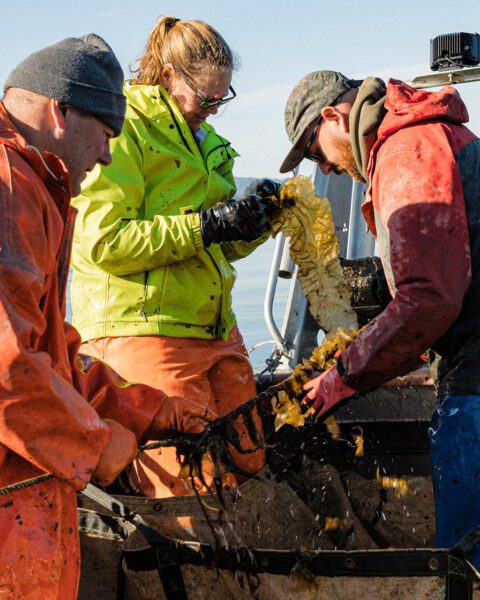 There are more than 12,000 seaweed varieties, each with different potential uses and benefits. In North America, the species that can be grown differ from tropical seaweeds, and the emerging industry has focused on applications such as biomaterials, biostimulants, nutraceuticals, and feed additives — namely plastics, farming, and food. The last decade of investment has created significant hype, but not all proposed uses have proven viable. Biofuels and ocean carbon sequestration, for example, attracted high-profile funders and media attention but are now under scrutiny for their effectiveness as climate solutions.
According to Sam Garwin of GreenWave, a U.S.-based nonprofit, caution is needed:
“When it comes to carbon sequestration, kelp does not sequester carbon, it cycles it. It would have been an easy solution to our problem, but sequestering has been oversold. Another thing we need to shift is the expectation that kelp is a hero ingredient in food. It can still be a functional, nutritional ingredient, but the American palate hasn’t developed where seaweed plays a center-of-plate role.”
GreenWave plays a key role in supporting regenerative ocean farmers, offering training and support through planning and permitting, seed nurseries and cultivar research, direct payments for ecosystem services, and connections between farmers, buyers, and sellers.
For the industry to grow, multiple applications must advance simultaneously. Garwin explained:
“In the U.S., in order for farmers to make a living wage, we have to maximize value from seaweed and not waste a single drop. Some applications, like cosmetics, are very high value. The next tier is food ingredients, then bioplastics and biostimulants. There are multiple applications, with a small quantity of very high quality and a large volume of lower quality, but all support farmers if they want to be profitable.”
Rather than replicating extractive paradigms, seaweed farming can pioneer regenerative practices.
Cosmetics are currently one of the most tangible ways for consumers to drive market demand. To accelerate adoption, GreenWave will launch the Kelp Innovation Colab in Fall 2025, working with beauty brands to integrate kelp into consumer products.
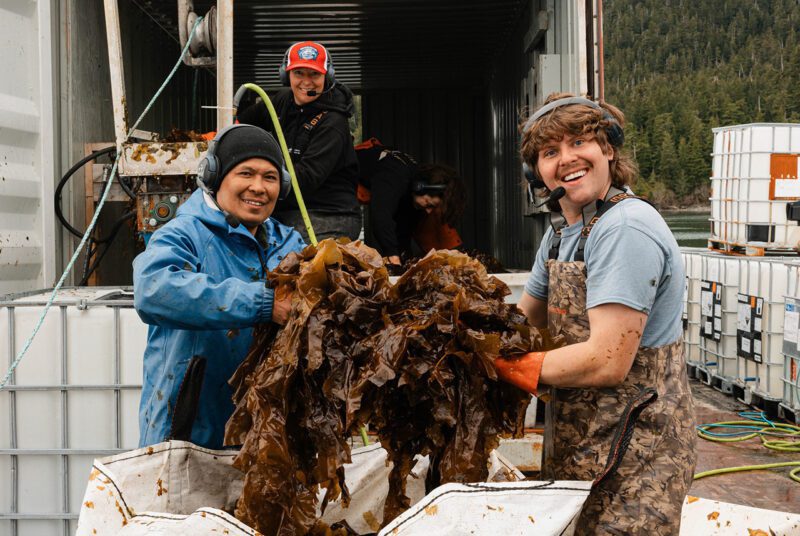
Another promising application is biostimulants — products that boost crops’ natural processes. As climate change intensifies, biostimulants help plants resist drought, salinity, and stress while improving soil health and reducing chemical fertilizer use. Already widely adopted in specialty crops and regenerative/organic farming, biostimulants are now expanding into mainstream agriculture as food companies seek regenerative practices in their supply chains.
Cascadia Seaweed, one of North America’s largest seaweed farmers, sees the strongest demand in this area. CEO Michael Williamson noted:
“You have to look at the conversion rate of your seaweed into the product you want to make, and you can find high-value uses. We use the vast majority for biostimulants, with some dried leftovers for feed additives.”
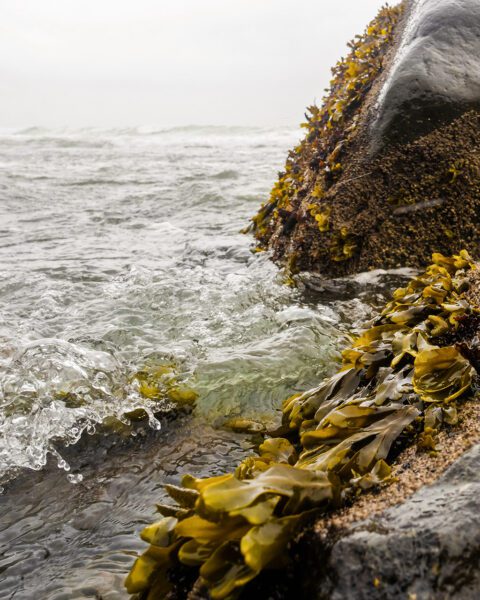 Feed additives are another use, with potential in livestock, aquaculture, and pet food. Small quantities of seaweed in animal diets have shown varied benefits and offer a sustainable food source that reduces pressure on overfishing and land use change. One area that drew heavy investment and media attention — methane-reducing feed supplements — remains controversial. Some companies claim reductions of up to 99 percent, but Project Drawdown and others caution that such solutions are not yet ready and risk distracting from more fundamental shifts such as reducing food waste and moving away from meat-heavy diets.
Another application for seaweed is in creating bioplastics. The scale of the plastics problem is daunting: over 400 million tons produced annually, containing thousands of toxic chemicals, persisting for centuries, and polluting ecosystems worldwide. Bioplastics — derived from sources like sugarcane, seaweed, or microbes — promise biodegradable, compostable alternatives. Companies such as Notpla, Kelpy, and Sway are developing seaweed-based films, coatings, resins, and molded products that mimic conventional plastics.
The appeal is clear: continue using plastic-like materials without the environmental cost. But seaweed bioplastics remain far from competitive with petrochemicals on price, and scaling will require policy support and significant investment. Moreover, bioplastics themselves face criticism for being energy-intensive to produce, not always breaking down as expected, and distracting from the more urgent need to reduce plastics consumption overall.
Despite strong potential, the seaweed industry faces significant hurdles: scaling production, achieving price competitiveness, developing processing infrastructure, growing market demand, navigating complex permitting, preventing industrial overreach, and securing financing. Mike Blakeley, co-founder of Seagreen Insights, a nonprofit focused on consumer and policy awareness, observed:
“In the U.S., the effort has been a supply push — providing technology, teaching, funding — in expectation that farmers will be able to sell. But the market hasn’t taken off as much. Farmers will grow more if there is more demand.”
Another obstacle is the lack of a unified national voice and consistent permitting framework. While states like Alaska and Maine have streamlined processes for seaweed farming, elsewhere regulations remain fragmented. NOAA’s Aquaculture Opportunity Areas initiative is a step toward easing permitting in U.S. coastal regions, but complexity persists.
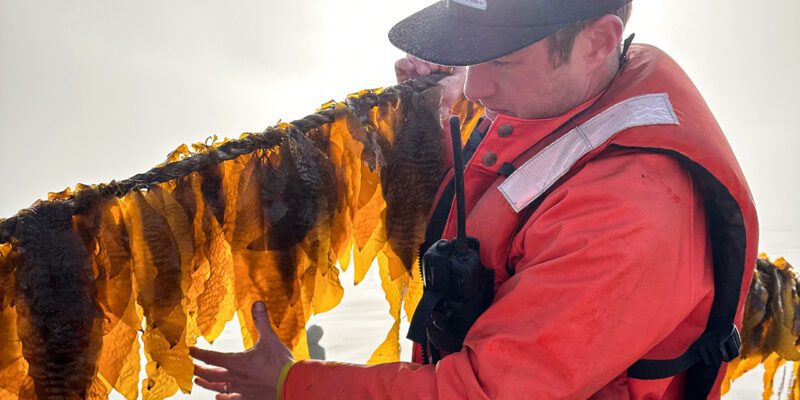
Financing is also a barrier. As Williamson explained:
“There is not enough investor interest or government funding. In North America, we are like every other startup, competing with every other technology for funding. We need more investment, as well as more collaborative research on downstream opportunities and cultivars.”
One unifying theme among seaweed innovators is the opportunity to build the industry differently from traditional agriculture. Rather than replicating extractive paradigms, seaweed farming can pioneer regenerative practices.
Seaweed bioplastics remain far from competitive with petrochemicals on price, and scaling will require policy support and significant investment.
Cascadia’s five Pacific Northwest farms, for example, are cultivated regeneratively in partnership with First Nations communities. “Whatever we do has to be good, as in goodness,” Williamson said. “We’ve recruited 20 people who want to improve the state of the planet. We are working with Indigenous, coastal communities, and environmental organizations to ensure that our farms deliver ecosystem and economic benefits. In the long term, we see our company jointly owned by coastal First Nations in British Columbia and a large agricultural supply firm that recognizes seaweed’s impact and has the distribution channels to reach farmers.”
GreenWave similarly emphasizes regenerative thinking from the outset. Rather than large monoculture farms, they train farmers in polyculture approaches where kelp and shellfish create ecological and economic synergies. Garwin noted:
“We want the industry to scale regeneratively. Rather than having large companies establish large farms, we need farmers working together to aggregate supply and scale. My goal in 50 years is that land-based agriculture looks to seaweed for inspiration on how to grow food regeneratively.”


Related Content

Why reconnecting education, work, and opportunity matters
1621
0

 1448
0
1448
0

Why militarized security keeps making us less safe
1675
0

Risk-sharing, resilience, and post-genocide Rwanda
 1582
0
1582
0
Comments

Deep Dives
RECENT
 1956
0
1956
0
 1975
0
1975
0
 1514
0
1514
0
Editor's Picks
 9739
0
9739
0
 16248
0
16248
0
 12959
0
12959
0
 1717
0
1717
0
 1451
0
1451
0
 2306
0
2306
0
Webinars
News & Events
Subscribe to our newsletter to receive updates about new Magazine content and upcoming webinars, deep dives, and events.
Become a Premium Member to access the full library of webinars and deep dives, exclusive membership portal, member directory, message board, and curated live chats.

Join our global community of systems-minded changemakers.
Subscribe to the Impact Entrepreneur newsletter for the latest insights, magazine features, and invitations to exclusive webinars, Deep Dives, and events.





0 Comments