When Impact Finance Stops Being a Niche
Blended finance, resilience bonds, and the emerging infrastructure of the impact economy



Blended finance, resilience bonds, and the emerging infrastructure of the impact economy

 1890
1890
 0
0

What frontline job quality reveals about value, resilience, and scalable impact
 1563
0
1563
0

What Iran and Ukraine reveal about the failure of militarized security
 2572
0
2572
0

Institutional amnesia and the regenerative correction
2164
0

What happens when adoption outruns safeguards and governance
 2143
0
2143
0

How frugal systems reshape power, capital, and scale
 1613
0
1613
0

 7984
0
7984
0
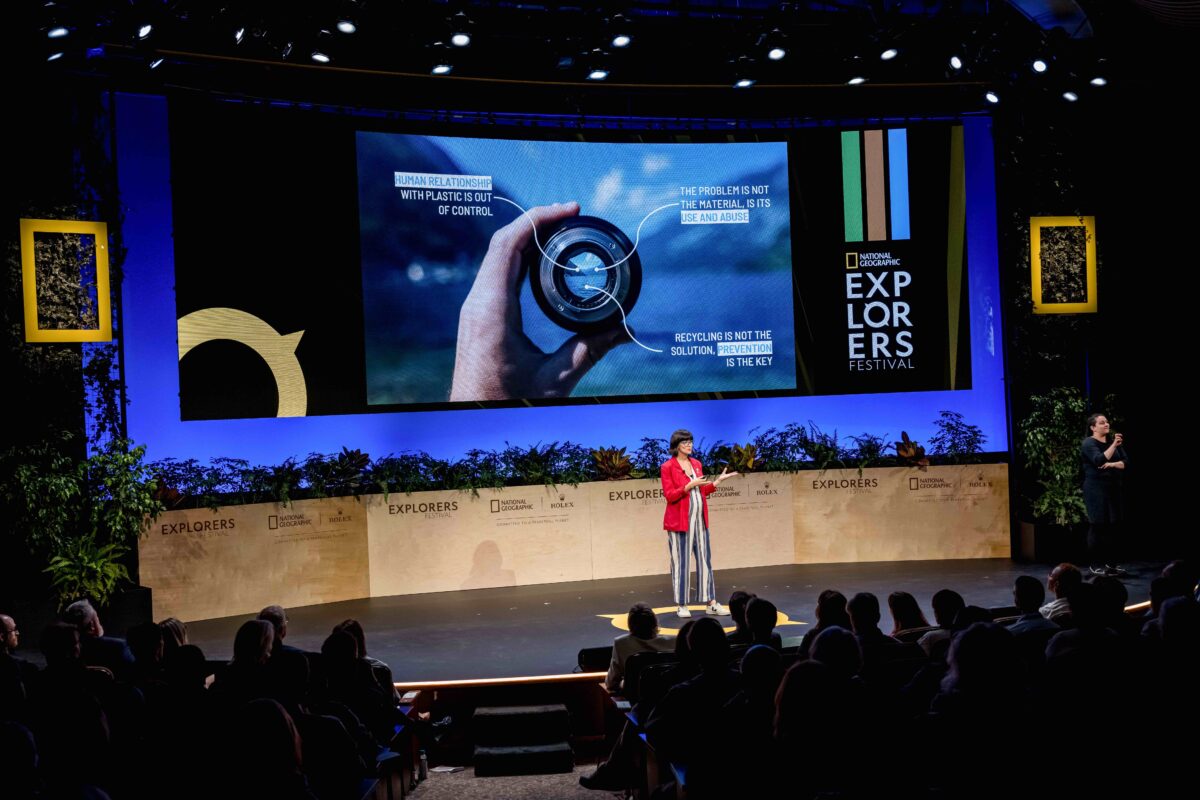
National Geographic Explorers Festival Symposium; Photo by Sam Kittner/National Geographic
Plastic pollution is one of the most urgent environmental crises of our time. Oceans and ecosystems worldwide suffer from the overwhelming influx of disposable plastics, which endangers biodiversity and human health. In response to this challenge, Unplastify — co-founded by National Geographic Explorer Agustina “Tati” Besada and Rocío Gonzalez — offers an innovative solution that goes beyond recycling, focusing on prevention, systemic change, and empowerment.
With a background in industrial design, Tati Besada has long been passionate about materials and the problem of waste, which she views as a fundamental design failure. Partnering with Rocío Gonzalez, who brings expertise in sustainability and public policy, they launched Unplastify in 2017 to empower communities, especially youth, and organizations to rethink and reduce their plastic consumption at the source.
Unplastify’s mission is to minimize the use of disposable plastic worldwide to prevent plastic pollution and restore ocean health. Unlike many initiatives that focus on downstream solutions like recycling, Unplastify works upstream, aiming to change the systems that generate plastic waste in the first place.
The project combines education, innovation, and collaboration across sectors to develop measurable impact. Since its inception, Unplastify has helped avoid over 9,500 tons of plastic through programs in schools, corporations, and governments in more than 20 countries. Its educational programs use gamified, project-based learning that empowers young people to become active changemakers in their communities.
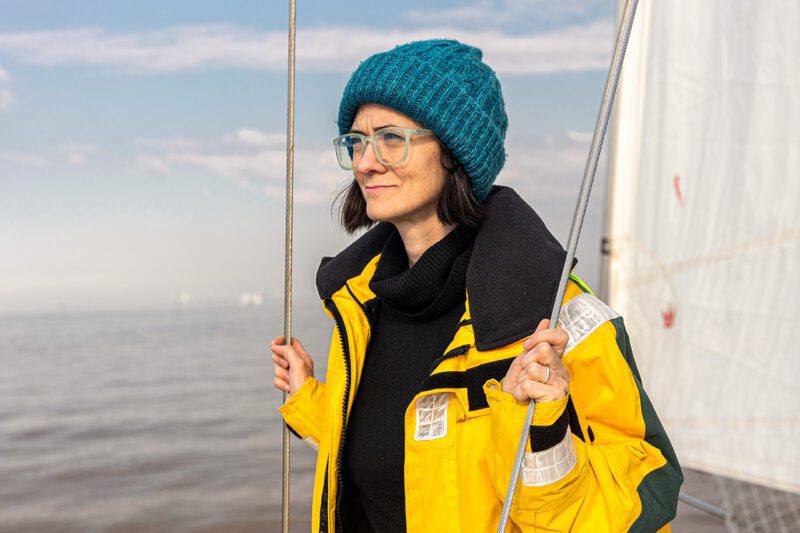 Agustina “Tati” Besada on her sailboat which she used to cross the Atlantic Ocean, twice, to research ocean plastics and to study international scalable solutions; Photo by Sofia Lopez Mañan/National Geographic
Agustina “Tati” Besada shares with us an exclusive insight into the Unplastify project, its mission, impact, and future directions.
Could you tell us a bit about your journey and what inspired you to start Unplastify?
As an industrial designer, I’ve always been obsessed with materials — especially when they go to waste. In my view, waste is a design flaw; nature, after all, knows no waste. When I realized that my true focus was on redesigning systems, I pursued graduate studies to gain the scientific tools and frameworks needed to drive systemic change. Yet the issue of waste kept pulling me back. Eventually, I became the director of a recycling center in Brooklyn, New York — an experience that deepened my understanding of recycling’s complexity. It was then that I began to wonder: what happens to the plastics that never make it to a recycling center? This question — and others like it — sparked a conversation with my friend Rocío Gonzalez, and together we began designing Unplastify in 2017.
 Agustina “Tati” Besada alongside the school winners of the 'Unplastify Challenge, ' an international educational program designed to empower 15 and 16-year-olds to actively engage with the global issue of plastic; Photo by Sofia Lopez Mañan/National Geographic
What is the core mission of Unplastify, and how does its approach differ from other initiatives addressing plastic pollution?
Unplastify’s mission is to reduce the use of disposable plastics worldwide in order to prevent pollution and help restore the health of our oceans. The issue isn’t plastic itself, but how we use — and misuse — it.
What sets Unplastify apart is our focus on prevention, systems change, and empowerment. While many initiatives concentrate on downstream solutions like recycling, we address plastic pollution at its source. Our singular focus on plastic has enabled us to cultivate deep knowledge and specialized expertise. Combined with our proven methodology and measurable results — including 9,504 tons of plastic avoided — this positions us to drive meaningful, systemic change across corporations, schools, and governments.
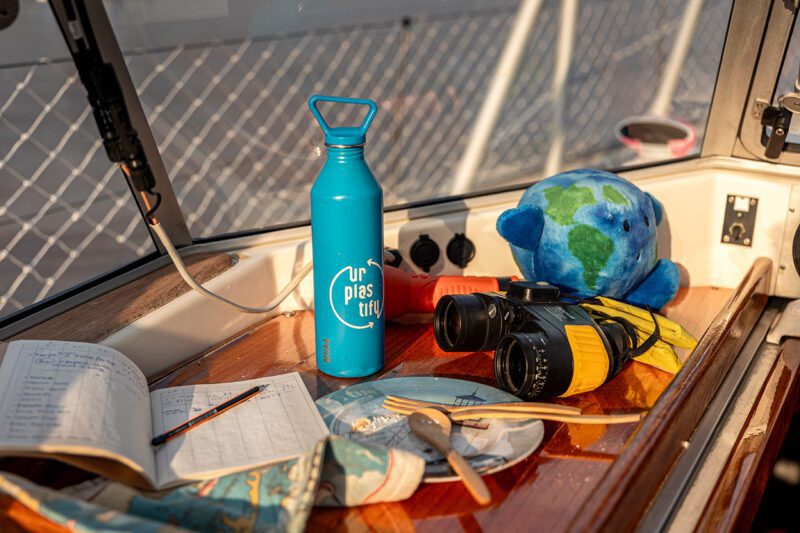 Unplastify, a social enterprise on a mission to change the human relationship with plastic, accelerating systemic changes to minimize the use of single-use-plastic; Photo by Sofia Lopez Mañan/National Geographic
How does Unplastify empower young people to become changemakers in their communities? Can you share some success stories?
Through our education programs, we guide youth and educators in unplastifying their communities through experiential learning. Students embark on gamified, project-based journeys that empower them to bring their ideas to life. Using a dedicated app, they receive assignments and guidelines, collaborate with peers, and earn points for their actions.
For example, a team in Costa Rica developed a biodegradable glitter alternative, produced DIY videos and training sessions for fellow students, and successfully advocated for a school-wide ban on traditional glitter. In 2023, the Argentine team R-USO eliminated single-use plastics throughout their entire school using a range of innovative strategies. Not only did they transform their school's relationship with plastic, but in 2024, they began working with other schools to replicate their project and amplify their impact.
It’s easy to shift responsibility onto regulation, product design, or consumer behavior — but systemic, lasting change requires engagement from all sectors.
These experiences are often transformative for students, equipping them with the tools and confidence to lead change beyond the classroom.
You recently participated in an expedition to the Galapagos Islands, working with the cruise tourism industry. What were the main challenges and outcomes of this project?
On a recent voyage to the Galápagos Islands with National Geographic–Lindblad Expeditions, we were pleasantly surprised to find the beaches remarkably clean, with very little visible plastic debris — despite the fact that ocean currents routinely bring plastic pollution to the archipelago. This may be thanks to the ongoing cleanup efforts led by local organizations, as well as ship staff and crew who organize cleanups during their time at port.
While visiting and learning about the operations of local producers and tourism operators, we observed numerous best practices already in place, along with clear opportunities for improvement. For example, most supplies are transported in reusable crates, minimizing the use of cardboard and stretch film. However, some refrigerated goods are still shipped in Styrofoam containers — which are non-recyclable and prone to shedding microplastics during use.
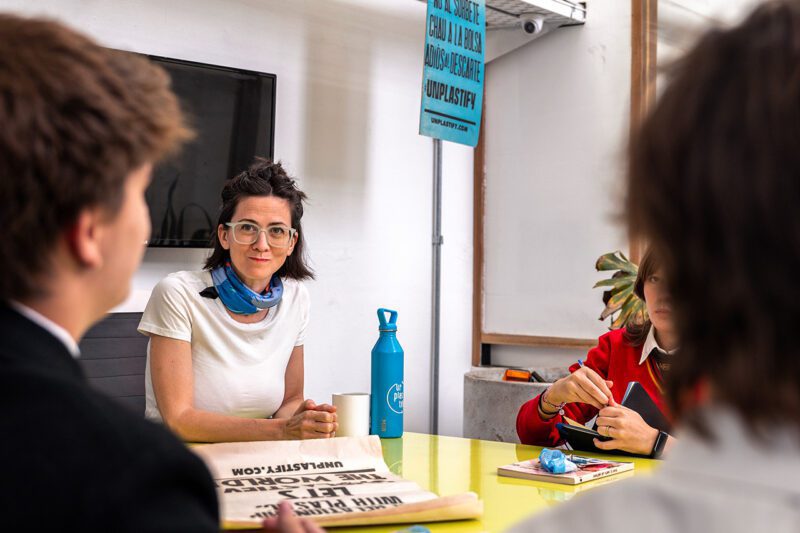 Agustina “Tati” Besada and the Unplastify Team are seen in their coworking space in Buenos Aires, Argentina; Photo by Sofia Lopez Mañan/National Geographic
You collaborate not only with young people but also with companies and governments. How important is this multi-sectoral approach in tackling plastic pollution?
We believe a multidisciplinary approach is essential to effectively address plastic pollution. It’s easy to shift responsibility onto regulation, product design, or consumer behavior — but systemic, lasting change requires engagement from all sectors. In many places, regulations exist, but without supportive alternatives or a cultural shift, they fail to gain traction. In other cases, viable alternatives are available, but without incentives or consumer demand, they remain underutilized.
The issue isn’t plastic itself, but how we use — and misuse — it.
That’s why most student projects we support integrate multiple strategies — blending science with policy, or launching startups that deliver practical solutions. This cross-sectoral thinking is key to driving meaningful and scalable impact.
From your perspective, what are the biggest misconceptions people have about plastic pollution and its solutions?
One of the most persistent misconceptions is that recycling can magically solve our waste problem. Unfortunately, it doesn’t work that way. Recycling is often inefficient, expensive, and, in many cases, ineffective — with only about 9% of plastic actually being recycled. At Unplastify, we emphasize the importance of designing systems and making decisions grounded in reality, not in wishful thinking.
So, what is the most likely end-of-life scenario for a plastic item? In most cases, it’s a landfill. If we design systems with that reality in mind, we’re far more likely to choose to avoid using plastic altogether or to replace it with a truly biodegradable alternative.
Agustina “Tati” Besada’s journey with Unplastify exemplifies how passion, expertise, and systemic thinking can come together to tackle one of the world’s most pressing environmental challenges: plastic pollution. By focusing on prevention, education, and empowering youth and communities, Unplastify is not only reducing plastic waste but also inspiring a new generation of change-makers. Their innovative approach, grounded in real-world impact and collaboration across sectors, shows that meaningful change is possible when we rethink our systems and work collectively towards a cleaner, healthier future for our oceans and planet.


Related Content

Purpose language is not enough
 2526
0
2526
0

Why climate advocates need a stronger narrative
 1769
0
1769
0

Why reconnecting education, work, and opportunity matters
1785
0

 1592
0
1592
0
Comments

Deep Dives
RECENT
 2164
0
2164
0
 2143
0
2143
0
 1613
0
1613
0
Editor's Picks
 12389
0
12389
0
 10192
0
10192
0
 10470
0
10470
0
 1890
0
1890
0
 1563
0
1563
0
 2572
0
2572
0
Webinars
News & Events
Subscribe to our newsletter to receive updates about new Magazine content and upcoming webinars, deep dives, and events.
Become a Premium Member to access the full library of webinars and deep dives, exclusive membership portal, member directory, message board, and curated live chats.

Join our global community of systems-minded changemakers.
Subscribe to the Impact Entrepreneur newsletter for the latest insights, magazine features, and invitations to exclusive webinars, Deep Dives, and events.





0 Comments