Building an Alabama Entrepreneurial Ecosystem
Focused on black business owners.



Focused on black business owners.

 10022
10022
 0
0

Impact investors and the community as a whole has missed a leadership opportunity.
 12052
0
12052
0

 9847
0
9847
0

A new marketplace called OutcomesX
 7504
0
7504
0

 13333
0
13333
0

Innovating and supporting women
 7894
0
7894
0

 2983
0
2983
0
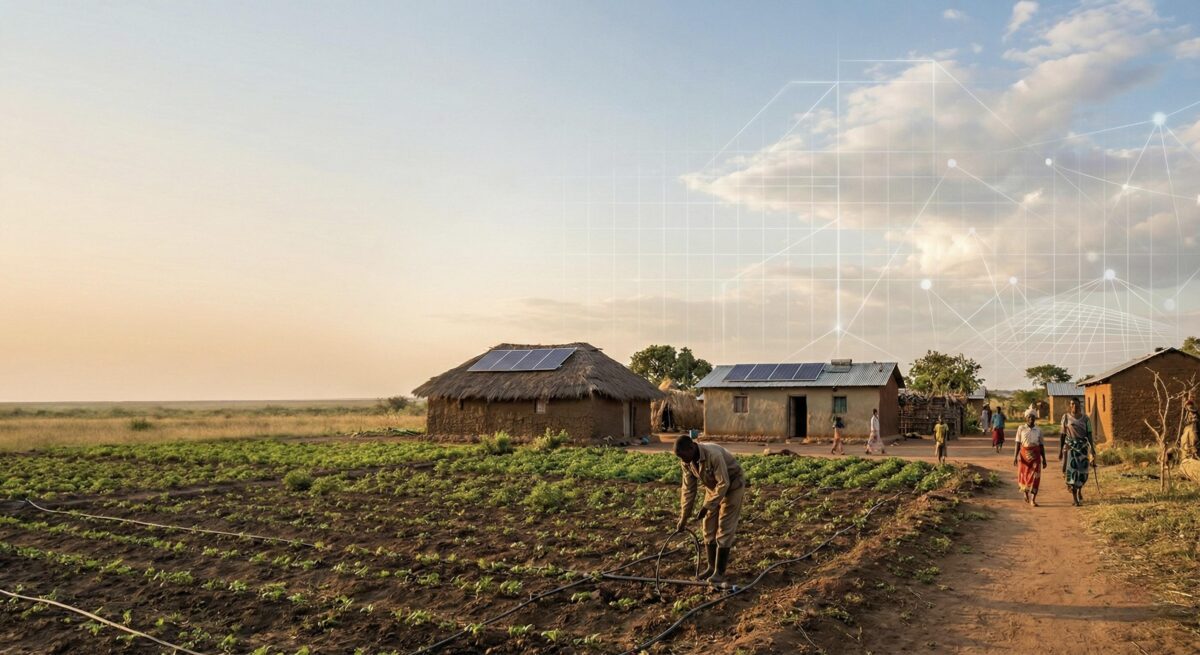
Global impact frameworks promise comparability and scale — but often miss what communities actually experience. Drawing on examples from Malawi and India, this article explores why SDG reporting falls short at the enterprise level and proposes a dual-layer measurement approach that reconciles global goals with local realities.
In villages in Malawi, solar micro-enterprises offer households access to lights and phone charging. These new connections are reported as progress toward SDG 7’s electricity-access target, yet many rural residents still describe the service as “unreliable,” citing intermittent supply and costs that limit everyday use. In parts of the Sundarbans in India, solar irrigation has reduced costs and stabilized yields, shifting agricultural energy use toward renewables and appearing in official reports as a contribution to SDG 7 and broader climate goals. Farmers, however, still speak of pumps breaking down during the monsoon, when demand is highest.
Both examples underscore a persistent tension in impact measurement: the metrics often look different from the lived reality. Across regions and sectors, global frameworks capture progress in ways that are highly legible to investors and policymakers, but not always meaningful to the communities experiencing change on the ground.
Impact enterprises increasingly find themselves navigating this gap, trying to honor both the global language of the SDGs and the local nuances where impact is actually felt. Understanding this disconnect is critical for building systems that produce reliable data while respecting the complexity of social and environmental change.
The SDGs are a powerful shared narrative, but they were designed primarily for national reporting, not for enterprises or community-based organizations. Their indicators assume long timeframes, broad averages, and policy-level levers. When applied at enterprise scale — where change is smaller, faster, and more context-dependent — several predictable challenges emerge.
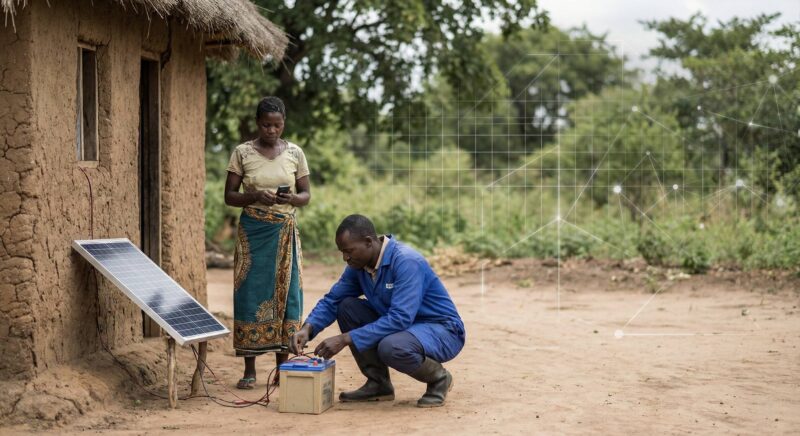
First, the SDG taxonomy misaligns with enterprise practice. The taxonomy allows companies to tag activities to several goals, but these labels are thematic and often only loosely connected to the causal pathways set out in an enterprise’s Theory of Change. A solar irrigation enterprise in India may appear under SDG 7 and be cited under SDGs 1, 2, and 13, yet that mapping says little about the operational questions that matter to farmers — whether pumps function through the monsoon and sustain yields and incomes over time.
Second, the surrounding measurement frameworks mirror this top-down design. IRIS+, HIPSO, and similar taxonomies were built to translate enterprise-level data into SDG-compatible indicators and to serve investors and large intermediaries with strong data systems. In practice, they remain partly aligned catalogs, each privileging different facets of impact and assuming capacities that many small enterprises lack. The result is fragmented reporting that often says more about funder expectations than about how communities experience change.
While enterprises are already innovating, a more supportive ecosystem is required to make dual-layer reporting both feasible and scalable.
Finally, the SDG indicator framework’s emphasis on universal, comparable measures creates blind spots. Metrics such as SDG 7.1.1, the “number of households with electricity access,” can hide questions of quality, reliability, affordability, and cultural relevance. Multi-tier energy-access frameworks were developed to bring these dimensions into view, but they remain only loosely linked to standard SDG and enterprise reporting. The result is a system that works for global comparison but is often too coarse to guide decisions for impact enterprises and the communities they serve.
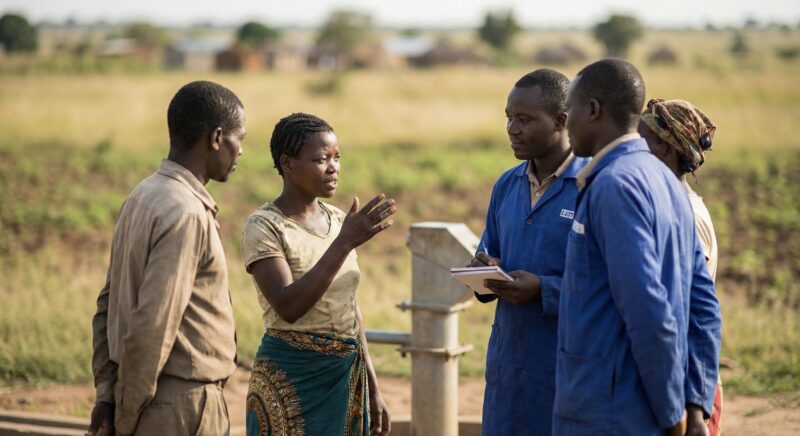
Despite these challenges, organizations are developing creative strategies to bridge the global–local divide. These strategies vary: some focus on what is measured, others on who defines the measures, and others on how local data are rendered legible to SDG frameworks. Three patterns emerge across sectors.
Innovation — Some enterprises design entirely new indicators or complement standard ones to better reflect local needs. In Malawi, for example, several solar companies now track “nights of uninterrupted lighting” alongside the number of systems installed, shifting the focus to whether light is actually available when households need it. This captures specific patterns — like whether lights stay on through the rainy season — that even multi-tier metrics may miss. The trade-off is that these tailored measures are harder to compare across portfolios and require data capacity that many lean teams struggle to sustain.
Co-creation — In other cases, enterprises collaborate with communities to define what “success” means. Agricultural cooperatives in India, for example, have co-designed metrics around reduced diesel expenditure, water security during heatwaves, and the stability of cropping cycles. These indicators do not fit neatly into SDG templates but offer a richer understanding of actual livelihood change.
Translation — A third approach involves translating local metrics back into global language. Enterprises take qualitative insights — such as farmers reporting “more predictable harvests” — and map them to SDG targets on resilience, climate adaptation, or productivity. This translation allows enterprises to maintain comparability without losing what makes local data meaningful, but it is delicate work and can still blur some of the nuance that matters most on the ground.
These strategies share a common goal: keeping global frameworks in view without letting them dominate the definition of value.
To reconcile global coherence with local meaning, a more balanced measurement architecture is needed — one that ensures rigor while giving enterprises space to articulate context.
A dual-layer system systematic mapping to SDGs offers a promising path forward:

Enterprises start by defining a small set of outcomes that reflect what progress means to the communities they serve, then organize these into a dual-layer metric system that can speak to SDG standards.
This structure preserves the strengths of the SDG narrative while recognizing that meaningful change is profoundly place specific. Importantly, it also mirrors the way enterprises actually operate: balancing global expectations with the realities of local systems.
While enterprises are already innovating, a more supportive ecosystem is required to make dual-layer reporting both feasible and scalable. Three shifts would help.
These shifts could move the ecosystem closer to a model where measurement supports learning and accountability — not just compliance. In addition, done well, this infrastructure can generate not only enterprise-level reports but also system-level views that highlight where policies, markets, or collective action need to shift.
The tension between global goals and local realities will always exist — and perhaps it should. Global frameworks give us a shared direction of travel. But impact happens in place, shaped by geography, culture, seasonality, and lived experience.
Bridging the measurement gap is not about abandoning global standards; it is about allowing room for the voices and values that make impact real. A dual-layer measurement system offers a path toward metrics that are both comparable and meaningful — a synthesis that honors the complexity of change while strengthening trust across the impact ecosystem.


Related Content


 9741
0
9741
0


Comments
Deep Dives
RECENT
 7504
0
7504
0
 13333
0
13333
0
 7894
0
7894
0
Editor's Picks
 10022
0
10022
0
 12052
0
12052
0
 9847
0
9847
0
Webinars
News & Events
Subscribe to our newsletter to receive updates about new Magazine content and upcoming webinars, deep dives, and events.
Become a Premium Member to access the full library of webinars and deep dives, exclusive membership portal, member directory, message board, and curated live chats.

Join our global community of systems-minded changemakers.
Subscribe to the Impact Entrepreneur newsletter for the latest insights, magazine features, and invitations to exclusive webinars, Deep Dives, and events.





0 Comments