Converting Waste to Value
Recycling is not the challenge.



Recycling is not the challenge.

 14433
14433
 0
0

Improperly irrigated land has led to low income and food insecurity.
 9792
1
9792
1

 14978
1
14978
1

 12161
0
12161
0

A new perspective
 10873
0
10873
0

The world is not on track, and more off track than four years ago
 16287
0
16287
0
Upcoming Events

 7802
0
7802
0

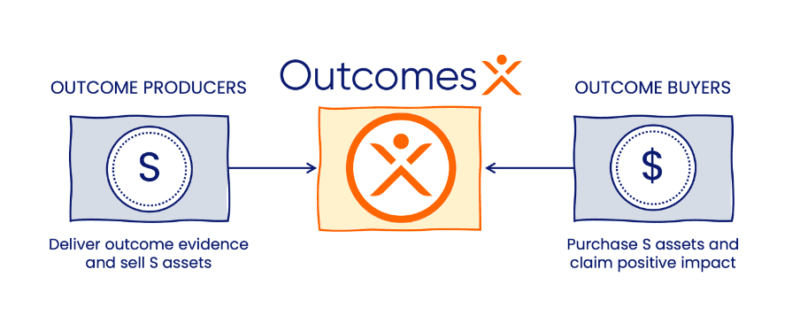
The S, for social impact in ESG, is hard to measure. This has led two experts in the social impact area to team up and create OutcomesX. This new global marketplace turns social outcomes into an asset, to be bought or sold, allowing corporates, foundations, and other donor organizations to fund their impact aims in a simple way, based on an established and robust method of impact measurement. It also allows charities with lower profile but a successful track record to access funders more easily.
What motivated the founders and how did OutcomesX emerge?
The problem for investors in social outcomes is that they are difficult to quantify due to the lack of standards in the required metrics. This difficulty has led to philanthropic and investor organizations often “tick-boxing” the S, relative to carbon emissions for example, where measurement is now more rigorous. This is where the co-founders of OutcomesX, Phyllis Kurlander Costanza and Jason Saul, are stepping in. Phyllis and Jason are no strangers to innovation in social impact. They were classmates at Harvard Kennedy School, and both wanted to find better ways to focus on outcomes to increase funding to good causes. Before founding OutcomesX in April 2023, Phyllis headed social impact for UBS, driving the growth of UBS Optimus Foundation globally with the desire to help her clients “buy” social outcomes using an international standard. Phyllis was a big backer of impact bonds but also found them very time consuming and complex. Jason had created the social impact consultancy Mission Measurement, which led to the creation of The Impact Genome project, the world’s first registry for verifying social outcomes, and the kind of solution Phyllis had been looking for.
What is the new venture?
OutcomesX is a for-profit platform, based in New York, which allows social impact to be standardized, priced, and sold, like other assets. To allow this to happen effectively, a robust system of outcomes measurement and verification is needed, to allow funders to make informed decisions, and reward programs with the strongest results. OutcomesX identifies the non-profits with the best social outcomes working in a causal area like education, health, or youth development, and the donors pay for the outcomes achieved aligned to their social objectives. OutcomesX charges a fee depending on the size of the outcomes trade.
OutcomesX is a for-profit platform, based in New York, which allows social impact to be standardized, priced, and sold, like other assets.
In this way, corporate donors and foundations gain quick and simple access to a broad range of charities with a track record of success. Another key benefit is that the platform provides evidence of how the donations have made a difference, which can be used when the social commitments made by the funding organizations get audited. These “verified impact units” could also work like carbon credits, with corporates and governments buying them to take their policy agendas forward. The prospect of greater efficiency in matching buyers and sellers is attractive to Google and the Gates Foundation, who are early investors in OutcomesX. “Ultimately we want to create a spot market to buy and sell social outcomes”, says Phyllis.
How does the platform identify the organizations with the greatest impact?
The co-founders want to enable greater funding of social outcomes and a level playing field for the charities. Often those with the highest profile or most charismatic leader get funding but many less known, excellent charities are left out. OutcomesX uses Impact Genome to create comparable impact data for any charity in the chosen causal area. The platform uses a subset of 132 outcomes across a dozen themes from the global database of 2.2m non-profits, to source its initial supply of outcomes. Outcome definitions are standardized in this way so that impact in the same causal areas can be compared. It does this by analysing each charity’s quality of impact evidence, with the results peer reviewed, as well as the efficacy and cost of delivering the outcomes.
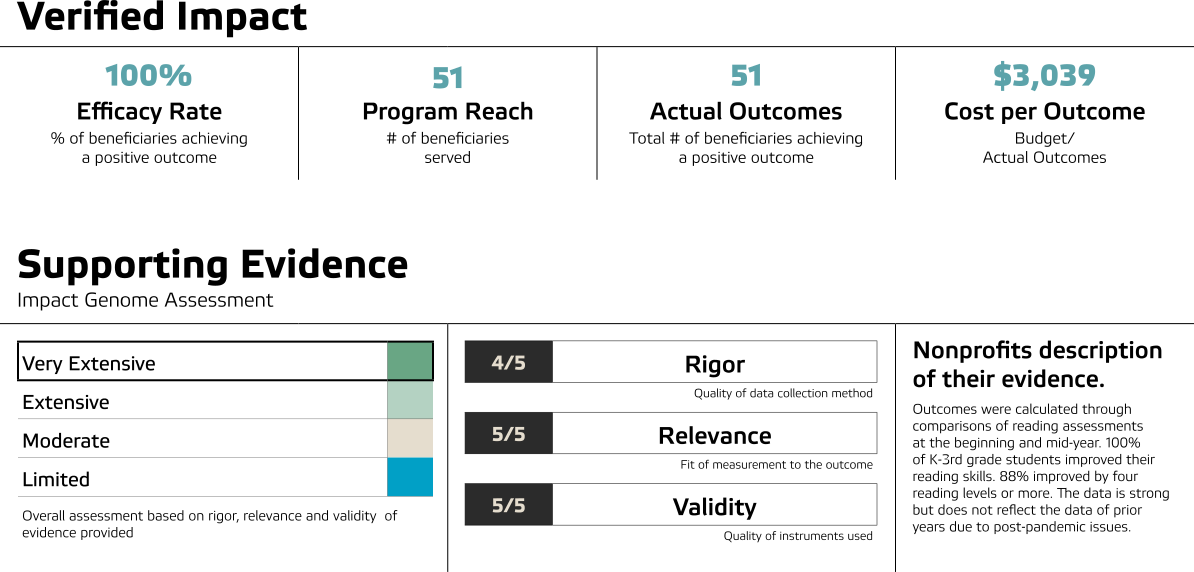
The cost metric may open OutcomesX up to criticism, as intervention costs can vary depending on complexity and the need for expert, hands-on work, but to counter this, the registry shows all the details so that broader priorities can be considered. For example, what the charity is doing and how, the communities being helped, and the intensity of the programme. This means the buyer of social outcomes needs to be very clear on what they want to support, and whether for example, they would pay more for difficult outcomes.
Using Ukraine as an example
UBS was looking to support humanitarian efforts in the Ukraine because of the ongoing conflict there, whilst many NGO’s in Ukraine have found it difficult to access the approx. $17bn of aid pledged since Russia’s invasion. With UBS as its first client, OutcomesX hired people on the ground to help an initial set of 65 charities to upload the required data (as Ukrainian charities were not on the Impact Genome database). The aggregated data helped set the price per outcome. 24 of the 65 charities were selected for the platform, and they have been sharing insights via joint sessions ever since. The buyer can help the charities in other non-financial ways too, like training and technology support.
The charities, as sellers of their outcomes, update their data quarterly and once the impact is verified, the charities are paid out so they can deliver more of those outcomes. The buyer, in this case UBS Optimus Foundation, purchased $2m of “verified impact units” to expand its emergency relief fund for Ukraine. The buyer can track progress and access the data for reporting. The relief fund supports education, with outcomes measured by improvements in test scores, grades, and enrolment, and in mental health, through improvements in emotional, psychological, and social well-being.
What have the co-founders learned by creating this venture?
First is the importance attached to community building by the NFPs on the platform. OutcomesX staff have guided this and continue to help them develop their capacity to measure impact. Secondly, a sharp eye is needed to spot possible misunderstandings; for example, buyers should not be looking for the lowest price if they want to help the hardest to reach. In addition, a new category of platform is being created, so a lot of explaining is required to convert the early adopters.
Next steps in an innovative journey
The platform described above is just a start. Discussions have begun with large financial institutions on how to create a Philanthropy Index, with the outcomes verified by Impact Genome Registry (and what they expect to be new entrants to the market), so that investors can buy a slice of it with confidence. Social indices could also be created for a geographic area (like Uganda), or a specific theme (like education or social mobility). Other types of funders and channels are also being considered. For example, using donor-advised funds (DAFs), or employee giving schemes, to purchase target social outcomes. Or local government bodies could invest in a set of community outcomes, at a specified cost per outcome, aligned to their social policies.
Increasing criticism of carbon credits also presents an opportunity for OutcomesX. Carbon projects that can demonstrate tangible “co-benefits” such as improved local livelihoods, biodiversity, and healthier communities, are priced higher on voluntary markets. “We’re working with the existing organizations, registries, and verifiers to be able to verify social co-benefits for carbon offsets,” says Costanza, who also wants to highlight OutcomeX’s difference, because “a carbon offset is allowing somebody else to pollute something, whereas we’re not an offset.”
Trust and scale will be key. For OutcomesX to be successful and scale up the outcomes market, it will need to earn the trust of buyers and sellers alike through robust standards, and the fairness and accuracy of its impact measurement. AI and data science will no doubt play an increasing role. Or as Phyllis says, “it’s about how to build the railroad tracks for a scalable ecosystem based on social outcomes”.


Related Content

A vicious cycle in wealth inequality
 15670
0
15670
0

Krakakoa's ethical journey in the cocoa industry
 10573
0
10573
0


Transforming agriculture to incentivize climate resilience
 8971
0
8971
0
Comments

Deep Dives

Featuring
Laurie Lane-Zucker
Founder & CEO, Impact Entrepreneur
July 30 - 12:00 PM EST
RECENT
 12161
0
12161
0
 10873
0
10873
0
 16287
0
16287
0
Editor's Picks
 14433
0
14433
0
 9792
1
9792
1
 14978
1
14978
1
Webinars

Featuring
Sateesh Nori
Legal Futurist
July 23 - 12:00 PM EST
News & Events
Subscribe to our newsletter to receive updates about new Magazine content and upcoming webinars, deep dives, and events.
Become a Premium Member to access the full library of webinars and deep dives, exclusive membership portal, member directory, message board, and curated live chats.

Join our global community of systems-minded changemakers.
Subscribe to the Impact Entrepreneur newsletter for the latest insights, magazine features, and invitations to exclusive webinars, Deep Dives, and events.


0 Comments