What a Minute Costs
Counting what we fail to prevent, sixty seconds at a time



Counting what we fail to prevent, sixty seconds at a time

 41
41
 0
0

How collateral rules and payment terms keep impact capital out of reach
 153
0
153
0

Why free education tools need reliable access, credible evidence, and lasting support
 220
0
220
0

How states can crowd in local early-stage capital
340
0

Why last-mile healthcare needs an operating model, not just more mobile clinics
 314
0
314
0

How Australia’s succession wave could turn ownership into a funding model
 431
0
431
0

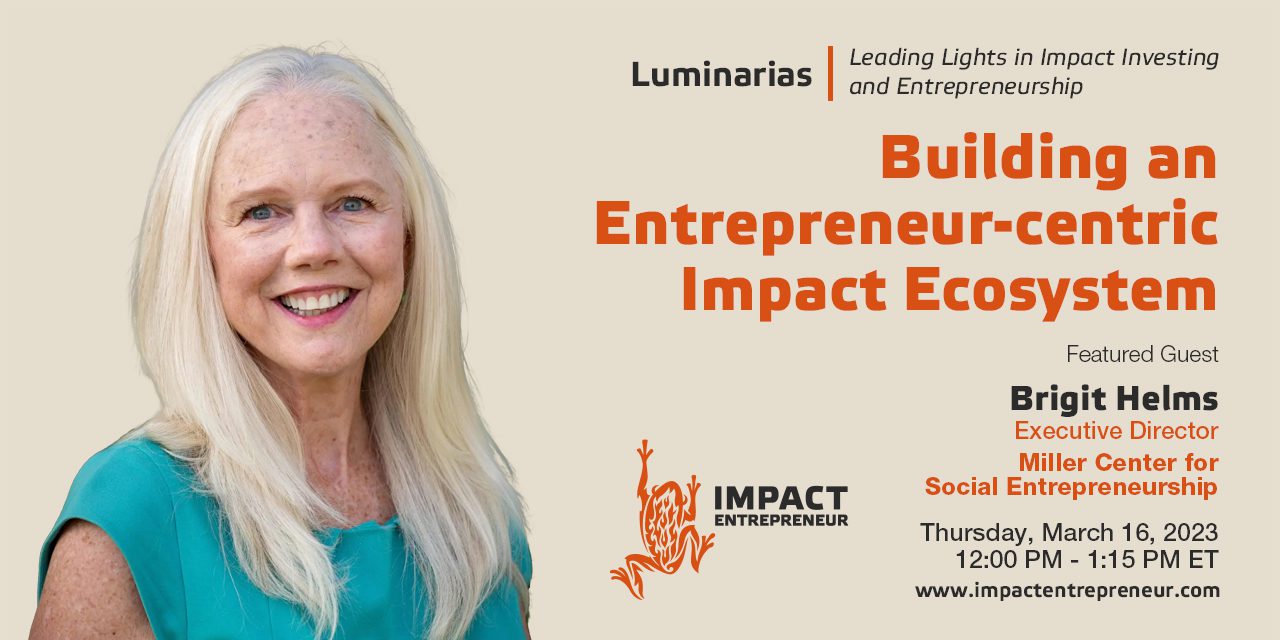
Participants in the impact ecosystem — accelerators, investors, corporates, higher education, and other interested parties — all strive to support impact entrepreneurs according to their own unique strategies. Unfortunately, these collective efforts can be mystifying and even counterproductive for the very entrepreneurs we seek to support.
A better approach entails working together to evolve an ecosystem that offers a seamless continuum of technical support, networks, and capital to accompany entrepreneurs throughout their journeys. Collective solutions must overcome the capital mismatch between supply and demand, ensure diversity and inclusion in the enterprises we support, prioritize impact measurement and management, and bridge partnerships with corporations and universities.
In this live fireside chat and audience Q&A, Impact Entrepreneur’s Laurie Lane-Zucker welcomes social impact pioneer and global development leader Brigit Helms of Miller Center for Social Entrepreneurship for an in-depth conversation about what works and what doesn’t when it comes to centering impact entrepreneurs. Spoiler alert: It’s about connecting the dots rather than strengthening silos.
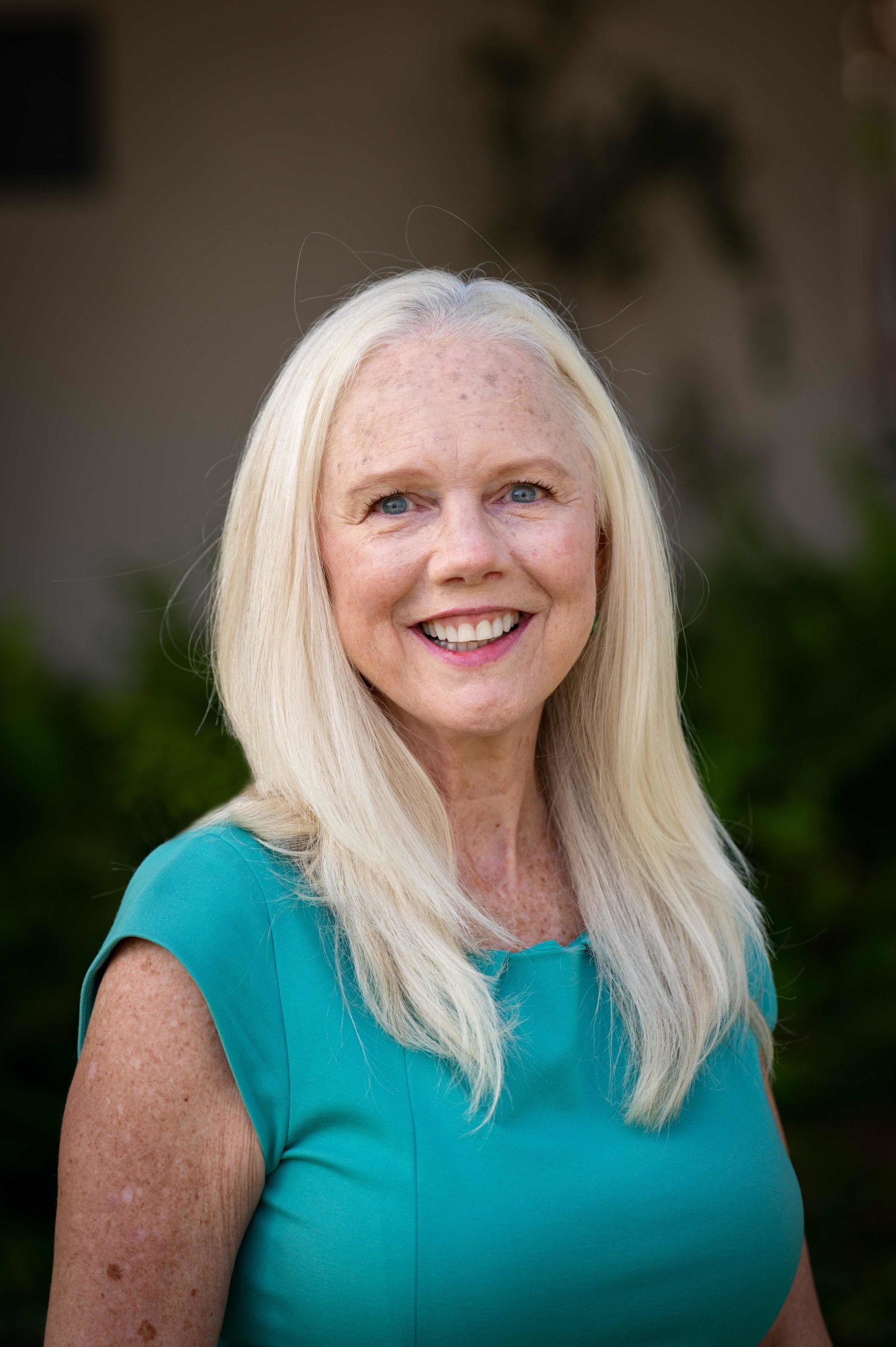
Brigit Helms is Executive Director, Miller Center for Social Entrepreneurship, the premier university-based social enterprise accelerator dedicated to eliminating poverty. For 30 years, Helms has created and delivered solutions to social and environmental challenges in 45 countries across Africa, Asia and Latin America, in both the private and public sectors.
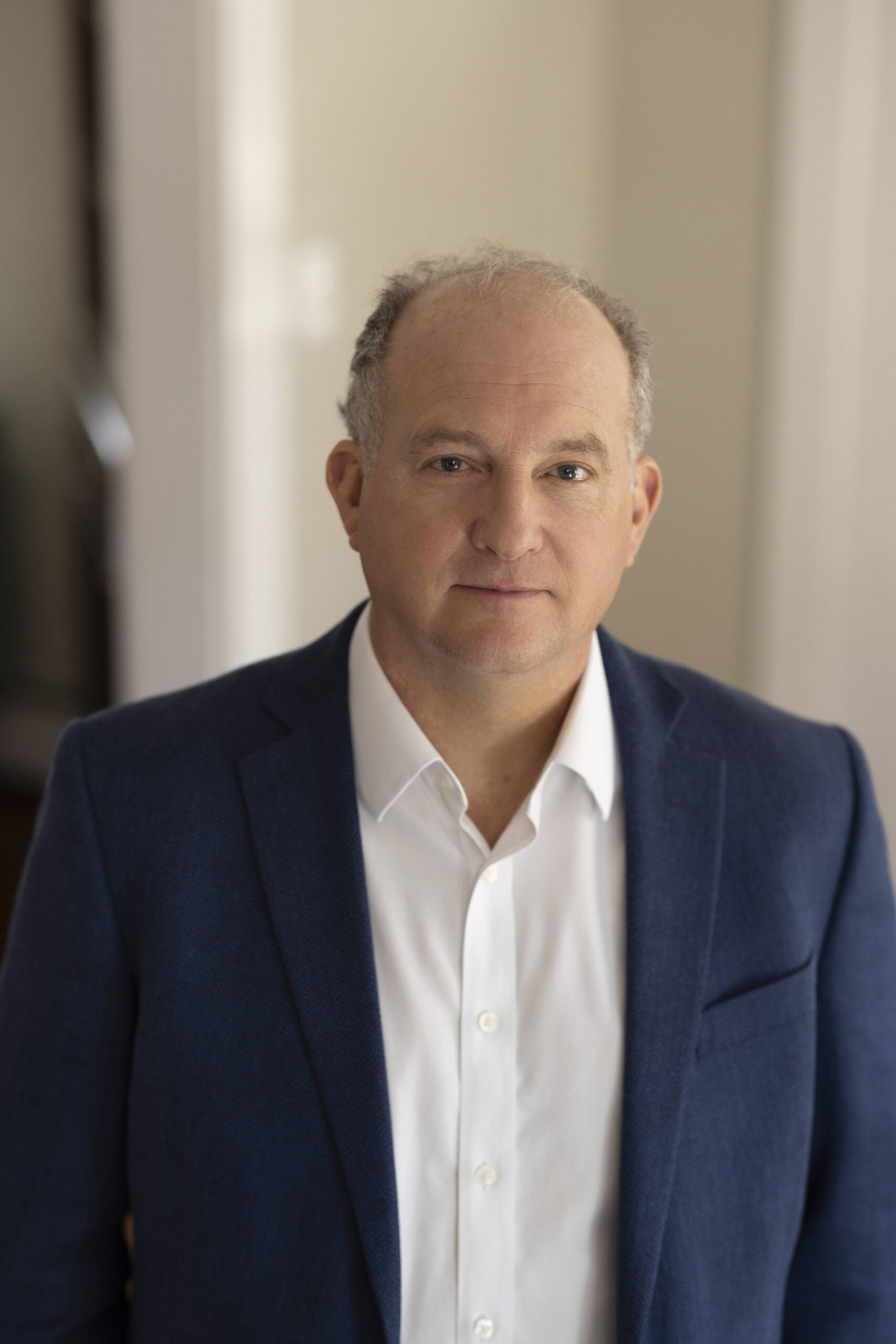
Laurie Lane-Zucker is Founder and CEO of Impact Entrepreneur, PBC, an impact economy business that hosts the Impact Entrepreneur Network — a large, global network of “systems-minded” entrepreneurs, investors, and scholars of social and environmental innovation — and editor and publisher of Impact Entrepreneur, a digital magazine covering the emerging Impact Economy. For over 30 years, Laurie has been a “pioneer” (Forbes) and recognized leader in sustainability, social enterprise, and impact investing. Laurie was the founding Executive Director of the international environmental organization, Orion Society, which publishes the celebrated Orion Magazine, as well as the founder of a global sustainability think-tank, the Triad Institute, and Hotfrog, a Founding B Corporation, GIIRS Pioneer Company, and the first company ever to complete an equity transaction on an impact investment exchange. Laurie is the bestselling and multiple award-winning publisher and editor of books and magazines on sustainability and social impact — having worked with such acclaimed authors as Wendell Berry, Barry Lopez, Terry Tempest Williams, and David James Duncan — and the author of numerous articles on entrepreneurship and impact investing. Laurie is contributing author to the academic textbook from World Scientific, Sustainability: Business and Investment Implications. His new book, The Impact Entrepreneur Breakthrough: A Field Manual for the Regenerative Economy, was published by Berrett-Koehler in September 2026, with global distribution by Penguin Random House.