Love and Care in the Future of Public Markets
Gabriel Grant on giving shareholders a way to express what matters to them


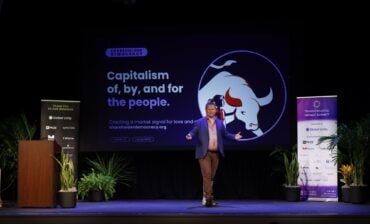
Gabriel Grant on giving shareholders a way to express what matters to them

 60
 0

For mission-led organizations, a change of manager tests whether workplace inclusion is built to last.
 68
0

Artist Rob Strati on inherited objects, the limits of market price, and the creative possibilities…
105
0

Why free education tools need reliable access, credible evidence, and lasting support
 316
0

What Islamic finance and impact investing can learn from each other
 394
0

After the flood, recovery capital must do more than replace what was lost
 384
0
 11
0
News from the Grunin Center for Law and Social Entrepreneurship at NYU School of Law
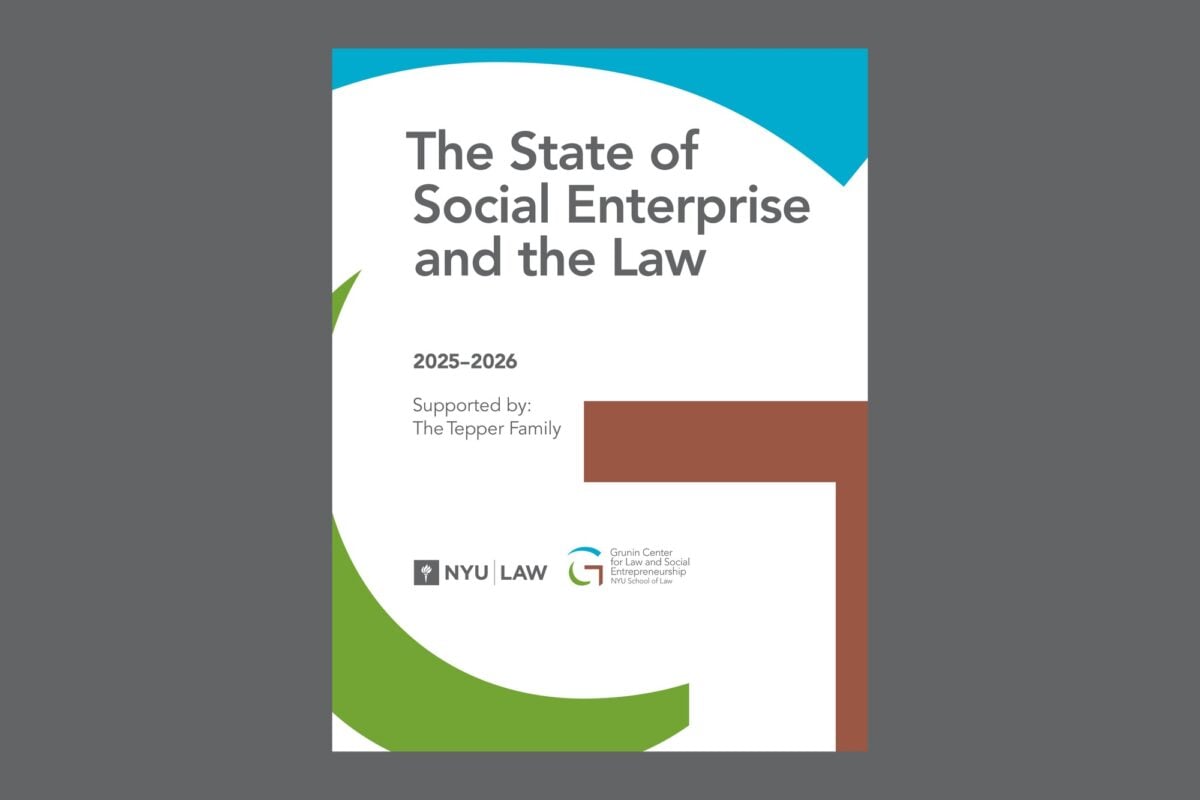
The Grunin Center for Law and Social Entrepreneurship at NYU School of Law has published the 2025–2026 edition of The State of Social Enterprise and the Law, its annual report on how American law treats social enterprise. Five NYU Law students wrote this year’s report: Shelby Hobohm, Casey Martin and Van Tran Schneider, all JD ’27, and Mary Grace Babbo and Morgan Duffield, JD ’28. The Tepper Family funds the research.
The report finds state legislation on social enterprise forms at a plateau, a trend several earlier editions had already traced. The authors found only three bills in 2025, and one became law. Indiana’s, enacted in March, created the “employment social enterprise,” a nonprofit or for-profit organization that employs people facing a barrier to work and gives them training and social support. No bill of its kind had passed anywhere since 2020. Mississippi’s benefit corporation bill failed for the ninth consecutive year, and a Rhode Island bill to repeal the state’s low-profit limited liability company (L3C) form went nowhere after its introduction in May.
The authors set that quiet beside a more polarized state debate over ESG. Using Ballotpedia’s tracker, they count 27 anti-ESG bills and four pro-ESG bills enacted or adopted in 2025, against 29 and nine the year before.
The report’s new research asks how many benefit entities exist in practice. It builds on the Corporate Census, a database of some 100 million US entity formations compiled by Andrew Verstein of UCLA School of Law. The team could verify public records in 13 jurisdictions, and those records add up to close to 7,000 benefit corporations, more than 3,000 of them in Colorado and more than 2,000 in New York. A footnote adds that only about 1,000 of Colorado’s were in good standing as of April 2026. Most states keep no single public list, and Delaware, which the authors expect is one of the main homes of benefit corporations, does not appear to publish such data at all. They suggest that states offering these forms publish searchable records and keep them current.
The report ends by returning to last year’s case study of OpenAI, which has finished converting its for-profit arm into a Delaware public benefit corporation, OpenAI Group PBC, on conditions set by the California and Delaware attorneys general. It also compares what Anthropic and OpenAI, both benefit corporations, did when the Pentagon offered each a comparable military contract: Anthropic refused, and OpenAI agreed, with one additional red-line term. The authors conclude that the effectiveness of the PBC form “depends heavily on the drafting of each entity’s charter,” and that with attorney general oversight stretched thin, civil society needs stronger reporting requirements to tell whether smaller PBCs are keeping to their charters.
The report is free to download from the Center’s publications page, along with every earlier edition back to 2017–2018. Its state-by-state findings draw on the Center’s Social Enterprise Law Tracker, an interactive map of the legal forms each state allows.
Source: the Grunin Center for Law and Social Entrepreneurship at NYU School of Law. Image: the cover of the 2025–2026 report.


Related Content
Comments
Deep Dives
RECENT
 316
0
 394
0
 384
0
Editor's Picks
 60
0
 68
0
 105
0
60
0
60
0
68
0
105
0
Webinars
Signed by the author. Collected at the door at Lipton Hall, NYU School of Law,…
News & Events
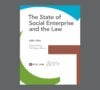
The 2025–2026 edition also tries to count benefit corporations

The only craft-focused project in Catalytic Capital Consortium’s new cohort.

The September 14 program and a live IFI Tool demo are online
Subscribe to our newsletter to receive updates about new Magazine content and upcoming webinars, deep dives, and events.
Become a Premium Member to access the full library of webinars and deep dives, exclusive membership portal, member directory, message board, and curated live chats.


0 Comments