Building an Alabama Entrepreneurial Ecosystem
Focused on black business owners.



Focused on black business owners.

 10023
10023
 0
0

Impact investors and the community as a whole has missed a leadership opportunity.
 12053
0
12053
0

 9852
0
9852
0

A new marketplace called OutcomesX
 7504
0
7504
0

 13335
0
13335
0
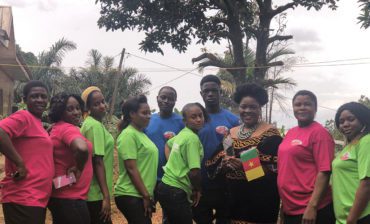
Innovating and supporting women
 7895
0
7895
0
 1451
0
1451
0
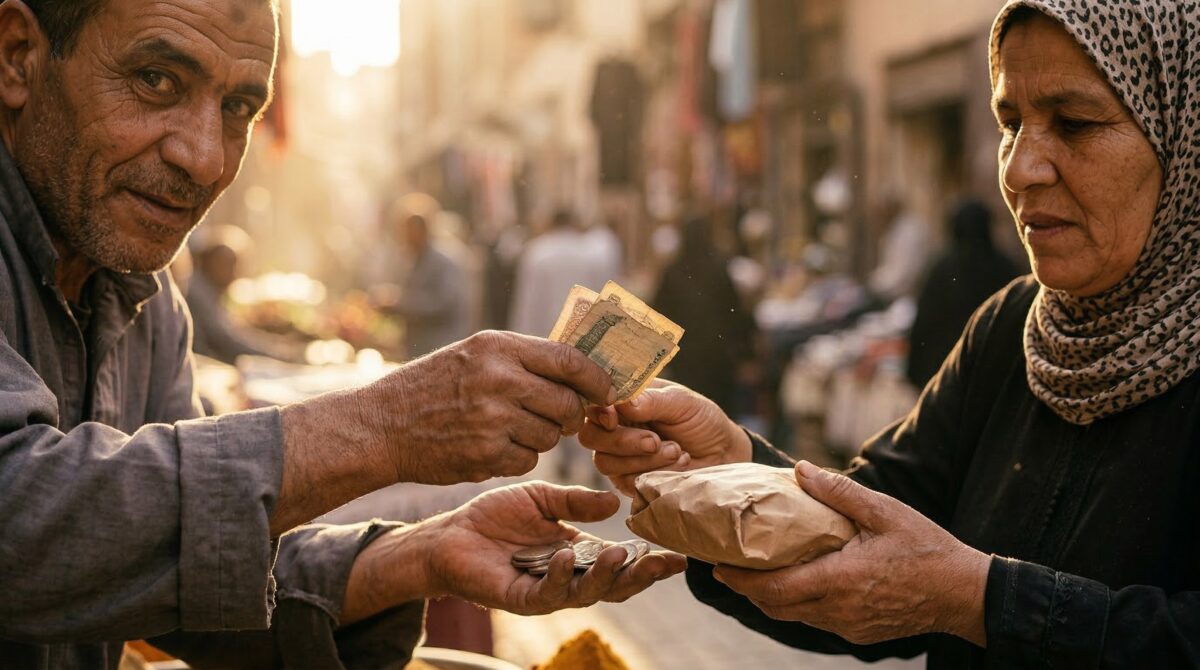
In fragile MENA markets, the businesses that hold communities together are rarely venture-backed startups. They are small shops, cooperatives, and home-based enterprises in the real economy — yet most support systems still favor high-growth tech. This article argues for a more grounded, inclusive approach to entrepreneurship.
Around the world, small and medium-sized enterprises (SMEs) represent roughly 90% of all businesses, provide 60–70% of employment, and generate about half of global GDP. They are the backbone of economies everywhere — but especially in fragile and low-income contexts, where large firms are scarce and public employment is shrinking.
Across the Middle East and North Africa (MENA), this reality is even starker. From family groceries in Sfax to olive cooperatives in Morocco and home-based caterers in Sana’a, small businesses form the economic spine of societies. They sustain livelihoods, stabilize communities, and keep local markets functioning even amid crisis.
Yet over the past two decades, a different image of entrepreneurship has come to dominate policy, funding, and media attention: the tech start-up.
Innovation is now often equated with apps, digital platforms, and venture-backed firms pursuing rapid scale. An entire infrastructure of incubators, accelerators, pitch competitions, and innovation hubs has grown around this model — promising disruption, speed, and exponential growth.
This global “startupization” of entrepreneurship is not misguided in itself. Technology has transformed access to markets, finance, and services across the region, and COVID-19 accelerated digital adoption. In cities such as Cairo, Amman, and Casablanca, fintech, logistics, ed-tech, and health-tech ventures are expanding opportunity.
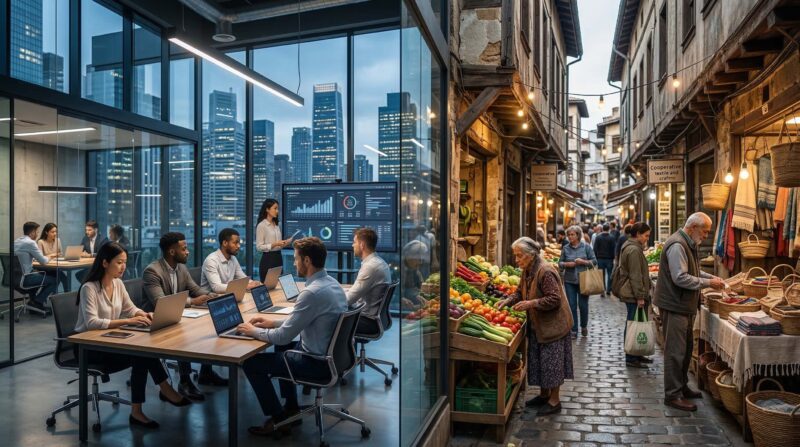
Entrepreneurship ecosystems often prioritize tech startups, while the traditional enterprises employing most people remain under-incubated and under-financed.
But in fragile and low-income contexts, the foundations required for tech to scale are often uneven. Internet connectivity remains unreliable outside major cities. Electricity is unstable in many areas. Markets are fragmented and purchasing power is limited. Trust in digital systems can be fragile, and founders frequently must build demand from scratch before revenue emerges.
In these environments, most livelihoods are not built on apps. They are built on the everyday economy.
Across many MENA countries, 40–60% of employment comes from the informal or semi-formal economy. The tailor, mechanic, farmer, grocery owner, and small service provider keep daily life functioning — often with little visibility or formal support.
Tech entrepreneurship captures a disproportionate share of donor funding, policy attention, and media coverage.
These enterprises rarely attract investors or headlines, yet they quietly hold societies together. Youssef, who runs a small grocery shop in Tunisia, describes this reality succinctly:
“Today, when people talk about innovation, they talk about tech. But for me, innovation is managing to keep my shop open and navigating the volatile economy every day — dealing with suppliers, rising prices, and customers with shrinking budgets. That’s the kind of innovation we live.”
Despite their central role, such businesses remain largely outside formal incubation and support systems. Many operate in fragile contexts where they require even greater support — training, affordable finance, market access, and pathways to formalization — yet most entrepreneurship programs are not designed for them.
Tech entrepreneurship captures a disproportionate share of donor funding, policy attention, and media coverage. Across the region, tech-focused incubators and accelerators have multiplied, built around venture capital logic, fast-scaling models, and digital infrastructure assumptions that reflect relatively stable markets.
The ecosystem often behaves as if the “typical” entrepreneur is a young founder raising seed capital. In reality, most entrepreneurs run micro-enterprises, home-based businesses, agricultural ventures, repair services, or cooperatives — the activities that generate the majority of employment and sustain local economies.
This imbalance reflects not the structure of MENA economies, but where visibility and funding have been concentrated. When support systems consistently reward what is perceived as scalable or investable, they risk drifting away from economic realities.
The gender dimension of this imbalance is equally revealing. Globally, women represent roughly 15–20% of start-up founders and receive only 2–3% of venture capital funding — figures that have remained remarkably consistent across regions.
Yet women are highly active in the real economy. They are disproportionately represented in care services, food systems, education, health, and climate-related activities — sectors that sustain communities through economic shocks and displacement. Studies suggest women account for 40–55% of social entrepreneurs globally.

Women entrepreneurs are heavily concentrated in care, food, and community enterprises — sectors often overlooked by startup-focused incubation systems.
Because these ventures often do not align with high-growth venture models, they remain chronically underfunded and under-incubated.
Arbia, who runs a small after-school center in a low-income neighborhood outside Tunis, describes the sense of exclusion:
“I’ve seen calls for programs on Facebook, but honestly, I never applied. The criteria are complicated, the forms are long, and everything is online. I work with children and organise activities. I didn’t think this kind of work fits what they call a ‘startup’ or ‘innovation’.”
For many women operating home-based or informal businesses, barriers emerge long before funding becomes relevant: digital literacy gaps, administrative complexity, time constraints linked to unpaid care work, and the perception that entrepreneurship support targets a different profile entirely.
The question is not whether to support tech start-ups or traditional SMEs. It is how to design ecosystems that reflect the actual structure of economies.
A rebalanced ecosystem requires tools suited to SMEs and social ventures: microfinance, blended finance, flexible credit, and patient capital that recognizes slower growth in fragile markets.
A healthy MENA entrepreneurship ecosystem requires both: start-up incubators that help high-growth ventures innovate and compete globally, and “real economy” incubation that stabilises livelihoods, strengthens local markets, and scales social and economic resilience. One without the other is incomplete.
In Tunisia, institutions such as ENDA Inter-Arabe, the Banque Tunisienne de Solidarité, and the Agence de Promotion de l’Industrie et de l’Innovation have long supported micro and small enterprises through tailored finance, training, and local accompaniment. While often constrained by bureaucracy and limited resources, these initiatives have enabled thousands of entrepreneurs — particularly women and rural producers — to access capital and survive repeated economic shocks.
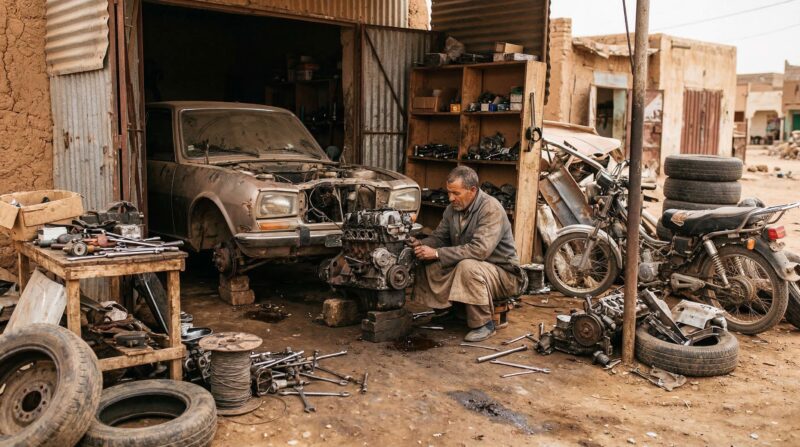
Across fragile markets, informal and small enterprises keep transport, supply chains, and daily life functioning — often without formal support systems.
Such examples illustrate what real-economy incubation can look like: patient, place-based, and grounded in local market realities.
As Majed, an incubator manager in Palestine, observed:
“There is room for everyone in this ecosystem — tech founders, small producers, home-based businesses. The real challenge is designing systems that allow all of them to grow together and complement each other.”
Donors have played a central role in shaping the region’s entrepreneurship landscape over the past decade. They now have an opportunity — and responsibility — to rebalance it.
This means funding not only digital innovation hubs in major cities, but also long-term, place-based programs that support small producers, women-led home businesses, rural youth initiatives, and social enterprises in fragile areas. It also requires rethinking how success is measured. Instead of focusing primarily on apps launched or investment raised, metrics should reflect real economic impact: jobs sustained, incomes stabilized, services delivered, and local value chains strengthened.
Ecosystem builders — incubators, NGOs, universities, and accelerators — are on the front line of this shift. Expanding the definition of “entrepreneur” is essential. The woman running a home kitchen in Taiz, the mechanic in a rural Tunisian town, the farmer organizing a cooperative in the Bekaa, or the youth group turning waste into income in a Libyan community are all entrepreneurs. Support systems must be designed with them in mind.
Finance must evolve as well. A rebalanced ecosystem requires tools suited to SMEs and social ventures: microfinance, blended finance, flexible credit, and patient capital that recognizes slower growth in fragile markets.
Building inclusive entrepreneurship ecosystems is not simply a matter of fairness. It is a prerequisite for economic stability and resilience. When support flows only to what is most visible or scalable, economies risk neglecting what is most essential — the everyday enterprises that hold communities together and form the foundation for long-term growth.


Related Content

 9742
0
9742
0


Comments
Deep Dives
RECENT
 7504
0
7504
0
 13335
0
13335
0
 7895
0
7895
0
Editor's Picks
 10023
0
10023
0
 12053
0
12053
0
 9852
0
9852
0
Webinars
News & Events
Subscribe to our newsletter to receive updates about new Magazine content and upcoming webinars, deep dives, and events.
Become a Premium Member to access the full library of webinars and deep dives, exclusive membership portal, member directory, message board, and curated live chats.

Join our global community of systems-minded changemakers.
Subscribe to the Impact Entrepreneur newsletter for the latest insights, magazine features, and invitations to exclusive webinars, Deep Dives, and events.





0 Comments