Building an Alabama Entrepreneurial Ecosystem
Focused on black business owners.



Focused on black business owners.

 10182
10182
 0
0

Impact investors and the community as a whole has missed a leadership opportunity.
 12203
0
12203
0

 9983
0
9983
0

A new marketplace called OutcomesX
 7740
0
7740
0

 13689
0
13689
0

Innovating and supporting women
 8139
0
8139
0


 7452
0
7452
0

Women in Energy Sierra Leone (Africa) - Image Courtesy of Village Capital
Catalytic capital is intended to be first-mover, flexible funding — filling market gaps and taking on higher risk and/or concessionary returns to unlock impact otherwise unattainable. Yet early-stage impact investors often default to traditional venture capital (VC) models, drawn by the promise of scale and market-rate returns. The problem? VC structures prioritize high-risk, high-reward growth — an ill fit for many mission-driven startups tackling systemic challenges like climate change, health access, financial inclusion, and social inequality.
Historically, a tiny fraction of startups (less than 1% in the U.S.) have raised venture capital. When applied indiscriminately, VC structures can do more harm than good — creating a vicious cycle of continuous fundraising and pressuring impact-driven startups to compromise their missions.
Further, the VC model relies on power-law dynamics: a few companies return the entire fund, while most fail. This high failure rate can be especially devastating for impact ventures serving vulnerable, high-need communities. Even when startups survive, exits pose another challenge. Successful exits are rare, leaving early impact investors with capital tied up indefinitely and limited prospects for meaningful returns. And in the rare cases where liquidity is achieved, it often comes at the expense of mission.
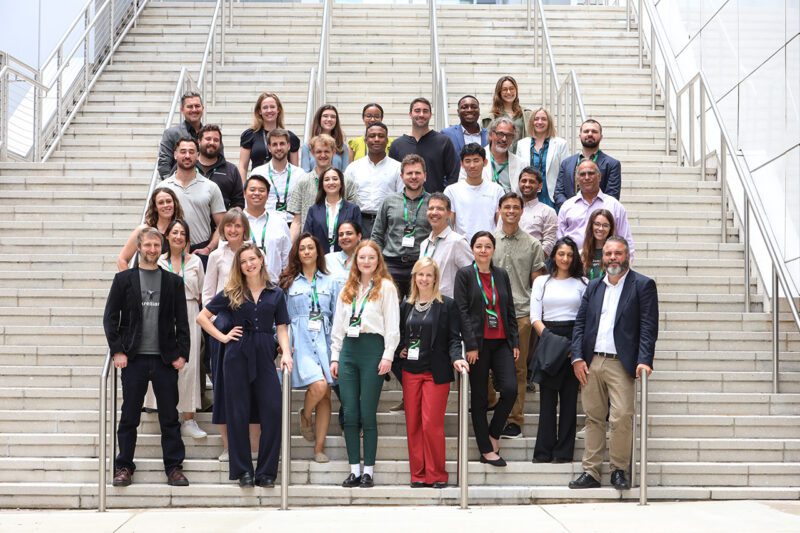 Village Capital Cohort - Image Courtesy of Village Capital
Consider agritech startups — a popular VC-backed sector in emerging markets. Many begin with the goal of boosting smallholder productivity, yet pressure for rapid scale often pushes them toward serving large commercial farms, sidelining intended beneficiaries. Similar patterns emerge in fintech and health tech, where solutions risk becoming inaccessible to the very populations they were designed to serve. While market and business-model challenges contribute to pivots, we must ensure our capital does not create perverse incentives.
Catalytic capital holds immense promise — especially when it truly prioritizes impact over short-term gains. But to realize that potential, we need a fundamental shift in how we invest. As catalytic investors, we must rethink processes, structures, and return expectations. Our goal should be to enable startups to scale impact without compromising mission — while laying the groundwork for long-term value that attracts aligned downstream capital.
A growing movement in the broader startup financing space recognizes a spectrum of capital beyond traditional VC and debt — designed to serve both entrepreneurs and investors effectively. Investors such as Capacity Capital, Collab Fund, Calm Company Fund, and Greater Colorado Venture Fund, alongside ecosystem leaders like Aunnie Patton Power, have pioneered “innovative finance” approaches — such as redeemable equity or revenue-based financing, where investors are repaid a percentage of revenue up to a set multiple.
 Tierra de Monte Regenerative Agriculture Team (Mexico) - Image Courtesy of Village Capital
When implemented well, these tools allow businesses to grow sustainably without the pressure for hypergrowth, while still creating viable returns and liquidity for investors — especially in cases where traditional equity would be a poor fit.
For impact investing, this shift is not just about new instruments. It’s about embracing a new investment philosophy — one that scales innovative approaches.
Catalytic capital holds immense promise — especially when it truly prioritizes impact over short-term gains.
At Village Capital, we support impact-creating startups with diverse business models. While some align with VC expectations, many do not — particularly those whose solutions aren’t built for the rapid growth VC investors demand. Rather than adopting the VC playbook, we are advancing “purpose-suited capital” to help startups pursue impact-aligned growth.
 Albedo Solar Team Member- Image Courtesy of Atta Impact Capital
The purpose-suited capital philosophy begins with the goal of maximizing impact and enterprise performance, then builds growth and capital strategies around that goal. Rather than a one-size-fits-all approach, it tailors capital structures — whether equity, debt, or flexible models—to align with a company’s actual needs, trajectory, and ownership objectives. While purpose-suited capital may use familiar instruments (e.g., equity), it differs in philosophy: prioritizing impact and enterprise performance, not just scale and financial return.
We’re shifting from a rigid, single investment strategy to a more flexible, diversified approach. Instead of relying on VC-style markups to show short-term value, we’ll measure realized impact and sustainable returns over time — while preparing startups for the complexities of downstream capital, ensuring they access the right funding at the right time.
We’ve already implemented this approach in more than a dozen impact-creating startups across various investment facilities. For example, we’ve rethought the use of convertible notes — structuring one deal to align with Islamic finance principles, and another to function like a term loan upon maturity instead of requiring a lump-sum payment. These weren’t radical structural shifts, but they introduced meaningful flexibility — allowing companies to scale at a sustainable pace and providing a clear path to investor returns.
This isn’t just about adjusting terms. It’s about helping the majority of impact companies prioritize profitability as a foundation for scale — reserving blitzscaling for the rare cases where it truly fits.
Blending traditional and innovative financing is not new — but it remains underutilized in impact investing. It requires rethinking what scale means, moving beyond the assumption that hypergrowth is the only path. Early-stage investors deploying catalytic capital can — and should — adopt purpose-suited strategies to better align impact goals with financial returns.
 Image courtesy of IMPAQTO
We’re not alone. Firms like Atta Impact Capital and Impaqto are pioneering innovative finance structures for impact companies in Latin America.
Traditional VC plays an important role — but it can’t be the only option. A purpose-suited approach expands the toolkit, ensuring entrepreneurs grow sustainably, stay mission-aligned, and access the right downstream capital. Driving real change means moving beyond the status quo. At Village Capital, we’re committed to expanding this approach, sharing tools like Capital Explorer, and equipping founders to align their capital strategies with impact and long-term success.
We know we don’t have all the answers. But we do know this: capital is only truly catalytic when it is structured to serve its purpose.




Related Content

 9379
0
9379
0

 9036
0
9036
0


 9857
0
9857
0
Comments

Deep Dives
RECENT
 7740
0
7740
0
 13689
0
13689
0
 8139
0
8139
0
Editor's Picks
 10182
0
10182
0
 12203
0
12203
0
 9983
0
9983
0
Webinars
News & Events
Subscribe to our newsletter to receive updates about new Magazine content and upcoming webinars, deep dives, and events.
Become a Premium Member to access the full library of webinars and deep dives, exclusive membership portal, member directory, message board, and curated live chats.

Join our global community of systems-minded changemakers.
Subscribe to the Impact Entrepreneur newsletter for the latest insights, magazine features, and invitations to exclusive webinars, Deep Dives, and events.



0 Comments